Jeff Wall’s Hyper-Real Visions
Jeff Wall’s large-scale images are windows into the theatre of the everyday. In one, a man casually backflips in the middle of a legion hall. Another shows a crowd of partygoers smoking outside a moonlit nightclub. Yet another features a horseback rider hauling herself up from the ground while the horse who tossed her looks on indifferently. Wall’s images seem natural and organic, as if plucked from daily life. But the reality is that most of them were often meticulously staged. He often spent months gathering props, casting performers and producing sets on location or in studio before taking a photo.
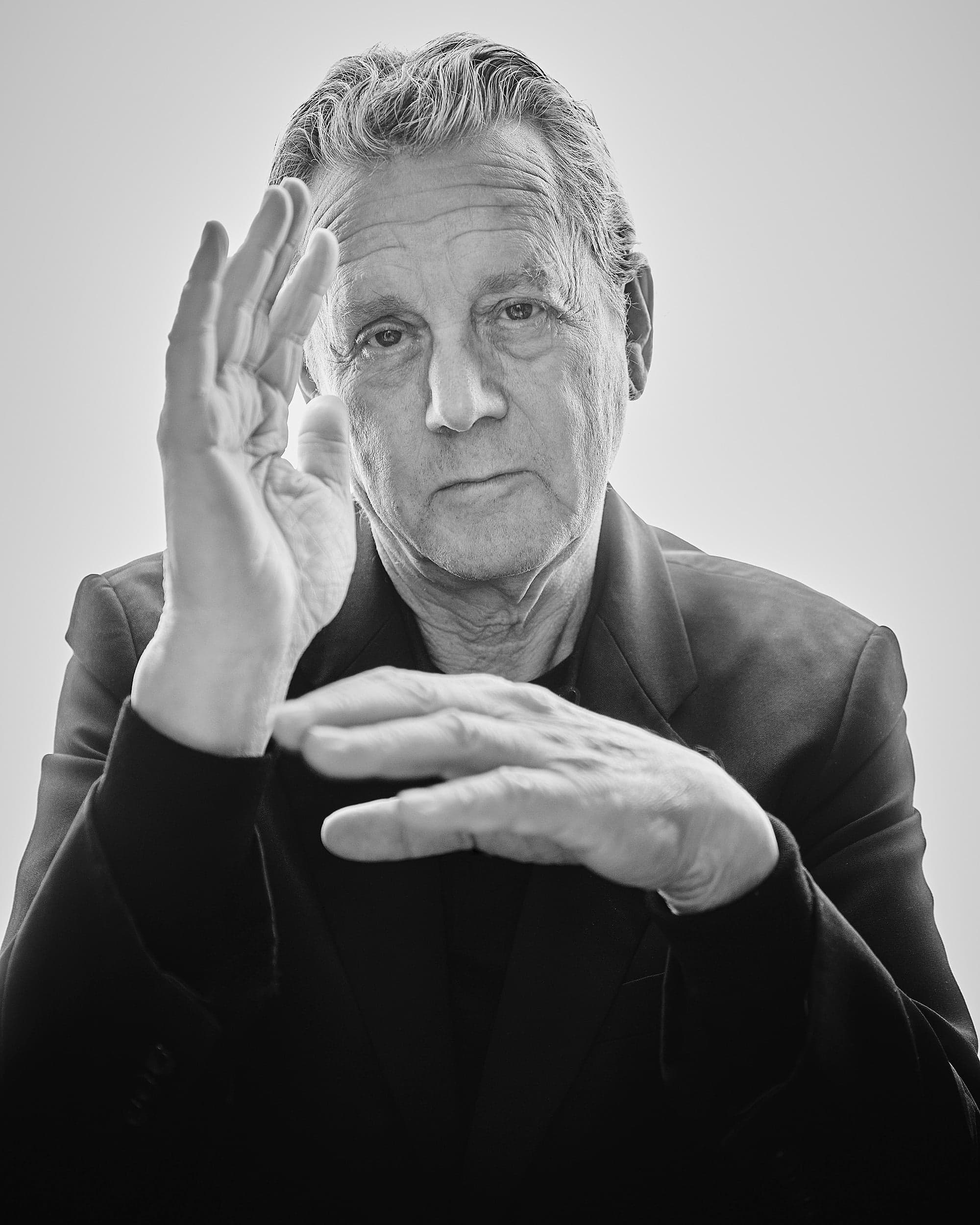
Wall was raised around art, painting in his parents’ toolshed-turned-studio as a kid, then studying art history at the University of British Columbia. By the end of the 1970s, he started staging and photographing the intricate scenes that would define his career. One of his first major works, The Destroyed Room, shows the aftermath of unseen violence: Wall created a red bedroom strewn with ripped fabrics, open dresser drawers, stray shoes, loose jewellery and a slashed, upturned mattress. He wanted viewers to see every detail, so when it debuted in Vancouver’s Nova Gallery in 1978, he printed it at 160 by 230 centimetres on transparent slide film, backlit and displayed in the gallery’s storefront window.
Over the next few years, Wall shifted his lens toward scenes about social tension and microaggressions; his best-known work in this mode, Mimic, depicts a white man making a slant-eyed gesture at an Asian passerby. He also evolved with technology: in the ’90s, Wall embraced Photoshop to create composites. Dead Troops Talk, stitched from around 50 photographs made in Wall’s studio, shows a group of dead Soviet soldiers chatting in the hills of Afghanistan. For the cemetery scene in The Flooded Grave, Wall built a grave-shaped aquarium in his studio with help from divers and oceanographers and filled it with thriving B.C. sealife. Then, over two years, he spliced pictures of it into a photograph of a real cemetery.
Because his pictures often demand extensive planning, staging and editing, Wall only makes around five per year. Now, 51 pieces from his four-decade career cover every floor of Toronto’s Museum of Contemporary Art in a retrospective that will run until March 22, 2026. At once dreamlike and documentarian in style, his work weaves undercurrents of class, race, social dynamics and nature through the familiar dramas of daily life. Below, Wall shares the stories behind some of his most iconic images.
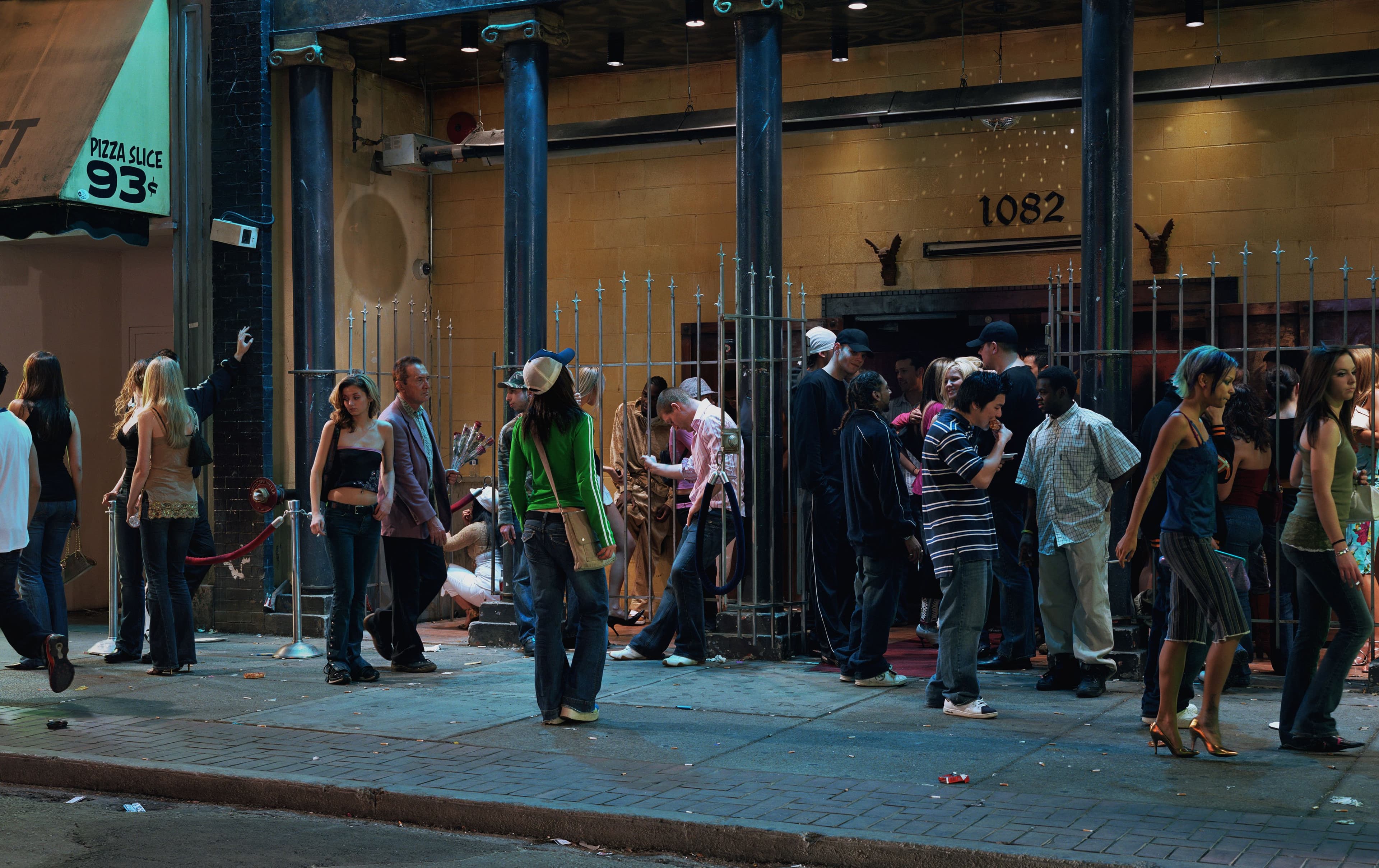
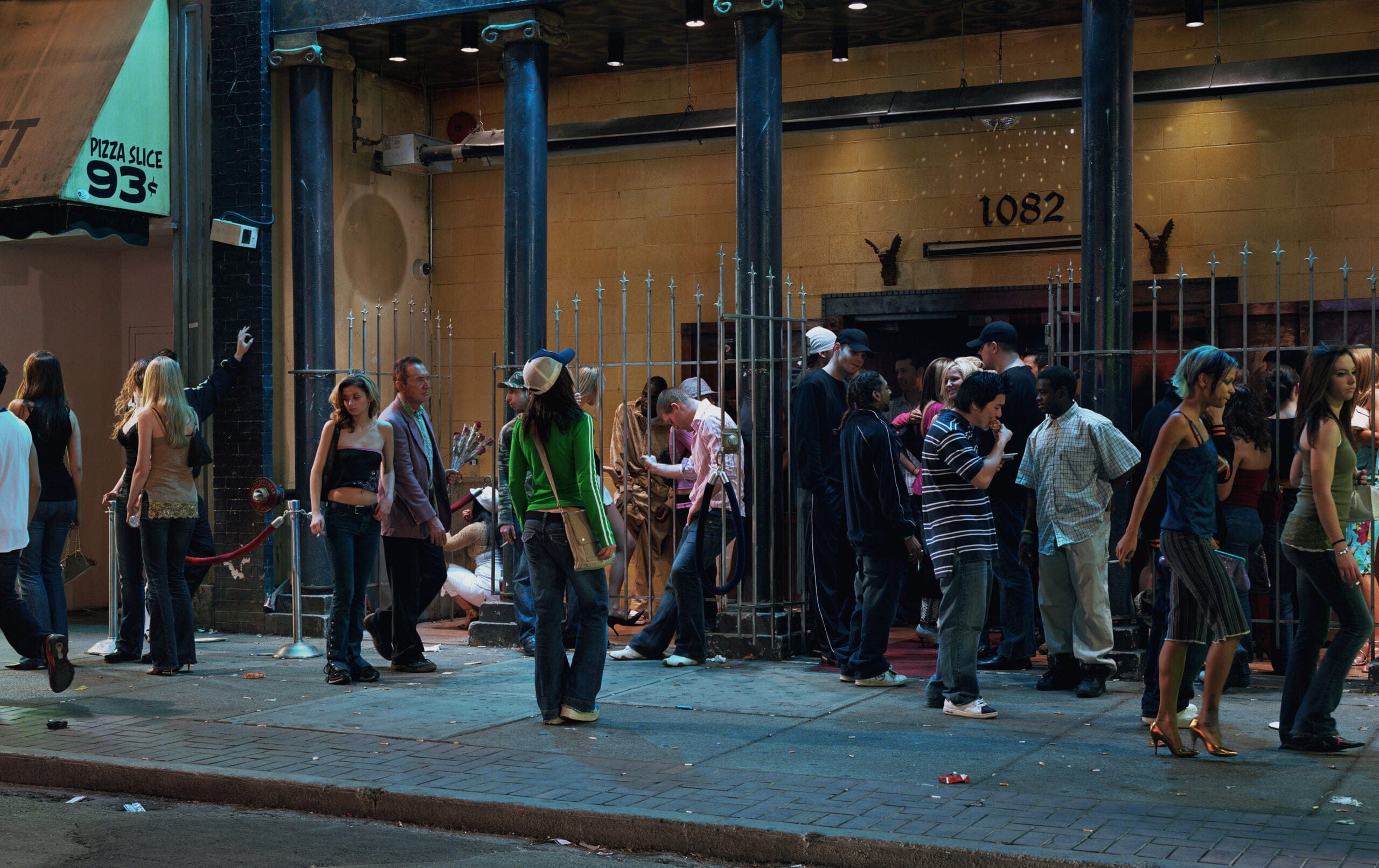
In Front of a Nightclub, 2006: “I wish I had made this image at the club it references, but the area was too busy. Over two or three nights I hid in my truck and photographed the action to study the appearance and behaviour of the clubgoers. Then I recreated the facade and sidewalk elsewhere. I was amused that some of the people who answered my casting call were in the photos I’d surreptitiously taken.”
Related Posts
Heated Rivalry Is Anti-Dystopia Art
How the Olympics Remade Montreal
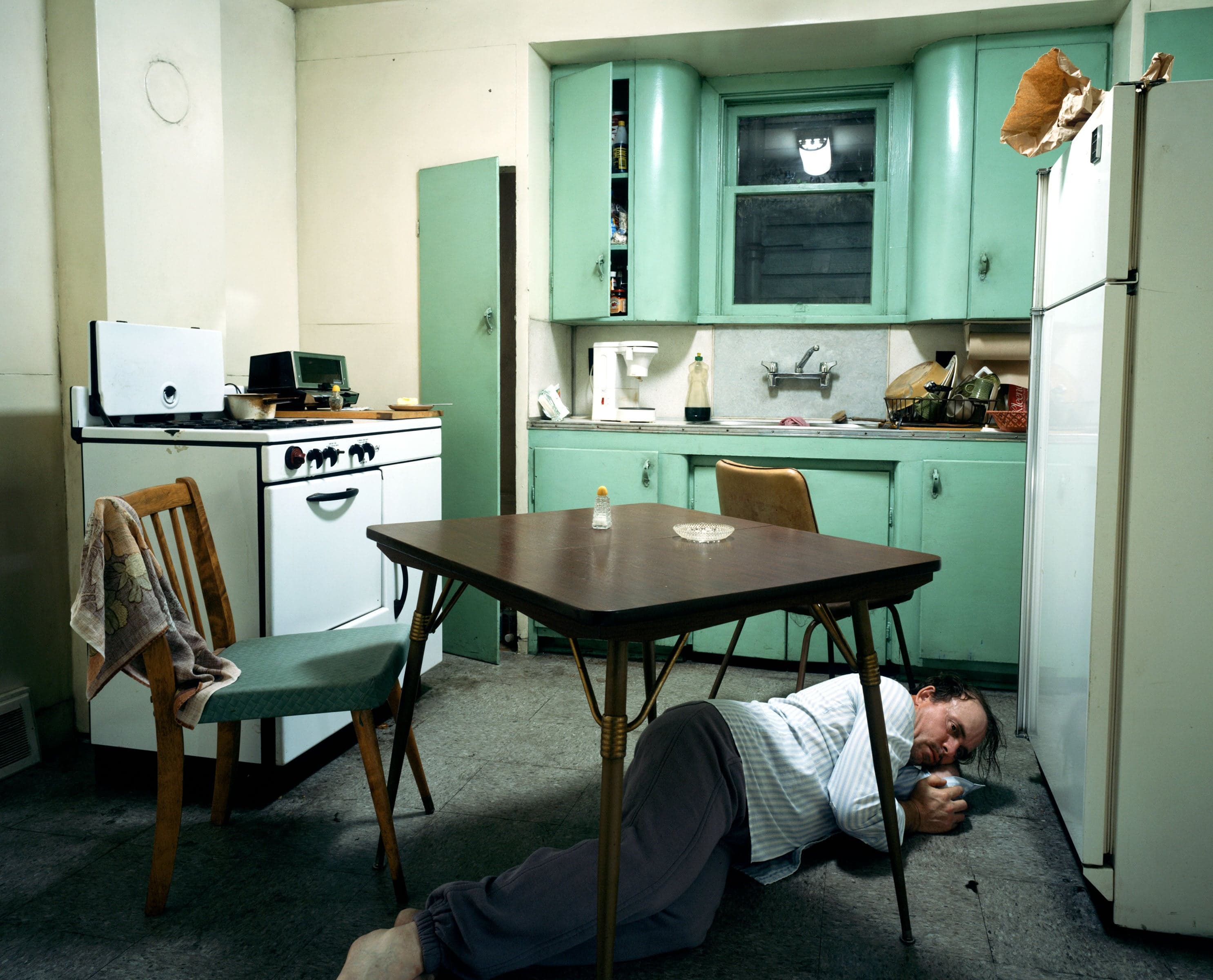
Insomnia, 1994: “For Insomnia, I photographed my model late at night to create the right physical feeling and mood. He needed to be tired, worn from the long day. Sometimes a subject will strike me from an unexpected angle. In this case it was realizing I wanted to photograph that kitchen. And the figure emerged from pondering what would happen in that empty room at night when I wouldn’t be there.”
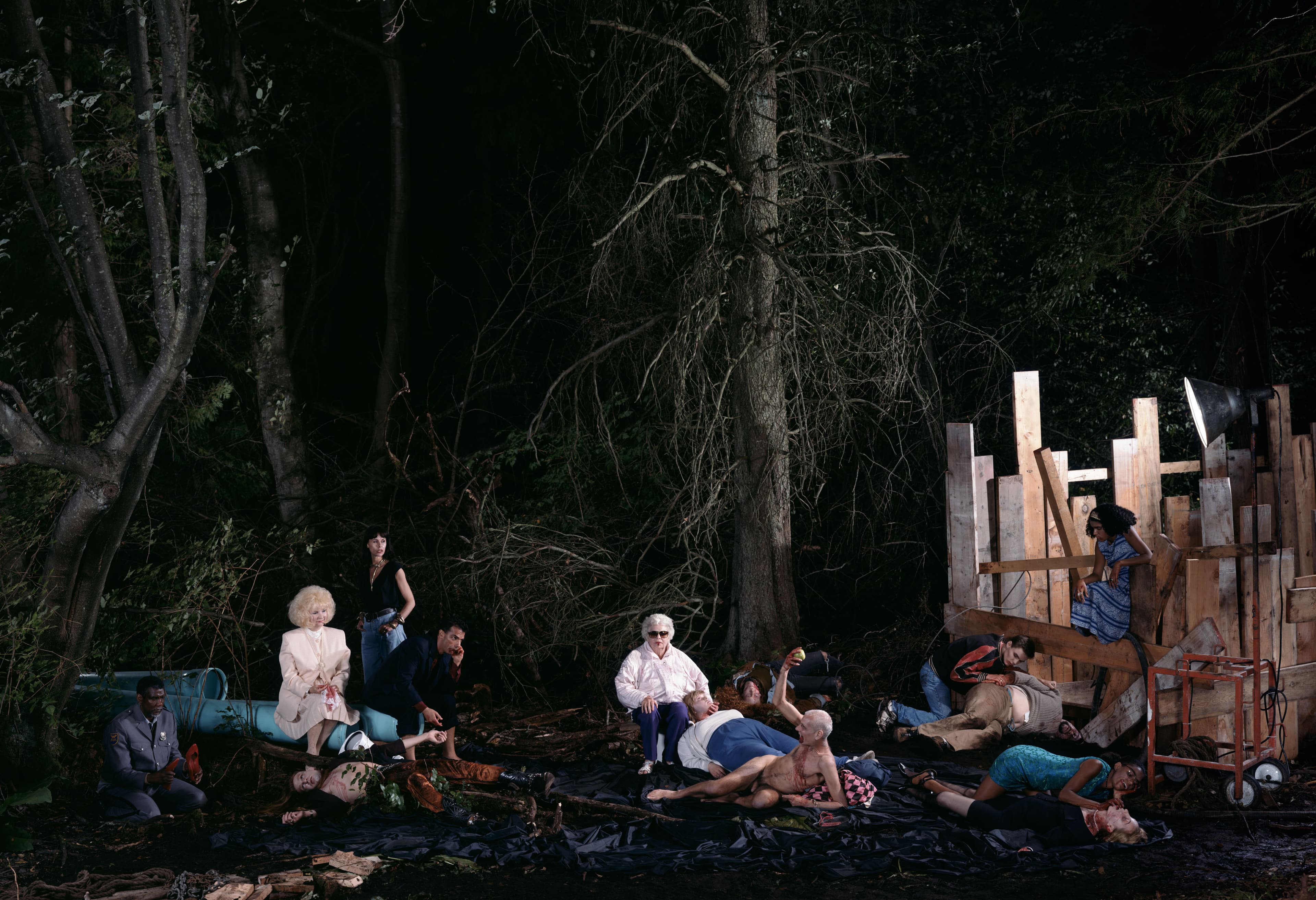
Vampires’ Picnic, 1991: “I occasionally work in a comic mode—not for laughs, but for the irony, absurdity, grotesqueness and preposterousness that I sometimes appreciate in literature, like in vampire stories. Traditionally, it seems that vampires came from the aristocracy, but in the photo, they’re from all walks of life; they’re the vampires of a democracy. I wanted to capture what a picnic among them might look like. They wouldn’t gather on a sunny beach or in a park. They’d pick somewhere unpleasant, like a construction site at night. And, instead of packing sandwiches, they’d bring victims. I held an open casting call in Vancouver and hundreds of people showed up—everyone loves vampires.”
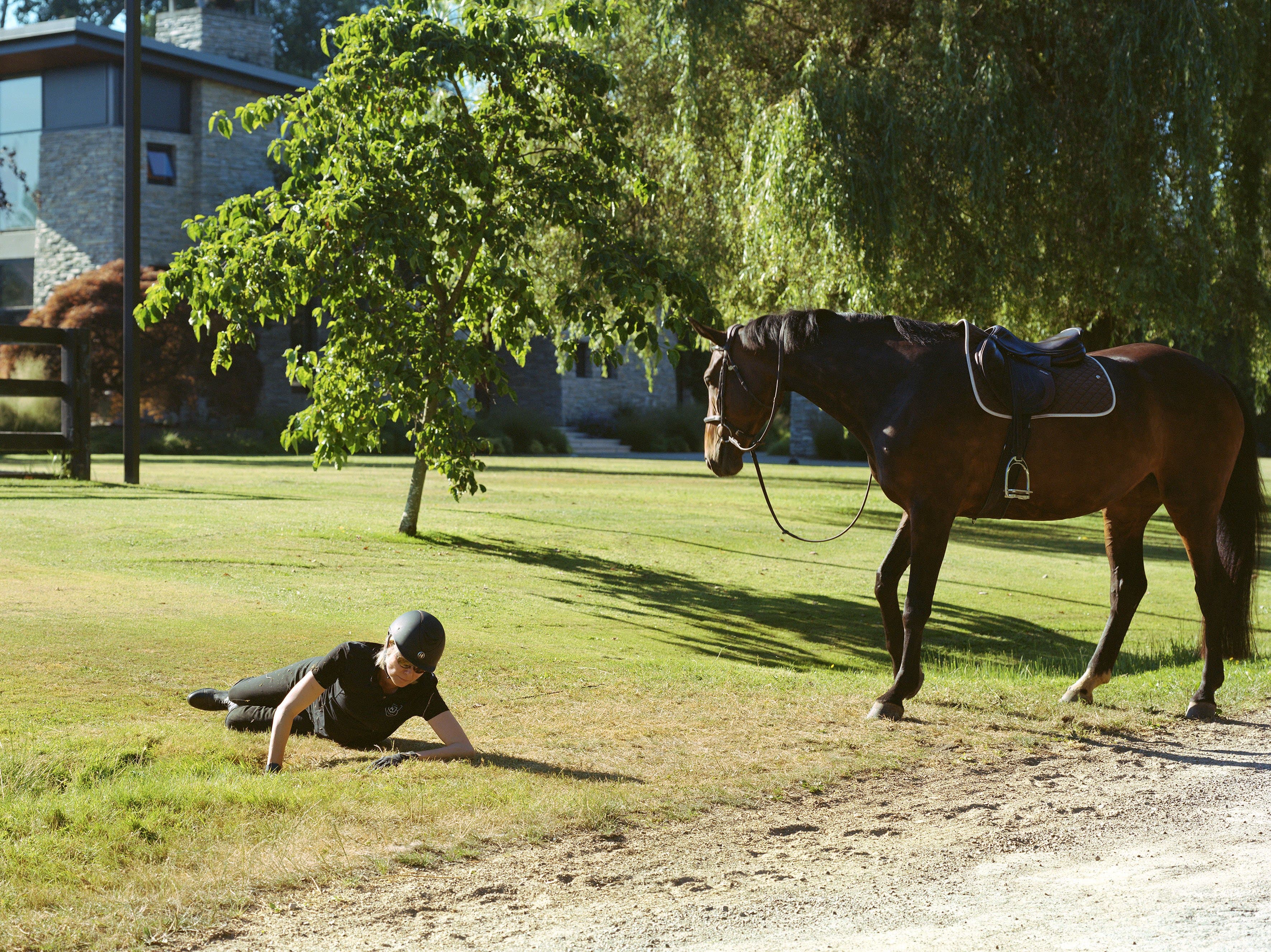
Fallen Rider, 2022: “Decades ago, a friend told me about seeing a woman fall from her horse in an equestrian neighbourhood in Vancouver. He said it was the kind of moment he’d expect me to photograph. I ignored him. Thirty years later, the idea resurfaced, and I realized he was right. I made the picture in the same neighbourhood with the collaboration of three experienced riders and horse owners and consulted with them on all the details. They, of course, handled the horse as much as a horse can be handled.”
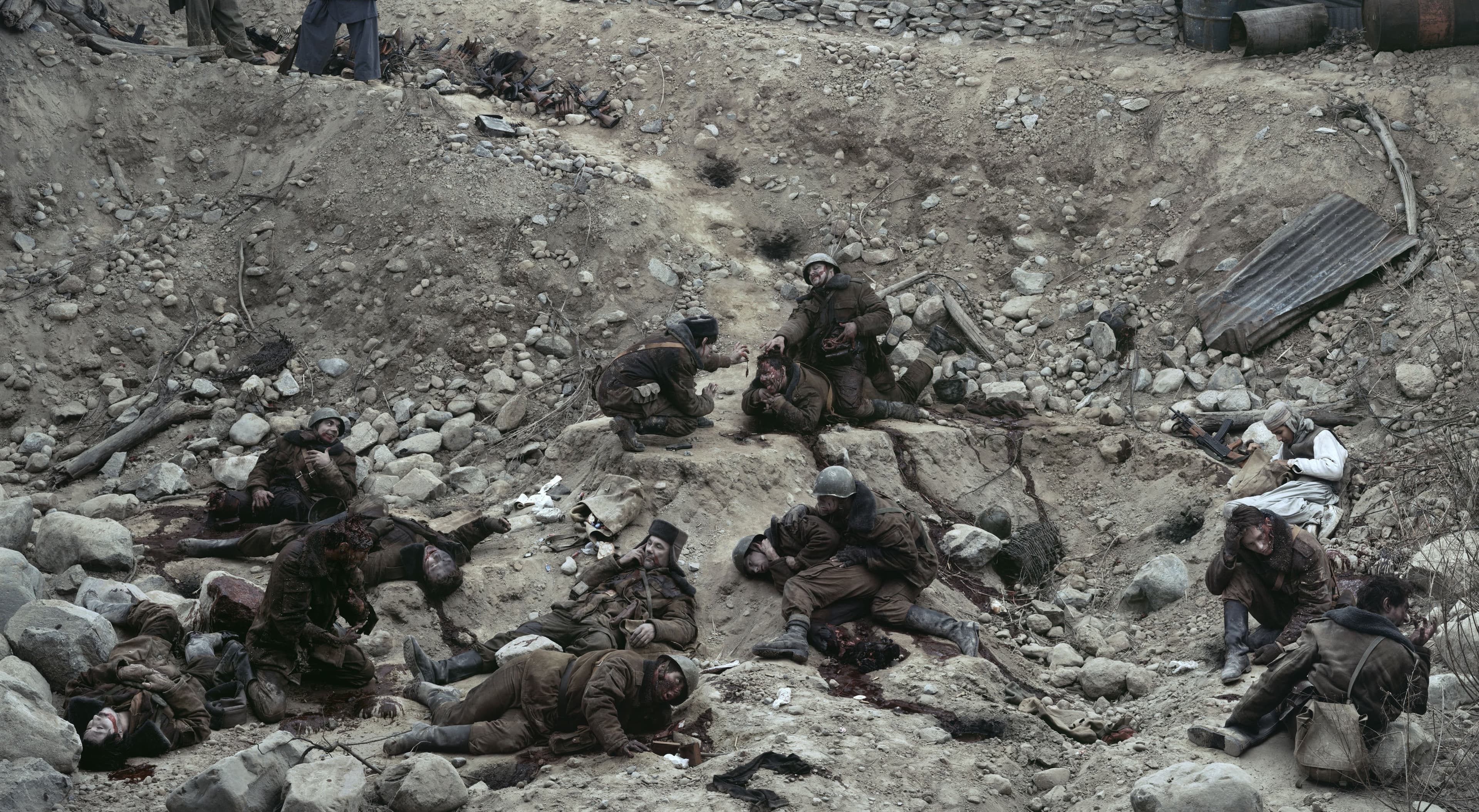
Dead Troops Talk, 1992: “The Soviet-Afghan war fascinated me: one moment the world was concerned, and then the news vanished. I fused that disappearance with the ancient theme of the dialogue of the dead. What would soldiers discuss after being killed in a dubious enterprise? I found historically accurate uniforms, hired Russian performers and recreated Afghanistan’s terrain in my studio.”
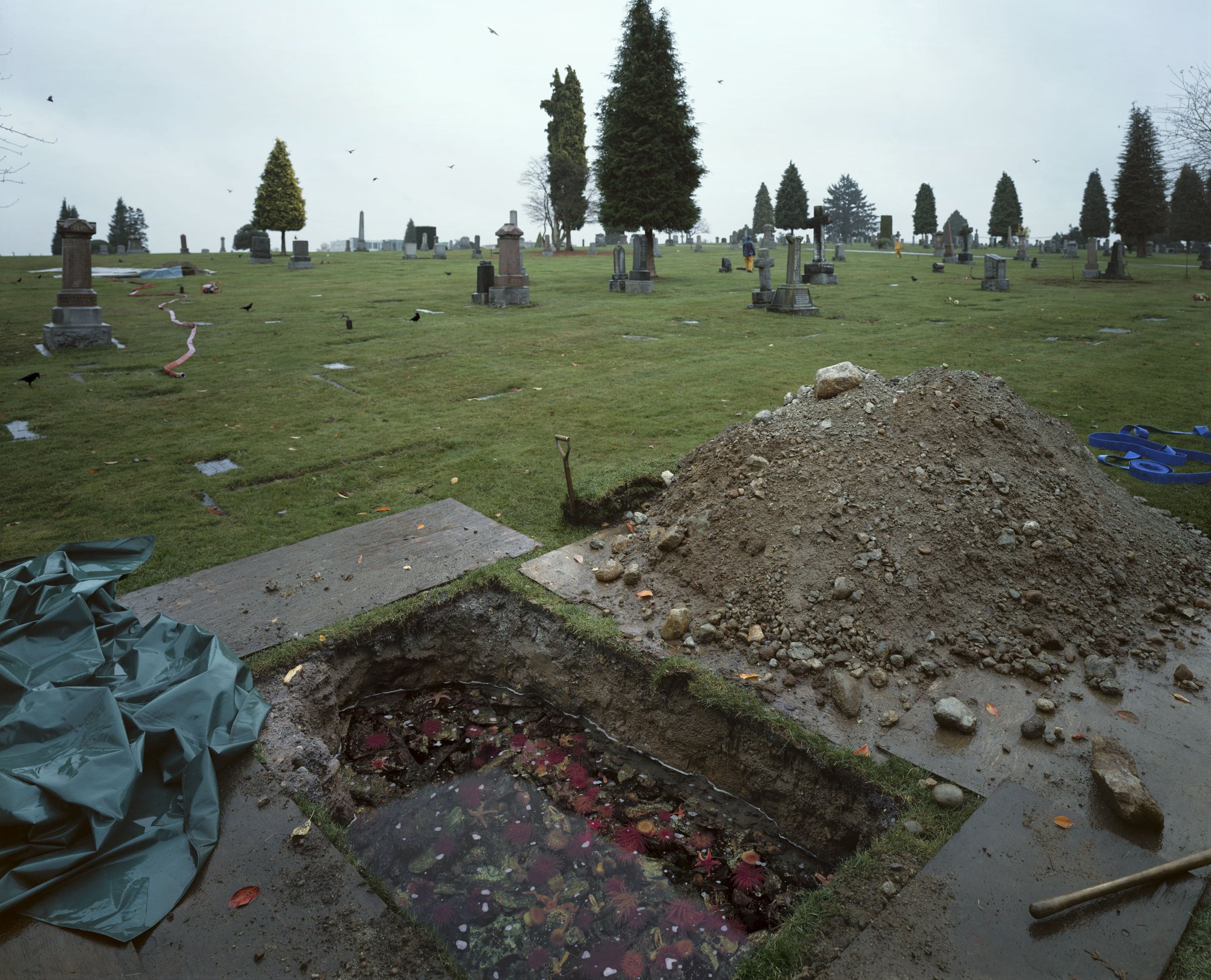
The Flooded Grave, 1998 to 2000: “Think of a daydream. Walking through a cemetery on a rainy day, you see a grave filled with water. For a microsecond you see a flash of colour. It may feel like a trick, but that vision is as real as any other. That’s the idea behind The Flooded Grave. I worked with oceanographers and divers near Vancouver to build an aquarium in my studio full of local sealife, which I then photographed and digitally spliced into the image I had taken of a real cemetery.”
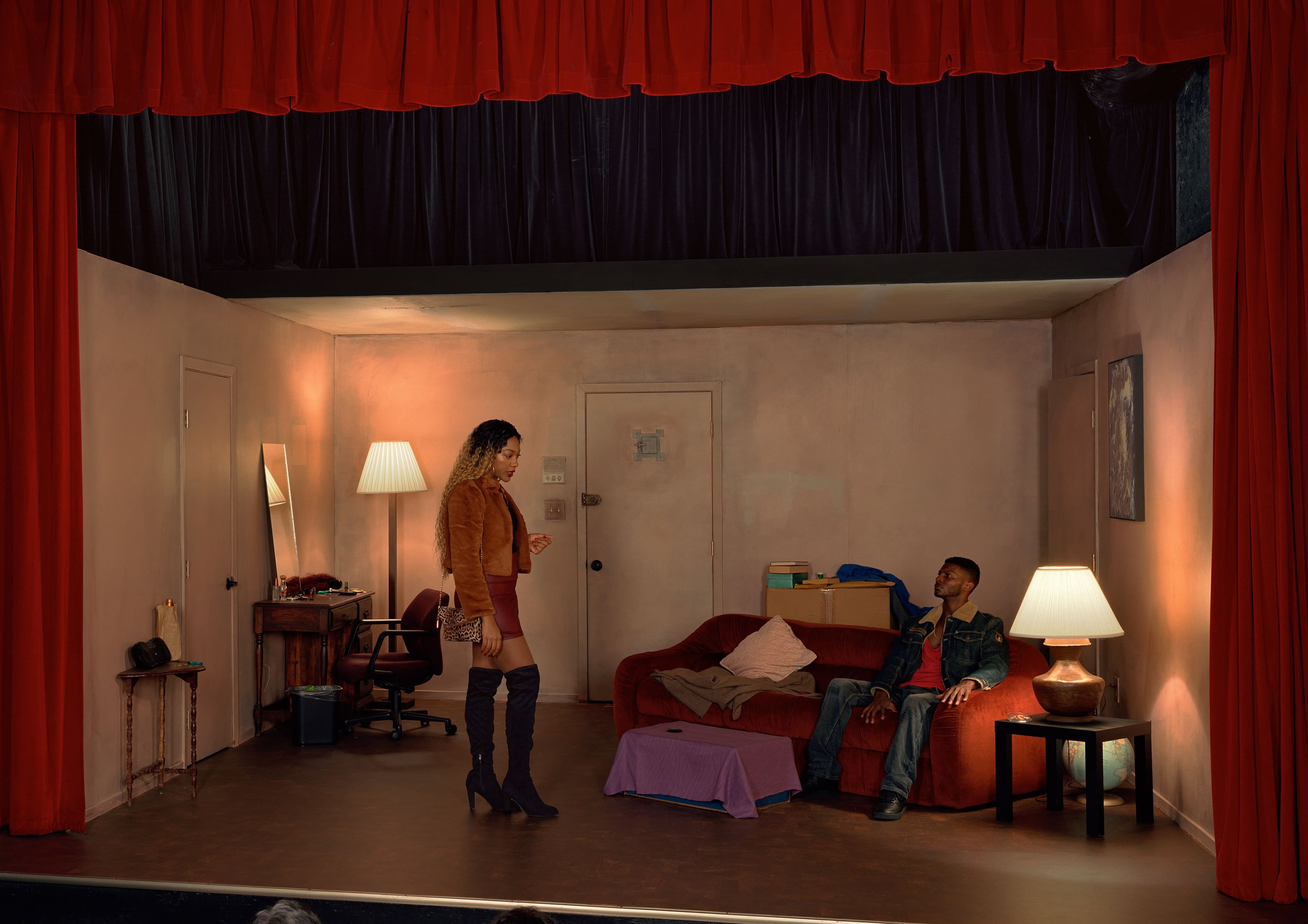
Actor in Two Roles, 2020: “When I create a diptych or triptych, it’s because the subject escapes a single image. I’m fascinated by how an actor can change their appearance for different roles and wanted to find a way to experience this directly. The pair of pictures compels you to compare the looks of one of the actors, to assess the degree of transformation. The setting had to be a small theatre—in film there’s too much equipment and it’s distracting. I hired professional stage actors for this work.”
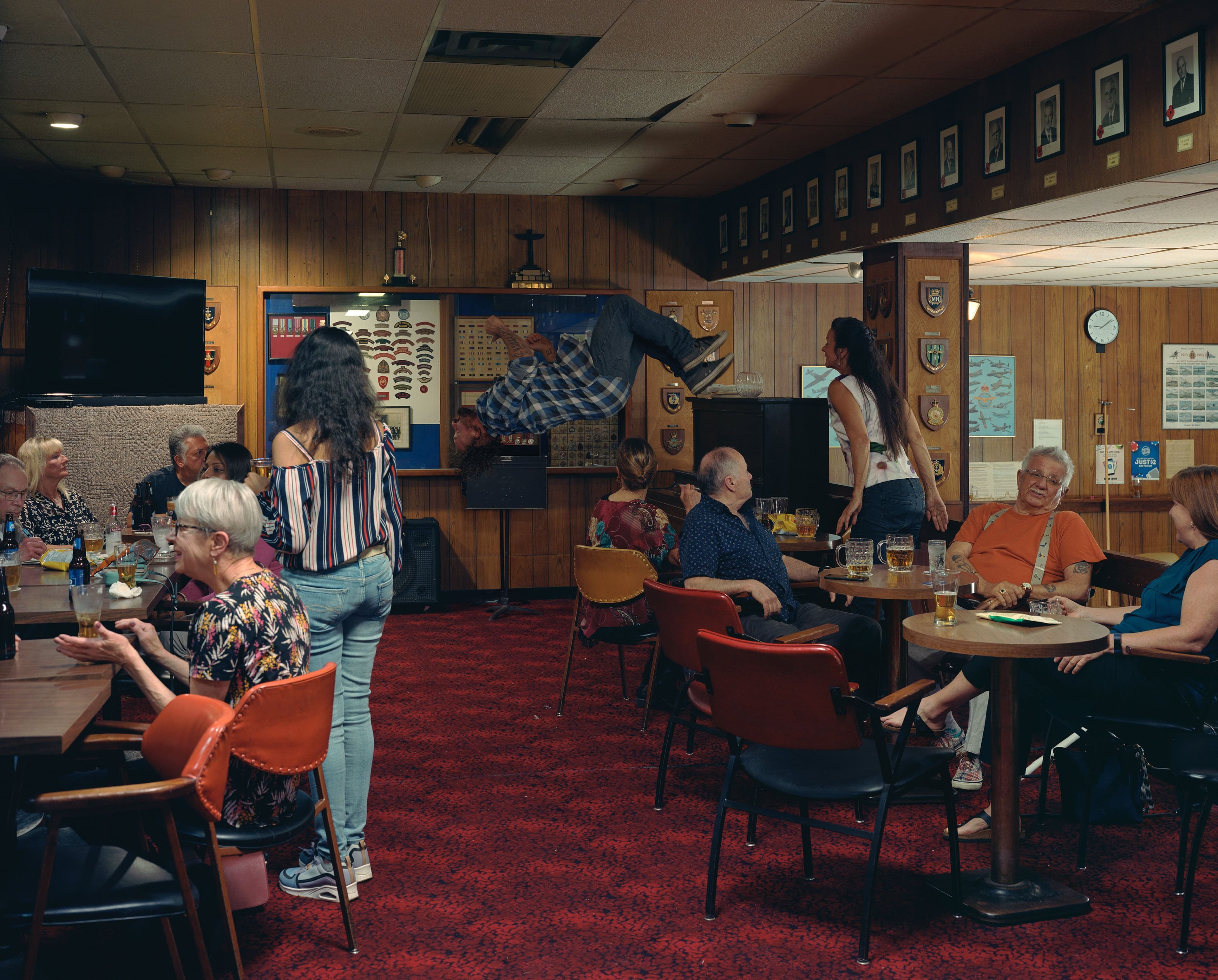
In the Legion, 2022: “I got interested in spontaneous acts and physical showing-off, like the somersaults or cartwheels you see people doing in a park. But the backflip is more zany and difficult. Slowly I turned from park or beach to somewhere people would be drinking. Alcohol encourages impulsive behavior. The legion hall in the picture is near my house in Vancouver, and I’ve known it for a long time. It’s a friendly and tolerant space, and it seemed likely that a casual backflip could happen there. This is another picture in the comic mode.”
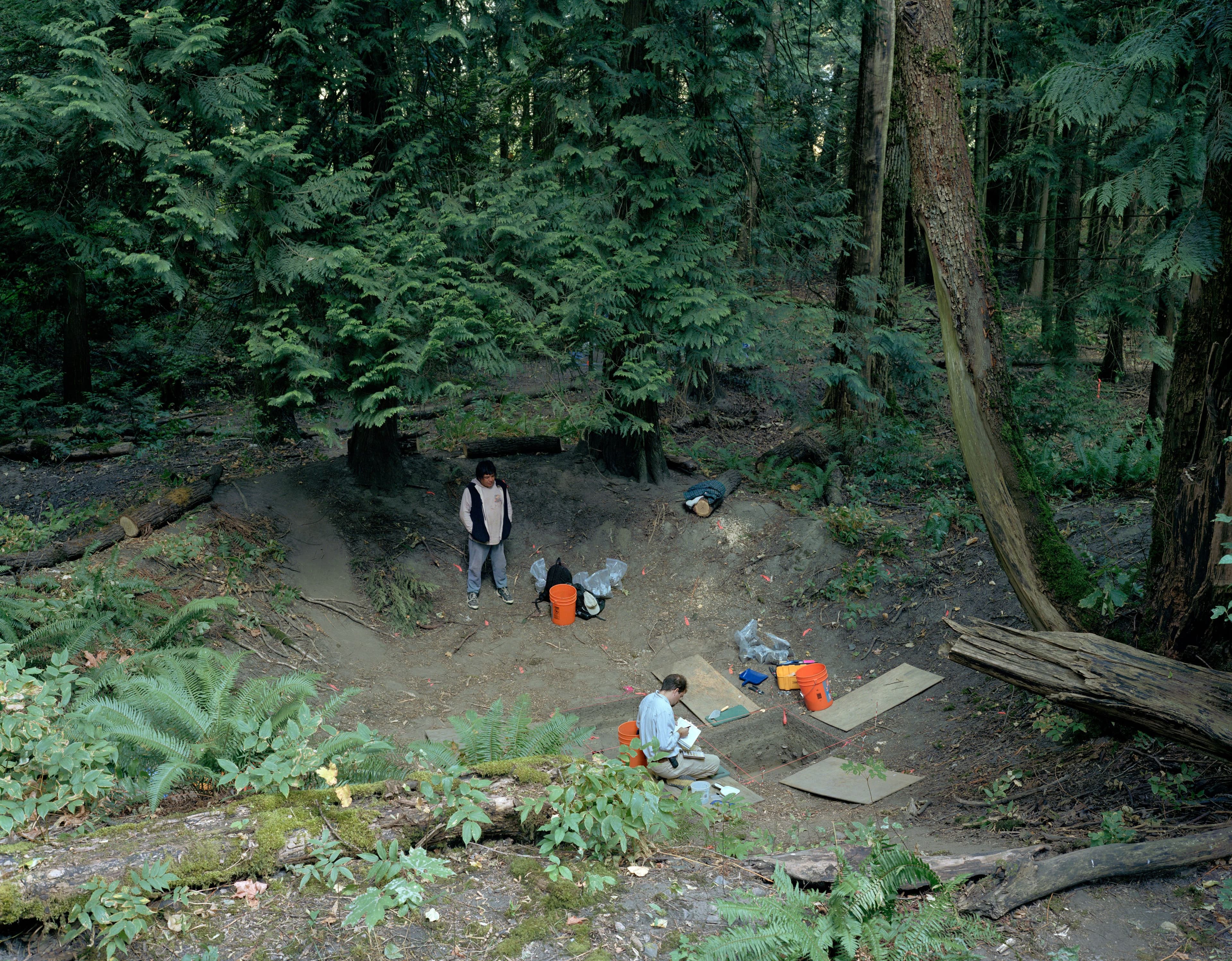
Fieldwork, 2003: “Fieldwork is very British Columbia and is as close to documentary as my work gets. For about a week I quietly photographed an archaeologist and his assistant working on an excavation site up the Fraser River. The two of them worked each day, paying me no attention. We barely spoke.”
This story appears in the December 2025 issue of Maclean’s. You can subscribe to the magazine here or send a gift subscription here.
Related Posts
How My Book, Heated Rivalry, Became A TV Phenomenon
How to Win the Westminster Dog Show
Canada’s Indiana Jones
The Golden Age of Smut
Get the Best of Maclean’s straight to your inbox.
Sign up for news, commentary and analysis. Join 60,000+ Canadian readers.