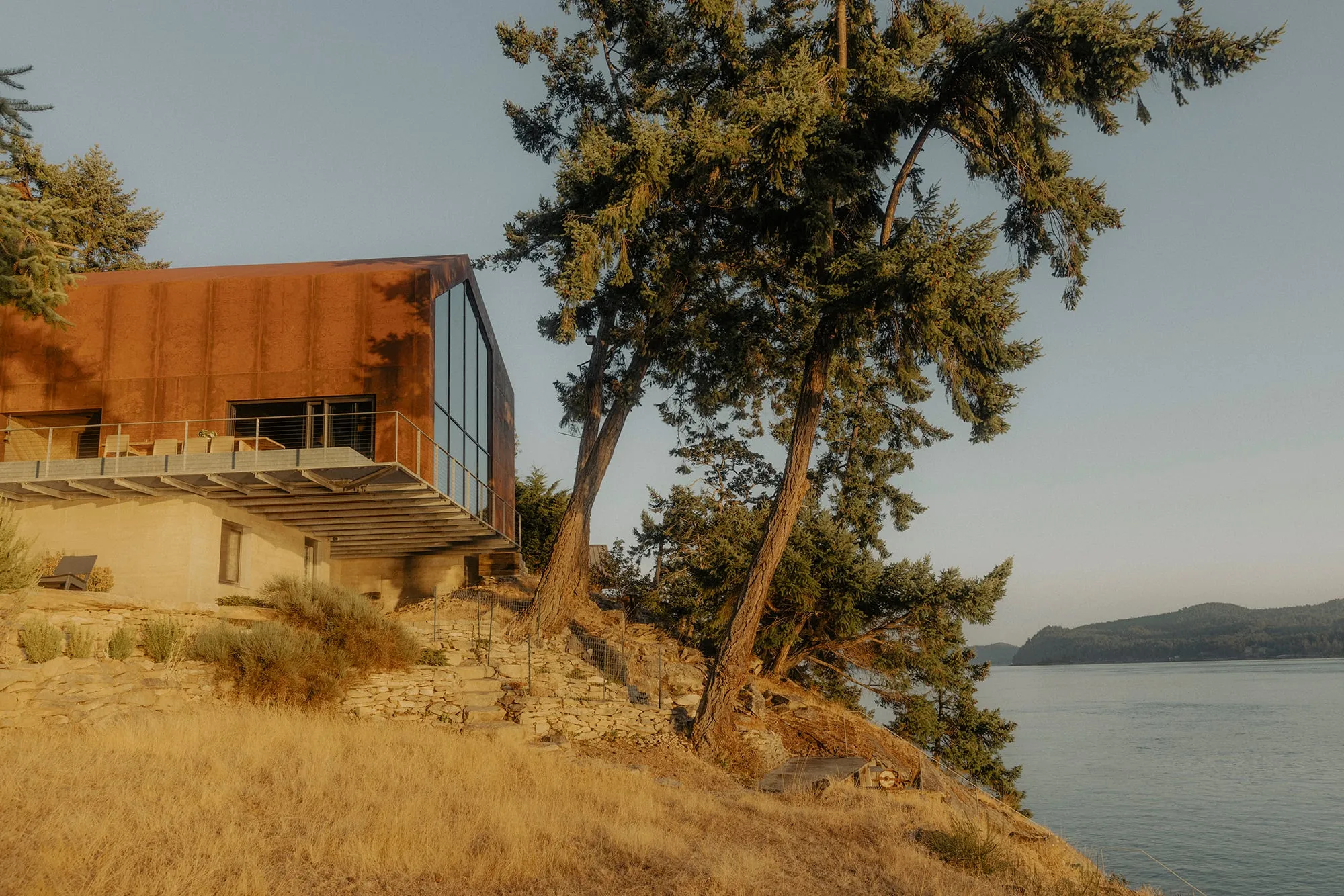
The Great Unbuild
Mayne Island is a small outpost located between Vancouver Island and the B.C. mainland. At just 21 square kilometres, it has sandstone beaches, rolling orchards, old-growth trails and orcas that regularly swim through nearby Active Pass. Locals are obsessively eco-minded; here, raincatchers and solar panels are as common as fences and flower pots.
In 2019, Vancouver couple Clinton Cuddington and Monica Berdin bought an ’80s family home and barn on the island overlooking the Navy Channel. Initially, the plan was a simple renovation—until the house revealed its aging infrastructure. A full rebuild would’ve dumped 4,000 metric tonnes of waste into already overburdened landfills.
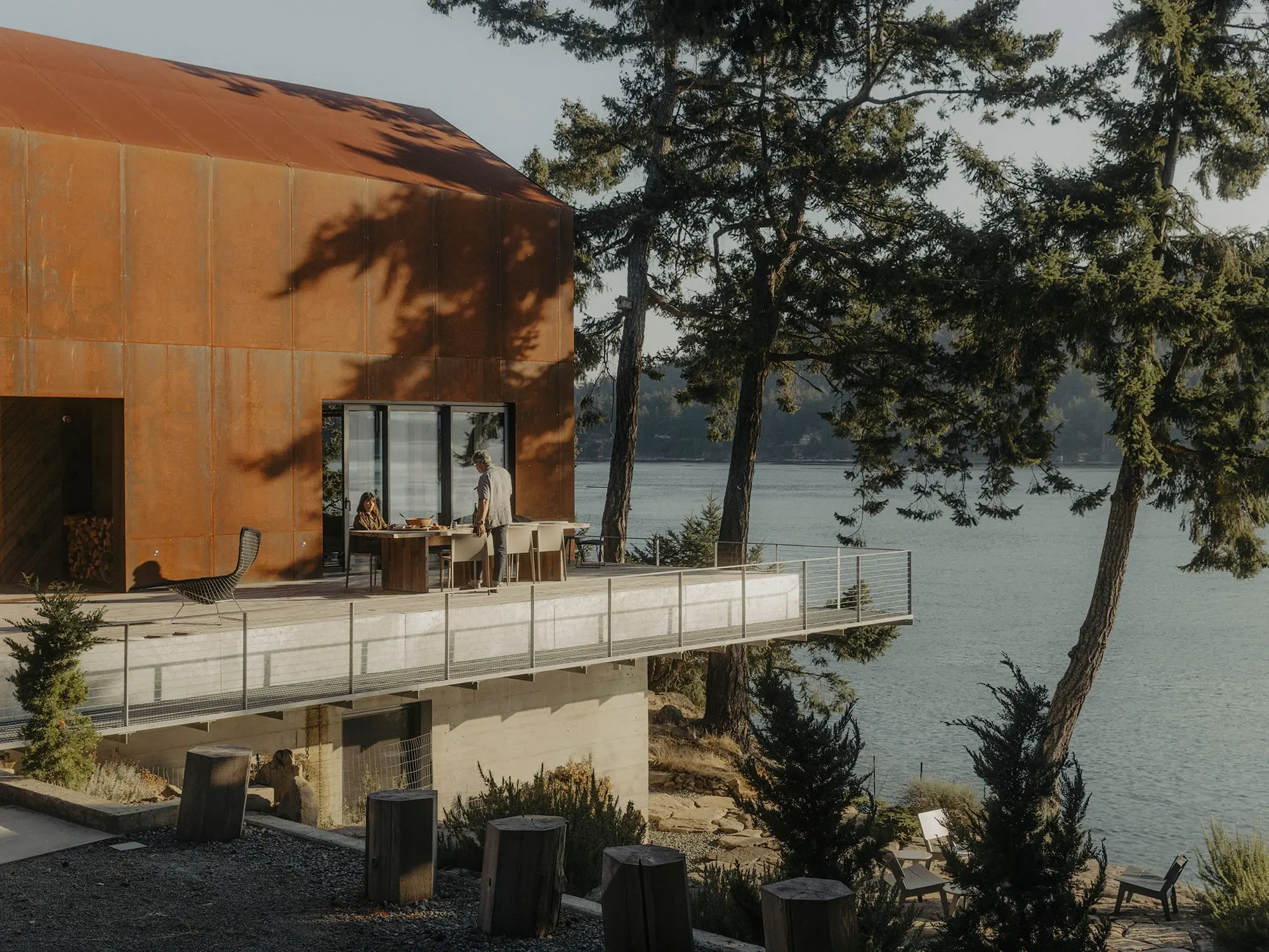
In keeping with the island’s eco-friendly mandate, Cuddington, who’s an architect, hatched a plan to salvage and reuse the house’s materials—a process known as “unbuilding,” popular with architects looking to mitigate the waste created by demolition. It involves dismantling and cleaning each piece, storing it all on site and then reconstructing the materials into a new home, vastly reducing the need for costly new lumber and trips to the landfill.
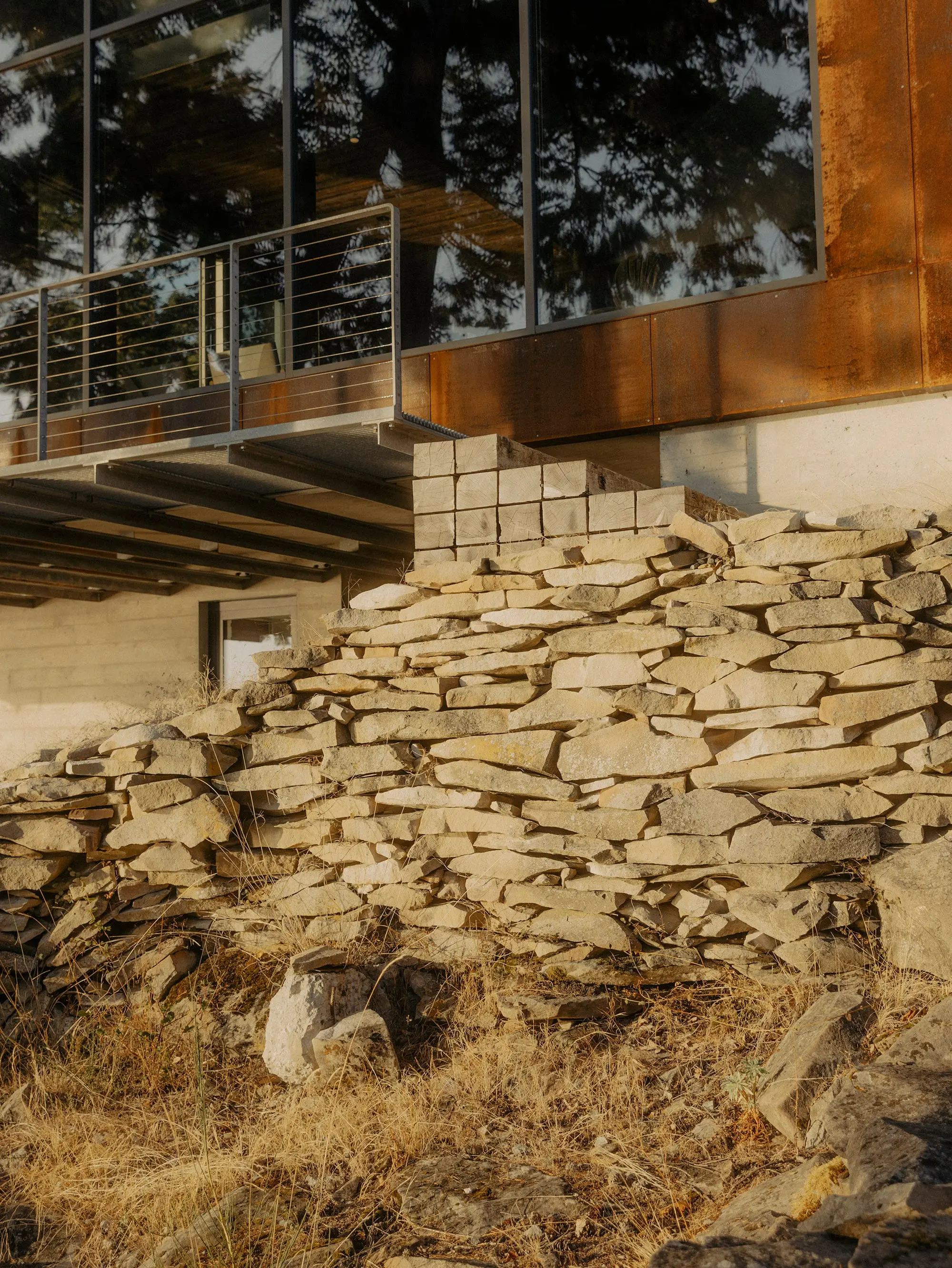
For three years, Cuddington worked with deconstruction pioneers Unbuilders, stonemason Tamotsu Tongu and contractors Powers Construction to create an eco-friendly home. They kept 75 per cent of the original concrete foundation, staving off the high carbon emissions that come with new cement production. The remaining excavation dislodged huge stones from the ground, which Tongu stacked to create rock walls that reinforced the foundation of the home. “It’s cathartic to lose control by only using what was there,” says Cuddington. There was one snag—the team stacked their materials on an anthill, which required constant scrubbing and ant traps.
The result was worth it: a four-bedroom, 3,500-square-foot orange barn wrapped in corten steel. Berdin wanted a black house, and she’ll have it in about 20 years: the coastal air will transform the walls from muted grey to rusty amber and eventually to black. The home reached carbon neutrality thanks to 32 solar panels, which generate more power than it needs and sends the surplus back to the grid for credits.
Related Posts
Inside a Canadiana-Themed Island Cottage
Inside an Ecohome on Stilts in Nova Scotia
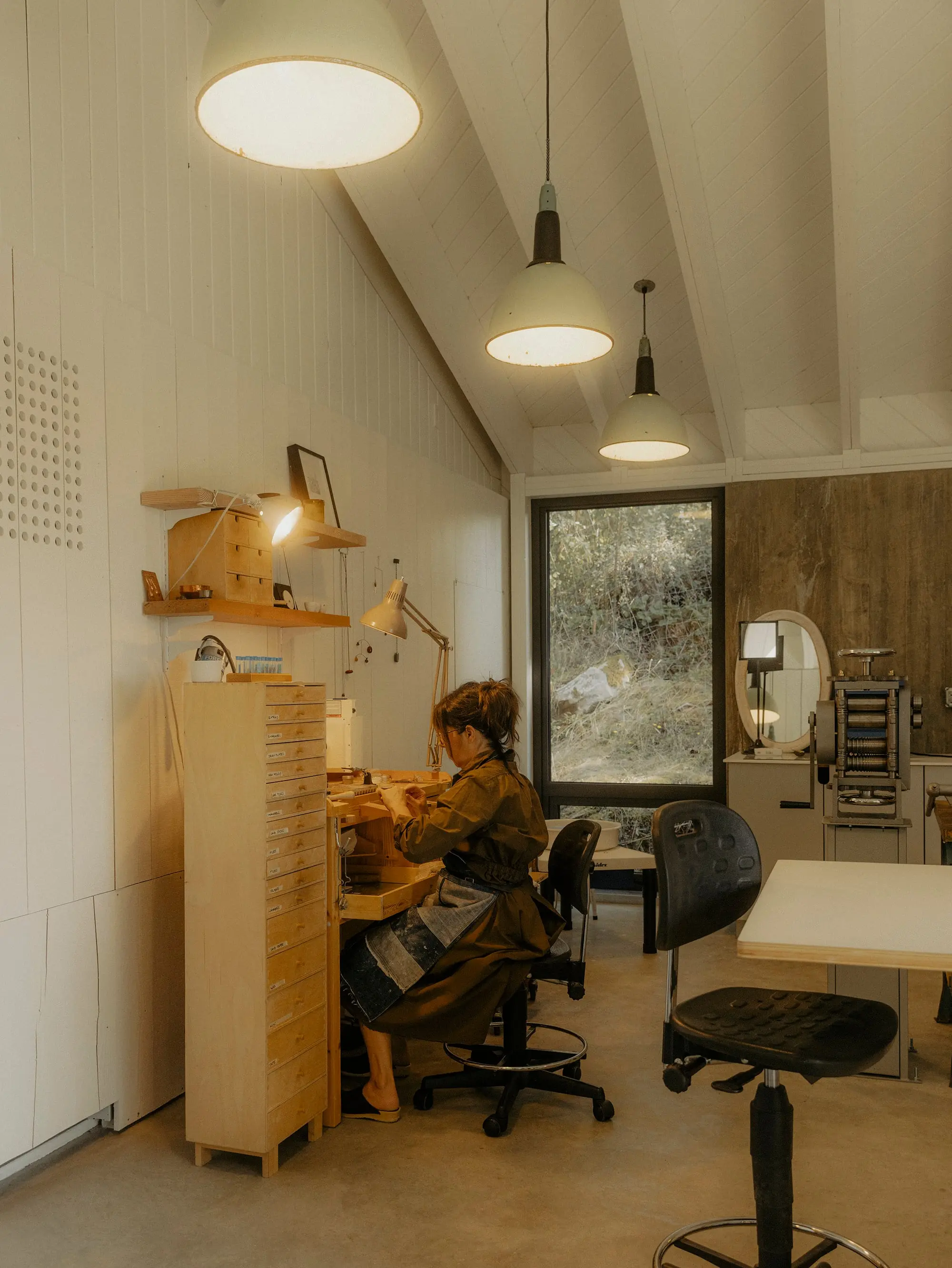
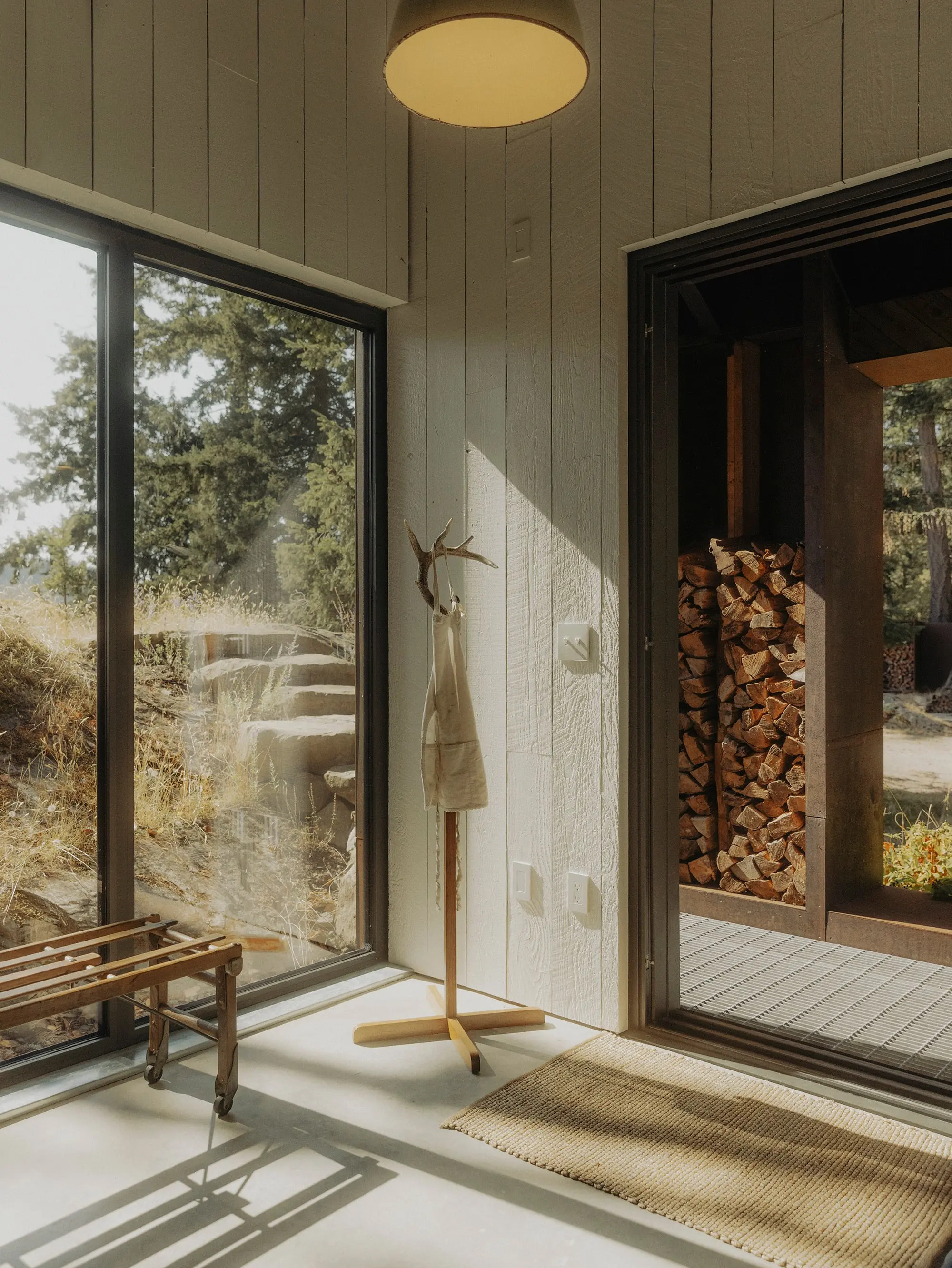
By the summer of 2023, the crew had finished two outbuildings: Berdin’s 650-square foot studio (she designs jewellery) and a 600-square-foot bunkie with a metal roof that collects rainwater and feeds into twin 5,000-gallon tanks. A $40,000 tax credit for salvaged material offset some costs. But the point was never saving money—it was cutting waste and shrinking their footprint.
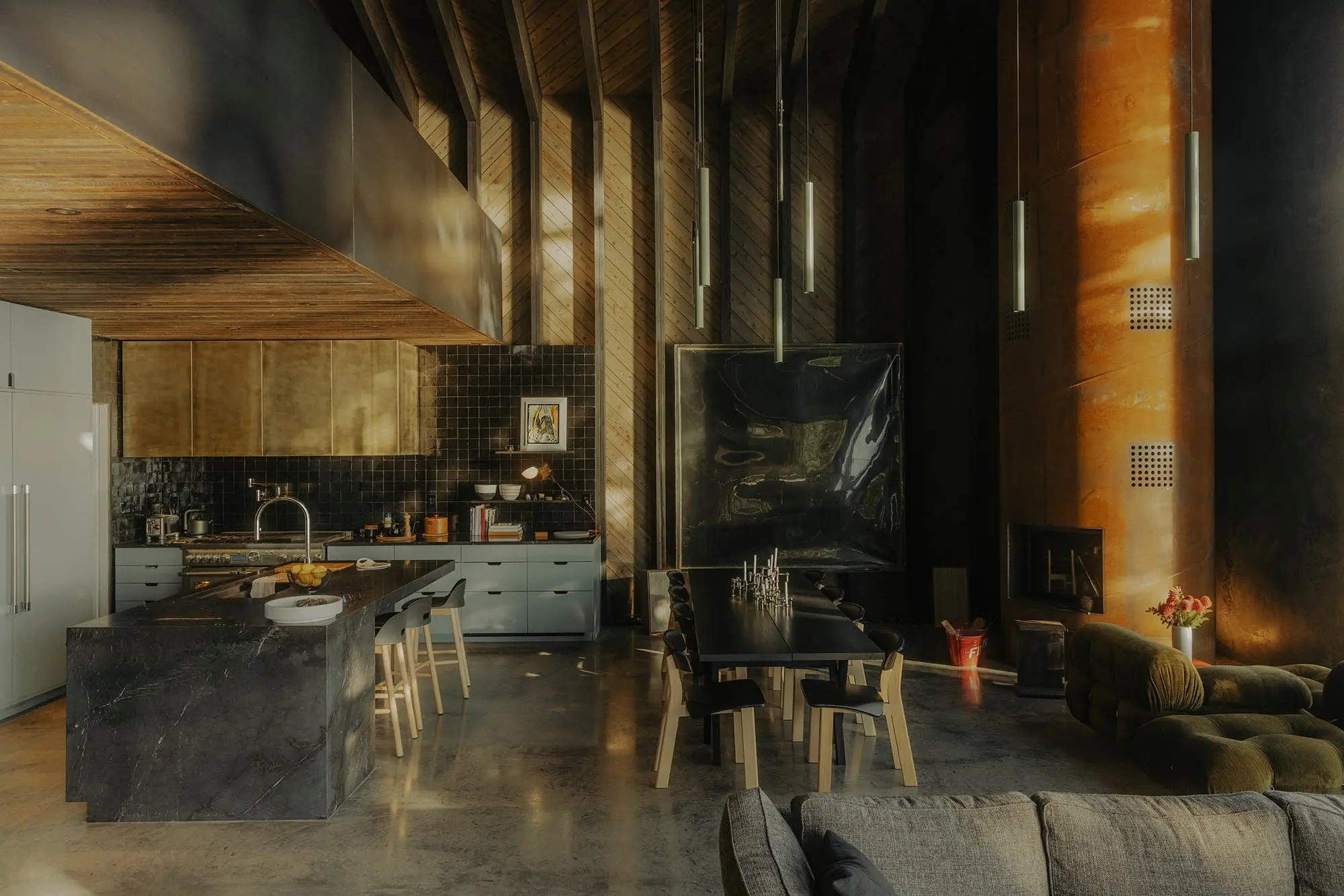
Inside, the salvaged materials are everywhere. Floors from the previous house were relaid without sanding, and about 80 per cent of the interior finishes in the kitchen, dining, living and bedrooms were once part of the former house. Once the drywall came down, the pair rebuilt the interiors with cladding salvaged from the house and barn. They rerouted the wiring overhead, turning pulley-hung green lamps into the great room’s centrepiece.
They reused materials from off-site too. The cylindrical fireplace used to be a coring bit rescued from bridge pilings in Lytton, the deck uses material from the dismantled Englewood logging railway and the timber staircases were once part of the Turner’s Dairy farm in Vancouver.
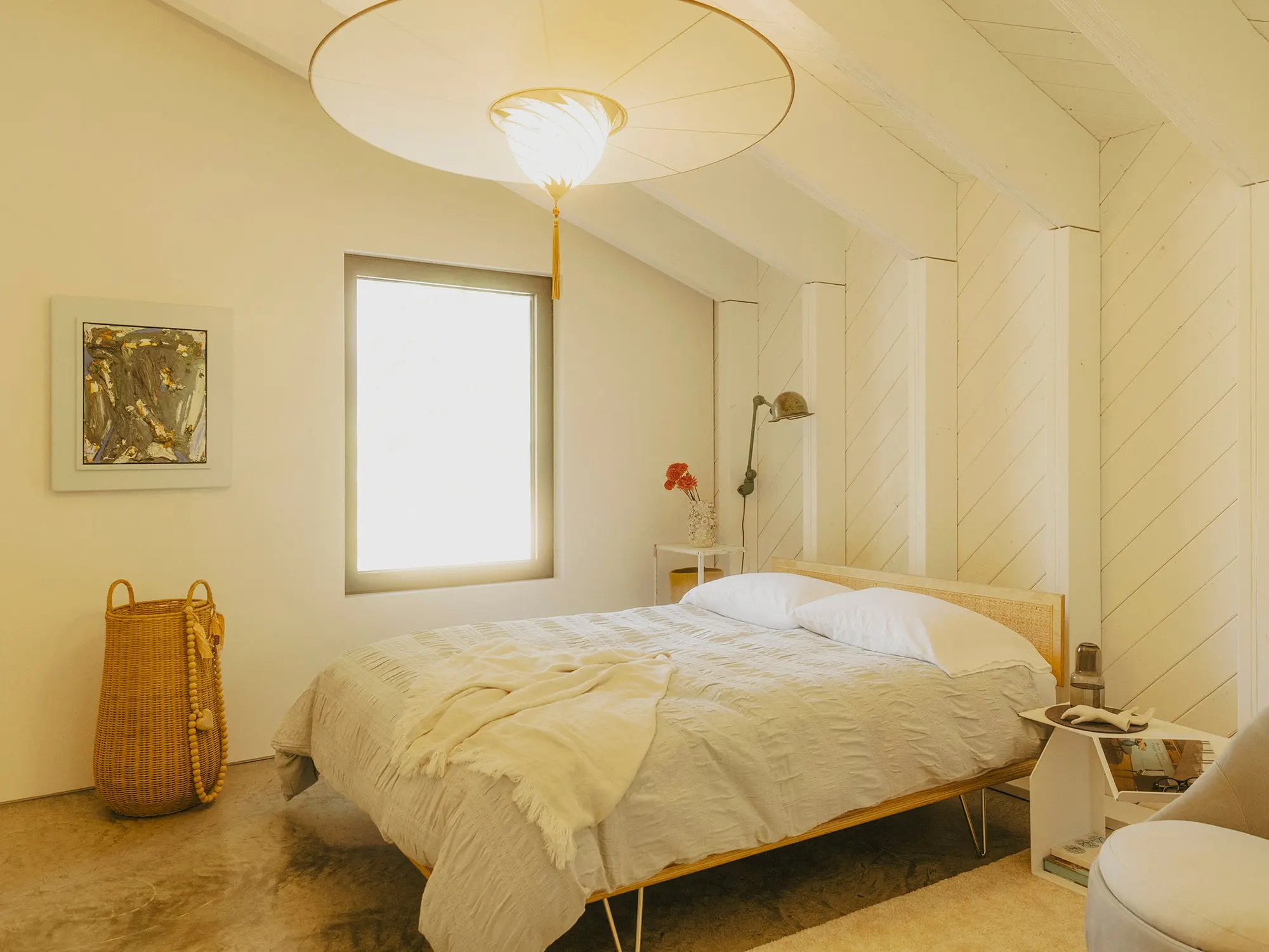
Upstairs, both Cuddington and Berdin have their own bedrooms. Hers is softened by a Venetian silk lamp and a French sconce, while his has industrial-style lighting. In their downtime, Berdin spends hours in her studio making jewellery and pottery while Cuddington stacks rocks outdoors. At 4:20 p.m., they often come together for a gin martini. When guests visit, Cuddington charges the e-bikes or readies paddleboards, and Berdin sets out charcuterie and wine for friends or for their grown children, Eero and Olive.
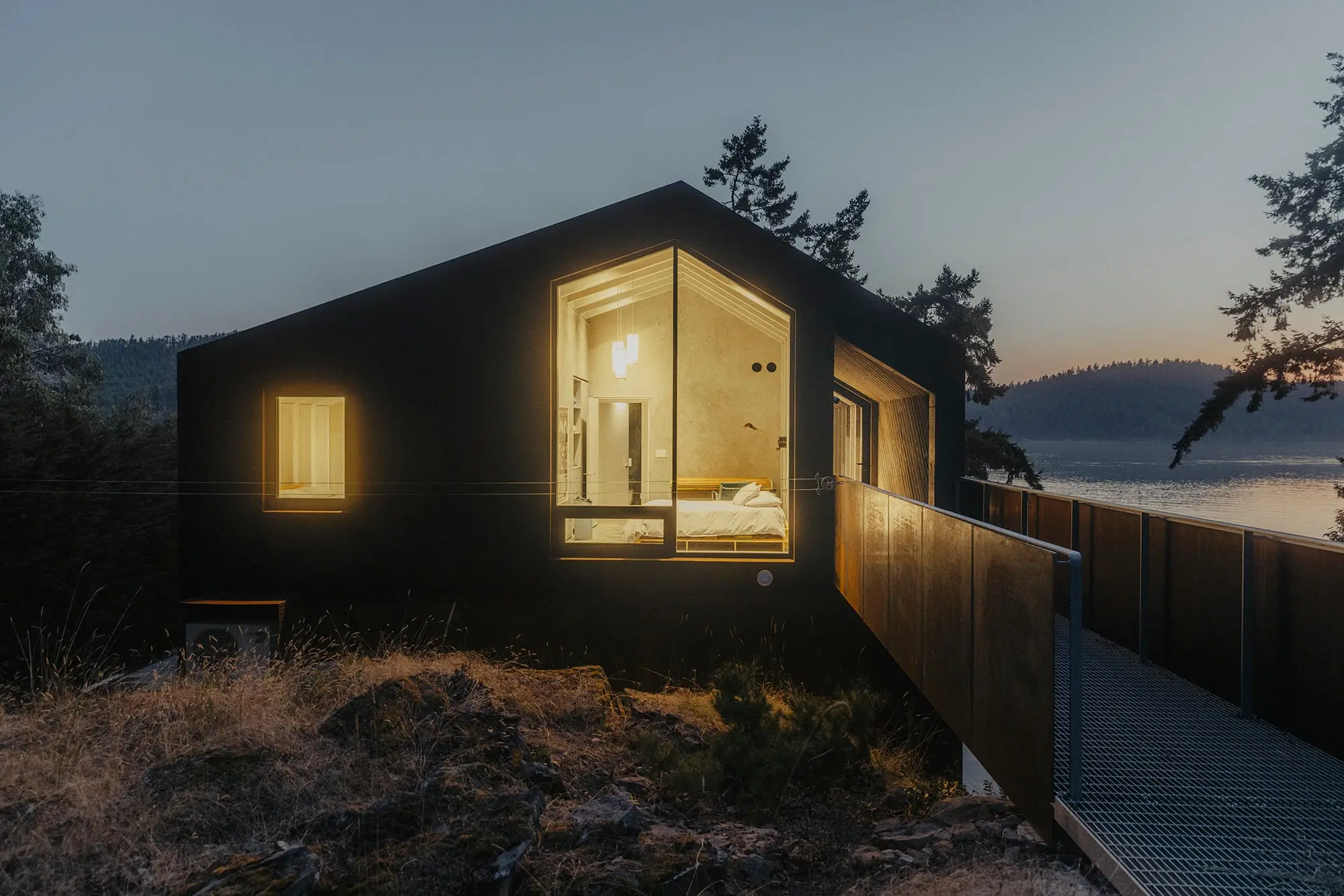
For Cuddington, their Mayne Island home is a testbed for his firm, Measured Architecture, to see what’s possible for net-zero homes. Every project is unique, he says, but unbuilding his own home allowed him to demystify carbon-neutral design to clients. Looking back, he wouldn’t change a thing about how he created it—but for his next unbuild, he won’t store materials on an anthill.
Related Posts
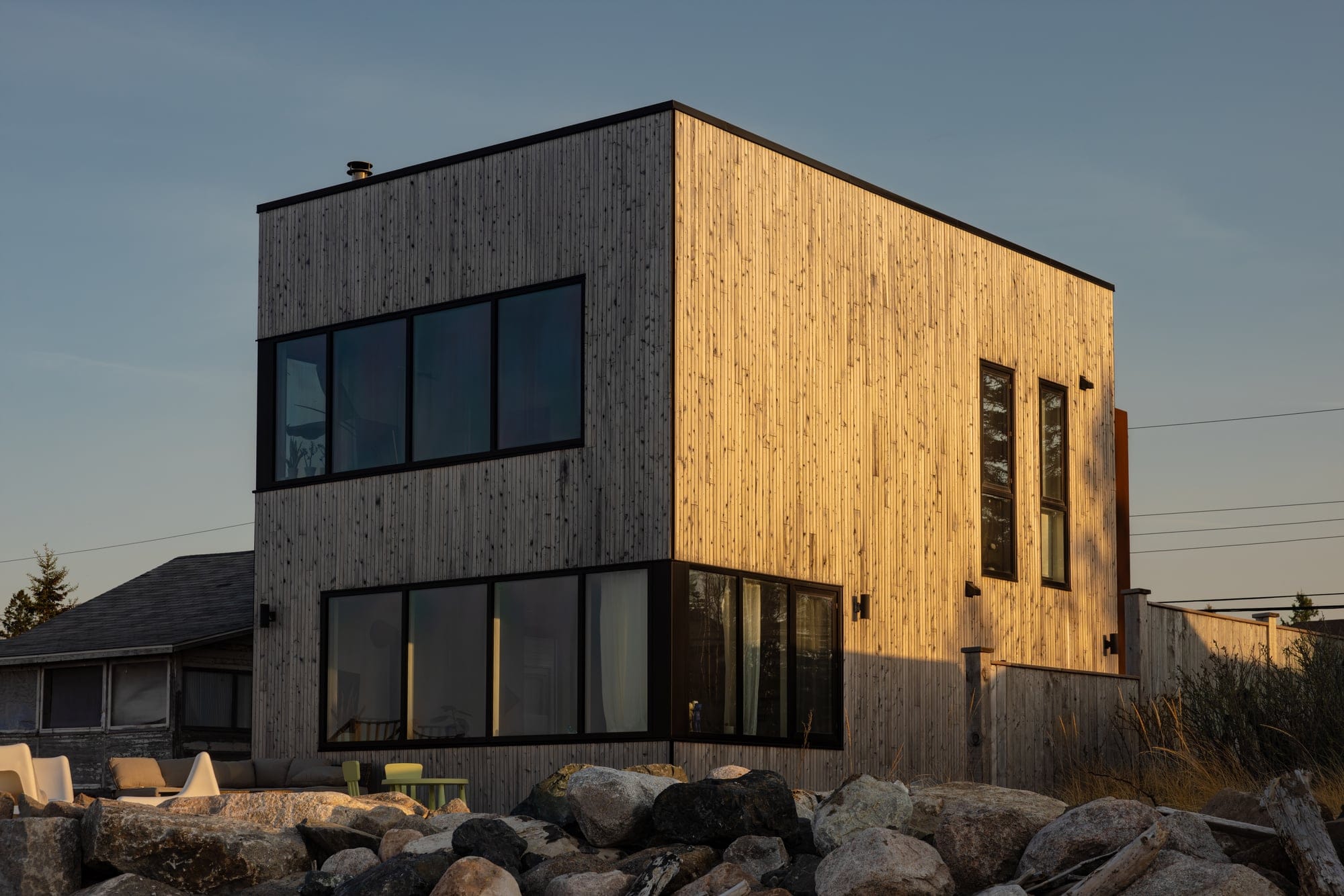
Inside a Salt-Sprayed Beach House in New Brunswick
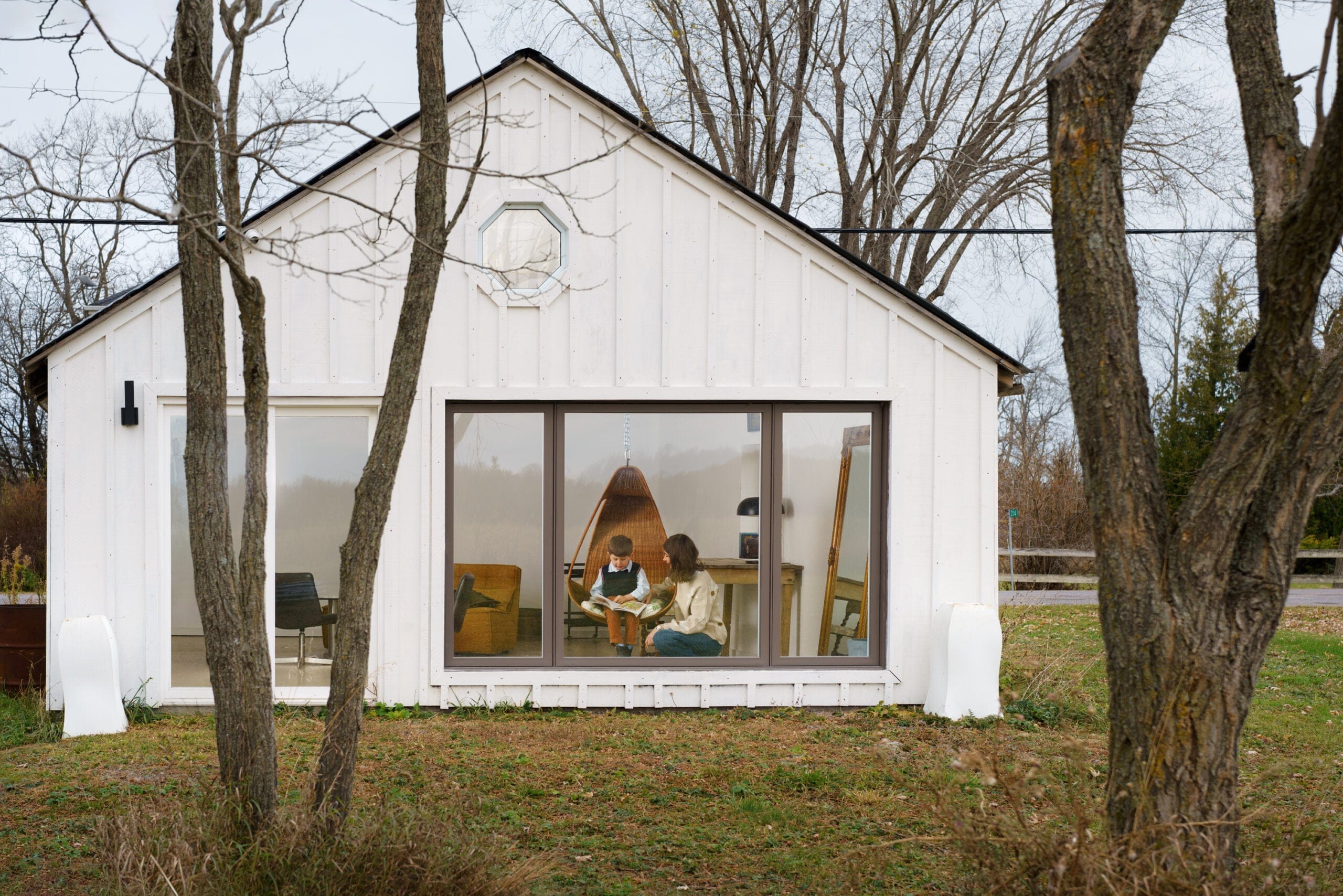
Little House in the County
Home Prices Are Finally Dropping
To St. Lawrence Market We Go
Get the Best of Maclean’s straight to your inbox.
Sign up for news, commentary and analysis. Join 60,000+ Canadian readers.