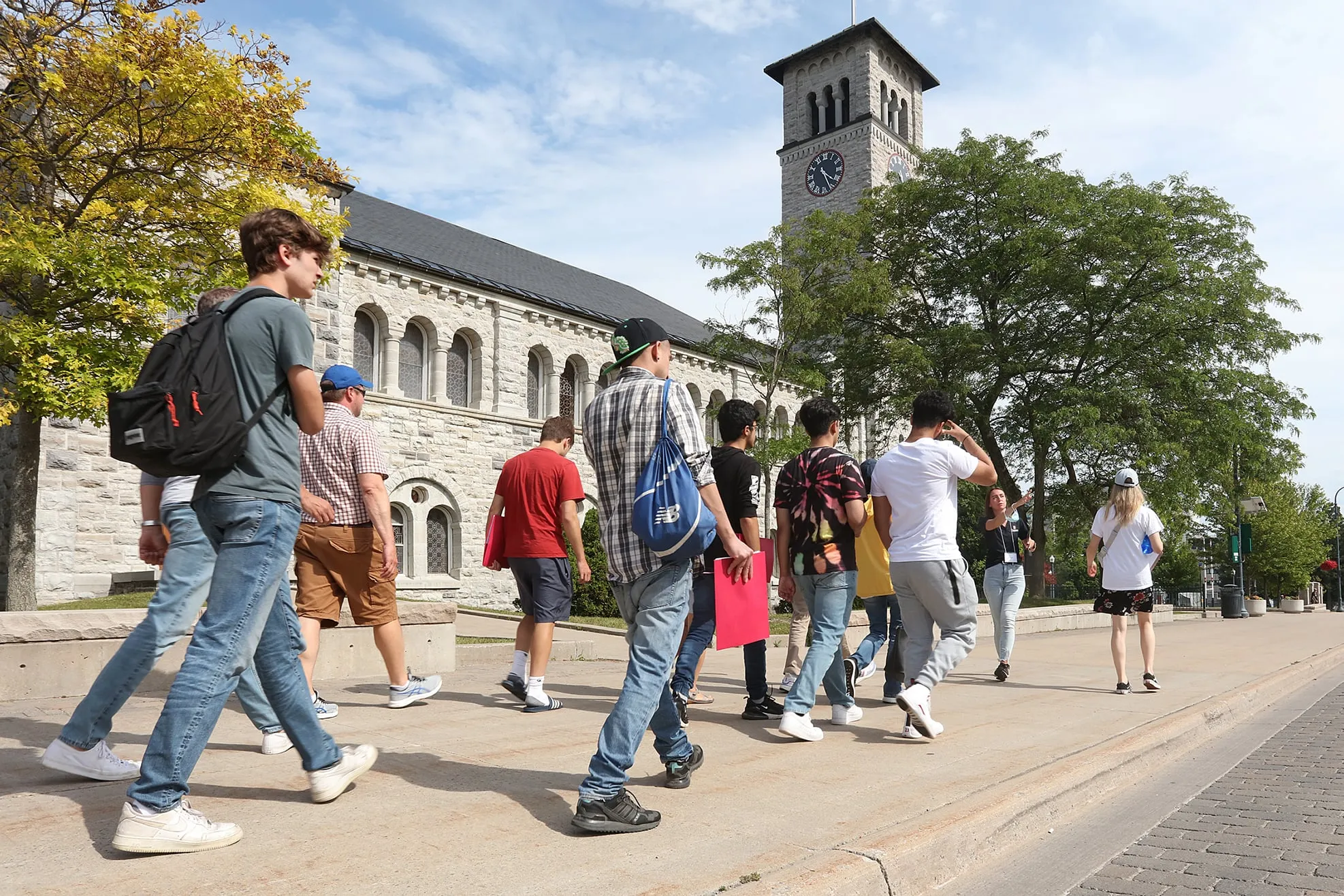
I was a Campus Tour Guide. These are the Best Questions People Asked Me.
When I was in first year at the University of Toronto, a few of my friends in upper years were tour guides, and they made it seem like the coolest job on campus. They looked so collegiate with their blue vests and lanyards, the pay was good and you could easily give a quick tour between classes and earn a few bucks. A group of my friends all decided to apply together, and, after a surprisingly intense interview process and a lot of memorizing enrolment data that I remember to this day, a few of us earned lanyards of our own.
I gave dozens of tours and talked to hundreds of prospective students in the three years that I was a tour guide. Students and their parents would show up full of nerves, overwhelmed and anxious about the whole university decision-making process. Some students had never been to Canada before, or to a city the size of Toronto, or were the first in their family to apply to university. My favourite part of the job was watching the kids relax over the course of the tour and start to get excited as they imagined their lives as a student.
While a tour is a great way to see a university’s campus and learn about their programs, the real value is in the chance to talk to a current student about what it’s like to attend the school. We have a script, but most of that information is in the school’s promotional material, and we’ve recounted it so many times we could do it in our sleep. We’re happy to go off-script and talk about things families can’t learn online: vibes, experience and advice. Here are the best questions to ask on a campus tour, from a former tour guide.
What are the vibes of each residence building?
The school’s website will tell you all about each building’s room configurations and washroom types, but it doesn’t give you a sense of what it’s like to live there. Each residence has its own reputation and pros and cons that are common knowledge on campus, but can be hard to suss out before move-in day. The vibe of your building can make a big difference in your res experience.
Students keen on socializing, for example, may want a building that’s known to be more lively or have the best common rooms. Likewise, light sleepers may want to avoid those buildings and opt for something quieter. Students in specialized programs, like engineering, may prefer a building close to their classes, and student athletes may want to be close to the gym. Often, other first-years make similar decisions, and students end up in classes with their neighbours, which is a great way to make friends and get notes for missed classes. Aligning with the vibe of the building can have a big impact on a first-year student’s quality of life, so families shouldn’t be afraid to ask for recommendations from the guide.
Related Posts

The Crisis in Student Housing

The Confusion and Controversy of University Meal Plans
How did you make friends?
For a lot of new students, the social aspect of starting university is as scary as the classes. Making friends can be daunting, and it’s especially challenging for students who are not living in residence. Luckily, this is a problem that every student faces and overcomes, including the tour guide, who probably has a couple of school-specific tips and tricks for where to find like-minded people.
For example, a lot of schools have a massive list of clubs and groups, so getting recommendations from someone familiar with them can help narrow it down. If a student is planning to commute to campus instead of living in residence, asking for commuter-specific friend-making tips is also a good idea. There are often events and orientations geared to commuters, or a student lounge just for people living off-campus that a student might otherwise not find out about until years later. Talking to someone about how they overcame the awkward phase of starting school can do wonders for setting a new student’s mind at ease.
How do the meal plans work—and which one should I get?
Meal plans are the one google-able thing I would recommend asking about on a tour because they are just so confusing. It seems like every school has its own baffling system of flex dollars, swipes per meal, guest passes and optional salad bars that would leave even the most diligent uni prepper dizzy. The tour will likely have a stop dedicated to explaining how the meal plans work, but families shouldn’t be afraid to ask for clarification, and, more importantly, for recommendations.
Meal plans are a big portion of first-year expenses for students living in residence, and often the money isn’t transferable if it’s not used up by the end of the year. Getting advice on how much meal plan money is actually needed can be a huge cost saver. Another important meal plan question: which dining hall has the best food?
What makes you glad you chose this school?
This is my preferred variation on the classic “Why did you choose this school?” because it goes beyond reputation. Asking a guide why they’re happy with their decision will prompt them to talk about what it’s like to actually go to that school: their favourite classes, how great their research supervisor is or how safe they feel with the communal vibe on campus. They might even share some hidden gems, like the study rooms with the best views (at U of T, it’s the top floors of Robarts Library) or the best intramural sports to join (dodgeball).
Ask about what’s important to you.
Tour guides are trying to get through a lot of information in a short amount of time, which means they might have to rush through subjects that are important to certain people. Students should spend time before the tour thinking about what their make-or-breaks are and ask about them as they’re walking between stops or at the end of the tour. It could be about living in residence, getting into a certain program, campus safety, or maintaining grades—whatever it is, ask about it!
Online research is a double-edged sword, and it’s easy to end up in an echo chamber of worries or focus on one person’s bad experience. Asking the guide is a great way for students and families to get an on-the-ground perspective. Tour guides aren’t sales reps for the school and we certainly don’t earn commission; our goal is to help students choose the best school for them, whether that’s where we go or not.
Subscribe to Message Board, our weekly newsletter guide to planning your post-secondary journey
Whether you’re a student, parent or guidance counsellor, Message Board is a resource you won’t want to miss out on.
Related Posts

The Fight to End Hunger on Canadian University Campuses

Self-care Tips for Post-secondary Students

Lessons From My First Year of University