
Finding My Son
The police called on Saturday night, just after dinner. I felt the room go slowly quiet as I started answering questions: “Yes, I’m his mother. No, I don’t remember what he was wearing. He has a smiley face tattooed on the palm of his hand.”
“His hair is blue,” I added, answering a question they hadn’t asked, struggling to remember if my eldest child had any birthmarks.
We were lucky. My son, who I’ll call B. to protect his privacy, had been found on the subway after a drug overdose. He and two friends were still unconscious, lying on ambulance stretchers surrounded by police, when I arrived at the hospital. His breathing was shallow, and nobody knew what he had taken. One officer took me into an empty room to ask some questions. Did I know where B. had been? Did I know what drugs he used? Did I know who the other kids were? I shook my head numbly, bewildered by the magnitude of what I did not know. I spent the night lying on the cold linoleum floor next to B.’s emergency-room bed, staring at a long fluorescent tube of humming light. His dad arrived at about 11 p.m., cried and left.
B. was only 14. He’d been spiralling for months, and skipping school for almost a year. What I didn’t know, until that night in January of 2020, was that he was using drugs. He’d spent the last three days at a house party where he had taken acid, molly, Xanax, marijuana, mushrooms and cocaine—anything on offer.
I texted B.’s therapist from the hospital. Over the past year, he had diagnosed B. with anxiety, gender dysphoria, depression, suicidal ideation and emotional dysregulation. B. had already tried to kill himself with a prescription overdose, and his behaviour was so risky I worried he’d die just because he didn’t bother to stay alive. His therapist said B. exhibited behaviours consistent with borderline personality disorder: impulsivity, mood swings and an unstable sense of self. He hoped this might be the crisis that could get B. hospitalized for long-term inpatient treatment, which requires a psychiatric evaluation. He told me not to leave without getting one.
Related Posts

Big Tech v. Me

The Doom Spenders
B. woke up angry, disoriented and deep in withdrawal. Yelling and swearing, he yanked IVs from the back of his hand and forearm. I backed quickly into the hall and said, “Can somebody call a doctor?” When he finally arrived, the doctor didn’t see any need for a psych evaluation. “You can take him home,” he said.
Home? Words came stuttering out of my mouth as I tried to explain that B. needed help: he’s been gone for days, I said, he’s delusional, he might have borderline personality disorder, he’s here because of a drug overdose. His therapist says he needs an evaluation. Did I mention he just turned 14?
Panicking and begging, I followed the doctor down the hall until he turned abruptly to asked if B. had suicidal thoughts, or was a danger to himself and others. Those two things would justify seeing a psychiatrist. Yes, I said, he has suicidal thoughts; yes, he’s a danger to himself and others. The doctor went back, spoke briefly to B. and ordered an assessment. Moments later, two security guards grabbed my son roughly by the arms and walked him through the corridors to the emergency psych unit. I trailed behind, carrying the clothes they had cut off him the night before. We spent the next nine hours in a brightly lit room, waiting to see a psychiatrist.
Late in the afternoon, I was sent to wait in the hall. Soon after that, through two locked and soundproofed doors, I heard B. scream. “Noooooo! Mum, don’t let them take me!” I slid down the wall to the floor, sobbing. I’d been there all day, but nobody came to tell me they were admitting him to their adolescent inpatient ward, or what would happen there, or how long he would stay. More than anything, I wanted to take B. home, but I let them take him away, because I had no idea what else to do.
By the time I left the hospital late Sunday night, I’d been awake nearly 40 hours. I’m a professor of political science at the University of Toronto, and I was scheduled to teach the next day. I’d been going back and forth about whether to take leave. Maybe I was making too much of this? But as I drove home, the car filled with a sound I only slowly realized was coming from me. It started as a moan and escalated into a keening scream, as if my body was distilling pain into sound. When it stopped, I realized I was going to need more help than I’d thought, and probably more than I’d ever needed in my life.
My son was born a girl, outgoing, unafraid and full of passionate intensity. He dove headlong into life and opened doors because he didn’t even know they were closed. He talked to everyone, led with his heart and, even when he was small, he was very, very big. When he spoke his first full sentence at two years of age—“Mum, I love all the people in the world!”—I was mostly surprised by how well he knew himself. Soon after that, he jumped into the deep end of a swimming pool and, even though he couldn’t swim, came up vibrating with excitement. Those two things encapsulated the particular alchemy of my eldest child. By the time he was nine, he was dropping in to skate the bowl at Venice Beach in Los Angeles, alongside men aged 15 to 50, with a smile as wide as California and a spirit that didn’t know fear.
I spent his childhood more than a little awed as I watched my child move through the world with a confidence that seemed to rest deep in his bones. But that wasn’t the only thing inside him. He was also sensitive, filled to overflowing with emotional intensity. Being B.’s mother was like trying to catch the wind, and my bookshelf filled with titles like Parenting a Child Who Has Intense Emotions and Raising Your Spirited Child. I adored him and worried about him in equal measure.
He was 12 when my husband left. Our younger son was only six. I loved my husband with no safety net, and when he walked out the door one day and never came home, my pain was physical. I dissociated. B. reacted with anger, and the madder he got, the more distant I became. Sometimes it felt as if I was watching the world from underwater. It wasn’t long before B. started threatening to kill himself. He would say it two, three, sometimes seven times a day, trying desperately to get my attention, to force me to see him, to be his mother. Instead, I hired a therapist. “I’m sorry you want to die,” I said. “I don’t know what else to say.” I just wanted it to stop.
A month later, when he told me he was a boy, I buckled. Everyone I loved, everything that anchored me, seemed to have disappeared. And B., a child gifted with enormous sensitivity, was left alone to bear the weight of gender transition and our family’s disintegration, just as he hit teenage-hood. Nine months later, barely two weeks after his 14th birthday, we were in the emergency room.
The morning after B. was admitted to the adolescent psychiatric inpatient unit, a social worker called me for an intake interview. Less than 24 hours later she called again, this time to tell me B. was being discharged. In the end he spent only about 40 hours at St. Joe’s, and the closest he got to treatment was filling in some worksheets describing how he felt. (His answers were brief and included a lot of expletives.) The discharge meeting was run by a Children’s Aid Society investigator, who outlined the rules B. was expected to live by: no drugs; attend school. Failing that, B. would be removed from our home, an outcome they said they were trying to avoid.
Once he came home, though, things only got worse, as if the last thread between us had snapped. He skipped school for weeks at a time and openly used drugs at home. He left the house without telling me where he was going, often failed to come home at all and, when he did, brought with him streams of teenagers I didn’t know, high on drugs I didn’t recognize. With CAS’s warning running on a loop in my head, I called him out on every transgression but, without any mechanism of enforcement, our home devolved into a war zone.
Still, I was confident I could fix things. Equipped with advantages not everybody has, including time and a streak of stubborn persistence, I felt confident in those early days that I could find the right program, doctor or hospital within a couple of weeks. As I navigated the system, it was never far from my mind that I also had the advantages of race and class.
It’s not as if there was nowhere to turn. We live in Toronto, where resources for mental illness and addiction—what they call concurrent disorders—are abundant. Beyond St. Joseph’s, there was the Centre for Addiction and Mental Health, Canada’s largest mental-health hospital. There was Youthdale and Sunnybrook. There were at least a dozen outpatient addiction programs that took teenagers.
But need still outstripped supply. A 2020 report released by Children’s Mental Health Ontario found that demand for youth mental-health care in the province was at an all-time high. Wait times ranged from two months to more than two years, and there were big regional differences: in Toronto, the average wait time was 684 days; in York Region, it was 919 days. In many parts of rural and northern Ontario there were no wait times, because there were no services to access. The report estimated that there were 28,000 youth and children on waitlists province-wide, but more than 200,000 in need of help. The reasons why are easy to understand: over the past 30 years, there has been a three-fold increase in the number of youth or caregivers identifying a need for professional help. And yet there has been a 50 per cent decrease in funding over the last 25 years.
Ontario is the only province with detailed information about youth access to mental-health and addiction treatment, but there is evidence that the situation is similarly poor nationwide. A 2022 survey found 18 per cent of Canadian youth aged 15 to 24 had met criteria for mental-health or substance-use disorders in the previous 12 months. Among 2SLGBTQI+ youth, the numbers are much higher: 56 per cent met criteria, and 25 per cent had experienced suicidal ideation.
Beyond long waits, almost every treatment option available is voluntary. I was surprised to learn that even young adolescents can’t be treated unless they want it. And B. didn’t want it, with the kind of full-throated vehemence he brought to all his life choices.
It was during this time, as I was researching programs, making phone calls and getting on waitlists, that B. started using crystal meth. He first tried it in the alley behind a McDonald’s in the city’s west end, snorting it like cocaine. Then he started to smoke it with a glass pipe. It wasn’t long before he got caught in a cycle of bingeing and crashing that he couldn’t escape. To feed his addiction, he needed money, and to earn money, he dealt drugs. For a small-time dealer in Grade 9, he got pretty big, buying drugs from adults in back alleys and the Dufferin subway station, and reselling them to kids citywide. He seemed to be in constant danger, threatened by drug dealers higher up the chain who wanted their money, and by the users who wanted their drugs. He carried a homemade knife that was more like a dagger and once showed me a series of texts from a dealer who was threatening to kill him and knew where we lived.
Related: The Fight Over Forced Rehab
As things got worse, I put B. on the waitlist for a residential treatment program called Pine River Institute, a not-for-profit, provincially supported rehabilitation centre northwest of Toronto. Pine River has a non-medical treatment model, which means they don’t pay a lot of attention to kids’ diagnoses, like anxiety or depression. Instead, they believe that families are systems, and that a breakdown in the system prevents some teenagers from developing boundaries, impulse control, risk appreciation and other hallmarks of maturity. It all sounded plausible, and I sent them assessments, hospital records, referrals and a pages-long “family reflection document.” But there were two drawbacks: it had a 16-month waitlist, and it too was voluntary.
There are two justifications for a policy framework that privileges consent. The first is concern for the rights of the patient. Ontario’s Mental Health Act, for example, prioritizes a patient’s right to refuse treatment over their right to access it. As I begged for help, social workers, addiction counsellors and program administrators often admonished me for my apparent willingness to sacrifice B.’s rights.
That’s partly because addiction treatment is highly politicized. Many people in Canada associate involuntary treatment with a recent policy change in Alberta that allows mandatory treatment for some people with addictions. Pierre Poilievre also made the idea of forcing some addicts into treatment part of his 2025 campaign platform. Those who oppose involuntary treatment often do so out of concern for civil liberties, and cite examples of patients subjected to violence, intimidation and trauma during involuntary treatment.
Generally, I’m also a fan of civil liberties. But in this case, I was prioritizing life. My son fulfilled the diagnostic criteria for a severe substance-use disorder. For him—a 14-year-old with a life-threatening addiction, out of his mind on the streets of Toronto—I desperately sought any kind of treatment at all.
Addiction treatment also privileges consent because the prevailing medical wisdom is that addicts who don’t seek treatment have poorer outcomes. This isn’t a consensus view, however. In a recent New York Times piece, Stanford University addictions specialist Keith Humphreys argued that research questioning the effectiveness of involuntary treatment usually compares outcomes of involuntary treatment versus voluntary treatment. But the relevant comparison, he says, is between involuntary treatment and no treatment at all—the actual alternative many addicts face. David Sheff, who wrote the book Beautiful Boy about his son’s addiction to methamphetamine, also published a New York Times article arguing that mandating treatment can be life-saving. Sheff’s own son, who was forced into treatment after many years of addiction, has been sober for 14 years.
In Ontario, only people who are an immediate danger to themselves or others can be admitted involuntarily, and then usually only briefly. When B. was admitted to St. Joe’s in January, it was on a Form One, an application by a doctor to admit a patient for up to 72 hours. Patients can also be admitted on a Form Two, which allows the police to take the patient from the community to a hospital. A Form Three, which requires a physician’s approval, allows a person to be detained in a psychiatric facility for up to 14 days. It can be renewed indefinitely in 30-day increments using a Form Four.
Armed with this understanding of the system, I tried to get B. into long-term mental-health treatment. But I soon realized that the short time frames were a problem: everyone who assessed B. agreed that he was using so many different drugs that it was impossible to guess at his underlying mental-health conditions. And detox could take weeks.
In fact, teenagers with mental-health and addiction problems are rarely admitted involuntarily for more than 72 hours. Even patients admitted for 14 days on a Form Three are often released early. That’s because, soon after they are admitted, a patient advocate shows up to advise them of their right to contest their admission before a board. B. was eventually admitted to St. Joe’s on a Form Three, which should have given him 14 days for detox and diagnosis. When his patient advocate showed up to let him know he had a right to contest his hospitalization, he opted immediately to go before the board. St. Joe’s released him abruptly the next day, prescribing an anti-anxiety medication at a dose too low to be therapeutic. I had spent six months trying to get B. into treatment, and we were back where we started.
Advocates of voluntary treatment often use the language of rock bottom: your loved one, they insist, will seek help when they get there. It wasn’t long before I started to hate this idea. It’s not just that I’m temperamentally ill-suited to wait around for something as intangible as “rock bottom”; it’s also that “rock bottom” is a moving target. For some, it could simply be a moment of acute embarrassment. For others, it’s a near-death experience. Waiting for my transgender 14-year-old with a drug addiction and a death wish to hit rock bottom, so that he might finally choose treatment, felt like waiting for him to die. Still, almost every day, someone told me I would have to wait until my son hit rock bottom.
The same framework may also be contributing to the addiction and overdose crisis in North America. Like most diseases, addiction gets worse, and has a greater physical impact, the longer it goes untreated. As addicts and families wait for rock bottom, addiction deepens, taking a greater toll on the user’s body, mind and life prospects. It also becomes harder to treat, which may explain why rehab so often fails. Many experts believe that rates of recidivism might be lower if addicts got help sooner.
All through the long months of B.’s addiction, people often asked what I was doing to take care of myself, and I would look at them blankly. Nothing. I was never a big believer in self-care, and every ounce of my energy was directed toward getting help for my son.
It wasn’t until B. had been rejected or waitlisted by every program within a two-hour radius of Toronto that I realized I had been deeply engaged in self-care all along. Instead of taking leave to focus on B., I had taken leave to focus on getting help for B.—which is actually a very different thing, and a difference he felt acutely. While I sustained myself with the conviction that I just needed to find the right program, B. himself went from very bad to much worse.
Maybe it’s no coincidence that it was only then, as I started to despair of finding help, that I learned about radical acceptance, a therapeutic technique designed to reduce suffering by accepting a difficult situation. It has roots in Buddhism. It’s not that you give up on changing the situation. Instead, you accept the situation, and change your orientation toward it to reduce your own suffering—and, possibly, the suffering you are inflicting on other people. I learned about it from the Sashbear Foundation, a Toronto-based mental-health organization founded in 2011. It offers workshops and resources I would recommend to any family in crisis.
There are two reasons I bought into radical acceptance. First, by then I had read the philosophy of Pine River Institute—where I’d put B. on a waitlist months earlier—emphasizing the role of family dysfunction in teenage addiction. I had also listened to a TED Talk in which Johann Hari, an author who has written about addiction, argued that the opposite of addiction is not sobriety, but connection. Human beings are sustained by the bonds of relationships—especially children, whose healthy development depends on them. Hari argues that people turn to numbing substances when they lack connection.
As B. skipped school, ignored curfews and openly used drugs, I was not only scared; I was very angry. I blamed him for all of it: the chaos, the drugs, the visits from CAS and police. Our relationship was in free fall. But I hadn’t considered the possibility that the breakdown of our relationship had triggered, or at least contributed to, his addiction. From my perspective, it was the other way around—addiction destroying our relationship. And the advice I got regularly, from Children’s Aid, the police and addiction counsellors, followed that logic as well, with a tough-love script that favoured laying down the law. I needed to confiscate his phone and lock him out of the house, cut him off from safety and family, so he’d hit rock bottom at last.
Radical acceptance was basically the opposite of tough love, and it led me to two important insights. First, B.’s addiction wasn’t the primary cause of stress in our family. It was my reaction to his drug use, and his reaction to my reaction. What therapists call “the dance.” My anger over B.’s abject rejection of every normal family rule was not unusual, but it was destroying our relationship and, quite possibly, driving him further into addiction.
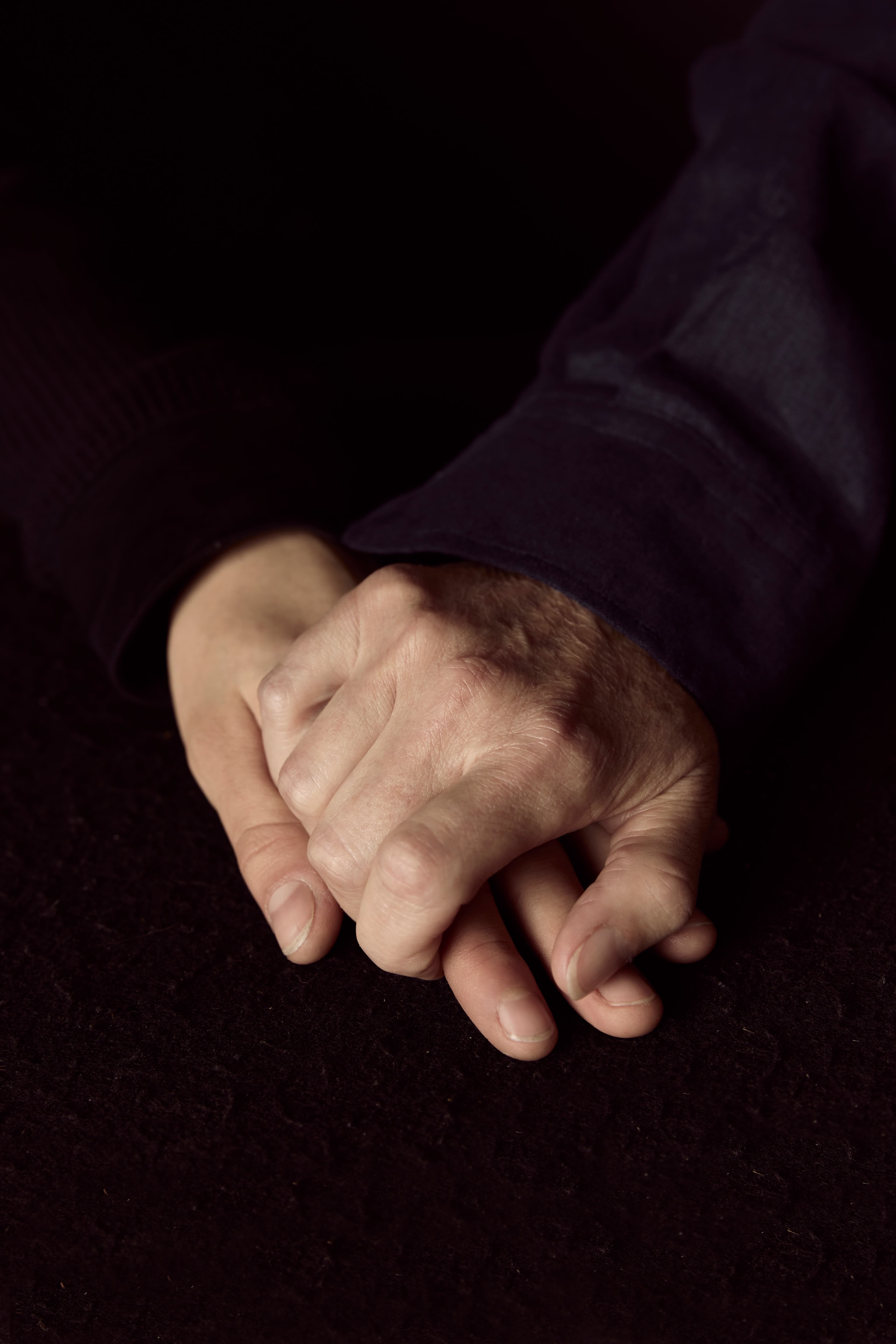
The second insight was game-changing. The fundamental message I’d been sending to my son was one of disapproval. I disapproved of his drug use, his skipping school, his foul language, his friends, his tattoos and his piercings. The list of things I disapproved of was long. But if the disapproval works, if it’s internalized by the recipient, it leads to shame. And no matter how justified my disapproval felt to me, shame would never be a healthy foundation for a relationship, especially not one between a mother and child. Instead, I needed to rebuild a connection that might help bring my son out of addiction. I decided to do it through radical acceptance.
It was a tough needle to thread. It didn’t mean I had to approve of what my son was doing. But I could try to see things from his perspective. I could remember that 14-year-olds are practically in the business of rebelling against their parents; maybe I could even take pride in how very well my son was nailing this developmental milestone. I didn’t have to like the stick-and-poke tattoos spreading like graffiti across his body. But I could respect that they were an expression of his independence. I could lead with love.
Radical acceptance was no magic bullet. I wasn’t always good at it. It didn’t stop B.’s drug use. But it did put us on a road to rebuilding our relationship which, in time, gave B. something to hold on to—and something to lose. That combination was an important factor in his eventual decision to enter treatment.
That, and a set of even worse options.
As the summer of 2020 approached, B. came home less and less, but I usually had an idea where he was. He would tell me, or I could keep track of him through his friends. But my access was far from certain, and in June of that year he disappeared. After he’d been gone three days with no word, I called the police to discuss filing a missing person’s report. They warned this would trigger a full-scale manhunt; they’d go to the homes of his friends and interview them and their parents. They would go to the places he bought and sold drugs. And they would set up a headquarters, with squad cars around the clock, in front of our house.
Even as I feared for B.’s safety, I also feared that kind of intervention. I wasn’t sure he’d be safe if police started interviewing drug dealers, who would probably blame him for the sudden scrutiny. I was also convinced he’d never come home if he discovered police were parked in front of our house. And if CAS learned he was missing, would they take him away? I told the police I would get back to them.
As the days passed with no word, I realized I would have to go look for B. myself. In a rare, unguarded moment, he had told me about an abandoned auto-repair shop he’d found with three other kids. It was in a semi-industrial area near the CN train tracks that cut across Toronto’s west end. Now they were using it as a hangout, calling it the trap house. I thought there was a good chance B. was staying there. I hadn’t told the police because I worried they might be aggressive with teenagers who were trespassing, vandalizing private property and in possession of large quantities of illegal drugs.
I also didn’t want to go to the trap house myself but, by the time B. had been gone six days, I didn’t see a way around it. As I pulled up out front, my heart was pounding fast. It looked dangerous; derelict and hard-edged, isolated on an empty stretch of road in a part of the city I didn’t know. It was early July, and the day was so hot I could see waves of heat rising from the asphalt.
Most of all I was afraid I would find B. inside, dead. I felt as if I was about to learn something I could never unlearn. So long as I didn’t go in that building, I could keep breathing. I wasn’t at all prepared for that part of parenting that involved scouring abandoned buildings in search of my eldest child.
I sat there for a while, willing myself to move, wishing I’d worn sneakers. The front of the building was boarded up and surrounded by a chain-link fence. I wasn’t sure how the kids got in, but I went around to the left and squeezed through a narrow opening. From the road, the building looked like it was one level, but the back stretched several storeys down into a ravine. There was human feces everywhere. Stepping carefully, I walked toward the building and called B.’s name.
Because of the angle of the ravine, it wasn’t hard to climb through a broken window. As my eyes adjusted to the dark, I noticed a lot of graffiti, along with some piles of clothes and blankets. It smelled of damp; concrete and earth. I called B.’s name again and, as it echoed back to me, two kids appeared in a doorway at the far end of the room. One didn’t speak at all and the other was very polite. More polite than you would expect from a stoned teenager in an abandoned trap house.
The polite teenager confirmed B. had been staying there, although he wasn’t around. He promised to get him a message—could he please come home, his mother is worried—and I gave him my phone number. Then I climbed out the window, skirted the poop and squeezed back through the fence. The kid called a few hours later to say B. would be home soon. When he walked through the door two days later, he’d been gone nine days and he looked like any addict you’d see on the street: filthy, bruised, jumpy and wastingly thin, with vacant eyes, scraped knuckles and a couple of fresh cuts. I was relieved he was home, and I went all in with radical acceptance.
Related: My Secret Addiction
This is what it looked like when I nailed it. Early one afternoon I walked into the house and was hit hard by the smell of marijuana. Then I opened the door into the front hall and immediately set my eyes on two bongs in the middle of the dining-room table, along with some pipes and other drug paraphernalia. To my left, a half-naked teenager with green hair was passed out on the grey linen couch I had recently bought. I kicked off my shoes, dropped my backpack and walked into the kitchen, where I found a friend of B.’s using every pot we own to make foul-smelling food that covered every inch of counter space. I could smell something burning in the oven. I said, “Hey, can you get those bongs upstairs, and ask the person in the living room to leave?” And then, breathing more calmly than a monk on retreat, I walked upstairs, tapped gently on the door to B.’s room and said, “Remember, no drugs in the house.”
I don’t remember how he answered but, for the first time in almost two years, he didn’t speak with any real venom. I was still reminding him of the rules, but my tone was no longer dripping with judgment and anger. And B. responded in kind; I was surprised at how willing he was to meet me halfway. As if he’d wanted to all along. What I was doing ran counter to almost all the advice that had been pouring in for months, and it often felt like capitulation. But I could see that it was working. Slowly and unevenly, we were rebuilding the connection between us. For the first time in a very long time, I started to breathe.
Ironically, it was around then that our CAS case worker started paperwork to get B. admitted to a program called Syl Apps. It was designed to provide therapeutic treatment for violent, incarcerated youth, but they had a small cohort of non-incarcerated youth. It was this smaller cohort CAS hoped would take B.
Although I had been trying to get B. into residential treatment for months, the phrase “violent incarcerated youth” scared me. I tried to get more information, which wasn’t an easy thing to do, because the program didn’t seem to employ anyone whose job was to answer questions from the public. Eventually I managed to reach a counsellor on the ward at Syl Apps; I had trouble hearing him over the echo of teenage anger bouncing off cinderblock.
The program was intended to serve mostly Black and Indigenous youth in the justice system, and most of the kids were boys. As a trans youth, B. had the right to be housed with the gender he identified as. At the end of our conversation, I asked the counsellor if he thought Syl Apps would be safe for B. “I feel ethically obligated to tell you that this is a very dangerous place,” he said. “It isn’t safe for anyone, and definitely not for a transgender youth. I wouldn’t send your kid here if you can help it.”
So there I was. After months of trying to find a residential program that would take my son, I was working against time to keep him out of the one program CAS was pulling out all the stops to get him into. Our Children’s Aid worker brushed off my concern that Syl Apps was dangerous—as if because B. was a drug addict, he was not also a child in need of protection. By this time, she and I were openly at war. A friend of a friend of mine knew a lawyer who had represented families against CAS. I wanted to know whether Children’s Aid had the authority to send B. to Syl Apps, even if B. and I were against it.
It was tricky. They might. We had been referred to CAS by someone in the ER in January. They were initially concerned for B.’s safety but, somewhere along the way, their attention drifted to my younger son. Our home, they said, was not safe for him. They started talking to me in the language of ultimatums: B. could go to Syl Apps, or I could find an alternative. They weren’t going to let things slide much longer. At that point, I called Pine River again. The promise of treatment was enough to hold CAS at bay for a couple more months.
On November 3, 2020, B. entered the Pine River Institute—ostensibly voluntarily, but he was facing a stark choice between that and involuntary commitment at Syl Apps. In a year full of hard moments, leaving B. with strangers in a parking lot was the hardest. The temperature was below freezing, and he wasn’t allowed to take a single thing with him. He was still only 14. The uncertainty was doing me in: was this the right thing? Would he be safe?
B. ended up spending 20 months at Pine River. The first part of its program is wilderness therapy, one of those backwoods immersion programs designed to address behavioural and substance-use issues in teenagers. For weeks, he was camping under a tarp in weather that often dropped below -25° C. I spoke to him once, for 10 minutes on Christmas Day. When he returned to campus, I was allowed one supervised visit every two weeks. He couldn’t make any phone calls. For nearly two years, he missed birthdays and holidays. It was a hard place to be.
When he finally came home in the summer of 2022, I thought that chapter was behind us; that things would go back to normal. When your loved one has been an addict, it’s human nature to be laser-focused on sobriety. But that myopia can blind you to what may be underneath substance use. Some kids use alcohol and drugs because it’s fun. Others are self-medicating. It’s very important to know the difference. Although rehab interrupted B.’s addiction and probably saved his life, the isolation of being institutionalized had done little to alleviate the deep hurt that lay just beneath the surface of his drug use. Everything between us was held together with tension.
Pine River turned out to be only the first step on a road to recovery that wasn’t just about sobriety. One thing you’ll hear constantly, if you love someone who is an addict, is that there’s nothing you can do. Only they can decide they want to change. That’s true, in the most basic sense that you can’t physically stop a person from using. But if you believe they are self-medicating, if substance abuse is coming from a place of pain, you can try to keep them close.
It wasn’t until after B. came home from Pine River that I thought more about the link between addiction and connection. In 2020, I had used radical acceptance as a strategy of crisis management, a way to find some peace in the middle of a terrifying situation. I hoped it would lay the groundwork for getting B. into treatment. Once he came home, I realized that for us to heal, radical acceptance was going to have to be more of a practice or a mindset than a strategy. I was going to have to dig a lot deeper to get our family back.
My son has been sober for over five years. More importantly, he seems to be standing on solid ground. We all are. For us, connection wasn’t so much the opposite of addiction as it was a way through it.

This story appears in the June 2026 issue of Maclean’s. You can subscribe to the magazine here or send a gift subscription here.
What did you think of this story? Send a comment for publication to letters@macleans.ca, and supply your name and address. Comments should be fewer than 200 words, and may be edited for length and clarity.
Related Posts

The Rich List
The Battle for the Soul of the University
My Secret Addiction
Get the Best of Maclean’s straight to your inbox.
Sign up for news, commentary and analysis. Join 60,000+ Canadian readers.