Office Wars
It was the spring of 2021, and Bella Bustamante was losing hope. Months after graduating from college with a degree in tourism, the 22-year-old Montrealer was still looking for a job in the field. It was a daunting moment to enter the travel industry, still reeling from pandemic lockdowns, but finally, in July, one of Canada’s largest tour operators offered her a first step on the career ladder: a job as a reservations agent. The salary was modest, but the benefits were solid and the travel perks enticing. “I felt like I’d found the place I was going to retire,” she says.
Because Bustamante was hired at the peak of lockdowns, her job was fully remote from the start. She worked from her apartment in Longueuil, an hour’s commute from the company’s downtown Montreal office. She felt lucky; if she’d started her job pre-pandemic, she’d have lost two hours every day on buses and trains. Instead, she claimed that time for herself, cooking proper meals, attending a 5:30 pm muay thai class and visiting her mother.
Then, in 2022, the company abruptly changed course: suddenly, employees had to come into the office twice a week. Supervisors said it was for team building. The change didn’t make much sense to Bustamante; because she spent her shifts on the phone with clients, she was discouraged from talking with colleagues. Many of her co-workers were unhappy too, but they accepted it grudgingly. But a year later, a third mandatory day in the office was announced. The grumbling grew louder, especially because the rollout wasn’t enforced evenly: some departments came back, others stayed remote, and some were supposed to come back but management let them continue working from home. Employees complained about double standards; some ratted out colleagues who skipped their in-office days, fuelling resentment and dragging down morale.
For Bustamante, the return to office was hellish, especially during Montreal’s long, snowy winters, when her round-trip commute could consume three hours of her day. Moving closer wasn’t an option; her salary was too low to afford rent in the city. Three days out of five she returned home exhausted, microwaved dinner or grabbed takeout, watched Netflix and collapsed into bed.
Related: Big Tech v. Me
She resented losing the freedom she’d enjoyed. The extra hours she’d had to complete errands, spend time with friends and family and pursue non-work interests were being clawed back for reasons that seemed arbitrary. Many colleagues felt similarly and wondered aloud whether more office hours were inevitable. And then, last spring, the company announced that staff would be required to come in four days a week starting in September of 2025. All over the office, employees were angry and confused. Some were in tears. It wasn’t just about a long commute. Employees were worried they couldn’t afford gas four days a week, or the extra childcare they’d need. Many felt betrayed; they’d believed that hybrid work was a permanent arrangement.
Bustamante considered quitting but, though she was miserable, she didn’t want to jeopardize her career prospects. In August, she took a month of personal leave for health reasons. On her first day back at the office, she woke up with a tightness in her chest. “I wanted to cry,” she says. “That’s when I knew I couldn’t work there anymore.” When she handed in her resignation in September, relief surged through her. The anxiety disappeared.
Bustamante is one of hundreds of thousands of Canadians who have, over the past few months, been ordered back into the office after years of fully or mostly remote work. A Cisco report from June of 2025 found that 68 per cent of Canadian employers had implemented a return-to-office mandate. They included most of the Big Five banks, four of which summoned workers back to the office four days a week starting in the fall of 2025. Rogers upped the ante for its 24,000 employees: five days starting in January of 2026. Soon after, Ontario’s provincial government announced that its 60,000 public servants would also have to return in January. In total, over the past four years, 800,000 Canadians have gone back to the office. Hundreds of thousands more will return over the coming months, as employers attempt to quell the remote revolution and reset workplace norms.
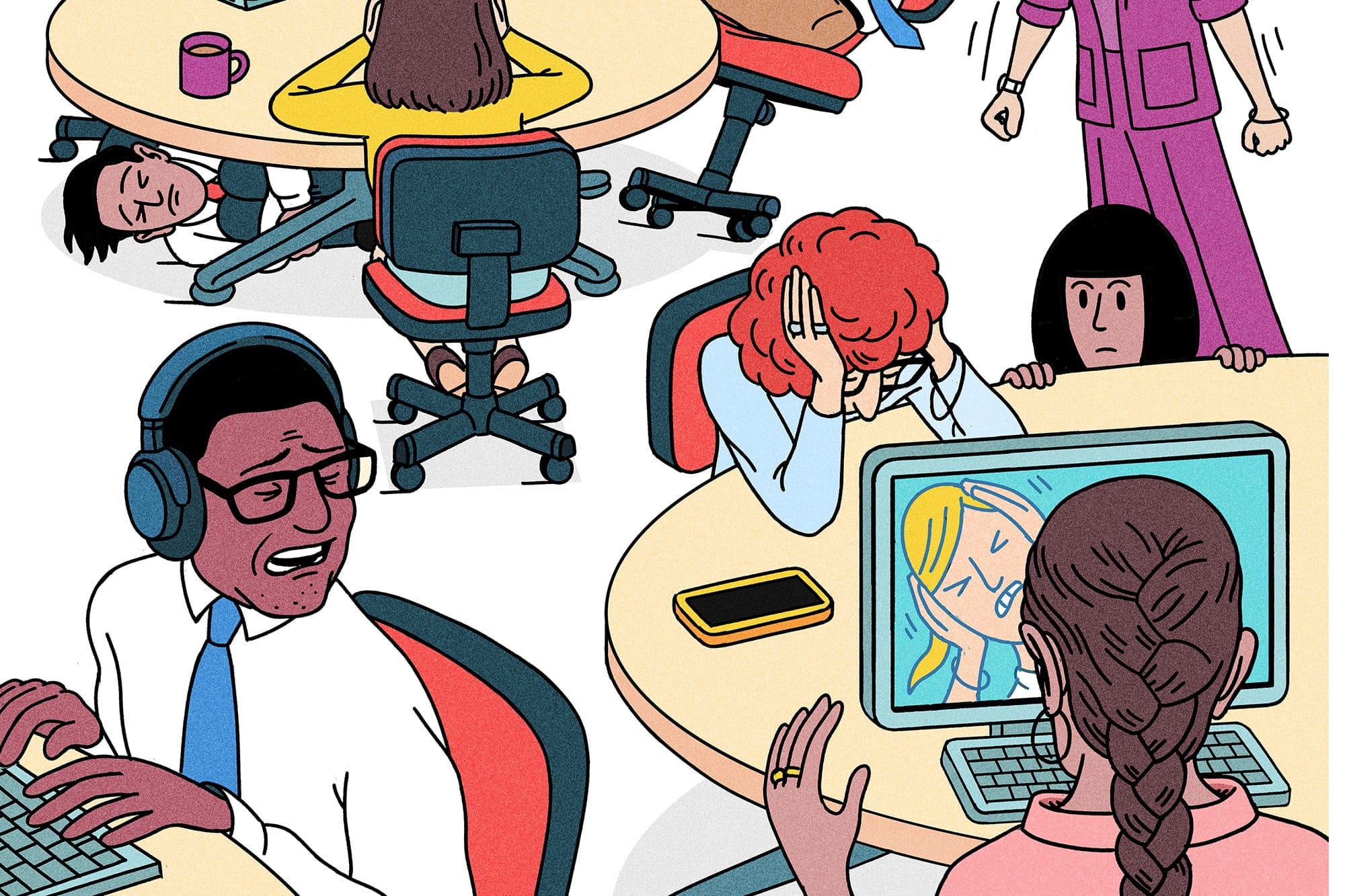
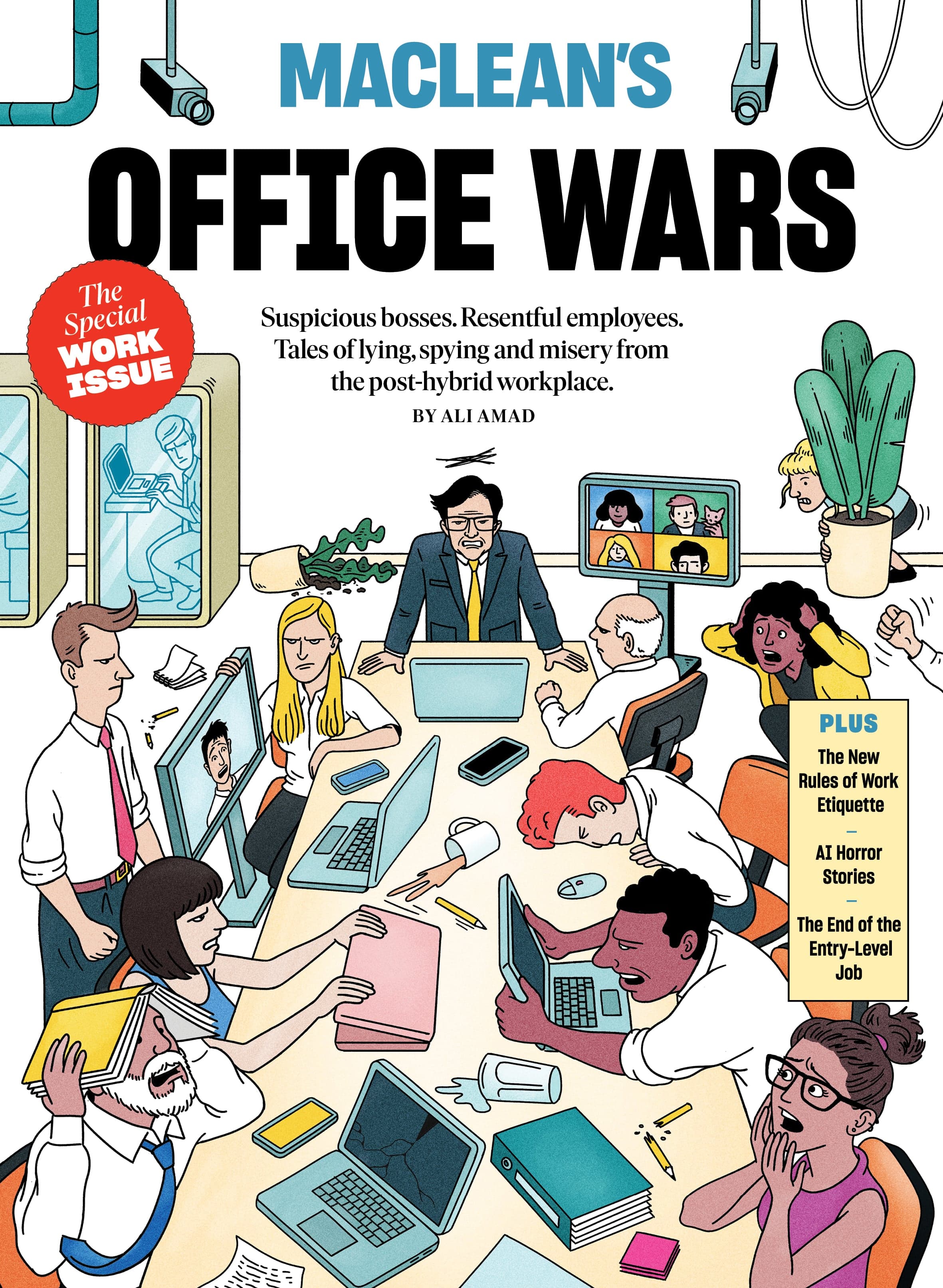
So far, it’s going very, very badly. Many employees don’t want to be there. Morale is low and resentment is high. Companies that gave up office space during the pandemic can’t fit everyone they want into their shrunken offices, forcing workers to share desks or hunt for quiet corners in hallways, stairwells and even bathrooms to take calls or get a moment of quiet. And some people, who were happier working from home, are revolting. That’s especially true of those who decamped from expensive cities to build new lives far from their offices—often with employer assurances that remote or flexible work was permanent. Now, their lives are unravelling as they’re forced to choose between extreme commutes or uprooting once again. The result is a cauldron of frustration and hostility.
Employers all list the same reasons for calling staff back: improved collaboration, productivity and efficiency, and a stronger corporate culture. But Canadian workers aren’t buying it. Three in five Canadians say they’d prefer to work mostly remotely, according to a recent Angus Reid survey. Millions have spent the past six years proving that their jobs can be done well—maybe better—at home. I’ve spoken with employees nationwide for this story and heard all sorts of theories about why their bosses are dragging them back: to prop up struggling commercial real estate, for example, or to quietly downsize by pressuring disgruntled employees to quit. But one overriding hypothesis surfaced over and over: that the mandates are about control. They’re a way for employers to reassert the authority that slackened during the pandemic years, and to make sure employees aren’t going to the dentist or binge-watching TV on company time. The clash is philosophical as much as logistical, and it raises defining questions about where, when and how people should work.
Beneath that debate sits a more basic issue of power. How much sway should employers have in dictating employees’ work lives, particularly when returning to the office appears to run against evidence about productivity and well-being? The irony is that in many offices, mandates meant to restore traditional workplace structures and rhythms are producing the opposite: total chaos.
The idea of dividing our lives between home and work is a modern one. For the vast majority of human history, most workers—craftspeople, merchants, farmers—laboured in or near their homes. This changed dramatically in the 19th century, when the Industrial Revolution gave rise to specialized factories and white-collar work. As cities grew outward, commutes got longer, swallowing up precious hours on either side of the workday.
Some people have been trying to bring work back home ever since. In the 1970s, NASA engineer Jack Nilles coined the term “telecommuting,” suggesting that employees could connect to their offices through mainframe computers. In part, Nilles framed telecommuting as a way to combat soaring gasoline prices during the 1970s energy crisis. In the ’90s, as the internet became more accessible, widespread telecommuting was often touted as the next big workplace revolution.
Enthusiasm waxed and waned. In the early 2000s, Yahoo! allowed hundreds of employees to work from home. In 2013, CEO Marissa Mayer abruptly ended the experiment—like today’s CEOs, she argued that it was a drag on productivity. “Speed and quality are often sacrificed when we work from home,” she wrote in an internal memo. “We need to be one Yahoo!” Employees balked but the company stood firm. (Mayer eventually resigned in 2017; her remote-work policy turned out to be one of many that were unpopular with employees, and the company’s value imploded during her tenure.)
For most, remote work remained a niche privilege until the COVID pandemic. By April of 2020, Canada’s work-from-home rate had soared, reaching 41 per cent, concentrated among highly educated white-collar workers. The rollout was rocky, but many soon believed the pandemic had accelerated an inevitable trend. Business leaders declared the office obsolete. In May of 2020, Shopify’s Tobias Lütke called his company “digital by default,” writing on Twitter that even when offices eventually reopened, most of his employees would work from home: “Office-centricity is over.” By 2023, long after lockdowns, Canada retained the highest rate of remote work in the world, averaging nearly two days per week among workers with university degrees.
But the enthusiasm obscured the discomfort that some business leaders had about remote work from the get-go. To them, it was always a temporary concession to extraordinary circumstances. Edward Sonshine, CEO of Canadian real-estate investment trust RioCan, said in 2020, “Anybody who says everybody’s just as efficient working from their dining room table with a laptop as they are in an office doesn’t live in the real world.” In early 2021, Goldman Sachs CEO David Solomon described remote work as “an aberration that we’re going to correct as quickly as possible.” Elon Musk went further, calling remote work “morally wrong.”
Some managers became convinced that time theft lurked behind every muted mic. This sparked a boom in the use of so-called bossware: monitoring software meant to catch idle screens or suspiciously long coffee breaks. By 2023, nearly half of medium and large U.S. firms had adopted digital surveillance tools—which can track app usage, log keystrokes and in some cases even capture screenshots—to keep tabs on their remote workers from afar. And in fairness, some employees were definitely taking advantage of the situation. One Quebec-based e-commerce company, Faxinating Solutions, rolled out electronic tracking and wound up firing one of its 40 employees after discovering they’d been sleeping on the job.
But instead of stamping out slacking, the crackdown spawned a thriving cottage industry of countermeasures: employees snapped up $40 keyboard clickers that randomly pressed keys and $20 mouse jigglers that kept cursors drifting across screens, simulating productivity while their users slipped out to walk the dog. Teramind, an employee-monitoring firm, reported that more than eight per cent of an anonymized sample of users showed signs of simulated activity, rather than normal mouse movements and keystrokes. Hubstaff, another firm, found a client whose employee had kept a mouse jiggler running up to six hours a day, during which the employee was gaming on a second device. For executives, all of this seemed to confirm an age-old instinct: proximity equals oversight.

Ope Akanbi is an associate professor at Toronto Metropolitan University who studies labour and technology. She frames the issue more as a power struggle than a productivity question: “I don’t think it was ever the case that employers were okay with remote work,” she says. “It’s against the very core of employer power, which is control over employees.” Even with increasingly sophisticated digital monitoring tools, the level of oversight achievable in-person is far greater, and many employers are keen to restore that dynamic.
A 2024 study found that nearly a third of managers said the real purpose of their company’s mandates was to track workers more closely. (The study also bolstered the theory that some employers try to downsize their workforce by giving employees reasons to quit: a quarter of executives who responded admitted they hoped the mandates would prompt voluntary resignations, which are cheaper than layoffs.)
Employers, however, say something important was lost while people stayed home: the spontaneous conversations that spark ideas, or the mentoring that happens when a junior employee sees a deal coming together. At a packed town hall in Toronto last spring, a senior executive at one of the Big Five banks tried to rally staff frustrated by the return-to-office mandate. “Michael Jordan wouldn’t play on a different court than the rest of the team,” they argued.
Of course, the banks seem to be doing just fine, even with their all-stars playing far from the arena. RBC reported a record $16.2 billion in profit in 2024, and its share price grew by 30 per cent, outpacing the Canadian stock market as a whole. The other Big Five banks posted similarly impressive numbers in 2024 and again in 2025.
Employees who are happy working from home believe this is because they’re doing more remotely than they would in the office—and there’s research to back that up. A 2022 review by Conestoga College’s Canadian Institute for Safety, Wellness & Performance, analyzing more than 2,400 research articles, found that employees who had the option to work from home often outperformed their in-office counterparts. A study published recently by WorkL, an online job marketplace, found fully remote Canadian workers were the most engaged and productive, and hybrid workers were close behind. Dead last were fully in-person workers. And a study by Indeed found that fully in-office employees get less sleep, see less of their families, have more hectic days and are more burned out. Dragging workers back to the office isn’t only counterproductive for their productivity; it materially worsens their quality of life.
Still, the managerial assumption that face time means a more productive, collaborative workforce is hard to shake. Ope Akanbi argues that return-to-office mandates have been driven less by data and more by managerial instinct and nostalgia for pre-pandemic norms. “If you go through many of the statements made around the mandates, you’ll see it’s rarely companies saying, ‘The data shows this works,’ ” she says. “Instead, it’s CEOs saying, ‘We think being in the office is better for collaboration. We think it’s better for productivity.’ ”
Employers are getting their wish—Canadians are going back to the office. But the office isn’t ready.
Before workers get to the office, of course, they have to slog through traffic to get there. Doing so has never been harder. Commute times have soared in almost every city in Canada over the past four years. There are multiple, converging reasons for this. First, there are simply more people on the road and, due to pandemic relocations, many are commuting from farther away than ever. Another factor is that in many cities—including Toronto, Montreal, Winnipeg, Ottawa and Quebec—public transit ridership plunged during the pandemic and hasn’t yet bounced back, despite population increases. Instead, more people are commuting by car, competing for limited space on already overcrowded streets and highways. And in the rare places where transit ridership has recovered, like Vancouver, there is unprecedented overcrowding on buses and trains.
Every year, navigation technology company TomTom produces a congestion ranking of cities around the world, using geolocation tools to measure how far a driver can travel in 15 minutes during rush hour. Out of the 10 worst offenders in Canada and the U.S., Canada landed seven metro areas on the list last year. Winnipeg topped it, at only 7.7 kilometres. Other Canadian metro areas in the top 10 included London, Vancouver, Montreal, Toronto, Halifax and Ottawa.

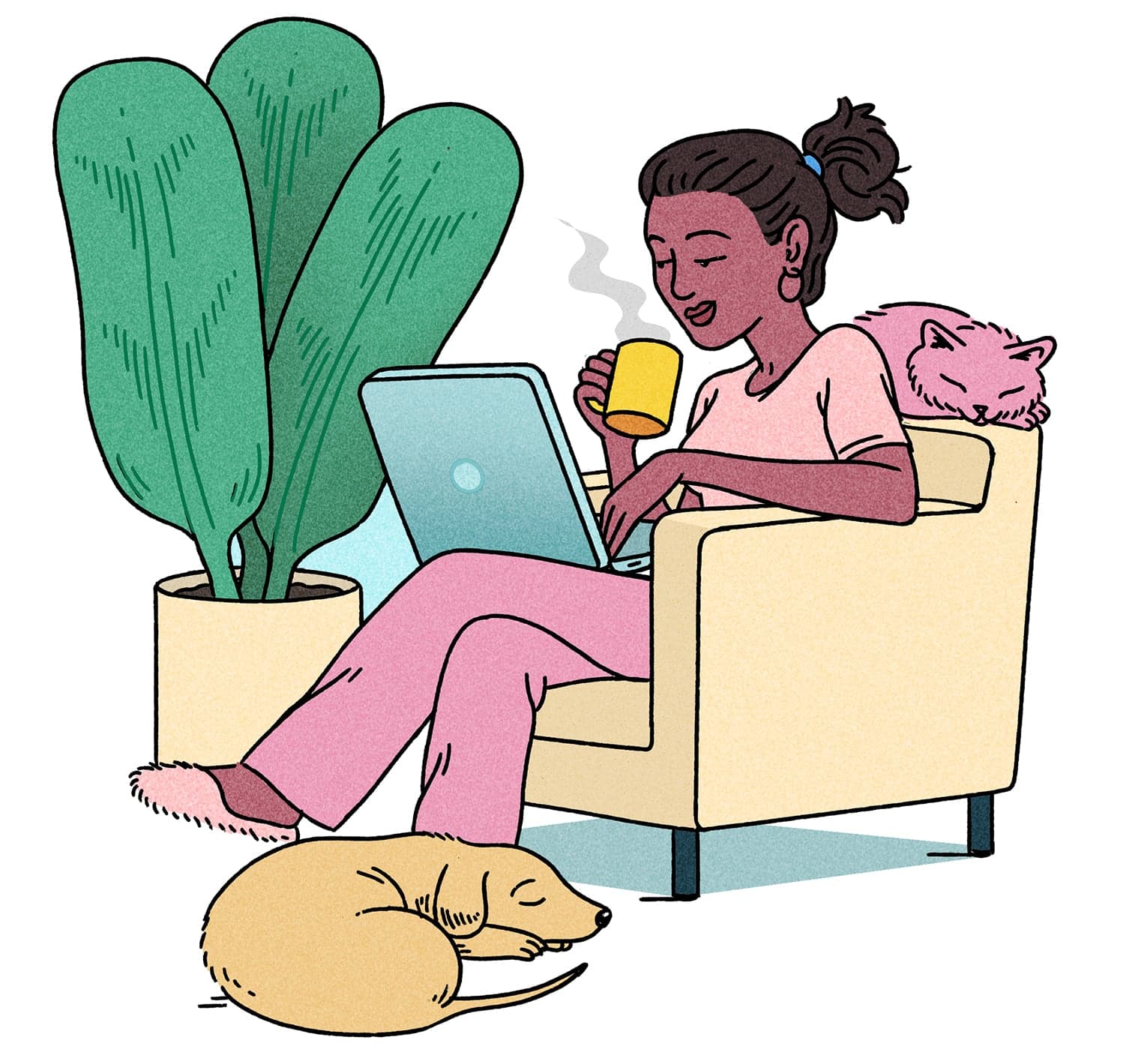
Then there’s the office itself. I spoke with private- and public-sector workers across the country about the unfolding turmoil in their offices. One federal government employee says that her Ottawa office has turned into a Hunger Games–style scramble for basic desk access. Before federal return-to-work mandates, her department had planned to adapt to remote work by shrinking its total office space, using a “hotelling” system that involved converting large cubicles into tiny carrels, separated by dividers. Now no one has an assigned desk; managers assumed only a fraction of their employees would ever be present at one time, mostly for meetings and training sessions.
But when the three-day-a-week mandate arrived, her building was suddenly packed far beyond what it had been redesigned to support. The planned renovations stopped, leaving some floors with normal cubicles and others with cramped carrels. “It’s become an awful, open-concept hellscape,” she says. People take video calls from their desks, talking loudly while their colleagues handle sensitive policy documents inches away. Sustained concentration is virtually impossible, and real desk space has become a luxury.
“Everybody’s racing for the original cubicles, and the ones who miss out take whatever is left,” says the employee. On particularly busy days, no one dares give up a chair; they might return from a one-hour meeting to find their workstation taken. Then they’re forced to wander the halls, or work from a hard plastic chair in the lunchroom. (Paradoxically, the employee works for Employment and Social Development Canada, a department tasked with improving Canadians’ quality of life.)
Other federal employees I spoke to, in Ottawa and Toronto, had similar stories. Many no longer have assigned desks, so in some buildings, they scan a board each morning to see what’s available, often landing in shared meeting rooms with strangers rather than their own team members. In other offices, the scarcity of quiet space has left some workers seeking refuge in the halls. Others head to washrooms simply to find enough silence to work. The stress has curdled into spite. Some employees have turned deliberately loud, as if to broadcast their displeasure and make the environment as unbearable as possible for everyone else.
Jennifer Harewood is a senior policy adviser with Ontario’s Ministry of Education. She describes her downtown Toronto office as a sea of noise. “There are no walls or cubicles, so there isn’t enough sound absorption,” she says. “Sometimes you’re asked to accomplish a task in an hour or two, but there are tons of people right next to you on calls. It’s hard to get the work done unless you tell everyone not to talk, which defeats the whole purpose of coming in to collaborate.” Her workstations aren’t even permanent; she and her colleagues have to set up their desks every morning and clear everything away, including computers and personal belongings, every night.
The private sector is facing the same problems. Many employees at the Big Five banks, who shared their stories with me on the condition of anonymity, said they felt completely blindsided and furious about the return to office. When they returned, they found chaos waiting. In some industries, like Canada’s financial sector, employers that downsized offices during the pandemic to save money are now ramping up in-person staffing without the space to do so. Desks are scarce, equipment malfunctions and collaboration—the very rationale most often cited for returning to the office—is challenging. Some workers roam multiple floors in search of an open workstation, while others give up and retreat to cafeterias or perch on stairwell landings. Those desperate for privacy take Zoom calls from their cars or even closets. One worker at a law firm in downtown Toronto told me, “It feels like you’re being actively punished.”
Their anger has settled into a kind of jaded cynicism. Some employees admitted to me that they now feel less guilty about taking small liberties with their employers’ time, like showing up late. They no longer feel compelled to go the extra mile in their work. Another put it more bluntly: “I do exactly what’s asked of me and not an inch more.” Others are finding creative ways to push back, like “coffee badging,” or swiping their ID at the office so the boss knows they showed up, grabbing a latte and immediately heading home. Others rely on “hushed hybrid” arrangements, where sympathetic supervisors swipe them in even though they’re actually sitting in a home office. Less productively, some admitted to simply strolling the halls and scheduling pointless meetings to make sure management sees that they showed up.
In response to this turmoil, RBC encouraged workers to “be creative with space.” It suggested that employees struggling with disruptive noise buy “productivity tools” such as noise-cancelling headphones. The Toronto Star reported that the bank also warned employees that failure to comply with in-office expectations could result in deductions in their compensation.
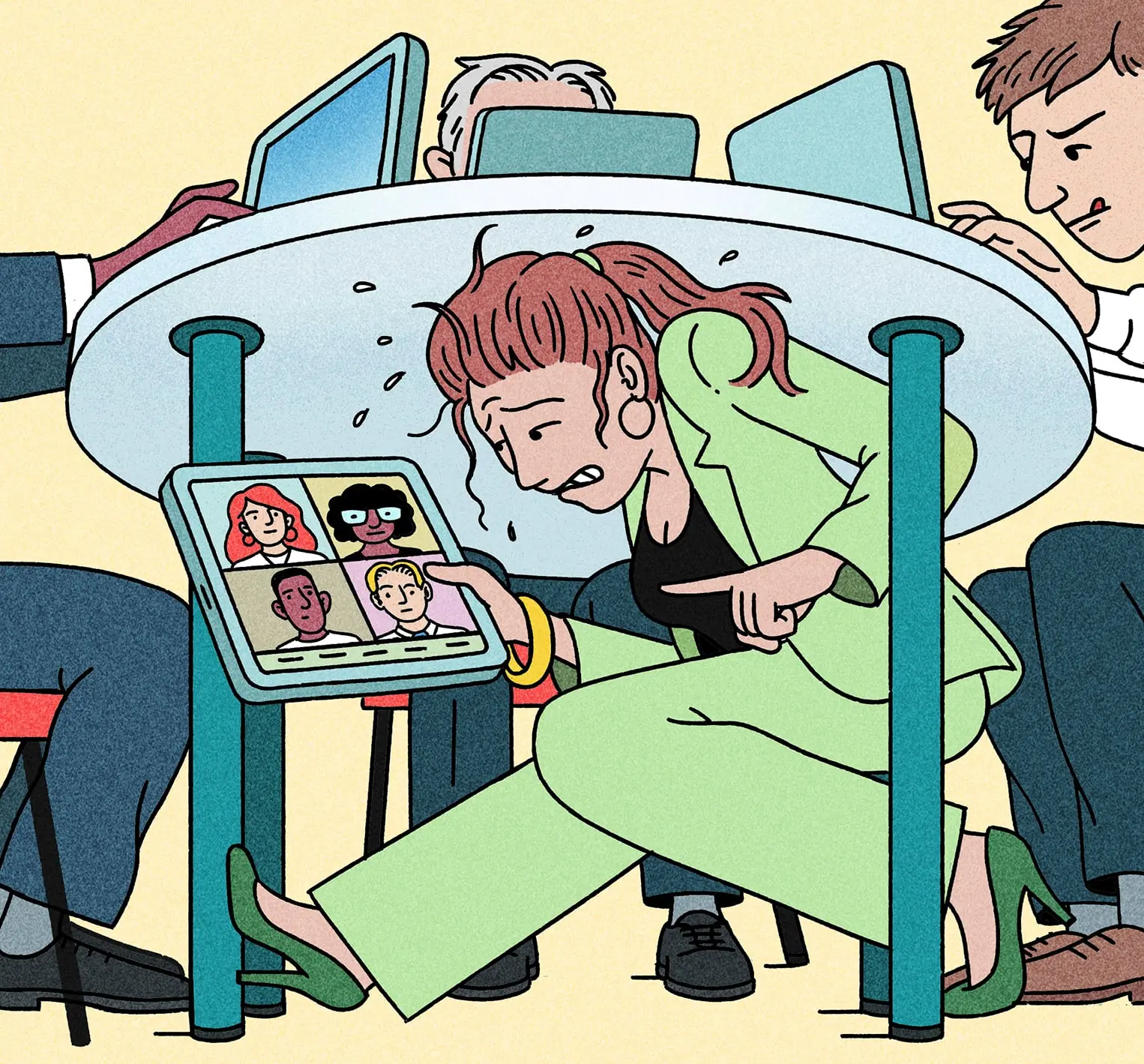
But for many of the people I spoke with, the worst part of the return to office isn’t the office cacophony or even the tedious daily assembly and disassembly of desks. It’s that they were simply happier working from home. They’d found a more rewarding balance between work and personal life, and they resent that they now lose hours to long, exhausting, pointless commutes. I spoke to one realtor who told me about a professional couple from Toronto, with three kids, who in 2024 bought what they thought would be a forever home in Barrie, Ontario, more than 100 kilometres from their offices. With 3,000 square feet of living space and a large yard, it offered everything they couldn’t afford in Toronto. Both commuted to the city twice weekly by train, a two-hour trip each way—manageable a couple of times a week. But last fall, one was made to come back four days a week, the other all five. Now they’re trying to sell their Barrie house, but because of the rapid slowdown in the housing market, it’s worth roughly $300,000 less than what they paid. For now, they’re stuck in commuting hell.
For the last few years, Jennifer Harewood cared for her ailing 85-year-old mother before and after work. Now, those hours are spent on a train from Brampton, Ontario, to her downtown Toronto office. A provision in her union’s collective agreement allows employees to propose flexible setups like remote work or compressed hours. She and most of her colleagues submitted requests in August and September, often asking to work from home two days a week. As of now, Harewood says, no one she knows has received a response. Most are resigned to the reality that they will be working on-site five days a week.
I also spoke to a director at an Ontario firm who’d taken her job primarily because she had been promised that she’d be able to work remotely three days a week, to care for her two kids and better manage their demanding schedules. In 2025, a new management team abruptly announced a four-day in-office schedule, leaving her in a difficult bind. She asked to alternate between two and three days in-office each week. Her team leader reassured her it would be simple to approve. But after weeks of silence, the same manager admitted they didn’t submit the request—for her own benefit. Doing so would likely hurt her career prospects, they said.
Employees have a few cards to play when pushing back against mandates. If a company changes the terms of employment too abruptly, it risks triggering claims of constructive dismissal—when an employer alters a job so significantly that it’s effectively a termination. If someone has worked from home for years with the reasonable assumption that it’s permanent, says Toronto-based employment lawyer Christopher Achkar, companies must provide significant notice, sometimes six months or more, or risk costly severance payouts. Still, he has also seen employers lock workers out of their computer systems and outright fire them for not coming in. There are no guarantees.
Because union members have far more protection against termination than non-union workers, they’ve been at the forefront of the anti-mandate movement. Last January, three federal unions representing more than 330,000 workers launched a nationwide campaign called Remote Works to advocate for remote and hybrid arrangements. Ontario public-sector unions are also challenging the provincial government’s return-to-office mandate. They include the Ontario Nurses’ Association, the Canadian Union of Public Employees and AMAPCEO, Jennifer Harewood’s union.
Dave Bulmer, president of AMAPCEO, says the federal government’s abrupt rollout violates the union’s collective agreement and disregards the need for consultation. If the bosses had listened, says Bulmer, union leaders would have raised the problems a full return to the office would create—including the fact that many of the union’s members relocated to far-flung suburbs during the pandemic. For them, a forced return is impossible without uprooting their lives all over again. He also cites the deficit of office space. “There are agencies that don’t even have office buildings anymore,” he says. “It’s impossible to have 100 per cent compliance with a full-time return-to-work.”
Nathan Prier is president of the Canadian Association of Professional Employees, representing federal workers. He says that rigid adherence to mandates will turn people away from public service. “Elected officials are trying to build up this idea that government is completely inefficient,” he says. “But the truth is, we’ve never been more productive. These mandates are making us less so.” AMAPCEO has already filed a dispute with the Ontario Labour Relations Board, and Prier says they are prepared to strike. If they do, it won’t just be a battle over where people sit—it will be a test of how much control employers can legally exert after more than five years of normalized remote work.
In the long term, some companies may compromise, depending on how hard employees dig in their heels. A recent study tracking millions of tech and finance workers at S&P 500 firms found that companies enforcing back-to-office policies experienced a 14 per cent spike in turnover. Women, senior employees and highly skilled workers were most likely to leave. Those firms also took 23 per cent longer to fill vacancies. JP Michel, an Ottawa-based career coach who helps young people develop career paths, says Gen Z workers are especially likely to walk away. Some began their careers remotely, and noisy, dysfunctional, conflict-riddled offices are especially repellent to them.
Nearly 80 per cent of Canadians under 30 now work for flexible or remote-first employers. Fintech company Wealthsimple, for example, remains remote-first, telling prospective hires that “output is more important than face time.” The company encourages in-person interactions through short on-site team “bursts,” casual meetups or optional workspaces in major cities. Flexibility has become a competitive advantage in recruiting top talent who prioritize hybrid work arrangements.
Four months after leaving her job at the tour operator, Bella Bustamante, now 26, is still unemployed. She’s searching for work, but not just any job. She’s looking for something that offers a sense of purpose and balance, where her life isn’t entirely consumed by work and commuting.
So far she hasn’t landed many interviews—it’s a tough job market. “In a lot of ways,” she says, “I feel like I’m starting from scratch.” But, she says, “I don’t regret quitting.”
This story appears in the March 2026 issue of Maclean’s. You can buy the issue here, subscribe to the magazine here or send a gift subscription here.
Related Posts

Big Tech v. Me

My Secret Addiction

The Rich List

The Battle for the Soul of the University
Get the Best of Maclean’s straight to your inbox.
Sign up for news, commentary and analysis. Join 60,000+ Canadian readers.