Quebec’s War on Religion
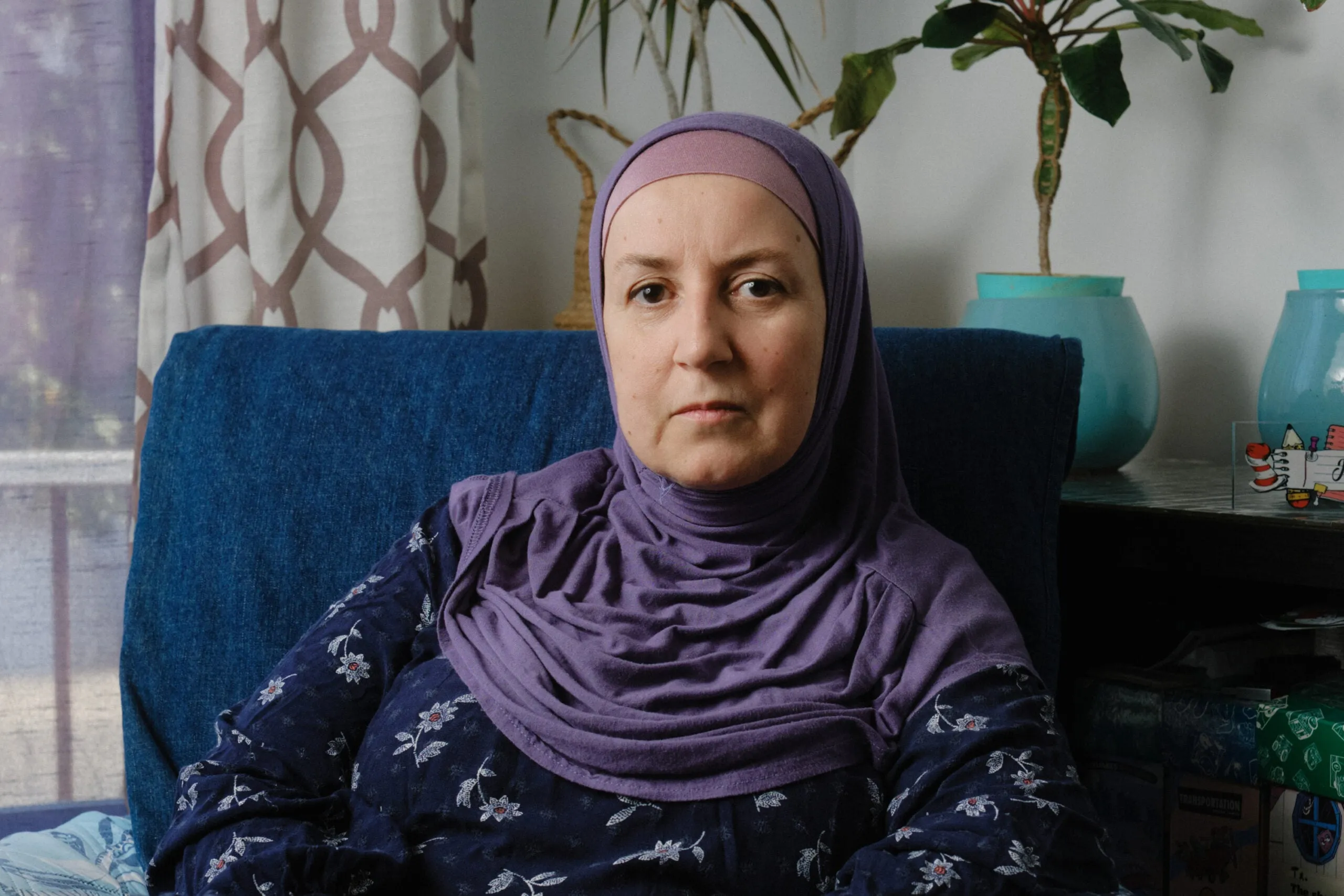
It was 2019, and Bouchera Chelbi was afraid of being fired. Rumours were rippling through the Montreal public elementary school where she taught English as a second language. Quebec’s new right-of-centre ruling party, the Coalition Avenir Québec, or CAQ, had recently won its first term in office, and one of Premier François Legault’s key election promises was to pass legislation banning certain public employees from wearing religious symbols, like the Jewish kippah, Sikh turban, Christian cross or Muslim hijab. In the 11 years she’d been teaching in Quebec, she’d never heard a comment in school about her hijab. But suddenly, as the CAQ readied a bill banning her from wearing it at work, her colleagues were both angry on her behalf and a little bemused. “I don’t get it,” one told her. “What’s the point of this law?”
There were two, from the government’s perspective: first, it allowed the CAQ to position itself as a defender of Québécois identity without leaning into separatism, which was increasingly unpopular in Quebec. Secondly, it let the party take decisive action on a long-simmering public debate. On the surface, the bill was a reincarnation of a 2013 effort by the Parti Québécois, known informally, and infamously, as the Charte des valeurs—the Quebec Charter of Values. It would have banned government employees from wearing most religious symbols. (That bill died when the province’s Liberal Party won the 2014 provincial election.) But the new legislation drew on a much longer history. For decades, Quebec has been on a spiritual quest for a public life devoid of spirituality.
Since Quebecers threw off the stifling hold of the Catholic Church during the Quiet Revolution of the 1960s, secularism—or, in French, la laïcité—has become a core state value. Banning hijabs and other religious garb might seem extreme to Canadians outside Quebec, but globally, the practice is not unique. Bill 21 takes its cue from legislation in France, Belgium, Austria and Denmark. Countries with Muslim majorities, including Tajikistan, Kazakhstan, Kyrgyzstan and Uzbekistan, have also limited citizens’ rights to wear religious clothing in public spaces, ostensibly to enhance social integration.
In the spring of 2019, the government held six days of consultations on the bill, during which dozens of people and organizations testified. Chelbi was among them. In a flowered blue headscarf, she sat in the stately Red Room of Quebec City’s National Assembly opposite a provincial commission. Also present were Gregory Bordan, a Jewish lawyer who wore a kippah, and Taran Singh, a representative for the province’s Sikh community. All three were members of the Coalition Inclusion Québec, or CIQ, a citizens’ group that had formed to oppose the bill.
Chelbi told the commission that the proposed law made her feel like a criminal. One member of the commission asked why she couldn’t just remove her headscarf during work hours. She said that would be like practising veganism at dinner but eating meat at lunch.
Related Posts
My Secret Addiction

The Doom Spenders
In June, Bill 21 passed, prohibiting public employees in positions of authority—police officers, judges, prosecutors and teachers, among others—from wearing religious symbols. Protests in Montreal drew enormous crowds rallying in opposition. I attended the protests as well. But the majority of Quebecers, particularly outside its largest city, supported the measure—some 64 per cent, according to polling at the time. There’s no way to know how many people are directly affected by the legislation, but in a sense it touches nearly all Quebecers. With good fortune, most of us will never come before a judge. But most will send their children to a public school, or attend one.
In the end, it turned out Chelbi’s position was safe. A grandfather clause allowed employees who already wore religious symbols to keep their jobs. But there was a big caveat: she could not receive a promotion, and she couldn’t switch school boards, which meant she could never move. She had hoped to become a principal; now, her career was stalled.
The bill was a magnet for lawsuits. Chelbi helped mount a legal challenge as part of the CIQ and, the following year, the Superior Court of Quebec heard its case. It was accompanied by others from the Canadian Civil Liberties Association as well as a host of Jewish, Sikh, Christian and Muslim individuals. Amnesty International and the Canadian Human Rights Commission also joined as intervenors. One organization stood out for its unique stance: the English Montreal School Board, or EMSB. It argued that because English speakers in Quebec have protected language rights under the Charter, the EMSB is guaranteed the right to govern its schools as it sees fit. Board chair Joe Ortona told me that it is a secular institution, with one important caveat: “We just don’t have the same definition of secularism as the government.” In effect, he and the EMSB, which represents 35,000 students in 73 schools, believe that an exposure to multiculturalism is fundamental to anglophone education in Quebec.
Lined up on the other side, defending the bill along with the provincial government, were a cluster of civil society organizations dedicated to upholding la laïcité. They included a feminist group, Pour les droits des femmes du Québec, and an atheist group, Libres penseurs athées. Foremost among them was the Mouvement laïque québécois, or MLQ, which has played a decisive role in advancing secularism in Quebec over the years, both in and out of court. For MLQ president Daniel Baril, Bill 21 is an important step toward fulfilling Quebec’s destiny as a secular, liberal-minded state, united by common values. To some supporters of Bill 21, pluralism and multiculturalism in the Canadian mode—two official languages, but no official culture—is almost nihilistic.
The battle has worked its way through the courts for the past six years. Sometime in the next few months, it will go to the Supreme Court of Canada. There, the Quebec government and its supporters will square off once more against their opponents, which this time will include not only individuals and organizations, but the federal government. When Bill 21 passed in 2019, Justin Trudeau expressed the Liberals’ distaste for it, though the feds didn’t interfere in Quebec’s lower-court challenges. Today, the provincial government insists that Ottawa should continue to stay out of it.
Fundamentally, the two sides are arguing for radically differing ideas of what secularism means—and of what Quebec society ought to look like in the years to come. It’s possible to frame Quebec’s roiling culture wars as the tale of two irreconcilable visions of liberalism. In one version, people who are free to make their own choices will make those that improve their lives, whatever that means to them. In the version espoused by Bill 21’s proponents, the state prioritizes communal values. Quebec has long had a more socialist flavour than the rest of Canada, and is more comfortable creating a framework that nudges citizens toward the government’s collective goals—sometimes gently, sometimes forcefully.
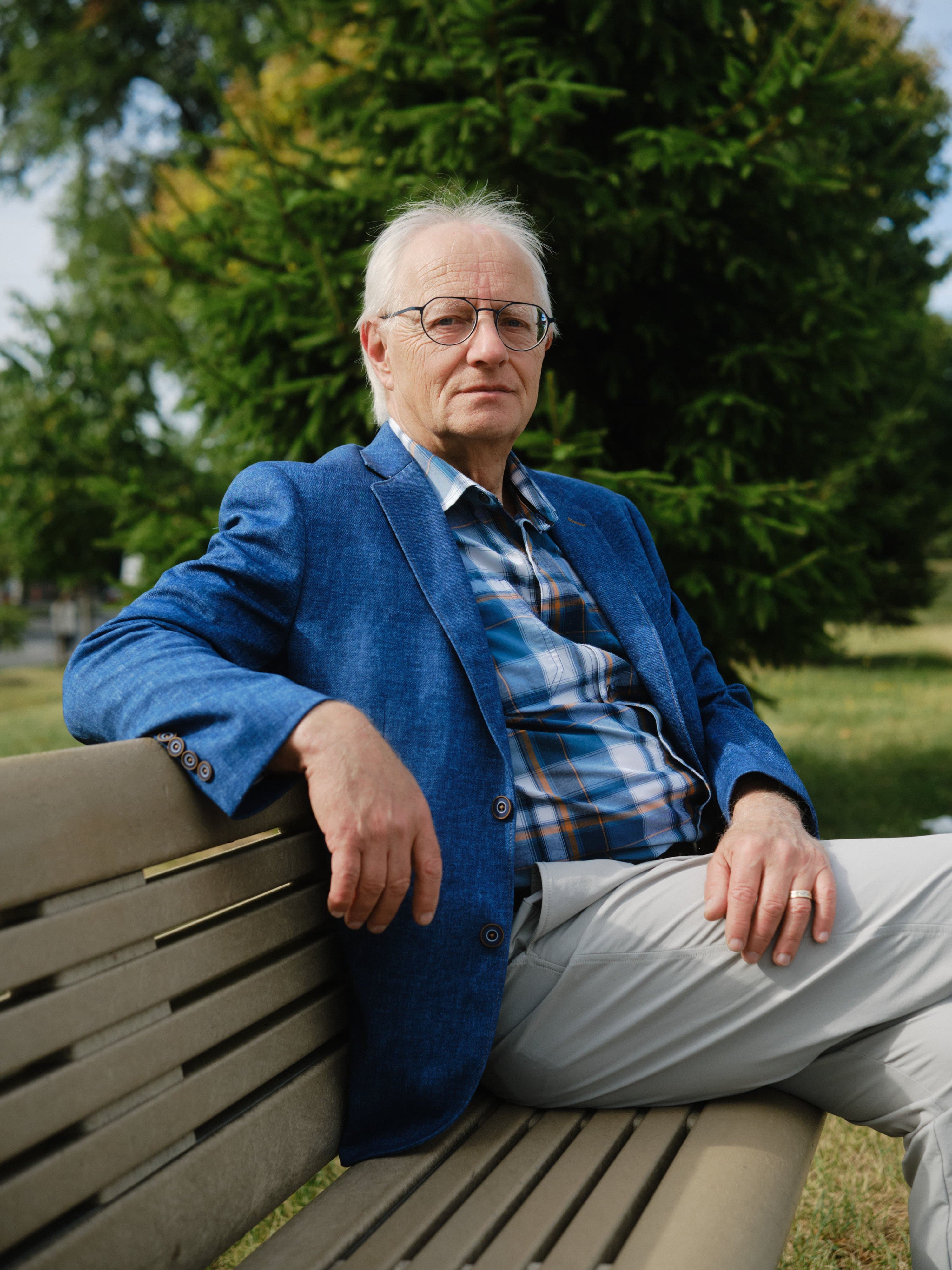
Daniel Baril grew up in the 1950s and ’60s in the tiny town of Black Lake, about 100 kilometres southwest of Quebec City. At the time, the province was at the tail end of la Grande Noirceur—the long era of religious repression that ended with the Quiet Revolution in the 1960s. Before then, the Catholic Church dominated life in rural communities like Baril’s. Many Catholics still felt social pressure to tithe to the church. Parishes were essentially local governments, and health care and education were delivered by Catholic or Protestant institutions.
Baril was the youngest in a family of eight children. Though he learned the sacraments in school and attended mass, he drifted away from faith around 13 or 14. After high school, he moved to Montreal for university and got caught up in the rebelliousness that defined his generation—including a rejection of church power. He became a dedicated opponent of any religious influence in public life. The more he reflected on the dogma he’d been raised with, the more it dissipated, as if his mind were being cleared of a noxious fog.
In 1974, at age 21, Baril had a son. When it came time to send him to school, he found an alternative institution within the Catholic system that quietly avoided religious content. Baril was a teacher, and he also joined an association that helped parents get exemptions from religious instruction in schools. In 1981 he co-founded the MLQ. The organization eventually helped form a coalition of teachers’ unions aimed at dismantling religious school boards and, in 1998, the province did so, replacing denominational school boards with ones organized along linguistic lines.
The MLQ took its activism beyond schools. In 2015, it won a Supreme Court Case against the small city of Saguenay, after learning that the mayor had been opening council meetings with a Christian prayer. The MLQ said this breached citizens’ right to religious neutrality.
Today, Baril is 73 years old, with a thin sprinkling of white hair and watery blue eyes. He is still determined to make his vision of Quebec a reality. Like Bouchera Chelbi, he testified during public consultations for the legislation that would become Bill 21. The panel mostly comprised CAQ members but, even though he was preaching to the choir, Baril took a querulous tone. The new law, he said, should take its cues from the Supreme Court’s Saguenay decision. Brandishing a printout, Baril highlighted two points in that judgment: first, that citizens should not be able to perceive any religious influence in state services, and second, that when a government representative is exercising their function, they are no longer a private citizen. Their first duty is to state neutrality, not their private beliefs.
When I spoke to Baril, he suggested a key difference between francophone Quebec and the rest of Canada: in the republicanism of the French model, religion is similar to a political conviction. You can change it, modify it, and put it on or take it off. The multicultural Canadian model, he says, makes religion something more like an ethnicity—an unchanging attribute that’s essential to a person’s identity. To Baril, signalling your religious convictions at work is like wearing a button announcing your political affiliations. A kippah, a cross or a hijab is an active expression of faith. “It’s a prayer you wear,” he says.
Joe Ortona, the chair of the English Montreal School Board, says this is backwards thinking. Religious neutrality is not about what teachers wear, but what they teach. He thinks that by targeting religious symbols, the government, the MLQ and other advocates of la laïcité are trying to solve a problem that doesn’t exist. “We never had a complaint from a parent about a teacher wearing a religious symbol,” he told me.
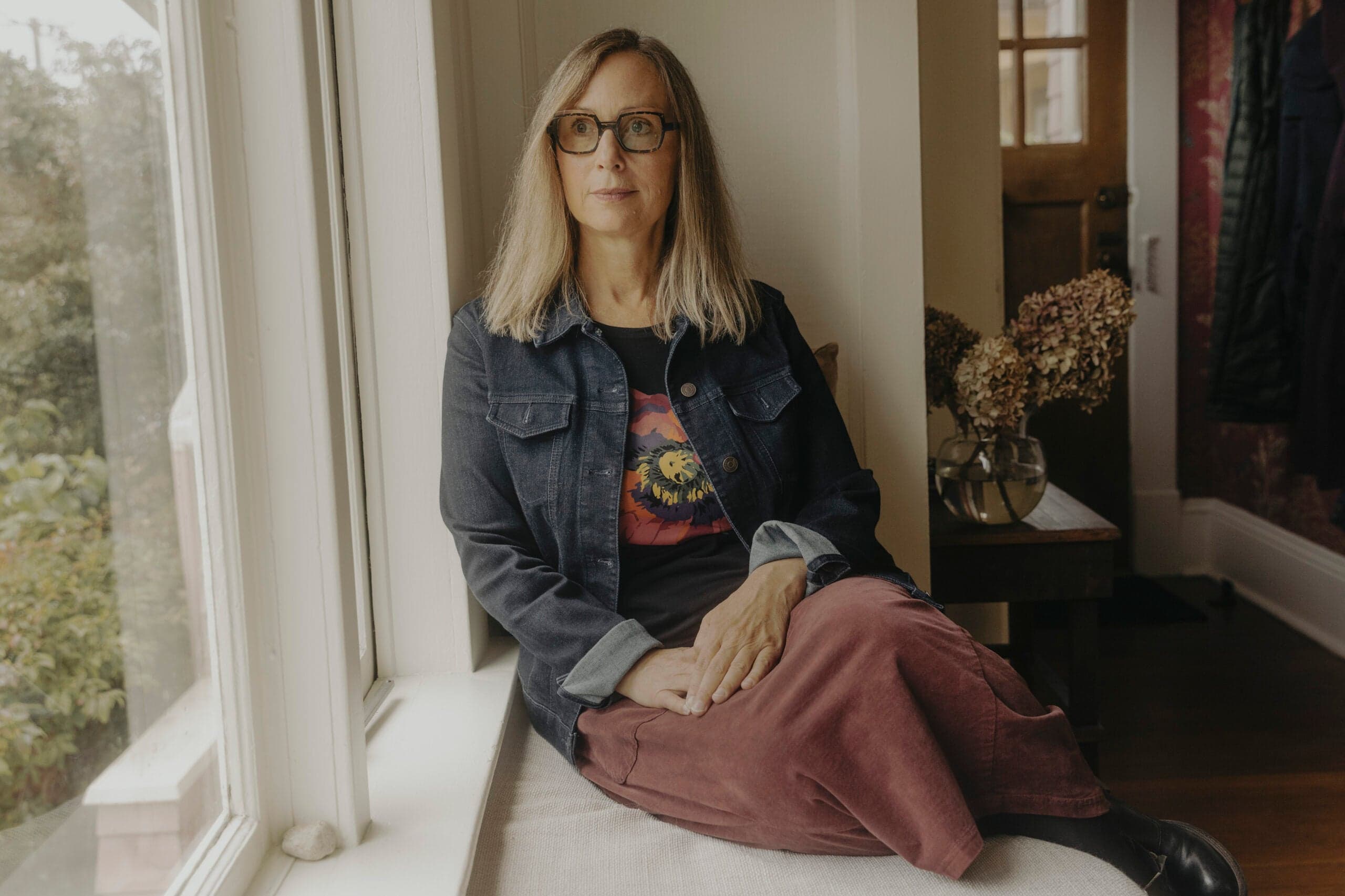
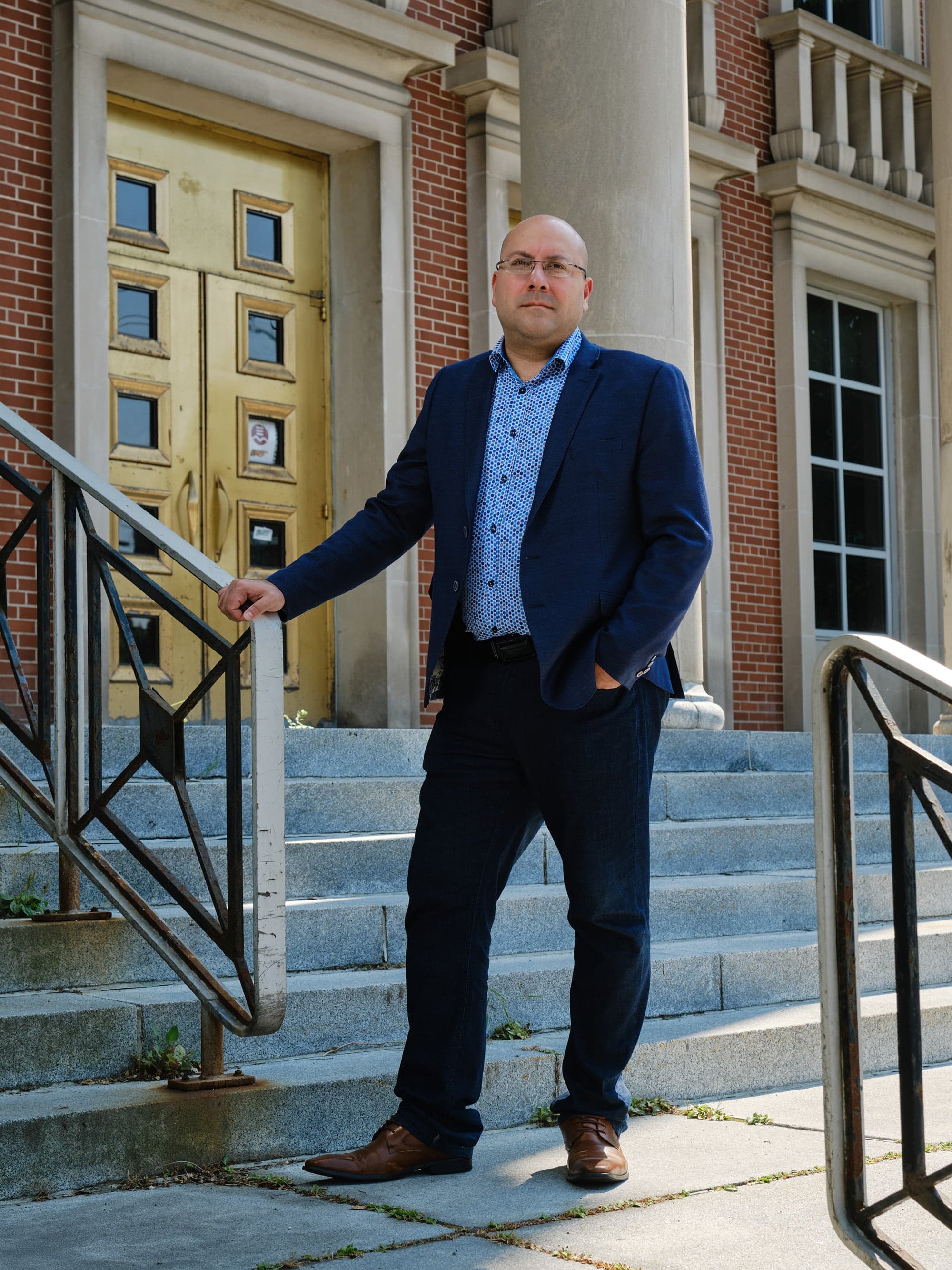
Ortona is bald and pugnacious, with the distinctive accent of an Italian Montrealer. In addition to his ESMB position, he is president of the Quebec English School Boards Association, but these are part-time roles. By day he’s a criminal lawyer. Like Baril, Ortona grew up Catholic. But he is 30 years younger, and his family are relative newcomers to Quebec—he’s the son of Italian immigrants who settled in Montreal’s Saint-Leonard neighbourhood in the 1950s. As a child, he went to mass every Sunday with his grandmother, and he was devout in the simple and unquestioning way that children often are. “I believed in miracles and all that stuff,” he says.
Today he is a non-believer, and the EMSB is a strictly secular organization. Ortona agrees that church and state need to be kept separate. But, he says, English-speaking communities in Quebec subscribe, like the rest of Canada, to a version of tolerant secularism that goes hand in hand with multiculturalism. He believes that children of all backgrounds need to see themselves and their families reflected, and that having visibly diverse staff is a benefit for all kids: “It exposes them to the undeniable fact that there are people in the world who look different than they do.”
In 2020, 18 months after Bill 21 passed, the Superior Court of Quebec heard the first arguments against it from the EMSB and other challengers. But the complainants faced a major barrier. When passing the law, the Quebec government took the then-unusual step of pre-emptively invoking the notwithstanding clause, the section of Canada’s Charter of Rights and Freedoms that allows provincial legislatures to override parts of the Charter—including rights to freedom of religion and freedom from discrimination. Because the notwithstanding clause shielded Bill 21 from legal challenges on the basis of these rights, it didn’t matter if the bill was discriminatory or not.
Instead, the plaintiffs were forced to put together a battering ram of technical arguments attacking the law’s constitutionality. Chelbi’s lawyers argued that Bill 21 violated the right to freedom of religion, as laid out in the Quebec Act of 1774. Ichak Nourel Hak, a newly minted teacher who wore a hijab, described being suddenly unable to apply for jobs, despite teacher shortages that left hundreds of positions unfilled across the province. Her lawyers argued that Bill 21 violates fundamental constitutional principles.
The hearings took nearly a month and a half. When Judge Marc-André Blanchard finally rendered his judgment in April of 2021, most plaintiffs’ hopes were dashed: because the government had used the notwithstanding clause, the law remained valid. But his judgment nonetheless contained harsh words for the government. “The use by the legislator of the notwithstanding clause appears excessive because it is too broad,” he wrote, “although legally unassailable in the current state of the law.”
The decision wasn’t a total defeat for Bill 21’s opponents, however. Blanchard upheld one argument against it, which came from the English Montreal School Board. This rested on section 23 of the Charter, which, unlike others, isn’t covered by the notwithstanding clause. It guarantees official language minorities—anglophones in Quebec and francophones in the rest of Canada—the right to establish and govern their own schools. Essentially, the EMSB argued that being an English-speaking Quebecer means embracing diversity and difference, and so should an English-language education. Blanchard agreed.
Ortona was thrilled. His team had succeeded with what some people had thought was a long-shot argument. He did, however, wish Blanchard had also upheld the EMSB’s claim that Bill 21 infringed on the right to equal treatment for men and women. Since the law affects Muslim women more than any other group, this argument could have paved the way to striking down Bill 21 for everyone. Blanchard did recognize in his judgment that the law disproportionately affected Muslim women, rather than men. And he wrote that forcing people to choose between their faith and their profession was cruel.
Before the day was over, the CAQ announced it would appeal the judgment in favour of the EMSB. “There are not two Quebecs,” said Simon Jolin-Barrette, the government’s justice minister, to reporters. “The laws must apply uniformly on Quebec territory.” Chelbi and other plaintiffs also found grounds to appeal. There had to be a way around the notwithstanding clause.
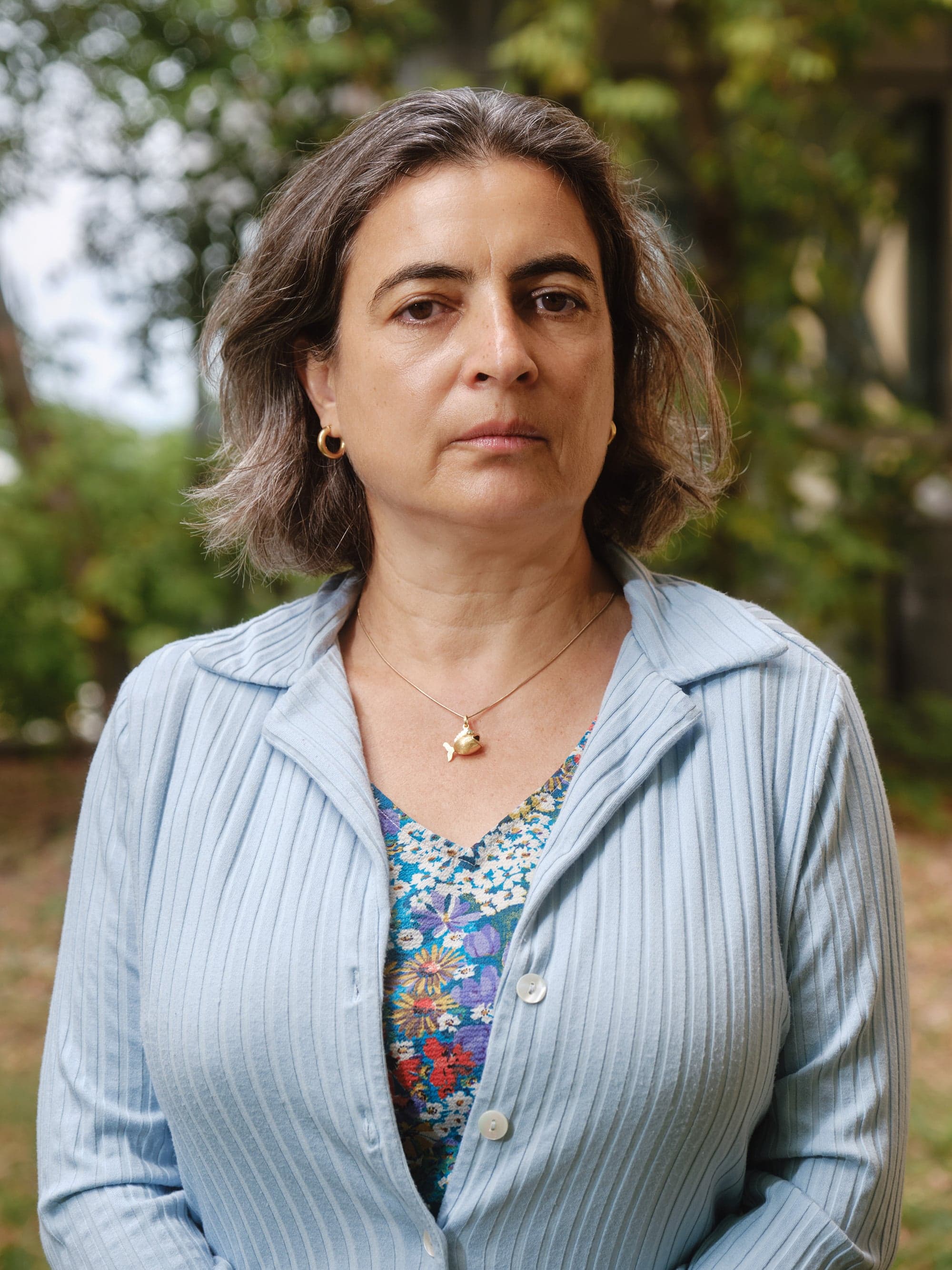
The initial effects of Bill 21 were subtle. In 2021, researchers from McGill and Concordia found that 52 per cent of education and law students surveyed planned to leave Quebec due to the legislation. Even those who didn’t wear religious symbols felt other provinces might offer friendlier environments. But few teachers were actually fired—the grandfather clause staved off any dramatic exodus from affected professions. This is why the story of Fatemeh Anvari created a national sensation. Anvari was hired in 2021 to teach Grade 3 at Chelsea Elementary, in the Outaouais region. School administrators thought that the EMSB’s victory in court meant that, for the time being, English schools were exempt from Bill 21. They were wrong. While the case was making its way through the courts, school boards had to uphold the law. So, in December, Anvari’s principal reluctantly told her that the board had to let her go if she continued to wear the hijab. She later took on a non-teaching position, which wasn’t covered by Bill 21, but Anvari’s resolve to wear the hijab actually grew after she lost her job. She told me she no longer wears it primarily out of religious devotion but to remind herself not to let others dictate her choices. “For me,” she said, “it represents empowerment.”
To Nadia El-Mabrouk, this is nonsense. She’s a professor of computer science at the Université de Montréal and president of the civil society group Rassemblement pour la laïcité, a pro–Bill 21 group. Growing up in the ’70s and ’80s in Tunisia, she saw a shift in the culture after the Iranian Revolution and the rise of the Muslim Brotherhood in Egypt. The festive, casual Islam of her childhood took on a fundamentalist character. When she was a teenager, her cousins would come home from university saying that prayer and the hijab were obligations of Islam. Her aunts began donning hijabs and praying daily.
El-Mabrouk wanted to believe too, but she couldn’t overcome her skepticism. In 1988, she went to France for university and eventually moved to Quebec. When she arrived during the ice storm of 1997, she found the cityscape of tree branches encased in glassy sheathes exotic and magical. In 2013, when many other Muslims denounced the Charte des valeurs as racist, she felt compelled as an immigrant herself to speak in its defence. “We didn’t come here to prevent Quebec from evolving its secularism project.” El-Mabrouk no longer actively practises Islam, but she identifies as culturally Muslim.
Quebec’s efforts to entrench secularism seem to El-Mabrouk like a refutation of the oppressive religious culture she’d seen in her youth—which is the same argument I heard from Daniel Baril. She also echoed his points when I asked what she’d say to women, like Bouchera Chelbi or Fatemeh Anvari, who felt the law discriminates against them. Teaching requires a professional demeanour, she said, and that means not betraying an outward sign of one’s religious or political affiliations. She doesn’t sport a button advertising her support of Bill 21. When we spoke in her office, she pointed out that she had closed the door so no one could hear. She supervises a graduate student who wears a hijab, but they never discuss Bill 21.
And it is the hijab, more than any other religious symbol, that has become a lightning rod in Quebec’s secularism discourse. During the bitter Charte des valeurs debates, disagreements about the hijab tore apart a prominent feminist group, the Fédération des femmes du Québec. The organization defended a woman’s right to wear what she chose, sparking the creation of a splinter group that called itself Pour les droits des femmes. It fights for secularism and against the hijab in public institutions. Just as the debate exposes two conflicting forms of liberalism, it has revealed two competing strains of feminism. Many women who are against the hijab still value their freedom to choose over legislating what women can and can’t do. And for a law that trumpets its feminism so loudly, Bill 21 has more male supporters than female. A Léger poll conducted in 2022 found that the law was more popular among men than women in every age group under 75.
The same poll asked Quebecers how they felt about major religions. Respondents expressed the most positive views of Christianity, followed by Judaism, Sikhism and, in last place, Islam. More than half of respondents had a negative view of the faith. The poll also found that 66 per cent of female Muslim respondents had received hateful remarks and sometimes physical threats. In May of 2019, while consultations on Bill 21 were underway, CBC News interviewed Fatima Ahmad, a woman who had been approached near a Montreal metro station by a strange man who pushed her and tried to rip off her green niqab. More extreme instances of anti-Muslim violence had also occurred: in 2017, a shooter murdered six Muslim men at a Quebec city mosque, in one of the worst mass killings in Canadian history.
I asked El-Mabrouk about violence against Muslims wearing the hijab, and she responded defensively. “I get a lot of harassment too for defending secularism” she told me. “I’m a poor girl too, no?” She said that stories of women allegedly being harassed are not credible. “This is part of an Islamist strategy aimed at demonizing Quebec and its secularism project.”
When I mentioned these reports of harassment to Baril, he didn’t doubt their veracity. But he suggested the mistreatment of hijab-wearing women was also because, in his words, “they’re signalling that they refuse to integrate into society.”
Fears that Islamists were infiltrating Quebec reached a new pitch on the afternoon of May 23, 2023. Montrealers tuned to 98.5 FM heard Le Québec maintenant, one of the province’s most popular drive-home shows. The broadcast that day featured the digitally distorted voices of teachers describing Bedford Elementary, a school in Montreal’s Côte-des-Neiges neighbourhood, as if it were mafia turf, with warring groups of teachers battling for supremacy. Anonymous witnesses suggested that a “majority clan” of Muslim teachers from the Arabic-speaking African region known as the Maghreb—Tunisia, Algeria and Morocco—were creating a sinister atmosphere at the school. These teachers allegedly terrorized children, bullied colleagues, imposed harsh rules, barred special-
education workers from classrooms and spoke in Arabic, so outsiders couldn’t understand them.
The reports were anonymous, but they exploded in the public imagination. The specifics of the story eventually faded, but the overall impression persisted, about a Quebec under siege from mass immigration, about foreign influence and about a school that had become something like a fundamentalist institute. “Islamist Infiltration at Bedford and in Quebec: It’s Time to Say No,” read a headline in the Journal de Montréal.
The real story was less sensational. A report by auditors from the ministry of education turned up some genuinely concerning findings: the sex-ed curriculum was quietly soft-pedalled due to discomfort from the predominantly Muslim parent committee, and there were instances of teachers yelling at and pushing children. It was also true that the school had essentially been hijacked by a group of teachers who created a toxic atmosphere. But this was due not to religious differences—many of the combatants on both sides were of Maghrebi origin—but pedagogical disagreements. Ultimately, the province suspended 11 teachers’ licences.
Still, the idea that Islamic extremism had seeped its way into classrooms was new fuel for proponents of Bill 21. After the province’s report came out, Premier François Legault, Education Minister Bernard Drainville and Secularism Minister Jean-François Roberge pledged to toughen secularism laws even further. Then, this March, the province introduced all-new legislation instead: Bill 94, a logical extension of the state-sponsored secularism of Bill 21.
The legislation is still being drafted, but ideas under discussion include prohibiting religious symbols on parent volunteers, barring prayer in any space on school premises and refusing speech therapy or other educational supports for homeschooled children who wear the niqab (a long garment that entirely covers the body and face, leaving only the eyes exposed) or whose parent does. Bill 94 is certain to extend the ban on religious symbols to all school staff, including janitors, cafeteria workers, playground supervisors and educators delivering after-school programs. It will impose on school administrators the additional duty of carrying out annual assessments to make sure staff respect the new strictures. The bill will also ban employees of French-language schools from speaking any other language, even on their breaks. And, as with Bill 21, the government will almost certainly invoke the notwithstanding clause to protect Bill 94 from challenges. Louis-Philippe Lampron, a law professor at the Université Laval, has pointed out that it has to, since the new bill extends the ban on religious symbols to more people.
That means Bill 94 will also be on trial when Bill 21 is debated at the Supreme Court in the coming months. If the CAQ succeeds in defending its use of the notwithstanding clause, there’s little to stop it from enlarging the sphere of la laïcité as widely as it wants.
Last February, the three-judge panel of Quebec’s Court of Appeal released a unanimous verdict, upholding Judge Blanchard’s previous decision declaring Bill 21 constitutional. It also overturned the EMSB’s exemption from the law. “Nothing in the act has any impact whatsoever on the use of the English language in schools,” the judges wrote.
Bill 21’s proponents celebrated. Premier François Legault said that the province would continue to use the notwithstanding clause “as long as it is necessary for Canada to recognize the societal choice of the Quebec nation.” (The clause must be renewed every five years; the province did so in 2024.)
The EMSB appealed the Court of Appeal’s decision—as did Bouchera Chelbi, Ichak Nourel Hak and virtually every other plaintiff. Their next and final stop is now the Supreme Court. Today, the plaintiffs are sharpening their cases. The EMSB will argue that a ban on religious symbols will impede its ability to hire and promote Muslim women, which it is arguing is its constitutionally protected right. Lawyers representing Chelbi will insist that prohibiting a religious practice is not within provincial jurisdiction. The Lord Reading Law Society, an association of Jewish jurists, will claim that Canada’s commitment to religious pluralism for representatives of the state predates the Charter, citing an 1832 law that granted Jews permission to hold public office. Another, more ephemeral argument is that, even if Bill 21 is technically in line with the written Constitution, it goes against the spirit of the “unwritten constitution”—the norms that sustain the document.
A key question will be whether the Supreme Court should reconsider an established precedent governing the notwithstanding clause: the 1988 case of Ford v. Quebec. That case involved a challenge to Bill 101, which regulates the use of French on business signage. The provincial legislature had invoked the notwithstanding clause, and the Supreme Court decided that as long as the legislature’s application of the clause respected formal procedures, the court couldn’t weigh in on whether the law violated the right to freedom of expression.
Some people believe it’s time to revisit this carte blanche approach. In August, the Saskatchewan Court of Appeal ruled that a law requiring parental consent for kids under 16 who request new pronouns at school is subject to judicial declarations regarding Charter rights. Even though the Saskatchewan legislature invoked the notwithstanding clause to protect the law, the decision means that citizens will hear the court’s analysis of whether it violates Charter rights. (It does not mean the law can be overturned, however.) Polling has suggested that, should Quebecers hear that the Supreme Court finds Bill 21 discriminatory, support for it would drop by 18 points.
The Bill 21 challenge might seem unique to Quebec, but the questions it raises about the power of the judiciary versus the legislature concern every province. That’s why the federal government, as well as several provincial governments, will also be arguing against the bill at the Supreme Court.
How the Court decides on Bill 21 will have far-reaching consequences but, even if it’s overturned, the schism in Quebec society won’t be easily repaired. Back in 2020, when the first intimations that Bill 21 would end up at the Supreme Court emerged, secularist Quebec historian Lucia Ferretti described the full-court press that its legal challengers employed. “One cannot help but see this artillery barrage as a sign that English Canada and those Quebecers who follow the Canadian model are determined to put Quebec in its place as an internal colony,” she wrote. Why, she asked, should Quebec even submit to the decision of the Supreme Court of Canada?
Despite the pressure of the legal fracas, Chelbi thinks she’s lucky. Her school’s administration, her colleagues and her students’ parents have all been supportive. But she hasn’t quite gotten over her initial surprise that her hijab is such an issue in the first place. She tells me she once worked at a school for a year before a colleague told her that she realized Chelbi was “just like us.” Once, a man yelled at her in a supermarket parking lot to go back to her own country. “This is my country,” she told him.
This story appears in the October 2025 issue of Maclean’s. You can buy the issue here, subscribe to the magazine here or send a gift subscription here.
Related Posts
The Battle for the Soul of the University

The Rich List
Big Tech v. Me
Get the Best of Maclean’s straight to your inbox.
Sign up for news, commentary and analysis. Join 60,000+ Canadian readers.