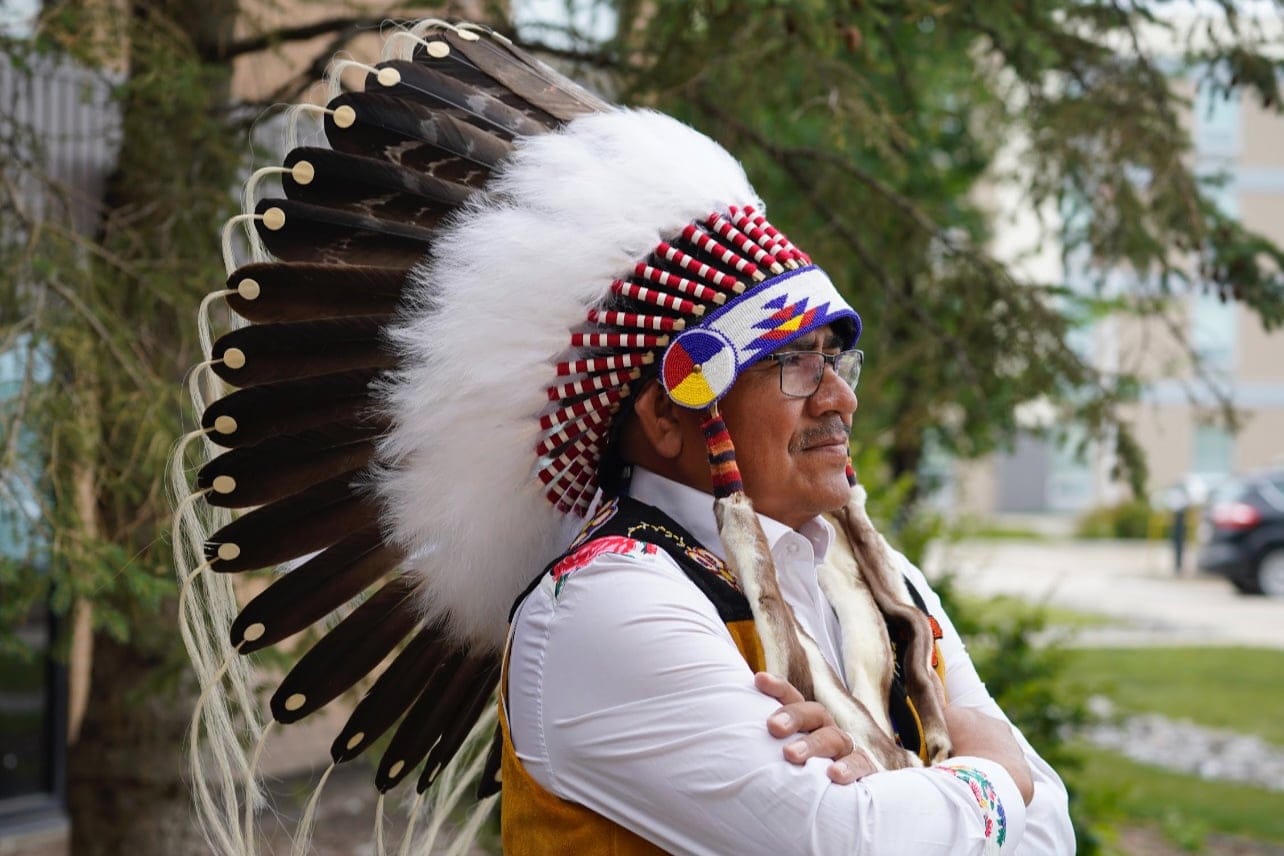
A Sovereign Alberta Is a Treaty Violation
I grew up in Sturgeon Lake Cree Nation, a three-and-a-half-hour drive north of Edmonton in Treaty 8 territory. After my parents separated, I was raised by my grandparents: my grandfather trapped furs and my grandmother tanned hides and pelts. I enjoyed the traditional life, but I never imagined I’d end up as our nation’s chief. Some of my friends and other respected members of our community convinced me to run. They thought we needed a leader that wasn’t afraid to speak plainly about the challenges facing our nation—particularly those resulting from our dealings with the government. I took over the role in 2022.
Historically, Sturgeon Lake Cree Nation hasn’t had an active relationship with the province. First Nations lands are federal lands, so many of our services—like education, for example—are primarily funded by the federal government, which has treaty obligations to us. In recent years, however, our council has noticed an increase in provincial legislation that infringes on our rights. The Critical Infrastructure Defence Act, passed by Alberta’s legislative assembly in 2020, criminalized demonstrations on railways in the wake of the Wet’suwet’en solidarity blockades. And last December, the All-Seasons Resorts Act was ratified, permitting Crown land to be used for commercial tourism development without first clearing those deals with First Nations. But few of us paid much attention to separatist sentiment until after this spring’s election, when the Smith government tabled Bill 54 to lower the threshold for a provincial referendum. I thought, They can’t be serious.
Don’t miss the October issue of Maclean’s
Featuring the Nation Makers, the end of gentle parenting and Evan Solomon’s AI ministry. Subscribe by September 14 to get it delivered.
SUBSCRIBE NOW


Soon after, I had a meeting with other chiefs, like Grand Chief Trevor Mercredi of Treaty 8 First Nations of Alberta and Chief Billy-Joe Tuccaro of Mikisew Cree First Nation. Some wanted to respond with more diplomatic, politically correct messaging. The Treaty 8 First Nations of Alberta quickly released a statement saying a referendum on separation would be a treaty violation, but it didn’t receive much attention. We felt a more firm response was merited, so we also drafted and sent a cease and desist letter directly addressed to Danielle Smith, warning her administration to stop stoking the separatist fire. We chastised them for stirring up a national unity crisis at a time Canadians should have been coming together against Donald Trump’s rhetoric. The point was to be direct, to elicit a response. It worked. Our letter made national news the next day.
Canadians rarely bring up treaty violations in separatist debates because, put simply, it’s easier to ignore them. Few people want to admit that First Nations’ interests are still put in a little box and set aside, still second-class. We’re told, “These are the things we’ll allow you to do. This is how we will allow you to exist.” Canadians forget about Treaties 1 through 11, signed by First Nations and the Crown, based on King George III’s Proclamation of 1763. It stipulates that only the British Crown—not colonial or local governments—has the right to negotiate with Indigenous nations on land and governance matters. Alberta, a province that didn’t even exist when we signed our first treaties with Canada, does not have the authority to supersede that. Even with a “yes” vote, independently deciding to secede without the free, prior and informed consent of First Nations would put the province in breach of Canada’s obligations.
This new separatism push in Alberta is the continuation of a struggle that First Nations have already been waging for 125 years: maintaining sovereignty over our land even as governments try to impose change on us without proper consultation. Consider the recently tabled federal Bill C-61, the First Nations Clean Water Act. It proposes giving jurisdiction of water access on reserve to First Nations; we never surrendered that jurisdiction in the first place. Even the rise of AI has flared the issue. Last year, the Alberta government transferred territory belonging to Sturgeon Lake Cree Nation to the Municipal District of Greenview, the proposed future site of developments like the Wonder Valley project—soon to be the world’s largest AI data centre. Our people use water and operate traplines in the area, and we learned of the project by way of a press release. Despite repeated requests for more information, we’re still not totally sure of Wonder Valley’s potential environmental impacts. As is true of secession, when First Nations push back, we are often told we’re against progress. We support responsible development and want better jobs and more prosperity, as everyone in Alberta does. But we also need to be engaged earlier—and included in the outcome.
Related Posts

Carney’s Biggest National Project is Mythmaking
Alberta Treaty Law Could Decide the Arctic
In the last few months, Sturgeon Lake has sent letters asking to sit down and discuss treaty infringements with Premier Smith. We haven’t heard back. We want to work with the province, but we’re still weighing our options, including taking legal action. Onion Lake Cree Nation, which straddles the Alberta-Saskatchewan border, has already mounted a lawsuit against Alberta’s Sovereignty Act, saying the province’s growing separatist agenda threatens treaty rights. Chief Henry Lewis argued the Act and related legislation—like Bill 54—undermine federal authority, attempts to intimidate First Nations and violate their treaty relationship with the Crown. There are five or six other problematic laws that show a pattern of privatization and reflect a separatist push. With the limited legal resources we have, our nation can’t challenge them all, but we’ll find a way to protect our way of life.
Wherever I travel across this country, First Nations tell the same story: only sovereign nations sign treaties, and there was never any talk of secession or surrendering of land or resources in the process. If there was, our ancestors would never have signed. As far as Alberta is concerned, it is all First Nations land. We won’t sit back and watch it go.
Sheldon Sunshine is chief of Sturgeon Lake Cree Nation in Treaty 8 territory.
Related Posts

How to Win the Space Race

Carney Is the Crisis Manager Canada Needs

Canada’s Defence Firms Are Ready to Boom
My Adventures in Greenland
Get the Best of Maclean’s straight to your inbox.
Sign up for news, commentary and analysis. Join 60,000+ Canadian readers.