
The Smart Case for Private Health Care
I recently saw a retired dentist at my medical clinic in Vancouver. His cardiologist had told him to exercise regularly in order to improve his circulation and control his blood pressure. But the dentist was a former competitive athlete who now suffers from advanced osteoarthritis in his hip. He was experiencing severe pain after just a few steps and couldn’t walk more than a block. He needed strong painkillers, even to sleep, and was concerned about the dangers of developing dependence. He was placed on a one-to-two-year wait list for hip-replacement surgery. I advised him to get the surgery as soon as possible—even if that meant leaving the province or country and paying for it. If he did, he wouldn’t be alone: last year, Canadians took 215,000 trips abroad for private medical care to avoid torturously long wait lists at home.
While many other countries incorporate private insurance and clinics into their systems to spur competition and shorten wait times, Canada is the only country in the world whose residents are banned from accessing private medical insurance or paying out of pocket for publicly insured services, even when faced with life-threatening delays. My patient asked why private insurers that provide coverage for people with severe dental pain can’t cover those with severe hip pain—and why he couldn’t seek care at a private clinic. “It doesn’t make sense,” he remarked. I agreed. By waiting, he faces serious risks to his health. He is now planning to undergo surgery at a private facility in the U.S. at a cost of at least $40,000. This will alleviate his pain and drastically improve his quality of life. He’s lucky that he can afford that option.
Orthopaedic patients aren’t the only ones going years without treatment—people are also waiting for cardiac appointments, cancer care, life-saving surgeries. Remarkably, the Canadian government allows many patients to suffer and even die each year while waiting for care. Government data reveal that at least 75,000 people have died on public surgical and diagnostic wait lists in the last six years. Canadians often suffer serious pain, limited activity, drug dependence and depression as they serve out a life sentence imposed by the state.
Canada’s Not For Sale
But Maclean’s is
SUBSCRIBE NOW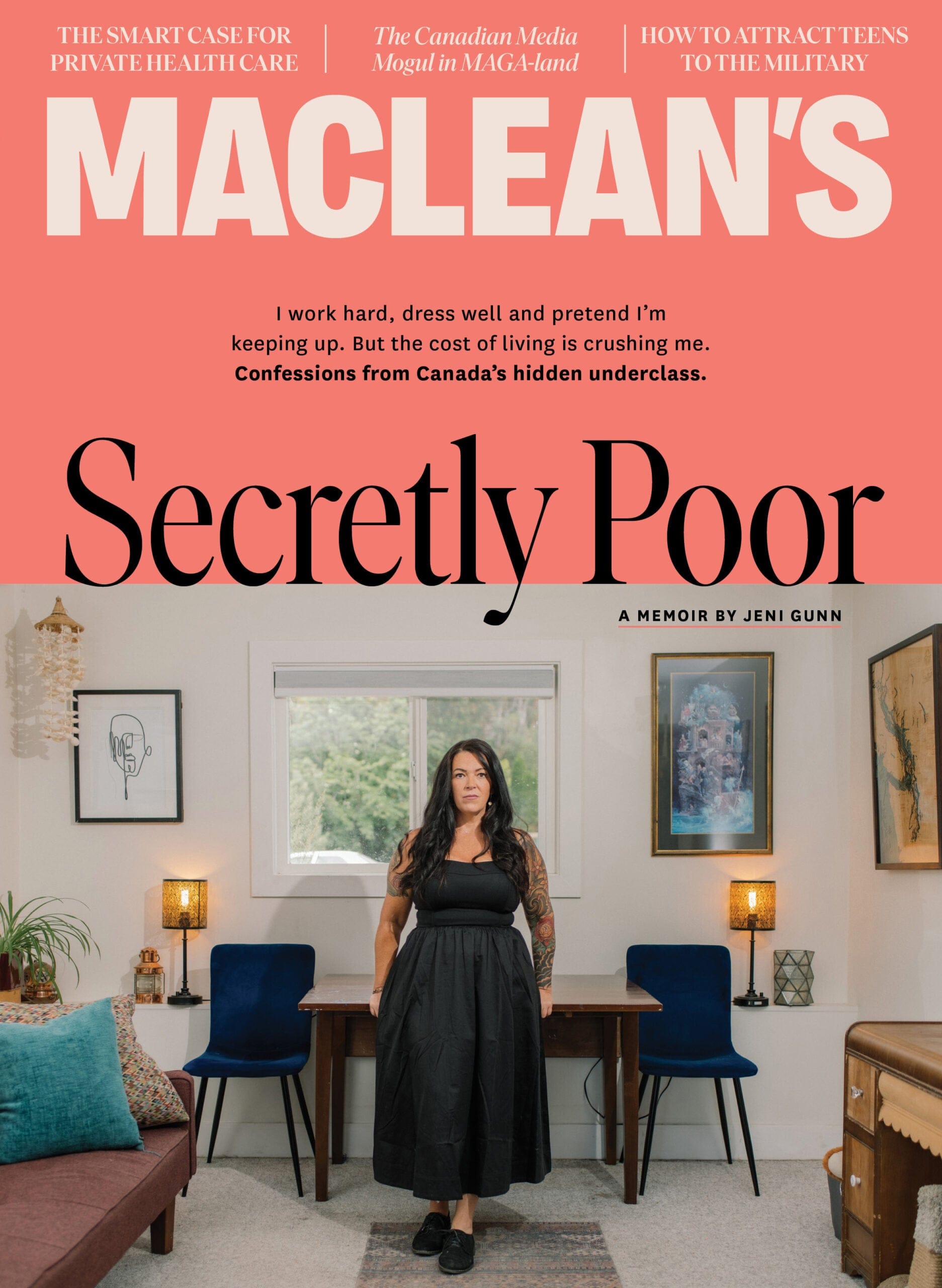


Like most doctors in Canada, I believe that if the public system could provide patients with timely care, there would be no need for a private option. But medicare in Canada has been on a downward spiral for 30 years—and the government can no longer hide behind its good intentions. When I first started working in Canadian medicine in the 1970s, all patients received timely care, and Canada had the second-highest physician-to-population ratios in the world; a recent OECD ranking now places us 35th. There were also plenty of nurses and hospital beds, while today, Canada ranks 31st in hospital beds per capita. Jeffrey Turnbull, a major supporter of medicare and past president of the Canadian Medical Association, summed it up succinctly back in 2010: “You can’t be cured by an idea. You can’t be made healthy by a theory. The system needs to work in practice. And, right now, today, in too many places across Canada, health care isn’t working nearly well enough.” And it’s only getting worse.
The Canada Health Act mandates that every Canadian should have access to medically necessary care, but that system is failing on every front, leaving hundreds of thousands of people suffering. How is this justifiable in a free and democratic society? Shouldn’t Canadians’ constitutional right to life, liberty and security protect them from this serious risk to their health?
Related Posts

AI Could Save Canada’s Health-Care System

Canada Needs a National Vaccination Registry
These questions formed the foundation of the legal challenge I launched 16 years ago, arguing that laws restricting private health care were unconstitutional. In all other countries—including places like Sweden, Switzerland, Germany and Australia—it’s legal for patients to use private insurance to get faster care at private clinics or hospitals. Their systems, which include a mix of private and public facilities, benefit from competition and choice, shortening wait times for everyone and improving results. I lost my battle in the courts in 2023, but I continue to advocate for the Canadian health-care system. As I argue in my recent book, My Fight for Canadian Healthcare, the goal is not to privatize public care but to add new options that will make our existing system more efficient. For decades, private health care has been maligned as the antithesis of Canada’s ideals, a stain on our sacrosanct vision of a universal public system, an irreversible slide into a morass of greed and opportunism. It might actually be a solution to many of our problems.
I was born and raised in a bombed-out house in Toxteth, the poorest area of postwar Liverpool. I was one of just three students from my primary school class who went on to grammar school: the Liverpool Institute High School for Boys. Paul McCartney and George Harrison were my schoolmates, and I sometimes shared the bus with them. Without my school, the Beatles might never have existed: a classmate of Paul’s introduced him to John Lennon. My friends and I often went to see early Beatles performances at the Cavern Club.
I started medical school in the mid-’60s and moved to Canada in 1973. My professors in London had suggested I spend a year abroad. “Anywhere will do,” they said. I’d recently learned to ski and was somewhat addicted, so I chose Vancouver. Within a day of my arrival, I decided to stay, training in orthopaedic surgery at the University of British Columbia. At that time, care was delivered promptly, and if we needed more operating time, the hospital provided it. No one had to wait. But that golden period did not last.
In 1984, the Canada Health Act was passed, suppressing private competition in our health-care system and banning doctors from charging patients for publicly insured services. That meant private insurance could cover things like eye exams, dental care and physiotherapy, but not medically necessary care like GP appointments or hospital visits. I have never had a problem with that concept. But politicians didn’t consider how they would finance their plans. The legislation made hospitals dependent on government dollars alone. Neither the provincial nor the federal governments could afford to fund them adequately. Emmett Hall, the famed constitutional lawyer and one of the fathers of medicare, once said, “I hope that we do not freeze our principles in legislation or bureaucracy such that we cannot adapt to a future of medicine none of us can imagine.” That’s exactly what happened.
Starting in the mid-1980s, federal funding to hospitals declined precipitously from 50 per cent of total spending to 25 per cent. Innovation stalled, services shuttered and public hospitals closed. The ones that remained were on fixed budgets and therefore unable to fund the escalating costs caused by the pressures of an aging population and advances in medicine. The following decade, hospital beds in Nova Scotia decreased by a third, while Ontario got rid of 20 per cent of its hospital beds. Even emergency patients were forced to wait days for care—all due to a monopolistic approach to health-care delivery. Around that time, my wife’s 85-year-old aunt was taken to Vancouver General by ambulance for an acute medical condition. My wife went to the ER, where she discovered her aunt had been lying on a stretcher for more than four hours. She had not been seen by a doctor and was unattended. Decades before, she had been the head nurse in that same department.
ERs weren’t the only problem. Hospitals were forced to close operating rooms and cut back on their hours, restricting the number of patients that surgeons could treat and forcing patients to wait for months for surgery. We started to see doctor and nursing shortages too: in the 1990s, B.C.’s NDP government cut back medical school intakes dramatically, and other provinces followed suit. I heard from at least one university dean that his med school’s enrolment had gone down by 30 per cent.
While Canada was falling behind, the medical industry was leaping forward. Throughout the ’90s and early 2000s, I attended international conferences, where I was exposed to newer and better techniques and technologies, such as instruments that enabled minimally invasive hip, knee and shoulder surgeries. My colleagues and I were keen to offer these superior options to patients. Hospital administration refused because it would attract more patients and their budgets would suffer. Their short response to our request: “There is absolutely no money available to be spent on new or enhanced products.” Doctors were instructed not to use any new technology unless it was available at no cost.
Medicine and medical technology have advanced more in the last 40 years than in the previous 30,000. When medicare was first introduced, organ transplants, joint replacements, minimally invasive endoscopic procedures, gene and stem cell therapy, robotic and laser surgeries and other complex interventions did not exist. Today, there are life-saving drugs that cost almost $3 million for a single dose. No society can afford to fund everything for everyone, and none does.
Canada’s system can’t even afford to provide the most basic care, much less cutting-edge medical procedures and treatments. It’s broke. The youngest baby boomers are now over 60 years old. They will receive an average of $4,000 more care than their lifetime tax contributions will fund, while younger Canadians will pay $18,000 to $27,000 more than they will receive. Governments plan in terms of election cycles, not generations, and funding hasn’t kept up: health care consumes about 40 per cent of program spending in every province. Canada is one of the biggest spenders on public health care, but ranks among the lowest in terms of timely delivery.
By the late 1980s, hospitals couldn’t afford to keep their ORs open at all hours, and the surgical time allocated to me and my colleagues was progressively cut from an average of 20 to five hours a week. In my travels, I’d visited smaller surgical facilities whose design was based on the “focused-factory” model, a concept pioneered at Harvard Business School. The idea was that small clinics, delivering a limited set of focused, high-quality services and interventions, were more productive and efficient than jack-of-all-trades mega-hospitals. I saw how they delivered services more effectively. I was confident that certain groups, such as workers’ compensation boards, veterans and federal employees, all of whom were exempt from the public system and covered by separate insurers, would embrace such a model. Together with a small group of colleagues, friends and supporters, I decided to establish a small private surgical centre. We recruited 20 investors, including the late Vancouver businessmen Jack Poole and Milan Ilich and other philanthropists who had collectively donated tens of millions to the public system. The lawyers we consulted told us our concept did not violate either the Canada Health Act or any provincial laws.
Cambie Surgery Centre opened in 1996 with some of the first digital operating rooms in North America. We received visits from national and international hospital leaders anxious to view our advanced technology. We loaned our equipment to public hospitals at no cost, allowing them to perform procedures like hip surgery with less invasive techniques and reduced hospital stays. In response to our success, many hospitals later upgraded their technology. Competition was working.

Our procedures encompassed all surgical specialties—orthopaedic, cosmetic, ophthalmological and dental—and we often did them at 40 to 50 per cent of the cost of large public hospitals, thanks to our smaller footprint and lower administrative fees. Prior to our opening, many cosmetic surgeries and complex dental procedures on children were being performed in public hospitals. By transferring them to our centre, capacity in public hospitals increased, and our centre generated tax revenue for all three levels of government. In 30 years, we have treated over 90,000 patients at Cambie with zero mortality. Our patients included not only exempted groups, but also self- or employer-funded B.C. residents. Our services range from $500 for consultations to more than $20,000 for complex procedures.
Many of our patients are from out of province. There’s a loophole in the laws restricting private funding for health care in Canada: upon crossing a provincial border, you are free to access private health care of all types. In this respect, non-residents have more legal rights than residents. Cambie serves hundreds of these interprovincial clients each year. Several months ago, I operated on five Alberta patients at Cambie and, on the same day, a colleague in Alberta operated on six B.C. patients. It’s a ludicrous escape clause. How would you feel if a non-resident could drive through red lights or ignore speed limits? It reminds me of Mr. Bumble’s line from Oliver Twist: “If the law supposes that, the law is a ass—a idiot.”
The taboo around private health care entered the spotlight in 2002, when the Quebec courts denied permission to Jacques Chaoulli to bill privately for services. His court petition eventually reached the Supreme Court of Canada, which in 2005 legalized Quebecers’ constitutional right to purchase private insurance. “The physical and psychological suffering and risk of death that may result from the prohibition on private health insurance outweigh whatever benefit—and none had been demonstrated here—there may be to the system as a whole,” the court stated. Canada’s leading constitutional expert, Peter Hogg, told me he believed the decision was binding on the rest of Canada.
Our clinic operated without much government interference until 2009, when the B.C. nurses’ union pressured the provincial government to act against us under a new provincial law: the Medicare Protection Act, which bans extra billing and private insurance for people enrolled in universal health care. We countered with a constitutional challenge.
Our plaintiffs showcased the dangers of long public wait lists. They included a 79-year-old woman with terminal cancer who was housebound with severe knee pain and on a wait list that greatly exceeded her life expectancy. She underwent surgery at Cambie, regained mobility and spent the last few years of her life active and without pain. Another witness suffered from colon cancer but was denied timely surgery, and her cancer spread. One young boy suffered paralysis after waiting too long for surgery. And a young competitive athlete with a painful knee surgery faced losing her university scholarship if she did not access timely care.
Our legal challenge began in 2009 and lasted for more than 13 years. We argued it was a violation of patients’ Charter rights to promise timely care, then fail to deliver it within a safe timeline while making it unlawful to obtain that care privately. Imagine a family with school-age children moved to a Canadian town where the local public school had limited class size and enrolment, and the parents learned their children would have to wait a year to get into the school. At the same time, government laws prevented those children from accessing private tutoring or attending an independent school. That would be tantamount to the state rationing access to education, while simultaneously making access to non-government options unlawful. This precisely illustrates the strange and unique paradox of health care in Canada.
The judge ruled against us, but we’d always anticipated that, like Chaoulli, we would have to go through the appeal process. The B.C. appeals court identified several errors made by the trial judge, and many of their comments seemed to support our cause. “Wait times in considerable measure flow from government rationing of health care,” wrote the judges. The system, they said, “is intentionally under-designed in order to achieve fiscal sustainability.” They noted that this waiting inherently carries the risk of death.
Despite these statements, the court rejected our appeal. Their dismissal was based on the unproven theoretical argument that allowing a private option would harm our current system. That position ignored the experience in every other developed country with universal care.
To fix Canadian health care, politicians need to open their minds and look for solutions. That means embracing the policies of countries that outperform us, all of which allow a role for private options in medical care. The first and most obvious step is to allow people to purchase private insurance to cover medically necessary services in their own provinces and permit them to seek treatment for them at private facilities. This will inject some much-needed competition into the public system and shorten wait lists. No monopoly is good for the consumer. The argument that private insurance is for the wealthy is easily solved: in a strong, competitive system, the government would pay the premiums for those who can’t afford them.
This kind of hybrid system works. The Swiss, for example, have universal coverage, but it’s largely private: residents are required to purchase their own basic plans, rather than pay through taxes or employment, and the government subsidizes people who can’t afford it. Switzerland consistently ranks as having some of the lowest wait times among countries with universal systems—an average of two days for a GP appointment and 28 days for elective surgery (Canada’s wait times, measured by the same metric, are among the longest). Germany, on the other hand, operates a mostly public health system, but one in 10 Germans has exclusively private insurance. A visiting German orthopaedic surgeon told me recently that waits for joint replacements in their public system were “very long” compared to the private system. When I asked how long, his answer was, “Four weeks, but just one to two weeks for those with private insurance.” To Canadians, that sounds like warp speed.

The U.K. also allows private competition, often covered by employer insurance; that money is funnelled back into the NHS. During our trial, Professor Alistair McGuire of the London School of Economics offered lessons from the United Kingdom. He explained the benefits of a hybrid system. “In B.C., increased private-sector capacity would, in my opinion, supplement the existing waiting time initiatives,” he wrote. “England has had success in countering excessive wait times and hospital quality issues generally, through a mixture of policy reforms, as advocated by the OECD. These reforms have supplemented wait time guarantees with increased choice and competition for patients through increasing capacity, partly by explicitly allowing privately owned clinics and private hospitals to provide substitute treatment options, which adds to health care capacity. The existence of this private care is only possible because of the complementary existence of private health insurance.” International experience shows private competition could improve current health-care shortages by repatriating thousands of nurses and doctors who have abandoned the Canadian system to work elsewhere. In Ontario alone, thousands of nurses commute daily to work in the United States. They could be enticed back by the improved workplace conditions that would result from ending the current monopoly.
Another smart way to incorporate private care into the system is via care guarantees, which determine a defined period a patient can safely languish on a wait list. Canadian hospitals are currently blowing past those deadlines. During our trial, evidence revealed some startling statistics on how many people in B.C. received care within the maximum acceptable period as defined by the government: only 16 per cent of patients with bladder cancer with a high risk of progression, 33 per cent of patients with lung cancer, 22 per cent of patients with ovarian cancer and 29 per cent of patients with cervical cancer. More recently, a 2022 study of Ontario patients revealed that, even pre-COVID, about 25 patients a year died while waiting for necessary cardiac surgery.
Defenders of the current system have proposed that surgical referrals be directed to the “most available specialist.” The flaw in that approach is that all surgeons have unacceptable wait times from assessment to surgery dates. And they’re not equally skilled. Would anyone want to go to the “most available restaurant” for a special anniversary dinner? A 2008 Canadian Medical Association study, “The Economic Cost of Waiting Lists,” reviewed data in just four categories from four provinces and showed the cost to the economy was $14.8 billion in a single year. Extrapolating this to thousands of other procedures nationwide, and to millions of patients waiting, would reveal a massive unmeasured cost.
In a system of care guarantees, health-care professionals would determine the longest a patient can safely wait for treatment. If they can’t get care in the public system by the appointed date, the government must fund their care privately, even if that means sending them to another jurisdiction.
Such guarantees already exist to some degree in Quebec, as well as in many other countries around the world. The Danish government introduced a wait-time guarantee for life-threatening conditions in 2000, ensuring that all urgent patients be seen and treated within four weeks. If this isn’t possible, they must fund the patient’s treatment in the private sector. A similar guarantee for non-acute treatment guarantees that patients will get care within two months or else receive private care, with the bill footed by the state. Sweden introduced its care guarantee in 1992 for elective surgery wait times. But since then, the country has introduced so many other reforms—including contracting out surgeries to private providers—that such long wait times don’t even exist anymore. Now the care guarantee is reserved for how long before a patient is seen by a doctor.
In 2002, Senator Michael Kirby chaired a committee investigating the state of Canadian health care and the government’s role in its administration. One of their report’s final recommendations was to incorporate care guarantees into the public system immediately. More than 20 years later, wait lists are longer than ever and care guarantees remain a pipe dream.
While patients need more freedom to take control over their health care, our public system also needs a huge influx of cash. For decades, it’s been taboo in Canada to consider health care a business. That needs to change. Canadian public hospitals are largely excluded from medical tourism, which is a rapidly growing industry worth some $24 billion globally and set to rise to more than $100 billion by 2032. Several million Americans a year seek care abroad. Many go to Mexico, the Caribbean or countries like Thailand and Malaysia, which receive about two million international patients each year. Despite being one of the U.S.’s biggest trading partners, Canada receives none of that massive revenue because there’s no mechanism to encourage public hospitals to treat medical tourists, even after hours.
At Cambie, we welcome medical tourists. We have treated many non-residents, including world-famous athletes and movie stars. Even that limited participation in medical tourism has public benefits through our tax contributions. When visiting Cuba, I learned their public hospitals gain significant private revenue from treating foreigners in their state hospitals. In the U.K., many specialist centres, such as the Brompton and Royal Marsden, benefit from medical tourism. In London alone, public hospitals receive about $600 million yearly from medical tourism. This could become one of Canada’s biggest industries. Politics and ideology make this impossible.
When it comes to private health care, hypocrisy is rampant. Many passionate advocates of the status quo decry the dangers of paying for private medical services, then turn around seek private treatment when they need it. The former Quebec premier Robert Bourassa underwent cancer treatment at the National Cancer Centre in Bethesda, Maryland, while ex–federal NDP leader Jack Layton visited a private Toronto clinic for hernia surgery. Former Newfoundland and Labrador premier Danny Williams strongly advocated for medicare but went to the U.S. when he needed heart surgery, and one-time federal Liberal MP Belinda Stronach sought treatment for breast cancer in California. Pierre Trudeau and Monique Bégin, pioneers in enacting the Canada Health Act, accessed private orthopaedic care by visiting one of my colleagues in Ottawa.

In Canada, animals have rights that humans don’t: we can purchase private insurance for our pets, but not for ourselves. Back in the 2000s, St. Paul’s Hospital in Vancouver charged private clients, including pet owners, for private MRIs after hours. When the media caught on, the practice was halted, the revenue dried up and patients waited much longer. And as a result, MRI clinics for pets were created. In May of 2008, the cover of this magazine featured a dog in a hospital gown, with the headline, “Your dog can get better health care than you.”
The fact is, private care already exists in Canada: we use private insurance to pay for dental care, medications, physiotherapy, even our ambulance services. Years ago, one of my children, then aged 12, suffered a serious medical emergency and was taken to the emergency department by ambulance. We later received a huge bill. So what is the psychological block that prevents Canadians from accepting the idea of private payment for medical care—especially when there’s proof that it can help the public system?
Imagine the manager of a professional sports team discovered they were spending as much as the top teams but were last in the league. They would figure out what their competitors were doing differently and learn from their approach. That’s what we need to do with Switzerland, Denmark and Germany. Canadians can’t afford to keep waiting.
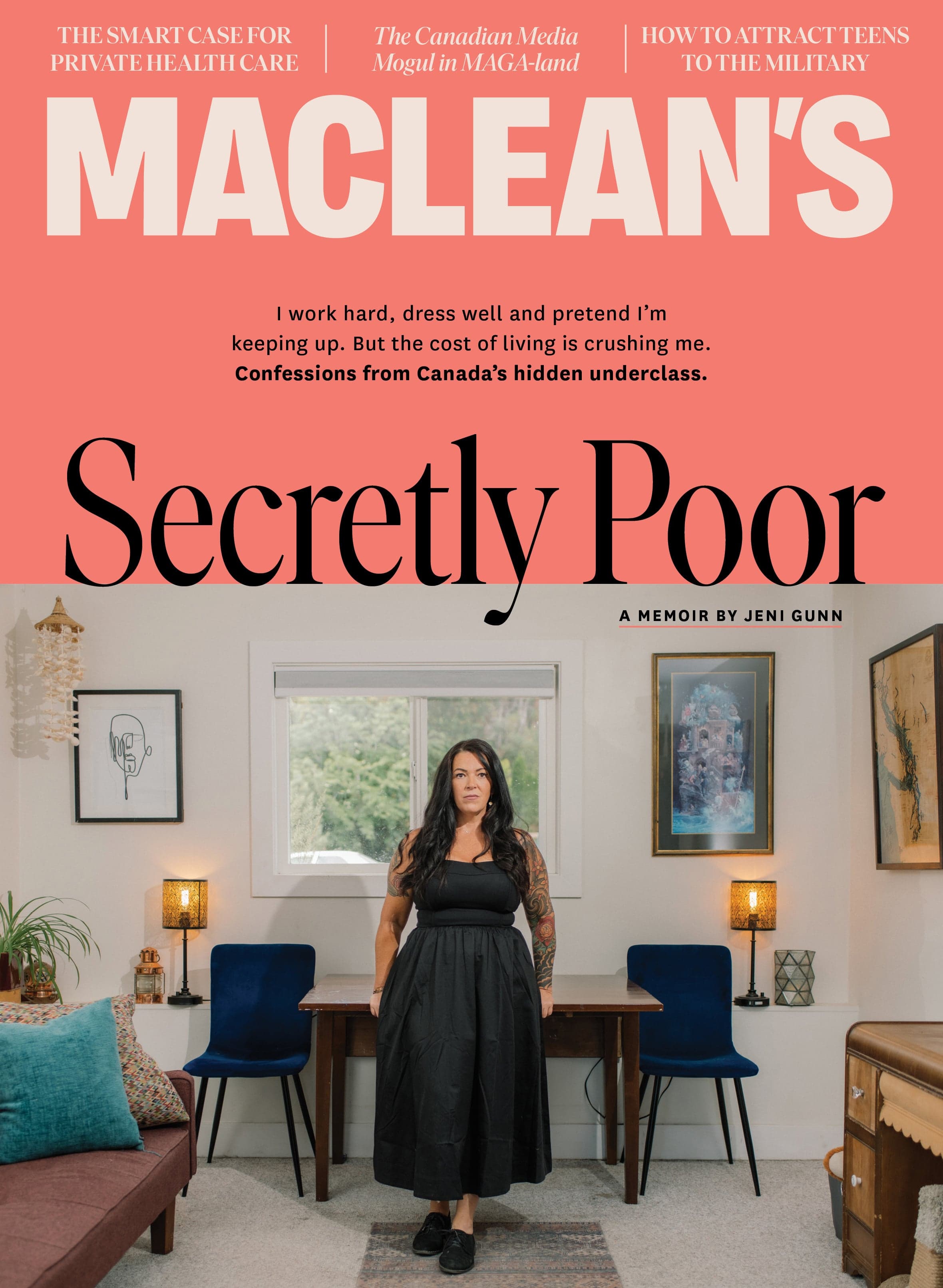
This story appears in the August 2025 issue of Maclean’s. You can buy the issue here, subscribe to the magazine here or send a gift subscription here.
Related Posts

Measles Is Just the Start

A Doctor’s Plea for Civil Discourse

Canada’s Flu Seasons Are About to Get a Lot Worse

The Secret Weapon in Canada’s Sewers
Get the Best of Maclean’s straight to your inbox.
Sign up for news, commentary and analysis. Join 60,000+ Canadian readers.