
Research Discoveries Lead to Better Outcomes for Specific Type of Brain Cancer

Each year, about 3,300 Canadians are diagnosed with a form of brain or other nervous system cancer. Out of this number, about 2,600 will die from the disease.1 “There are more than 120 different kinds of brain tumours, which makes them challenging to research and treat,” says Dr. Farshad Nassiri, a neurosurgeon and scientist at the University Health Network in Toronto, Ont. One of those types is glioma.
Glioma: a rare form of brain tumour
Gliomas are diffuse tumours of the brain that start in the glial cells in the central nervous system.2 Unlike discrete or localized tumours, gliomas have no clear boundaries and spread into the surrounding healthy brain tissue. High-grade gliomas are fast-moving, with poor prognosis for long-term survival. Low-grade gliomas may grow more gradually, but they can still have a profound impact on daily life, often causing debilitating symptoms such as headaches, seizures, vision changes, speech difficulties and balance issues. “Unfortunately, these low-grade gliomas affect mostly younger patients between the ages of 30 and 40 who are in the prime of life,” says Nassiri. In fact, low-grade gliomas are the second most common type of cancer in Canadians under 40 and the second most common cause of cancer-related deaths in this group.3
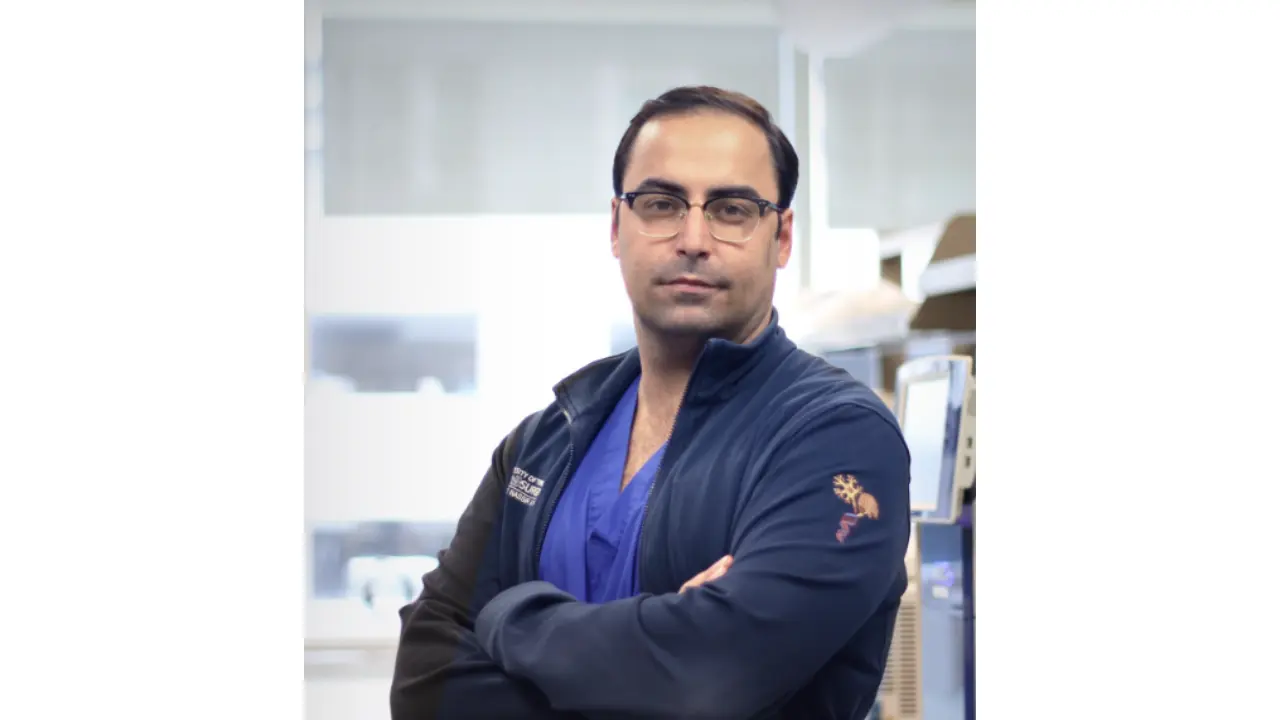
Dr. Farshad Nassiri, neurosurgeon and scientist, University Health Network
But there’s hope. Recent research advancements have identified a specific gene mutation called isocitrate dehydrogenase (IDH) in low-grade gliomas. “This is a foundational key alteration that changes the diagnosis, prognosis and treatment options for these patients,” says Nassiri.
Research innovation gives hope to patients
One of the innovative treatment options is a targeted oral therapy for grade 2 IDH-mutant glioma. “The drug inhibits the specific protein that allows the cells to divide uncontrollably, essentially putting the brakes on the engine that drives the tumour cells,” says Nassiri. For patients with this specific type of glioma, this represents the first major treatment advance in nearly 25 years.
Angela Scalisi, chair of Brain Cancer Canada, wishes this treatment had been available sooner. In 2013, her brother Bernardo was diagnosed at age 26 with a low-grade glioma. “At the time, the ability to identify genetic markers was not at the forefront, and treatment options were limited,” she says.

Angela Scalisi, chair, Brain Cancer Canada
Recognizing the need for more research, Scalisi co-founded Brain Matters in 2015, with a goal to address the research funding gap and transform the standard of care. As engagement and interest grew, the charity rebranded as Brain Cancer Canada (BCC) in 2021 and is now a national leader in funding and advocating for brain cancer research.
Fighting for a better future for patients
“As both my brother’s primary caregiver and chair of BCC, I’ve seen extraordinary progress in treatment for low-grade glioma patients,” says Scalisi. “Unfortunately, my brother didn’t have access to it, and he passed away in January 2025. Had he been diagnosed today and able to access this treatment, I believe the outcome may have been different.”
Scalisi’s story highlights the urgent need for more advocacy and research funding. “We really need fast-tracking, especially for high-morbidity diseases like brain cancer. Canada has brilliant research scientists and neurosurgeons, but they lack the financial support to do the research,” she says.
Nassiri agrees, adding: “Funding research is not an expense but an investment in the future because it leads to better diagnostics, therapies and patient outcomes. Without sustained research, we’re basically asking today’s patients to rely on yesterday’s treatments, which is unacceptable.”
Learn more about how you can help support innovations in brain cancer research by visiting braincancercanada.ca.
This article was made possible by the support of Servier.
Sources:
1 Brain and other nervous system cancer statistics | Canadian Cancer Society
2 https://cancer.ca/en/cancer-information/resources/glossary/g/glioma
3 https://sunnybrook.ca/2023/06/drug-prolongs-time-before-brain-tumour-grows-back/
Get the Best of Maclean’s straight to your inbox.
Sign up for news, commentary, analysis and promotions. Join 80,000+ Canadian readers.