The heroes of the Thai cave rescue
We were foreigners and we weren’t going somewhere foreigners often go, so when I saw the blond man across the Bangkok airport shuttle bus on our way to the remote mountains of Chiang Rai, a one-hour flight away, I asked whether he was about to do the one thing or the other: “Are you rescuing the boys or covering the rescue?” “Well, we’re hoping we can help rescue them,” he said. He didn’t seem hopeful. He seemed grim. We stepped off the bus onto the hot tarmac and walked toward the plane. “You never know,” I said. “It could happen.” Save 12 children and their soccer coach who got stranded three kilometres inside a flooded cave in northern Thailand at the start of the rainy season with no known food, water or swimming skills: It could never happen. He nodded. “You never know.” We climbed the rickety boarding ramp and found our seats, his behind mine. He was too calm. I turned around over the back of my chair. “Have you ever helped rescue many people from a cave before?” A pause. “Not live ones,” he said. The plane took off. Only when it landed and we were standing in the aisle did I ask what the world had wondered for days. “Don’t you think it might be better to just wait out the rain and send in supplies?” He was quiet but firm. “I think it’s better to try.” “Men are really going to dive them out.” “That’s the plan.” We looked at each other. If I had known who he was, maybe I wouldn’t have worried so much. Maybe I would have worried more. Either way, the events of the next few days were as yet opaque to me: there would be children’s lifeless bodies yanked through paralyzing water; fingernails digging into rock walls and human skin; a cable wrapped around a neck; a strap binding a pair of wrists; a needle stabbed into a thigh; a skull smashed into rock; a lifeline drifting out of reach, out of sight, into the black. That afternoon I saw only a light-blue button-down shirt and kind eyes. We disembarked, walked through the gate and passed a stretch of windows. He raised his hand to stop me. “What’s this?” Through the glass, rows of military men stood at attention on the tarmac. They were saluting a coffin. My flightmate answered his own question. “They’re here for the dead diver.” A former Royal Thai Navy SEAL had just died in the cave. I wondered how it had happened. “He probably hadn’t done anything like this before,” the man said. Who has, I thought. We turned to the escalator, and when he spoke next it wasn’t to me. “This is not a good way for me to arrive.” “Good luck,” I said when we hit the bottom. “You keep yourself safe.” He winked and was gone.
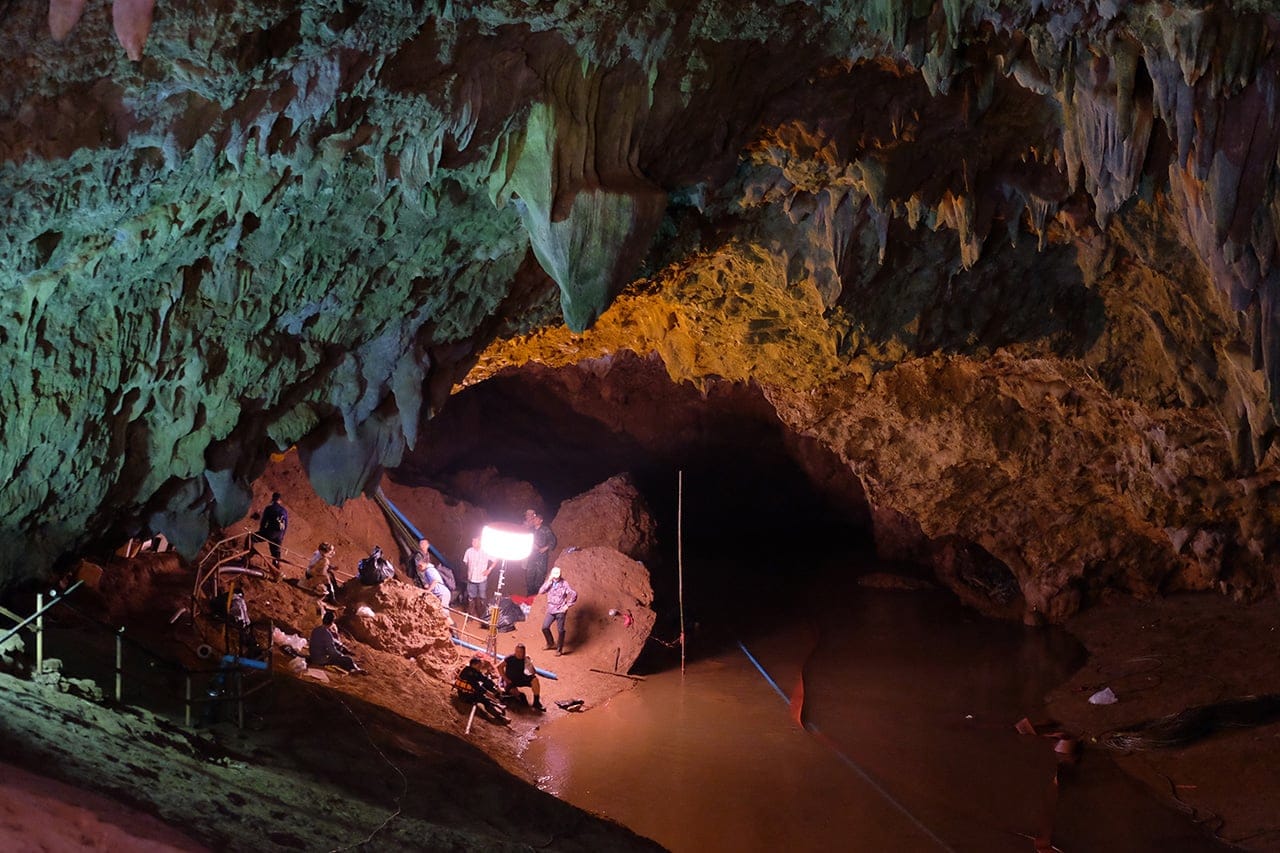
Ben Reymenants from Belgium is tall and dark and handsome and famous for record-breaking depths and encounters with rare and exotic species of sea worms—for these reasons and more, and perhaps despite his uncommonly successful dive shop in Phuket, Thailand, Ben is worshipped among certain diver sects. “One of the top 10 cave divers in the world,” some call him. “No, no,” he’ll say. A smile: “Maybe one of the top living cave divers.” Cave divers are explorers, always looking for the next new thing—fish, pirate ship, psychological limit, anything—and Ben occasionally finds it. Today he is looking for a soccer team who entered Tham Luang cave a few days ago. Eventually he will discover something else: he can be replaced. At this particular moment, Ben only knows he can’t breathe properly. His chest is currently being crushed between the floor and the low ceiling of a flooded cave. He got here because the players and their team’s assistant coach, after bicycling to the cave, walked in to explore it and never walked out. Rainwater racing down the mountain and into every rocky crevice penned them in, maybe drowned them. Park rangers found the bikes by the cave mouth. Royal Thai Navy SEALs entered. Tham Luang is several kilometres of cavernous rooms with soaring ceilings leading to pinhole passageways leading to more cavernous rooms. Some were above the waterline when it flooded; most were below. The SEALs entered the black cathedral of the first chamber, stalactites plunging from the ceiling, boulders exploding from the floor. This cave made the grown men feel small. Then it squeezed the life out of them: some corridors were so narrow only skinnier divers could get through. It dwarfed them again, squeezed them tight again, but within three kilometres and a day and a half, the SEALs pressed on to Monk’s Junction, where the cave split in two and rapids could rip a mask off. They wanted to reach Pattaya Beach, the long patch of dry, rocky land in an air chamber where they thought they might find the boys. Instead, the floodwaters rushed at them and they had to retreat. The cave’s currents were impossible. Visibility was also impossible: even the diver’s headlamps, pinpricks of light in the suffocating blackness of the cave, could barely penetrate the mud-filled water.The constricted sumps—submerged underwater passages—were worse than impossible: they were deadly. Trained only in open-water diving with the old-timey single back-mounted air cylinder you can get away with in a vast ocean but not in a narrow sump, SEALs had gone as far as they could alone. They needed the specialists. A SEAL volunteer liaison had called Ben to the cave. When Ben first entered, he learned that two Britons—firefighter Rick Stanton and IT consultant John Volanthen, two of the top cave rescuers in the world, living or dead—were already there, working closely with the Chiang Rai governor. In the coming days, more Europeans and Brits would join them. They were various kinds of cave divers. The Europeans: dive shop owners, entrepreneurs of the underwater world. The Brits: caving hobbyists and rescue society volunteers who pulled their fins over green wellies because the point of getting in the water, for them, was to trek deeper into a dank cave. The men knew of each other. That’s a different thing from really knowing each other. When Ben discovered the Brits at the cave, they had made a discovery too: four men on a bank around 800 m from the cave entrance, penned in by three sumps. Rick and John got them out. It was never determined whether they’d sneaked into the cave to snap photos or were left behind through some cave rescue clerical error, but people had other things to worry about. The boys. The first time Ben dived in, the current knocked him back. He dived in again. He made it into a tight passage. He didn’t make it farther. And that is how Ben the scuba god has come to be trapped. Strength is useless. Skill is useless. Only by emptying his lungs can he flatten his body enough to move an inch backwards. Then another inch. Then another. Breathe out, inch back. Breathe out, inch back. Finally he’s free. Ben is in this cave because of his experience. His experience tells him no amount of experience can beat this cave. Soon more monsoon rains will fall. The next morning, Ben goes back to the cave to retrieve his gear. He finds the SEALs getting ready to dive. A suicide mission. “I can’t let these guys go in on their own,” he tells the Thai liaison. “I can at least go in with them and hope they get scared enough to turn around.” The SEALs’ rear admiral is way ahead of him. A short man, he climbs up on a chair outside the cave. Get in line, he tells the SEALs. “You too,” he says to Ben. A Thai monk had predicted the boys would be found alive; therefore, the boys will be found alive. The monk made and blessed bracelets for the SEALs. The admiral ties one around Ben’s wrist. Ben doesn’t think prayers will save them. He tries to buy time for the Thais to change their minds. I need more rope, he says—a very specific, hard-to-find sort of rope. Rope appears. Okay, I need more air tanks. A chopper airlifts in four hundred. Fine. I need men, hoses, food. Check, check, check. Whatever Ben pretends to wish for, it’s granted. Ben accepts defeat. “I have all the toys and no more excuses,” he thinks. Into the cave he goes. He takes 20 SEALs with him. He finds people laying the line. In cave diving, the line can be a flag in the ground telling divers which other diver beat them to it. It’s also a lifeline. In the black of a deep, muddy cave, where divers might as well be blind, they can grab and follow the nylon cord through the treacherous passageways. These men need a lifeline. Ben goes under. He’s gone for a while. When he comes up, the SEALs think he’s lost the line. He’s laid it farther. He hears a Thai diver shout, “Ben laid the line!” Ben will see the diver’s name in a newspaper more than a week from now: Saman Gunan. It’s his coffin I’ll watch officers saluting on the tarmac at the Chiang Rai airport. More Europeans, having heard that the cave needs divers, go in to lay the line just past Monk’s Junction, where the cave splits left and right. Again, Ben gets stuck. This time, a European has to use nearly a full tank of air pulling Ben out by his ankles. Finally, Ben makes it to Monk’s Junction. He lays the line to the split. In several days, the man who replaces Ben will follow that line in an attempt to rescue boys who right now most people believe must be dead. They know they’re nearing the bodies. Then Ben runs out of line. He heads back. The Brits are going in. Ben thinks the Brits—Rick and John—will lay the line close to where the kids are; he also thinks they will turn back before they discover them. The SEALs want to find their people’s kids. He, and some Thais, too, think the Brits understand. Cave divers might understand this more than most. Every explorer wants to be the first in line. But no one cares when first contact doesn’t go according to that plan—when, after Ben leaves the cave that day, the world hears not a Thai but a British voice calling out these words in a grainy video: “How many of you? Thirteen? Brilliant!” The Europeans are in their hotel when they hear the boys are alive. A Ukrainian raises a glass of vodka to the discovery. Ben tells him to put it down. They might be needed. Back at the site, they congratulate the Brits. “We come!” the Brits had assured the boys; the boys coming out alive is a different thing, though. The Brits don’t want to talk to Ben about getting the kids out. He fights with some of them. “Why won’t you be part of the team?” Ben shouts. Maybe the Brits are the team, though. Maybe Ben doesn’t fit. The Thai liaison pulls Ben away. “This isn’t the right time,” he says. Ben agrees. He’s no god. He knows it. He’s a guy who needs a breather. The next morning, he boards a flight out of Chiang Rai: he can’t help a team that may not want him. Some European divers follow. Some stay.
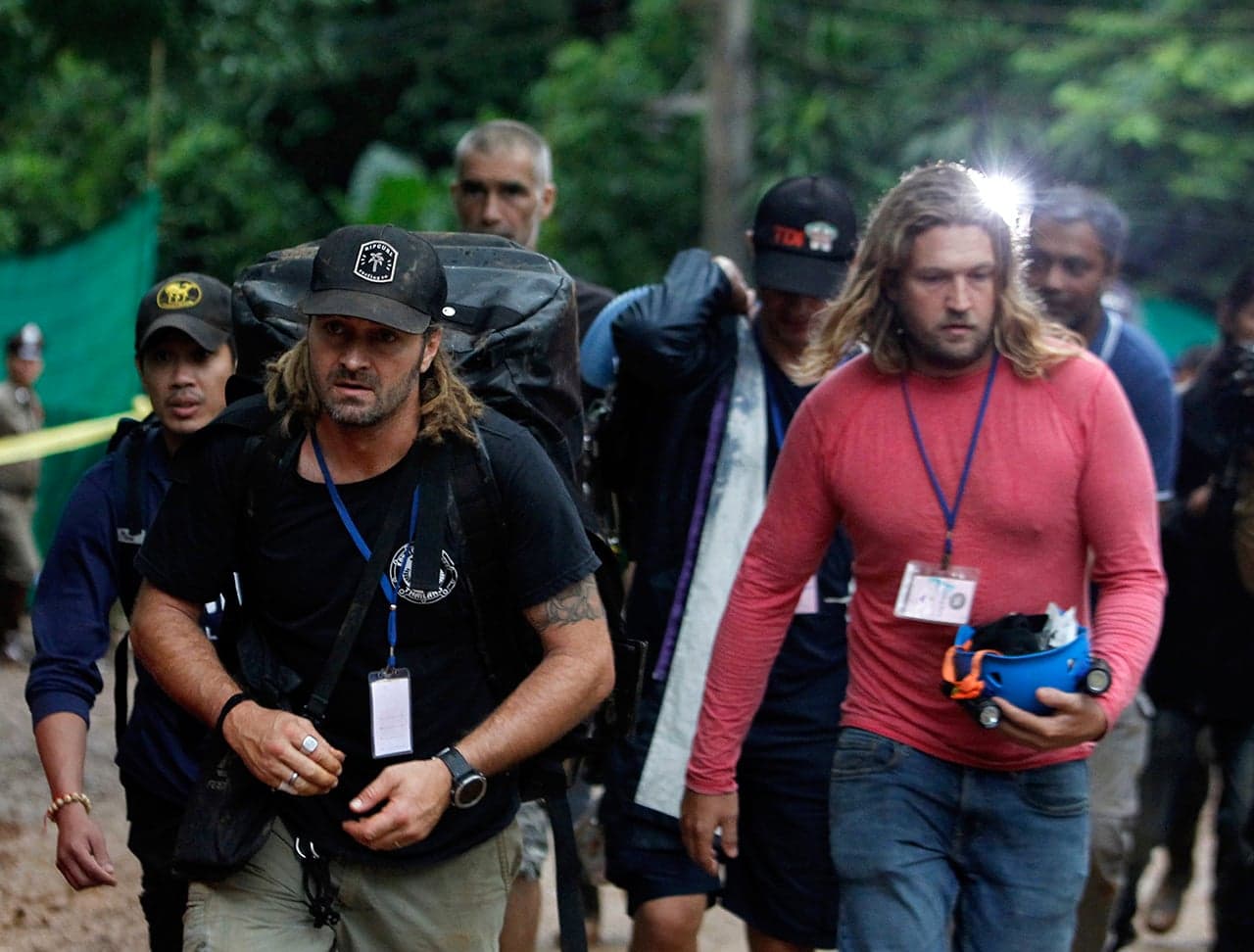
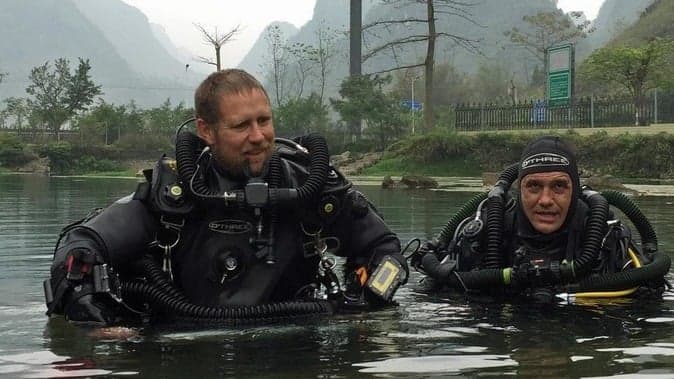
It’s a couple of days later and there is more shouting outside the cave. Claus Rasmussen, a Dane, has lived in Thailand for 15 years and works at Ben’s Phuket dive shop. He thinks he’s ancient in dive instructor terms: he’s 45. In previous lives, he’s worked with refugees, homeless people, drug addicts. He’s seen a lot, inside caves and out. Right now he’s seeing checkpoint guards delivering clear orders to his fellow divers, Erik Brown and Ivan Karadzic: take a seat. They take a seat and wait outside the cave in their wetsuits. Erik and Ivan run dive shops a few beach bars away from each other on Koh Tao, an island renowned for two primary tourist occupations: diving and drunkenness. Ivan is a Danish hippie with a brush cut; Erik is a long-haired surfer who was forced to retire from surfing when he busted his shoulder—he is no hippie. Ivan went to Thailand on vacation a couple of decades ago and never went home. He came to think of cave divers as a secret society—they want respect from their own, and they don’t care if people who know nothing about cave diving know their names. Erik is broad-built with long hair and a serious face. From Vancouver, he’ll be the mission’s lone Canadian but a member of Team Europe, shorthand for Team-Europe-Plus-One-Canadian. Erik has been on Koh Tao only a few years and already worries he’ll become another dude in Thailand with a Peter Pan complex. Neither man makes millions teaching tourists to dive, but neither thinks twice about buying plane tickets to reach the cave. They’re told to wait—they wait. Claus knows he and his fellow Europeans can support the rescue mission. He just needs to convince the Brits. He meets with representatives of the British team and American Special Forces to talk rescue options. All the options are bad. One is slightly less bad. Option one: Believe the children’s claims that they heard roosters crowing. Assume there is a chimney in the mountaintop leading to the kids and their coach. Find it, somehow. Pull the team out, somehow. Option two: Assume there is no chimney. Make one. Drill through the rock—700 m. Pull the team out—700 m. Option three: Leave the kids and their coach in the cave. In the dark. For four months. Send in food, letters and medical support. Wait for the rain to stop. For four months. Bring the team out the way they came in. Option four: Do what no one has ever done before. Bring a dozen children and one adult, none of whom know how to dive or probably even swim, through a few kilometres of flooded cave in almost zero visibility and torrid currents. Option one is unrealistic: the kids are probably hallucinating about the roosters. Option two is deadly: drilling could crush the children under falling rocks. Option three is torture: stuck on that small patch of dirt in the dark, surviving on water dripping off stalactites, the kids hadn’t lasted a few days before trying to claw their way out by scratching at the rock face with their bare hands; four months would be unendurable. And option four is madness. No one has ever tried anything like it before. Divers might die. The ones who don’t die might have to carry out a dozen dead children. Tonight, the men choose madness. They want to dive the kids out. The Brits will select the foreign support divers they lead. The Europeans plus one Canadian at the cave are on the team.
***
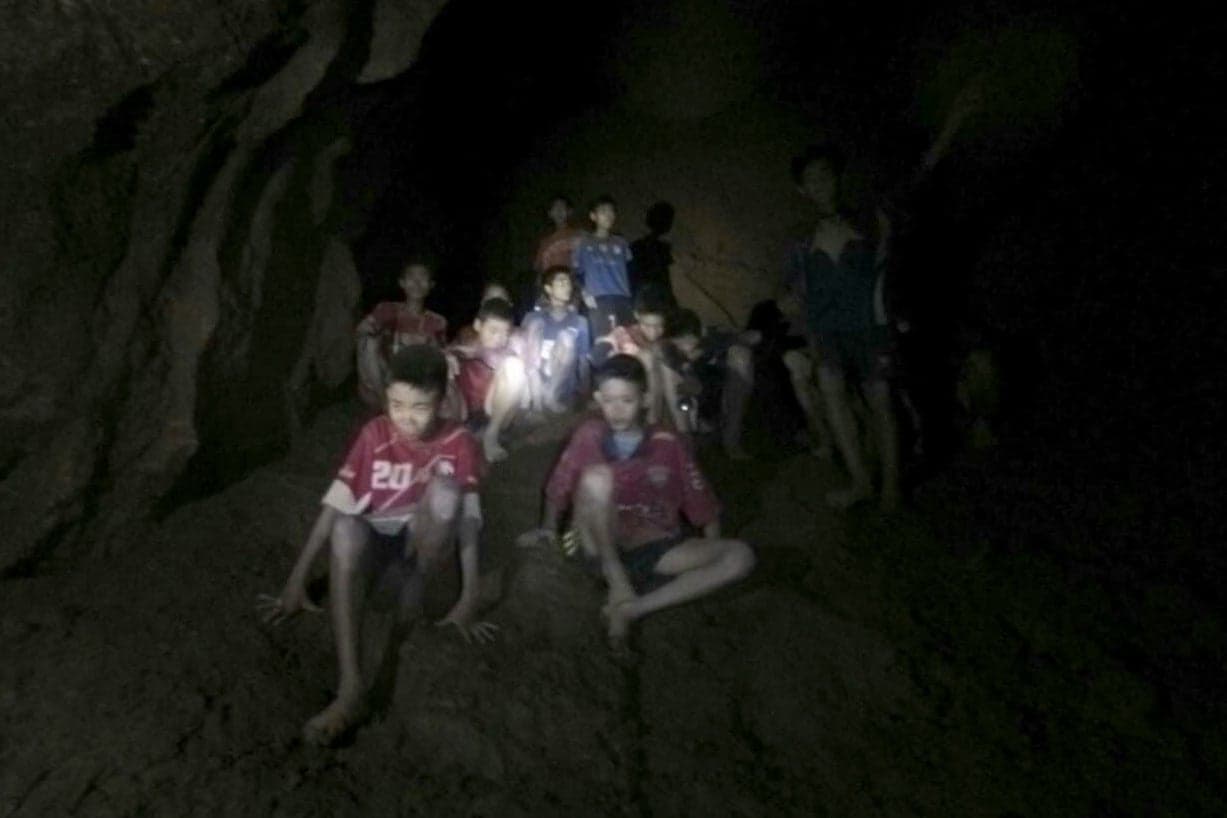
One of the original Brits, Rick, asks another British diver, Chris Jewell, if he’s sure he wants to meet the boys. Many men wouldn’t want to see children they know will soon be dead. Chris, a computer programmer from Cheddar, England, is sure of most things, none more so than himself. Most men avoid tight spaces, steep climbs and the dark. These things feel like death, and Chris isn’t afraid of that. He likes cave diving because most men can’t do it and he can do it because he doesn’t panic. “If you panic, it’s curtains,” he’ll say. “You can’t control your heartbeat but you can control your breathing.” Chris knows he can do that, too. He isn’t sure about meeting the boys. He dives in on a supply run with another Brit, Jason Mallinson; Jason makes the decision for both of them. When Chris surfaces metres from the team, Jason is already walking up the bank. “I guess I’m meeting the kids,” Chris thought. Quick, strong and fit, Chris can’t climb the muddy bank without slipping and falling. The boys are making fools of the men, he notes. Rescuers who swooped in from around the world can barely stand as the children skip down to the water’s edge and back up like little mountain goats. They’re so alive.
Related Posts
Why Russia should fear the coming insurgency in Ukraine
“It wasn’t long before we were flooded with cholera patients”
***
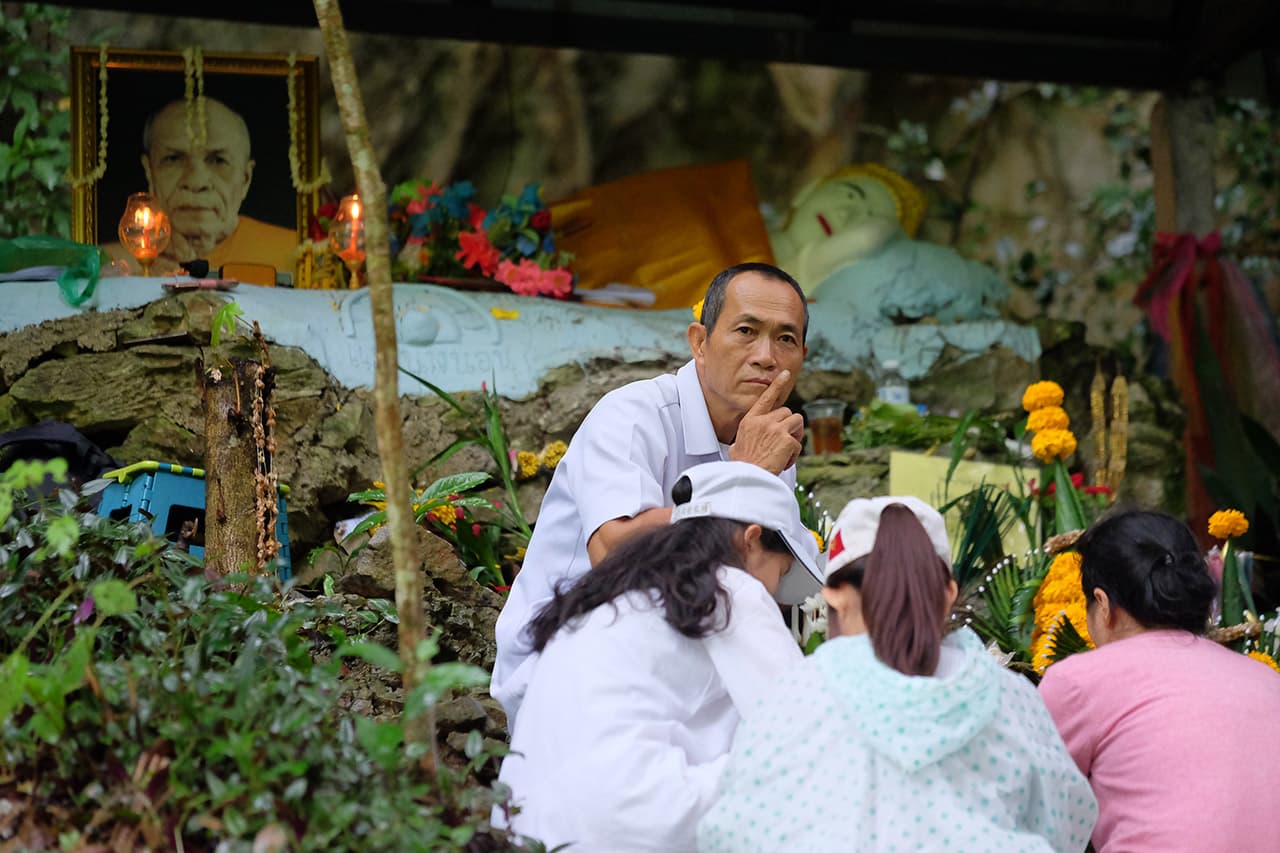
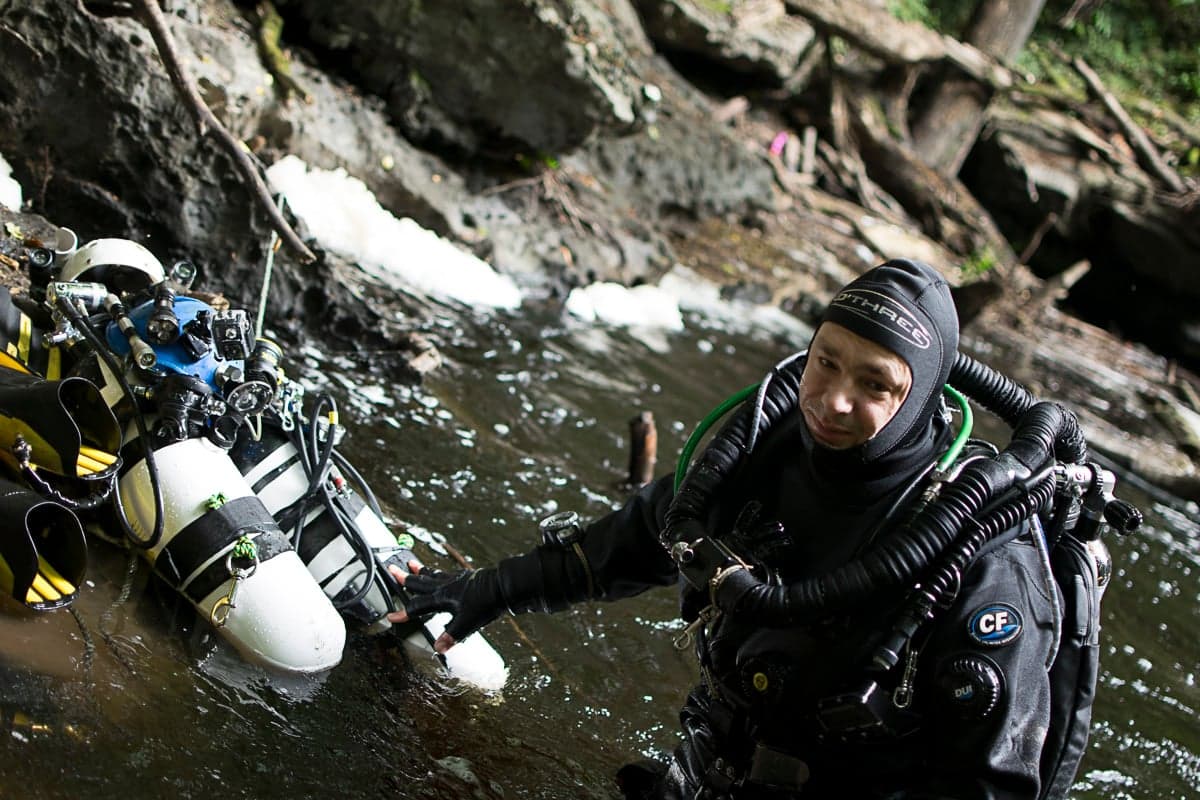
Claus bows his head before a shrine outside the cave. Caves are sacred in Thailand. He won’t enter without asking permission from the Lady of the Cave, as she’s known around here. The curves of her reclining figure stretch across the rounded mountaintops, holding the children deep inside her caverns. He doesn’t know exactly what it means to pray to her, but he knows it means something to the Thais. The Europeans have permission from Thai officials to enter the mouth of the cave now. One will be repelled almost as soon as he enters. Inside, wires and cables drift like seaweed in the dark water. Installed in haste after the boys disappeared, divers are cleaning them up to bring the children—or their bodies—through. Claus is cutting telephone cable wrapped around the main line when he feels a German diver coming up behind him. No problem. The cable tightens around his fingers. Problem. The German must have passed him in the dark and pulled the cord along with him. Claus starts swimming madly. The German has the cable tangled around himself. When Claus reaches him, the German has stopped. Claus can hear him breathing. A bad sign. The German was on a rebreather, which purifies a diver’s exhaled breath and mixes it with oxygen; rebreathers are soundless. If Claus can hear the German’s breath being exhaled into the water, it means something got in the way of the rebreather, and he’s in enough trouble he had to bail out and go on standard open circuit. The visibility is so bad that Claus can’t make out what went wrong, but the German is cutting off wires, taking off tanks. Claus makes physical contact, puts his hand right up to the German’s mask so he can see the hand signals. He makes the “okay” sign with his thumb and forefinger. Is he okay? Yes, the German is okay. But he’s shaken: He’d come down with a bug; he has loved ones; he’s just tried to penetrate a cave and it has casually discarded him. He’s leaving. As the German retreats, Claus, Ivan, Erik and Ivan’s business partner in Koh Tao, Mikko Paasi from Finland, push ahead, getting a sense of the cave. By the time they make their way out, they pass a Thai team going in. They chat with an English-speaking Thai diver in an air pocket and tell him how far up they’ve placed air tanks. It’s gruelling, essential work: each tank weighs 35 lb.; a tank won’t last a single hour; journeying through the cave takes several hours. The Thai diver is Saman, the former SEAL who will die later that day, placing more tanks. Maybe his air ran out. Maybe he panicked. Maybe, as the man I met on the airport shuttle bus later suggests, he’d just never done anything like this before. Saman’s death is not the only one horrifying Thailand: a tourist boat has sunk off the coast of Phuket and more than 40 people have drowned. Divers from around Thailand are descending on the wreck to pull bodies out of the water. The European divers feel sick for their friends. They also wonder if they’ll soon complete a similar task in the cave. https://www.youtube.com/watch?v=2BpaaSzq3-I The mission needs more men: some to support the men who are there; some to replace the men who will fall sick or quit or die; and one man who has no replacement. In addition to putting out a wider call for support, the Brits askAustralian Dr. Richard “Harry” Harris to call off a planned diving holiday and travel from his Adelaide home to the cave. Everyone wants him there for three reasons. First, Dr. Harry is a top-notch cave diver: in 2012, he made a record-breaking descent into the world’s deepest cold-water cave. Second, Dr. Harry is an anaesthesiologist: he specializes in keeping people safe and comfortable in critical situations such as surgery—or, somewhat less commonly, subterranean underwater retrievals. And third: people love him. They just do. He’s humble and funny and nice. Even people who have never met him love him. “I would have loved to have been at the cave. Just to have met Dr. Harry,” sighs one diver left behind on Koh Tao. Few in this world possess any one of these qualities. Maybe only Dr. Harry has all three. Ben is called back to the cave by a Thai liaison working with the SEALs. When Ben lands at the Chiang Rai airport for the second time, the liaison says, “We have a problem.” Someone has been handing out posters claiming the governor has banned Ben from the cave. Ben and the liaison think the posters are fake: whoever pulled photos of Ben off Facebook didn’t exactly create an official-looking document. They also understand that it doesn’t matter if it’s fake. One overzealous police officer, one photo of a diver in handcuffs, and the mission looks bad. For now, Ben shouldn’t enter the cave. But the mission might need another man. The team might need him to be that man. He goes to the cave. He pulls up a chair outside. He sits and he waits. He does not know he is waiting to be replaced.
***
In a little village in Ireland lives an elfin man named Jim. Jim Warny doesn’t quite fit. He lives in Ireland but was born in Belgium. He caves more but dived first. He used to work in dive shops as an instructor but now works in a factory as an electrician. He knows the British rescue team members, but maybe not as well as they know each other, and his name isn’t known to many others. He came to know the Brits better when his friend Artur Kozlowski disappeared during a dive seven years ago. The first day, Jim found nothing. The second day, he called the British Cave Rescue Council. Rick, John and Jason answered. Jim couldn’t bear to recover the lifeless body he’d discovered drifting in the water. He wanted to help his friend and needed other men to help him. While Saman’s body is being recovered from the cave, Jim thinks about the Brits on-site. He thinks about the long cave and the children stranded at the back of it. He’s sure it’s better to leave the boys in until everything dries out. But also he thinks about the small crew and the men who helped him recover his friend. Jim sends the Brits a Facebook message. “I’m here if you need me.” At home, Jim asks his fiancée what she thinks. She’s thinking the best divers in the world are already there. “Why would they need you?” she asks. She walks upstairs. By the time she comes down, Jim is on the phone with his boss, getting time off from the factory. Chris has told him to pack his bags.
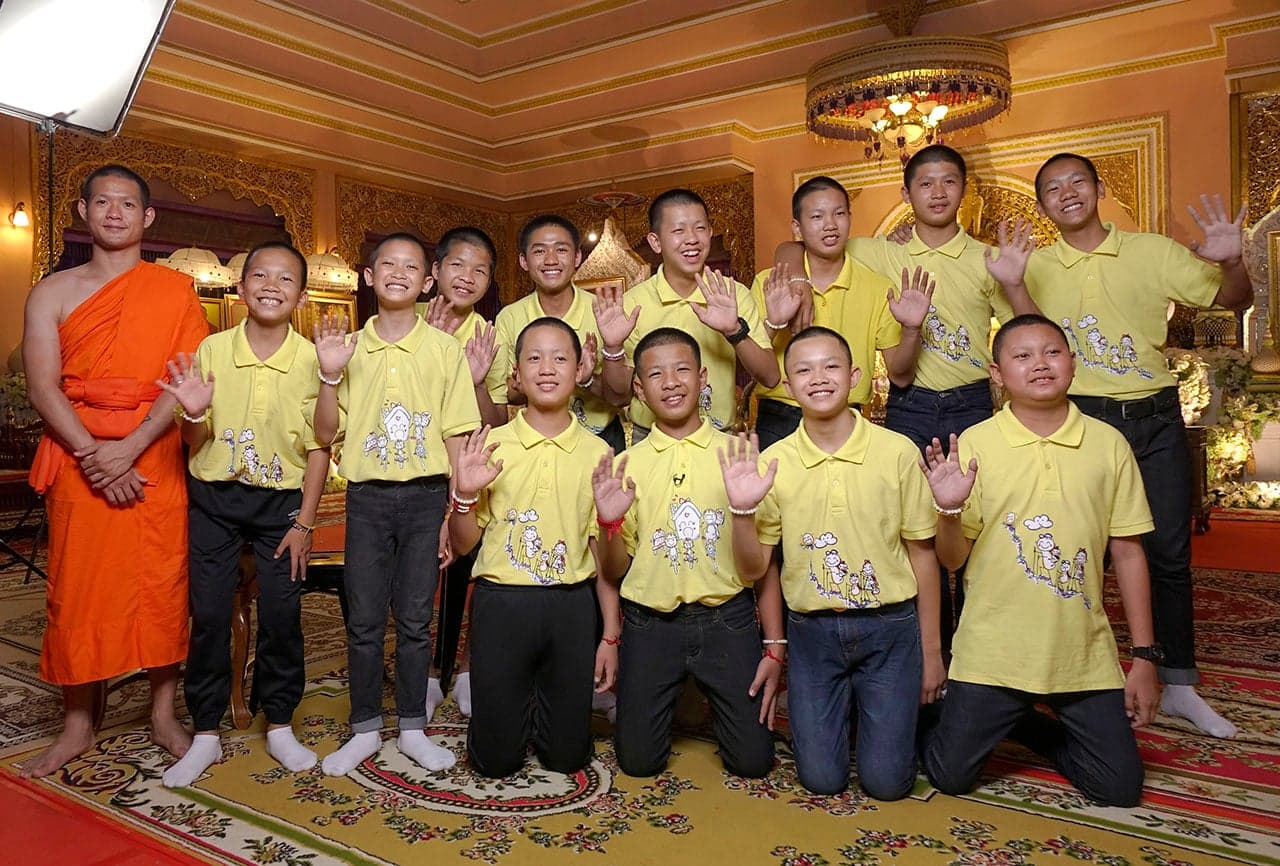
When I found the cave site, a diver was being mobbed in the media area, which at one point was, to some rescuers’ great regret (though possibly not to others’), the only route to the toilets. “Media area” was a polite descriptor for the mud pen in which hundreds of cameras were corralled. An Aussie TV reporter took pity on me, pointing me to a blue tent overflowing with donated rain boots and plastic ponchos, but I was worried about the foreign volunteer I had met on the plane, that he might get hurt in the cave. No one could point me in his direction. And that day there were bigger questions on people’s minds. In the letters the boys’ parents wrote, delivered to their children by divers, they said they prayed for the team’s assistant coach—the man who allowed them to enter the cave. It didn’t make sense. Leaving the mud pit, I wandered the coach’s neighbourhood and found his next-door neighbour grilling chicken outside her corrugated-tin-walled bungalow. When I asked why people weren’t angry with the coach, she corrected me. Not just a coach: a former monk. After practice, he would occasionally take some of the boys to a nearby temple. At the edge of that temple stands a cave, much smaller than Tham Luang. The monk would light a candle with the boys, they would slip inside the mouth of this cave, and they would pray. Word had slipped out, locals said, that after they got stuck in Tham Luang, the monk kept the children alive by teaching them to meditate. Parents offered the monk thanks, not forgiveness. While men furiously pumped out water, placed air tanks and carried lights, the monk was instructing 12 young boys that they had a job, too. They had to breathe.
The day before the rescue, everything is ready. Several options have been duly considered and politely dismissed. The kids won’t be confined to airtight metal coffins, as Elon Musk has proposed, or made to crawl through a several-kilometres-long inflatable bouncy castle tube, as one Bangkok construction company suggested. No: their faces will be covered by full-face masks and their bodies dragged underwater. Separately, in 45-minute intervals, four lead divers will each take a child through two kilometres of watery passageways and treacherous boulders with only their hands to guide them along a single thread, before delivering them to Station 3—call it Grand Central—where teams of medical support will await to hurry them through the rest of the cave, pumped mostly dry. The terrain the divers will traverse will be dotted with four manned diving stations, banks of land in air chambers equipped with air and oxygen tanks, with only a couple of support divers at each. These support divers, with only their dive buddy, will wait to offer assistance to each lead diver bringing a child through. Most support divers will be European; all lead divers will be British. At least that is the plan. Onward to the drills. First, the pool drills. Little boys plucked from a local school shiver in a nearby pool, testing the smallest full-face masks sourced from around the world. Divers practice hauling the boys face-down through the water to see if the masks leak. Unlike the more common half-masks, with which a diver uses a regulator mouthpiece to breathe, full-face masks use pressure to push air out, making it more difficult for water to seep in. Full-face masks must be sealed airtight, though—if water were to seep in through a too-large mask, the mask would flood and the child could drown. They don’t make full-face masks for children. These masks may not be small enough. But onward. Next, the rock drill. Like a special forces team drawing lines in the sand with rocks and branches to map out an attack, the divers walk through a miniature mock-up cave in a parking lot. Police tape wrapped around sticks signifies the route along the main guide line the divers will follow out of the cave. Plastic half-litre water bottles wrapped with different colours of tape signify people and tanks: red for the children and the coach, blue for air tanks for the divers, green for oxygen tanks for the children. (If something goes wrong, it will be easier to revive someone who has been breathing pure oxygen.) Here, enacted in the rock drill, is “the plan”: extract four of the cave’s prisoners, one at a time, dead or alive, on each of three rescue days—plus a fifth on the third day. Thirteen red bottles are placed near the stick marking the spot where the soccer team has been stranded for two weeks. It begins: Is Station 6 that bit of mud or that bit of mud? Do we need more tanks here and fewer there? Fewer here and more there? This is the only time divers see the cave in anything approximating light. Still, onward. To the sedation drill.
***
A word about sedation. A word, too, about Dr. Harry.Anaesthesiology requires more training than most branches of medicine; there is always some risk that when a patient is put under, he or she will never wake up. When the patient is a child, the risks are greater. When the child is yanked along underwater for hours through a dark, cold cave, the risks are incalculable—no one has ever done anything like this before.Dr. Harry believes the risks of sedating the children beat the risks of not sedating the children. The lead divers believe the same, and the Thais believe the experts know best. The children cannot dive; the children will panic; the children will drown their rescuers and themselves. That is why Dr. Harry is going to do this: inject 12 kids with a sedative so powerful it will knock them out cold.Ketamine: a horse tranquilizer, an operating-room drug, a soon-to-be cave-rescue pharmaceutical product in its early testing stages on rock-entombed human minors.If only it were so simple. The children’s drugs will need to be topped up with half-doses along the way. Dr. Harry cannot dive every child out himself, but the divers are not medical doctors. Dr. Harry must give a dozen cave hobbyists and small-business owners a crash course in do-it-yourself anaesthesiology.If anyone dies—and many divers think they will be lucky to save two or three of the kids—Dr. Harry will bear much of the burden. He is not licensed to practice medicine in Thailand, let alone teach other foreigners to practice. Though Thailand and Australia have offered some assurance that he won’t suffer legal consequences for his young patients’ probable deaths, a conscience and a name are not so easily protected. Cave divers are solitary creatures, Dr. Harry will later say to the cameras he normally avoids. And as he instructs laymen how to sedate a bunch of boys in the dark before dragging them through a flooded, stalactite-strewn tunnel, Dr. Harry is very alone. He thinks the drugs might help some children survive. He’s going to try, anyway. That’s the plan. But you never know. So. The sedation drill. One last water bottle is put to use. Dr. Harry holds it up. With his other hand, he raises a needle in the air. Is everyone listening? He will be fully sedating the children, but the injection he administers won’t last the whole of the journey, so when a child begins to wake, the diver must do this: brace one hand against the boy’s thigh—here, like so, Dr. Harry demonstrates, and stabs the needle into the bottle. Don’t worry about finding a vein. Just get the needle into muscle. Far, but not too far—not into bone. Inject the child with the drugs. Then: onward. The pool drill, the rock drill, the sedation drill. Everything is done. Everything but the thing that’s never been done. Onward, sure. But where to?
Related Posts
My devastating, inspiring trip to provide flood relief in Pakistan
Why sanctions over the Ukraine invasion won’t stop Putin
Nothing prepared me for what I saw in Ukraine
‘Anybody want to drive this ambulance to Ukraine?’
Get the Best of Maclean’s straight to your inbox.
Sign up for news, commentary and analysis. Join 60,000+ Canadian readers.