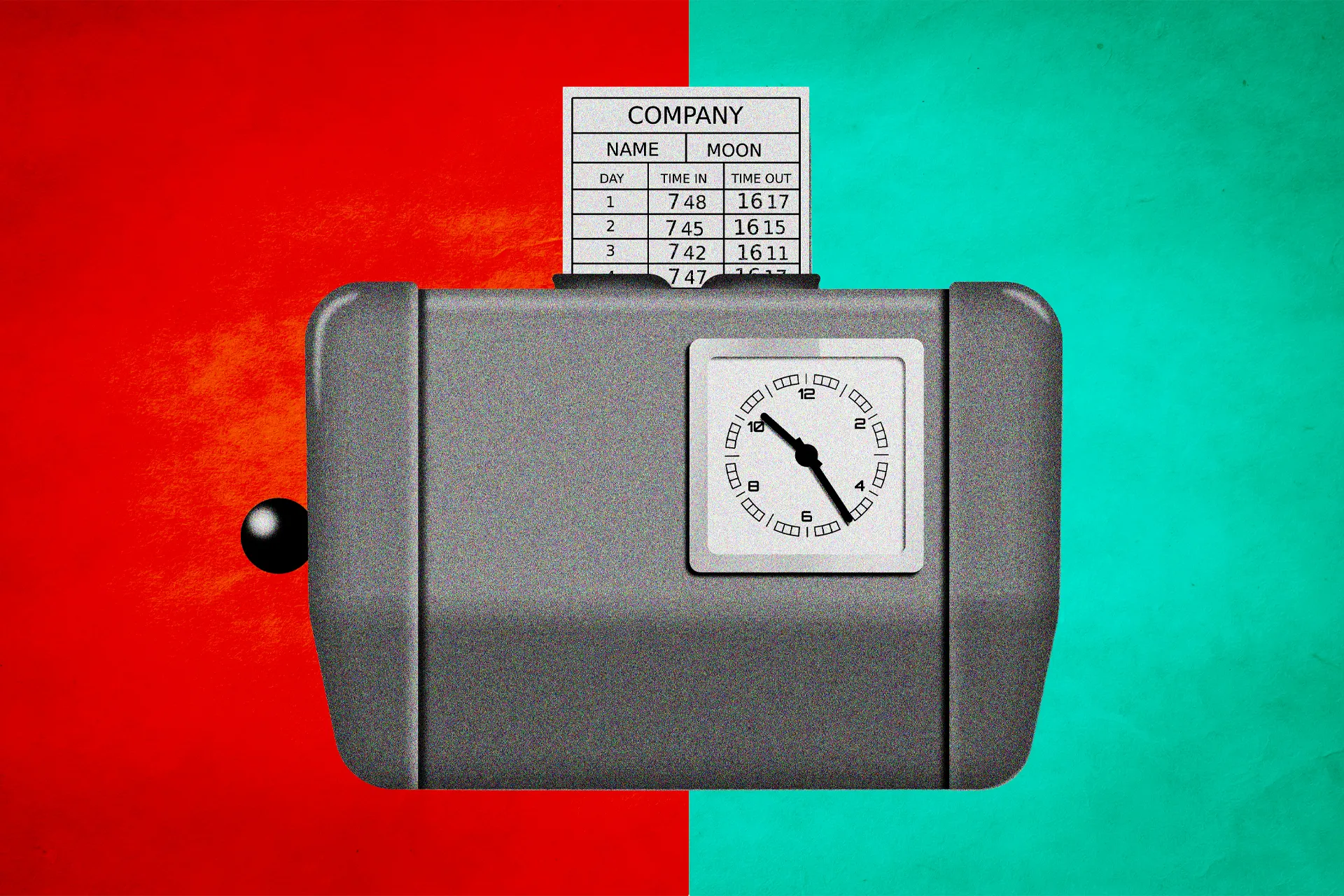
The Sneaky Rise of Office Attendance Fraud
One Bell employee allegedly entered an office just before midnight, swiped their access card, then swiped again shortly after midnight, registering two days of attendance without spending more than an hour at their desk. Another reportedly badged into a Bell building to use the gym before returning home. These are just a few incidents behind Bell’s decision this May to fire nearly 50 of its employees for cause, accusing them of “deliberate and repeated falsification of workplace attendance”—a practice commonly known as “swipe and go.” Now, the former employees are suing the media giant for wrongful termination. They claim they were fired for failing to meet in-office attendance quotas that, despite existing on paper, were often not enforced by managers. Allegedly, some employees were even told to disregard the policy and then fired anyway. Meanwhile, Bell maintains that each dismissal followed a thorough investigation. It’s a troubling situation, and one that exposes the complexities and contradictions of the importance of attendance in the post-pandemic workplace.
Attendance fraud has likely existed since the invention of the modern clock. There have always been people who had friends sign them in early if they were running late or sign them out late when leaving early. But remote work made fake attendance easier to get away with for the small minority willing to try. For example, a late start or a mid-afternoon nap is likely to go unnoticed if it takes place in your bedroom with your status set to busy. Or maybe you decide to watch an episode of TV, paired with the occasional jiggle of your mouse. But the Bell attendance fraud scandal didn’t arise during the height of remote work, when these tactics were easily accessible, but in its aftermath.
Return-to-office mandates have swept across Canada, with major employers—including banks, telecoms and governments—requiring workers to spend more days at their desks. In one survey, 76 per cent of Canadian employers said they’d ordered employees back at least part of the week. For workers who’d moved farther from city centres or reorganized childcare and eldercare around remote work, returning to the office meant returning to long, expensive commutes. The expectation is clear: many employers told staff they would be expected to work in person four to five days a week. But the reasoning behind it is murkier.
Execs often argue that in-person work improves company culture. Whether it does is a complicated question, but even granting the point, culture is an abstract benefit, difficult to weigh against the concrete, measurable ones remote work provides: eliminated commutes, reduced gas and childcare costs, better work-life balance. This justification falls especially flat in light of studies that show productivity remained the same or even improved under remote-work conditions. Roughly 50 per cent of knowledge-based workers prefer working from home, and for them, bolstering company culture is rarely a strong enough incentive to return to the office full-time. Now, as they question why that work setting can’t continue, they’ve built up resentment over weak justifications for the return-to-office.
And enforcement of in-person policies has been patchy. Executives often demand strict compliance, while lower-level managers, who work more closely with employees, might allow looser adherence to new attendance rules. That’s what allegedly happened at Bell: the former employees now suing the company claim that some managers permitted—or even encouraged—the flexible arrangements for which they were later fired. (Bell says managers who helped employees circumvent the RTO mandate were dismissed as well.) In our federal public service, departments and individual managers have relied on varying combinations of badge swipes, computer log-ins, IP data and direct supervision to enforce a government-wide mandate. It’s a perfect storm of resentment and mixed-messaging. The result is a rise in attendance fraud tactics like swipe-and-go or coffee badging, where workers briefly stop by the office for coffee or to use the gym facilities, for example, and swipe their card before returning home to work remotely.
Related Posts

Embracing technology has allowed companies to flourish amidst the pandemic

The push to fill Canada’s critical PSW shortage
Attendance fraud is more of a symptom than a disease. At the core of the problem is companies’ inability to properly measure productivity. This is a modern difficulty: a century ago, workers were paid for each unit they produced, which made output easy to count. But knowledge workers today mostly work in teams, where individual output is far harder to measure. When higher-ups fail to define what productive work looks like, they rely on a proxy instead. Attendance is an easy one to fall back on, but it’s far from the most accurate. Not only do some people simply work better in the quiet, familiar environment of their home, but just because people show up to work in person doesn’t mean they get more done. One 2024 study published in Nature found that allowing employees to work hybrid schedules had no impact on performance; at the same time, employees reported improved job satisfaction and quit rates fell by one-third.
The reverse is true too: in-person work does not equal productivity. A poorly kept secret in the office world is that there are many ways to perform productivity. In management studies, we call this dramaturgical work behaviour: pretending to look really busy in an environment that values busyness. This might involve staying at the office longer than you actually need to, attending meetings with stacks of unrelated files to mime a heavy workload, or even loudly typing on your computer when your boss walks by. None of these tactics actually improve productivity, and there’s no proof that being in office makes workers get more done than they would at home.
In reality, what workers respond to is flexibility, autonomy and fairness. I tell my own students: “I don’t grade attendance. You’re adults. You don’t get points for sitting in a chair.” In the modern workplace, issues arise not when people fail to present in person, but when they fail to do their work. So whether an employee is working from home or in the office, the time they log on or walk through the doors shouldn’t matter. Today, most knowledge-based jobs should be allowing employees to work when they are most productive—which can mean working in the evening or on weekends—as long as they attend meetings and complete tasks on time.
Companies that are truly focused on improving productivity should redirect their resources away from attendance surveillance and instead figure out how to measure productivity within their business. This means regularly discussing with managers and team members about what work they’re doing, what success on a certain project or goal would look like and how to achieve that. Frequent check-ins and 360 evaluations where an employee’s productivity is assessed by their peers are also helpful.
At first glance, the Bell terminations convey a pervasive attendance issue among employees. It can be tempting to brand these people as lazy and deceptive. But most employees aren’t trying to avoid the office; they’re willing to show up for a good reason. A team workshop or a client meeting justifies a commute. “Because we track if you swipe your badge” does not. Along with dramaturgical busyness, attendance fraud is a byproduct of a rigid system that rewards the appearance of hard work over output. As we continue to navigate the post-pandemic professional landscape, it will be the companies that value autonomy, communication and peer evaluation over attendance surveillance that outperform the rest.
Jean-Nicolas Reyt is an associate professor of organizational behaviour at McGill University in the Desautels Faculty of Management.
What did you think of this story? Send a comment for publication to letters@macleans.ca, and supply your name and address. Comments should be fewer than 200 words, and may be edited for length and clarity.
Related Posts
The workplace of the future will probably remain under surveillance

Young, working Canadians face a dilemma: eat, or pay the bills?

Inside Google’s super-sustainable new Montreal HQ

How Lindsay Somers takes the awkward out of on-screen nudity
Get the Best of Maclean’s straight to your inbox.
Sign up for news, commentary and analysis. Join 60,000+ Canadian readers.