Canada’s Disappearing Mid-Range Restaurant
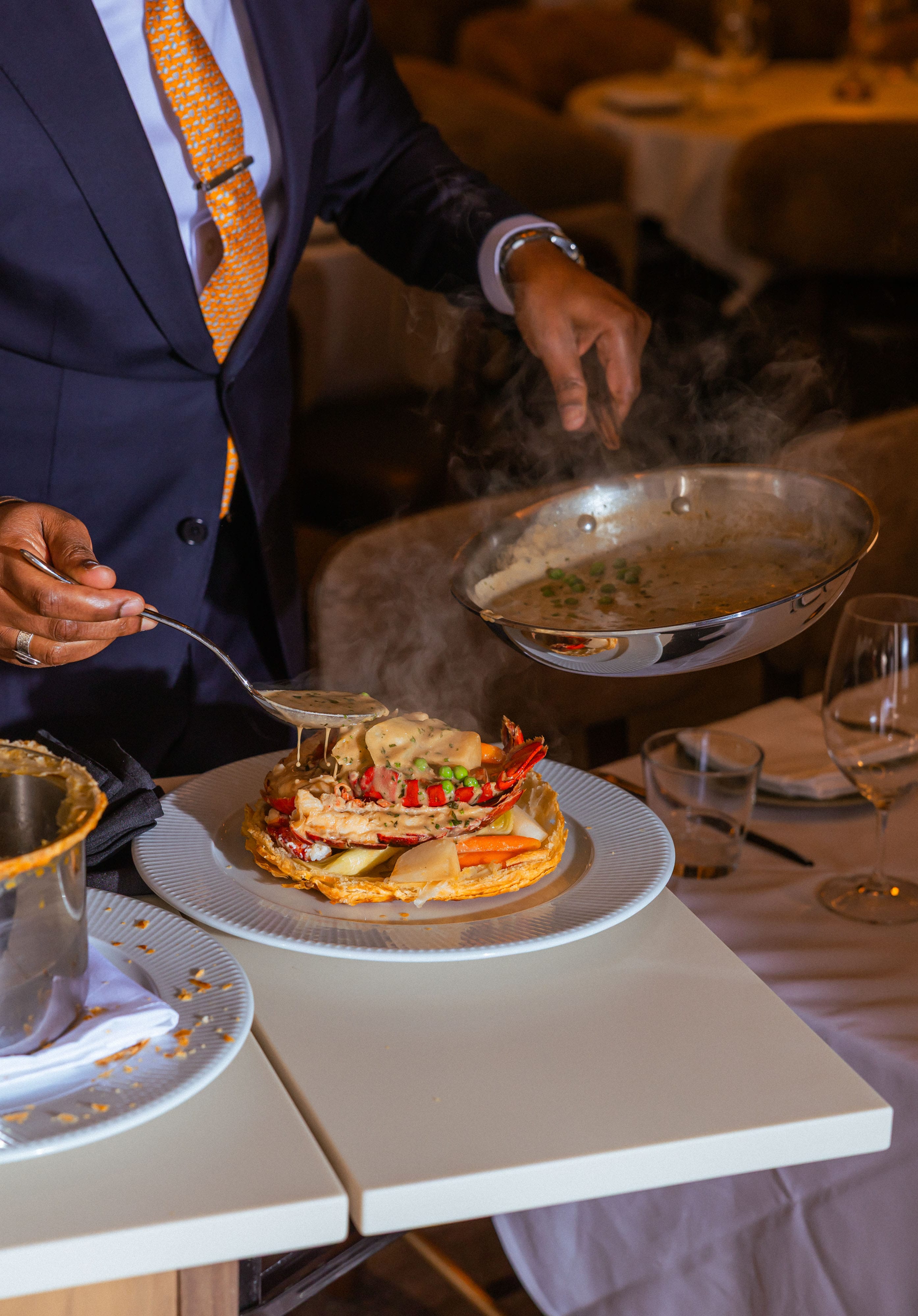
This past March, when I visited Riley’s Fish & Steak in Toronto for a press dinner, my spread looked like the dream last meal of someone with extremely expensive taste. There were glittering, layered seafood towers. Lobster pot pie puffing over the rim of its dish. Platters of steak charred at the edges and slick with jus. Sides and sauces circling around it. All the while, a sharply dressed server steered a martini cart through the dining room. The whole production was grand and easy to surrender to, especially because the final bill wasn’t mine to settle.
I’ve been covering the dining scene in Toronto—and across Canada—for more than a decade. Since the pandemic, I’ve noticed a curious culinary pattern. In our major cities, the appetite for luxury is rising, whether in the form of stylish new steakhouses like Riley’s or the multi-course tasting menus at places like Montreal’s Panacée. At these spots, price is linked to a broader sense of ceremony. Recent research from OpenTable shows that, in 2025, experiential dining shot up by 67 per cent year over year in Canada. (“Experiences” include things like chef’s tables and themed nights.) Meanwhile, at the other end of the spectrum, cash-strapped restaurant owners and operators are chasing leaner models, like slice shops, burger counters and fast-casual spinoffs of fine-dining concepts.
Related: 20 Reasons to Eat Canadian Right Now
The result is a national dining culture increasingly clustered at the extremes, split between occasion and convenience. It’s a food scene with plenty of places to eat, but fewer that make eating out feel like a part of everyday life. We see fewer independent bistros and dependable neighbourhood sit-down spots—places like Taverne Tamblyn, an excellent spot on Toronto’s Danforth strip that served cozy French dishes, like moules frites, before shuttering in March. These spots weren’t necessarily cheap, but with mains hovering under $40, they could at least be considered accessible. They were more personal than a chain. And they made up the culinary middle that, more and more, is missing.
This polarization in new restaurant offerings, of course, mirrors the ever-widening income gap between Canadian households. But it’s also happening because the business model that held up the middle is buckling. A mid-range restaurant still has to pay for the expensive parts of hospitality: cooks, dishwashers, servers, bartenders, managers, hosts, glassware, linens, insurance, rent, utilities and enough empty space between tables to make the room feel welcoming. Unlike a swish steakhouse, however, it can’t easily charge hundreds of dollars a head to cover it all. And, unlike a counter-service spot, it can’t easily strip the operation down to a tighter menu or smaller footprint.
Recent research from Restaurants Canada showed that 36 per cent of operators were either losing money or breaking even in early 2026, a figure that has tripled since 2019. In the same report, 91 per cent of operators cited food costs—which spiked after the war in Iran started—as a pressure point. Labour is also a massive contributor. The average hourly wage in Canadian food-service and drinking establishments rose from $16.33 in 2020 to $19.15 in 2024. Higher wages aren’t a problem in moral terms; restaurant work has long been under-compensated for how physically demanding it is. But for chefs trying to sell a bowl of pasta or a roast chicken at a moderate price, any increases in staffing costs, no matter how justified, can cause serious strain.
Related: The Rise of the Micro-Restaurant
Wine, beer and cocktails also help support the economics of full-service dining, but, these days, Canadians are drinking less. In 2015, 80 per cent of adults aged 18 and older who drank alcohol in the past year reported doing so at least once a month. By last year, that figure had fallen to 73 per cent. At restaurants already squeezed by food and head count, fewer bottles of wine at the table can make the difference between a busy night and a truly profitable one.
This unpredictable, cautious behaviour among diners has prompted some Canadians restaurant owners to create more certainty for themselves. Sara, a Toronto restaurant run by the Food Dudes group, recently moved from à la carte dining to a tasting menu–only format. According to Adam Minster, Food Dudes’ co-founder and managing partner, this set structure reduces some of the financial guesswork that comes with à la carte dining. In that world, every table behaves differently. One guest might order several courses and cocktails; another might split a few dishes and leave after an hour. For the kitchen and dining rooms, that means different cheque averages, different pacing and less control over labour, ordering and service. With tasting menus, however, Sara can better anticipate revenue, food costs and staffing needs.
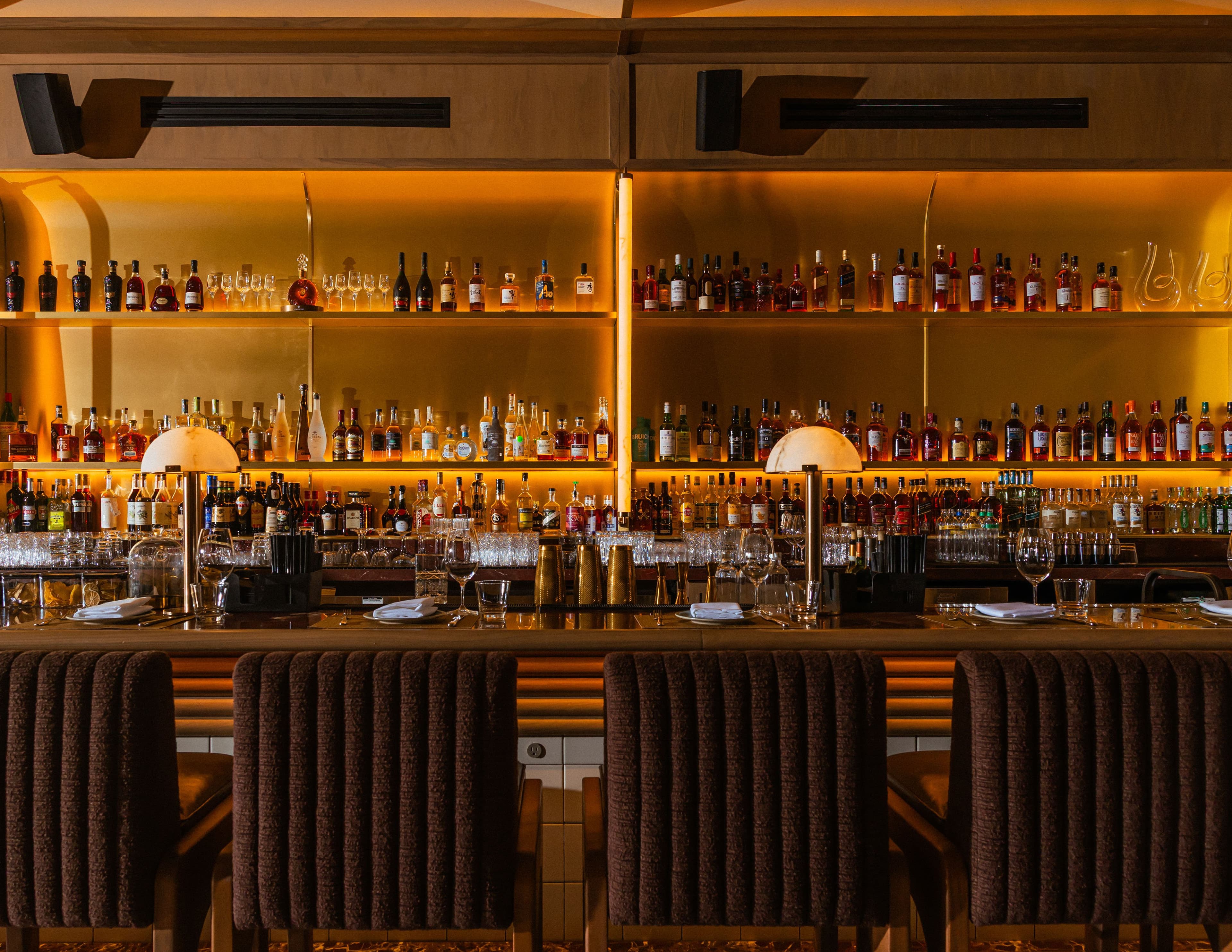
This setup shifts Sara toward occasion dining, where a higher price can be easier for diners to understand. Sure, the tab is a bit steeper. But in showing up, the diner has already decided the evening is supposed to feel indulgent. Minster sees dining’s murky middle, on the other hand, as increasingly hard to define and sustain. Guests nowadays, he says, are either interested in something casual and affordable (like a poke bowl) or something more tailored to a special occasion. In these highly busy, highly inflated times, when they do decide to go out, they want the night to justify the time and money spent.
Some restaurant groups are still trying to stretch their brands to hit diners on both sides. This past January, INK Entertainment—the hospitality group behind high-end Toronto joints like Sofia and Byblos—launched Little Baba by Amal, an elevated fast-casual spin-off of its upscale Lebanese restaurant, Amal. Owner Charles Khabouth told me the quick-service model lets customers access a familiar brand without paying for alcohol, high gratuities or the other extra costs embedded in full table service. Another bonus of this format? Little Baba can serve more customers with fewer staff.
Fast-casual places are useful—and often excellent. I recently stopped by Pizzeria Badiali’s new sit-down spot in Toronto’s Mirvish Village, skeptical that it could live up to the hype. I’ll admit that the vodka slice I chose was very good. High-end restaurants can also be thrilling. But neither quite replaces the neighbourhood dining room whose pleasure isn’t in the grab-and-go or the novelty, but the familiarity. I don’t worry so much about losing $25 main courses, low lighting and surprisingly decent bread. I do worry about losing the kind of restaurant that made dining out feel ordinary in the best sense—spots where people could drop in after work, bring visiting family, celebrate an unremarkable birthday or go after a long day to avoid shopping for dinner groceries. They glean their meaning from repetition rather than spectacle.
For me, one of those places was Little Sito, a homey Lebanese restaurant in Toronto’s Bloorcourt neighbourhood that closed at the end of 2023. There, they seemed more interested in feeding people well than being talked about. I could order the halloumi beet salad when I wanted something light, savoury lamb sausages when I wanted something richer, or a lovely spread of dips and flatbread when dinner only needed to be satisfyingly snacky. I never go to places like Little Sito expecting a life-changing meal, but I don’t need every dinner out to transform me. Only to restore me.
Many modest restaurants are forgettable; some are not or will not be missed at all. But a food scene made up mostly of counter service and event dining means it becomes harder to eat out without making either a calculation or a production of it. What disappears with the mid-range restaurant is the possibility of a solid meal, a known room, a little care and a bill that feels manageable enough to do it all again soon.
Related Posts

The Golden Age of Smut

How the Olympics Remade Montreal

Heated Rivalry Is Anti-Dystopia Art

How to Win the Westminster Dog Show
Get the Best of Maclean’s straight to your inbox.
Sign up for news, commentary and analysis. Join 60,000+ Canadian readers.