How the Olympics Remade Montreal
As the summer of ’76 closed in, Montreal was on edge. The Olympic Games loomed, and nothing was ready. As part of mayor Jean Drapeau’s attempt to “clean up” the city, the police tore through gay bars and bathhouses, arresting hundreds and inciting protests. Overhead, military choppers roared through the air to show security officers the lay of the land. Below, cops on motorcycles rumbled through the streets. And construction on the Olympic Stadium had stalled, with everyone involved pointing fingers. Officials insisted that labourers, embittered by their working conditions, had sliced wires and staged slowdowns. Workers complained of material shortages, plus engineering directives so indecisive that they kept having to raze and rebuild. In June, 80,000 health-care workers declared a strike. So did pilots, traffic controllers, Hydro-Québec workers and even liquor-store staff. The airports shut down, hospital treatments slowed and blackouts rolled through parts of Montreal. The city had ceased to function.
Montreal 1976 was Canada’s first shot at hosting the Olympics—an opportunity that had materialized thanks to Drapeau’s sheer stubbornness. He’d wanted his city to attain world-class status and, to realize that vision, he agreed to muscle his way through a $120-million project. But he’d vastly underestimated the challenge. For a brief moment, it seemed that the Games wouldn’t happen. Then the province pulled off a last-minute rescue and, somehow, Montreal cleared the bar. Sure, the stadium wasn’t complete and organizers had oversold 14,000 tickets, but on the afternoon of July 17, half a billion people tuned in as the opening ceremonies flickered to life on TV. The Games were on.
Once the whole affair was in swing, it was bafflingly normal. As columnist Jack Todd wrote in the Montreal Gazette, “For the most part, the buses ran on time, the crowds showed up, the volunteers were friendly, the venues functioned as they were meant to function.” When the rush was over, the Games had cost Quebec $1.5 billion—around 13 times its budget. The province took three decades to free itself from the resulting debt, and the stadium remains unfinished to this day. The people’s nickname for the whole debacle? The Big Owe.
That’s why, when Montreal’s McCord Stewart Museum pays tribute to the Games’ 50th anniversary this year, it will call its exhibit Montreal 1976: An Olympic Feat. Curator Christian Vachon combed through the museum’s collections to assemble a retrospective, rich with documents, photographs, uniforms and souvenirs, that tells the story of a city transformed by the Games. “Most of the photos we’re selecting were never published in newspapers,” Vachon says. “We have exclusive material and, after this year, we’ll probably never use it.” The exhibit, which runs from March 27 to September 7, will also include more than 150 editorial cartoons mocking Montreal’s mishap-ridden moment in the spotlight. Still, hosting the Olympics catapulted the city onto the world stage and, Vachon says, “We want people to feel la fierté—the pride—of the Montrealers when they welcomed the world.” Below, Vachon shares the stories behind some of the most notable images from the show.
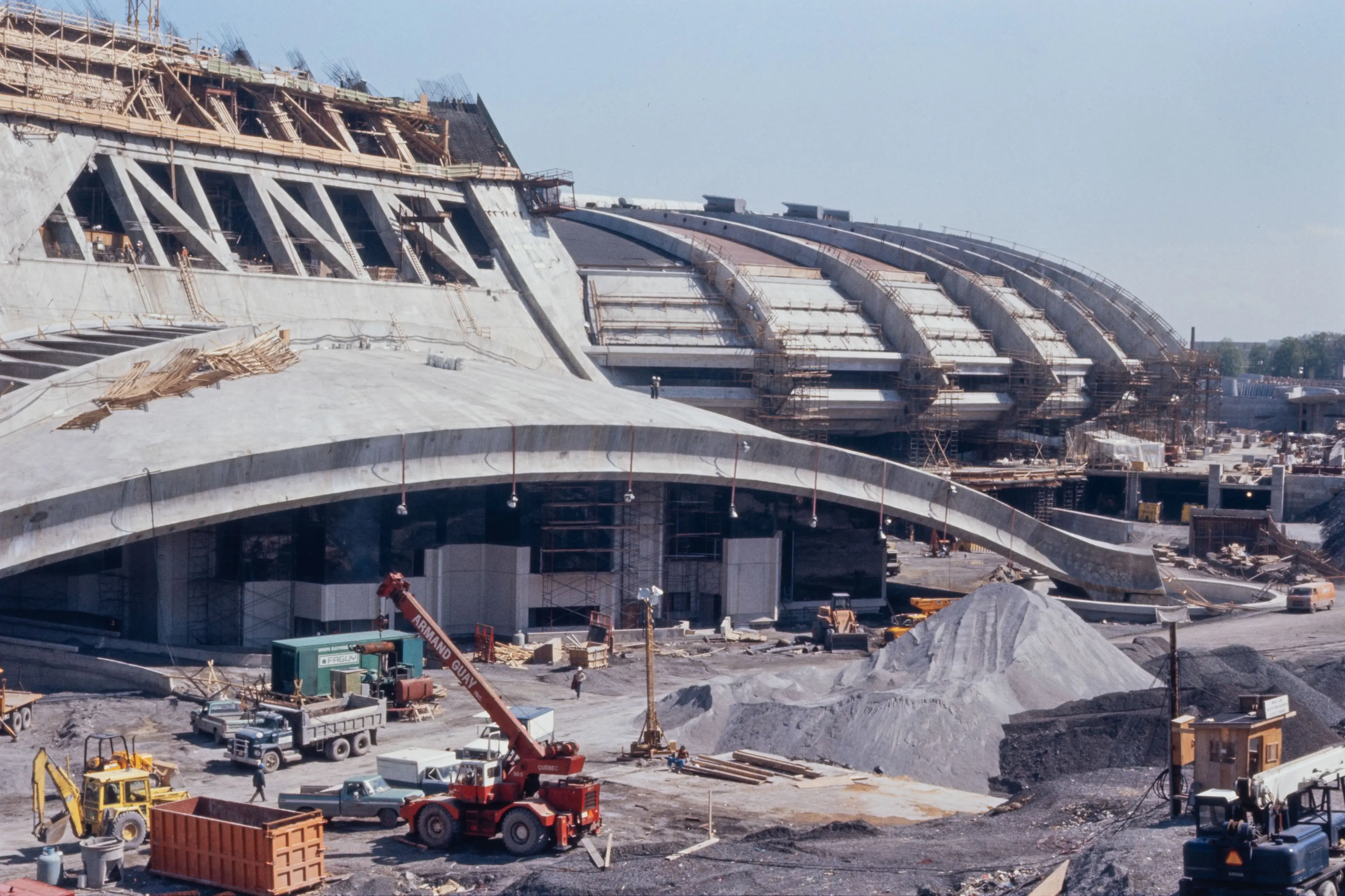
Robert Nadon, Two months before the opening of the Games, May 15, 1976: “This photo, from the French-language newspaper La Presse, is from eight weeks before the opening ceremonies. Everybody was stressed and doing their best to finish work on the stadium. At one point, there were three eight-hour shifts a day. To me, this photo shows that a miracle happened.”
Related Posts

How My Book, Heated Rivalry, Became A TV Phenomenon
Jeff Wall’s Hyper-Real Visions
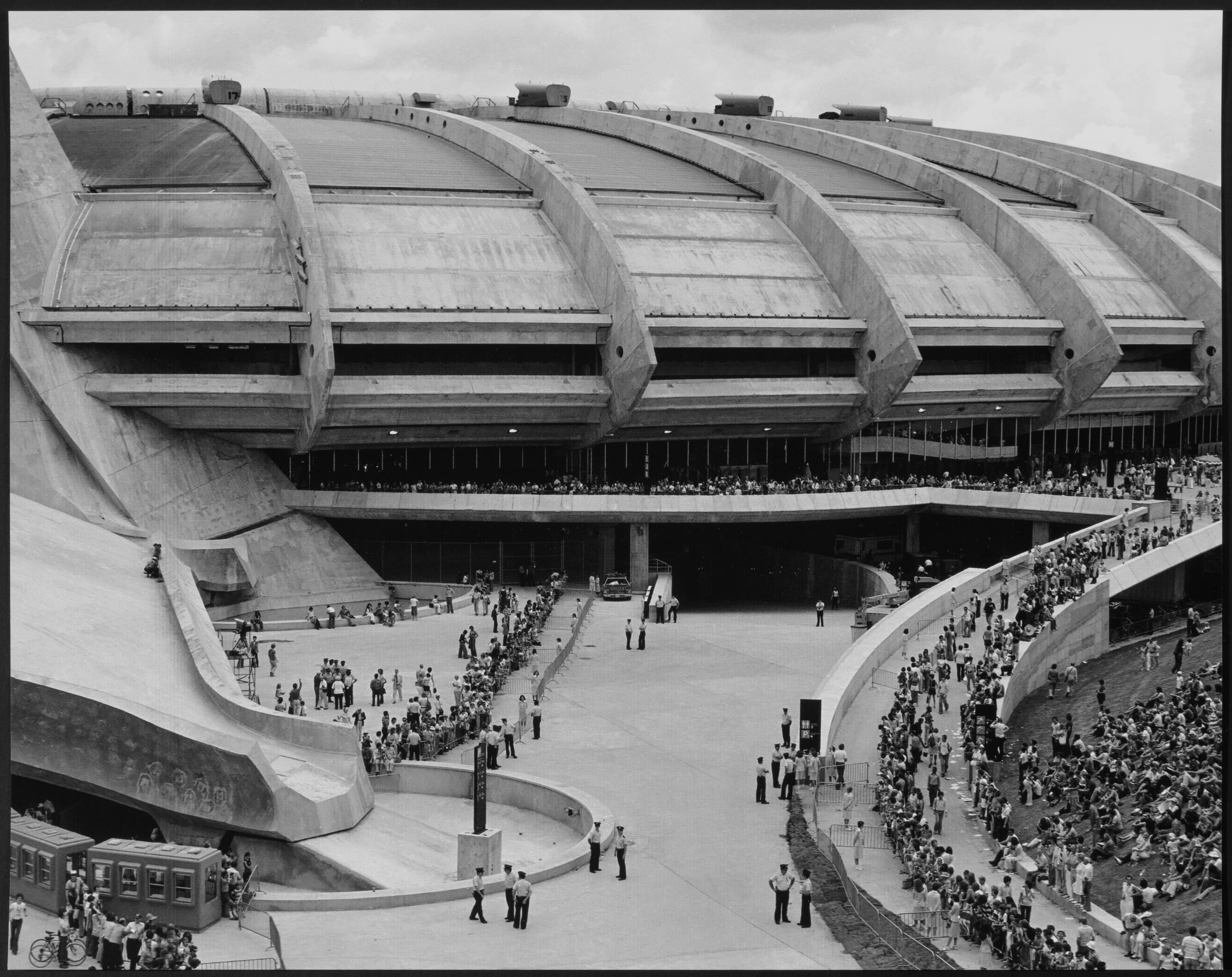
Edward Kostiner, Opening of the Games at the Olympic Stadium, July 17, 1976: “This image from the day of the opening ceremonies is from a series of four shots by Edward Kostiner, a Montreal-based photographer. The stadium was full—we’re talking about 73,000 seats—and there’s a crowd in line to get inside. You can even see some people sitting on the grass to the right, because they didn’t want to go inside right away.”
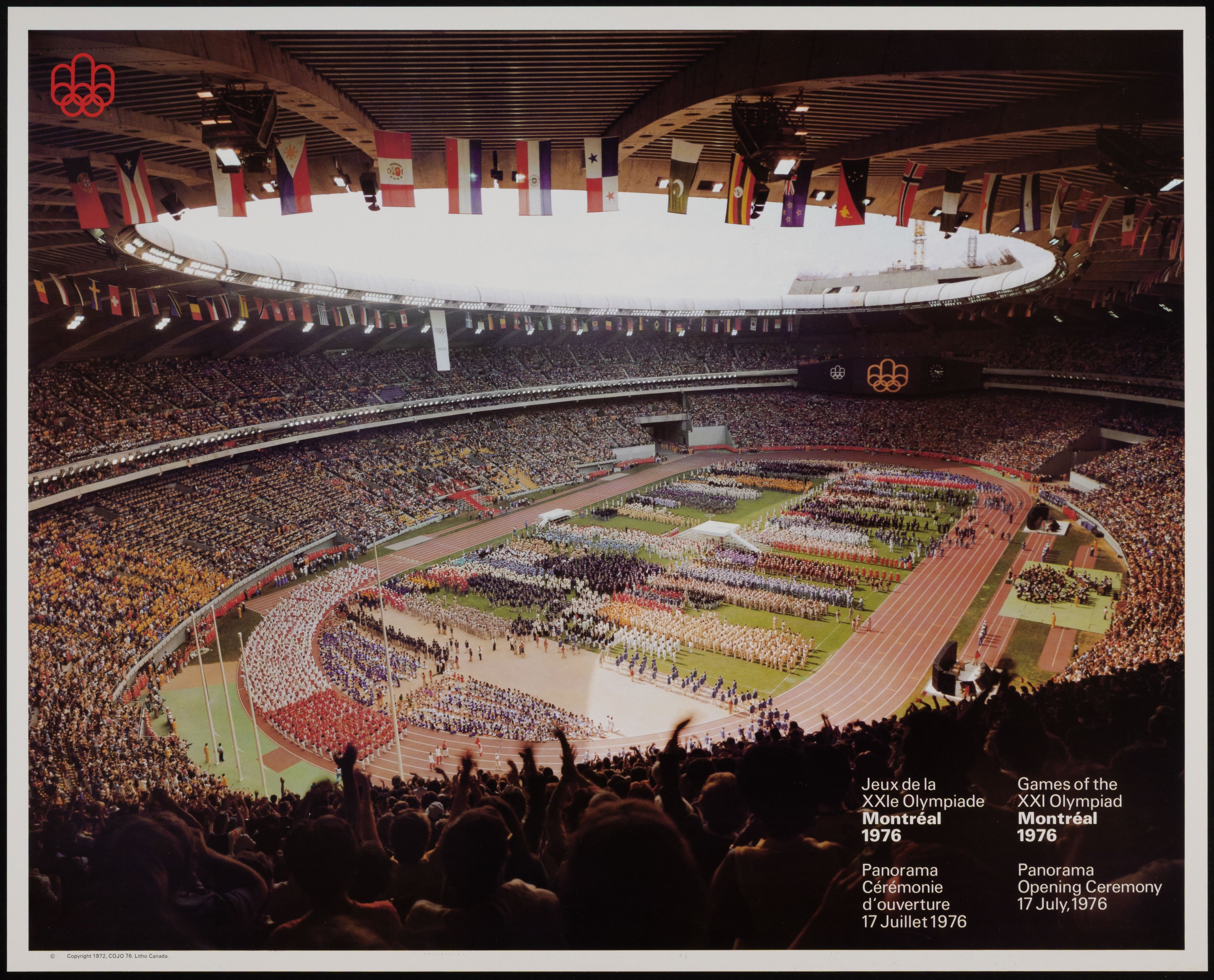
Opening Ceremony of the Games of the XXI Olympiad poster, Montreal 1976: “This photo shows the opening ceremony just after all the athletes entered the stadium. You can see that some of them, in red and white, are still marching in. And through the hole at the top of the stadium, you can see two cranes. That was important for me to show: that somehow we missed the boat on finishing the stadium, but we still had the Games.”
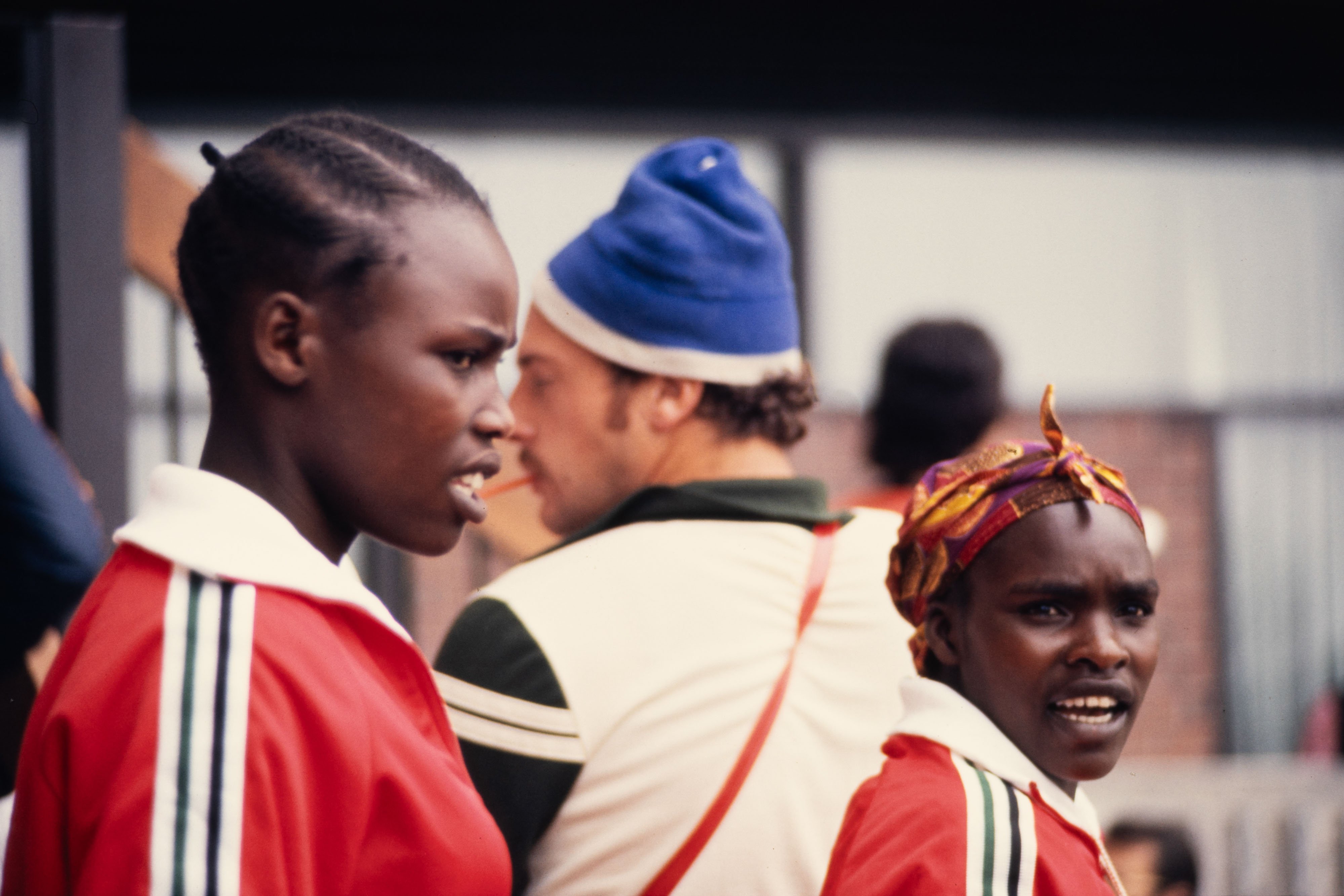
Michel Gravel, Members of the Kenyan delegation in Montreal, prior to the 1976 Olympic boycott, July 9, 1976: “Montreal’s Olympic Village welcomed its first athletes on July 1st. The Kenyan delegation was a big one, around 130 athletes, and they likely arrived five days later. They stayed for almost two weeks before learning that their country was boycotting the games, and they had to leave. They’d seen the city; they’d seen the installations; but in the end, they didn’t compete. What a disappointment for them! And they weren’t the only ones: the night before the opening, 22 African countries boycotted the games, all for the same reason. The IOC had refused to ban New Zealand from the games for sending a rugby team to tour apartheid South Africa—a country that was barred from most of the sporting world at the time.”
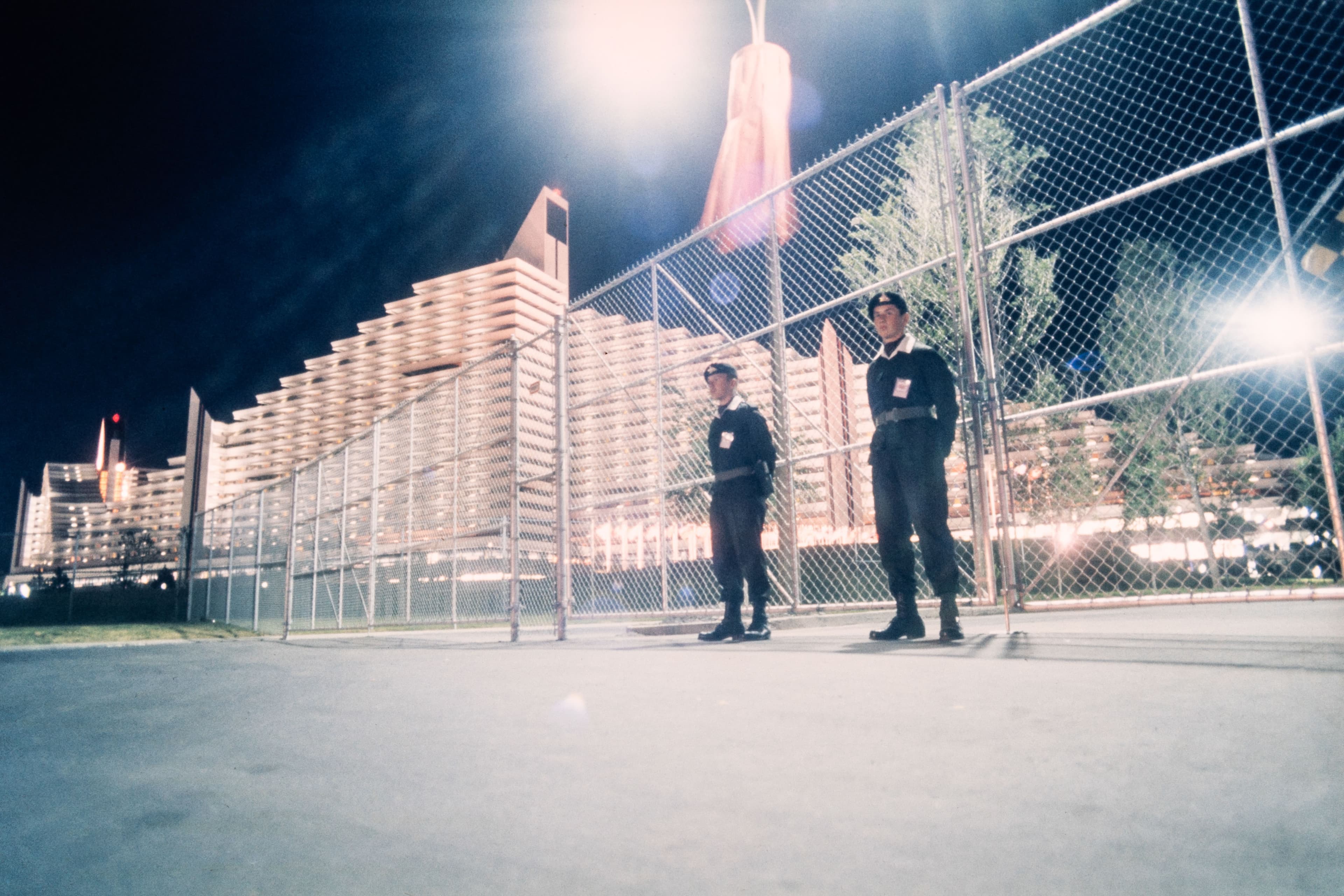
Denis Courville, Two soldiers guarding the entrance to the Olympic Village, July 25, 1976: “At the 1972 Munich Games, Palestinian Black September militants—demanding that Israel liberate over 200 imprisoned Palestinians—murdered 11 Israeli athletes and one team manager in their apartments. We didn’t want that to happen in Montreal, so the security was strict. Here, you can see night-shift guards outside the Olympic Village, where the athletes’ apartments were. There was security at the city’s two airports; there were Jeeps in the city; there were boats in the port. Cops were everywhere.”
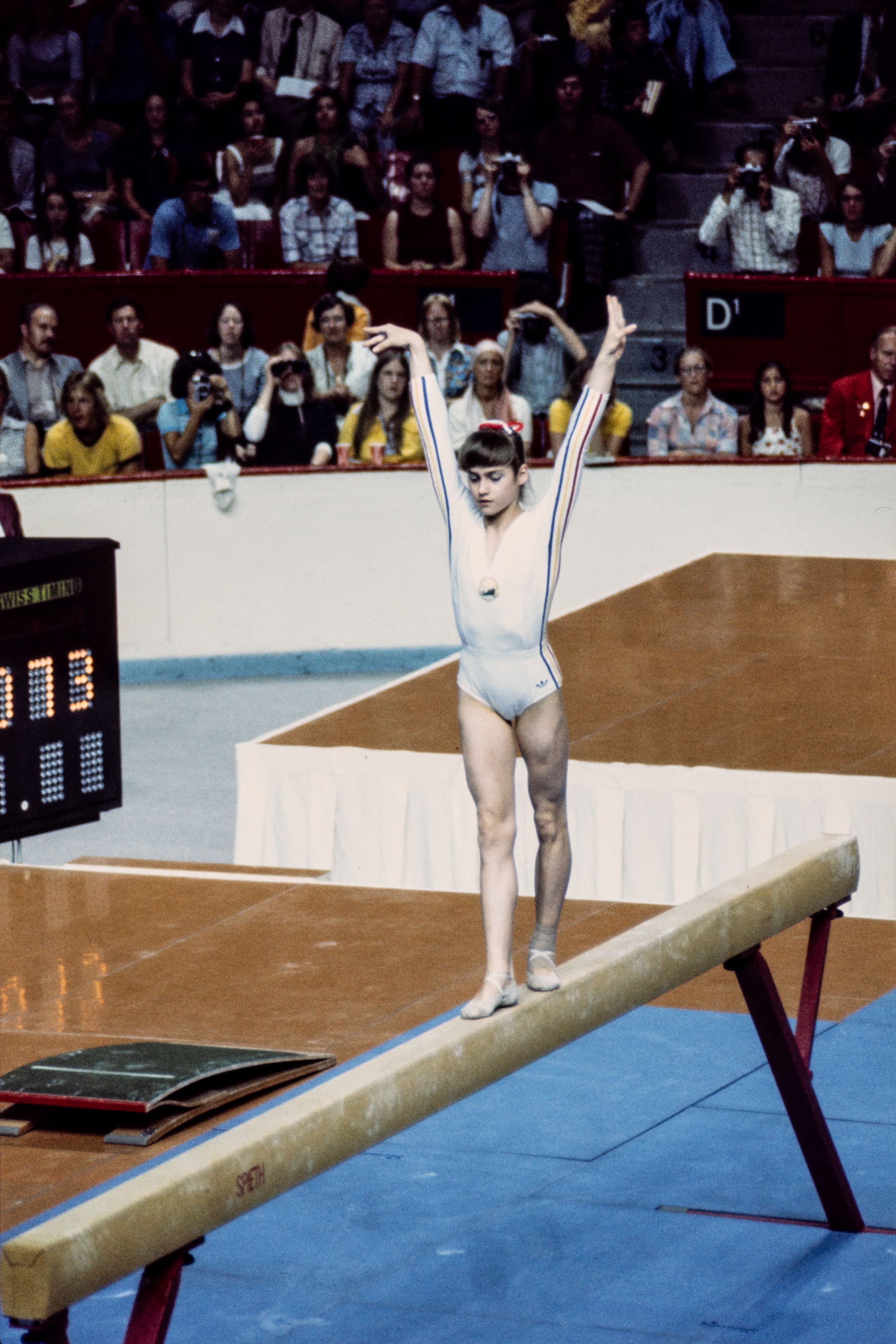
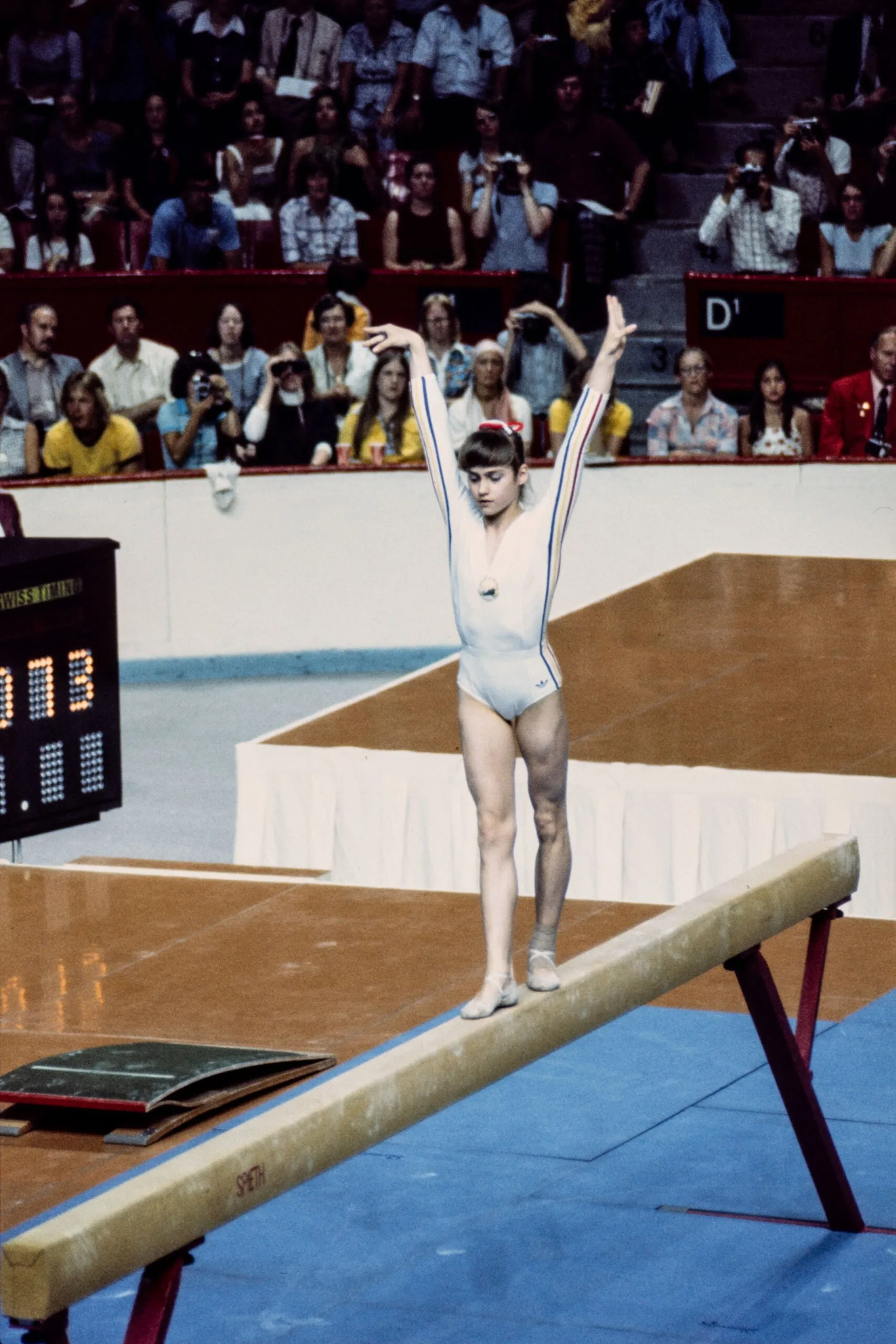
Pierre McCann, Nadia Comăneci earns a perfect score on the balance beam, July 19, 1976: “Romanian gymnast Nadia Comăneci was the queen of the Games: she earned seven perfect scores and five medals, including three golds. This photograph is from her second perfect score. This happened 50 years ago. I don’t know how many women in Quebec are named Nadia today, after Comăneci. Maybe thousands.”
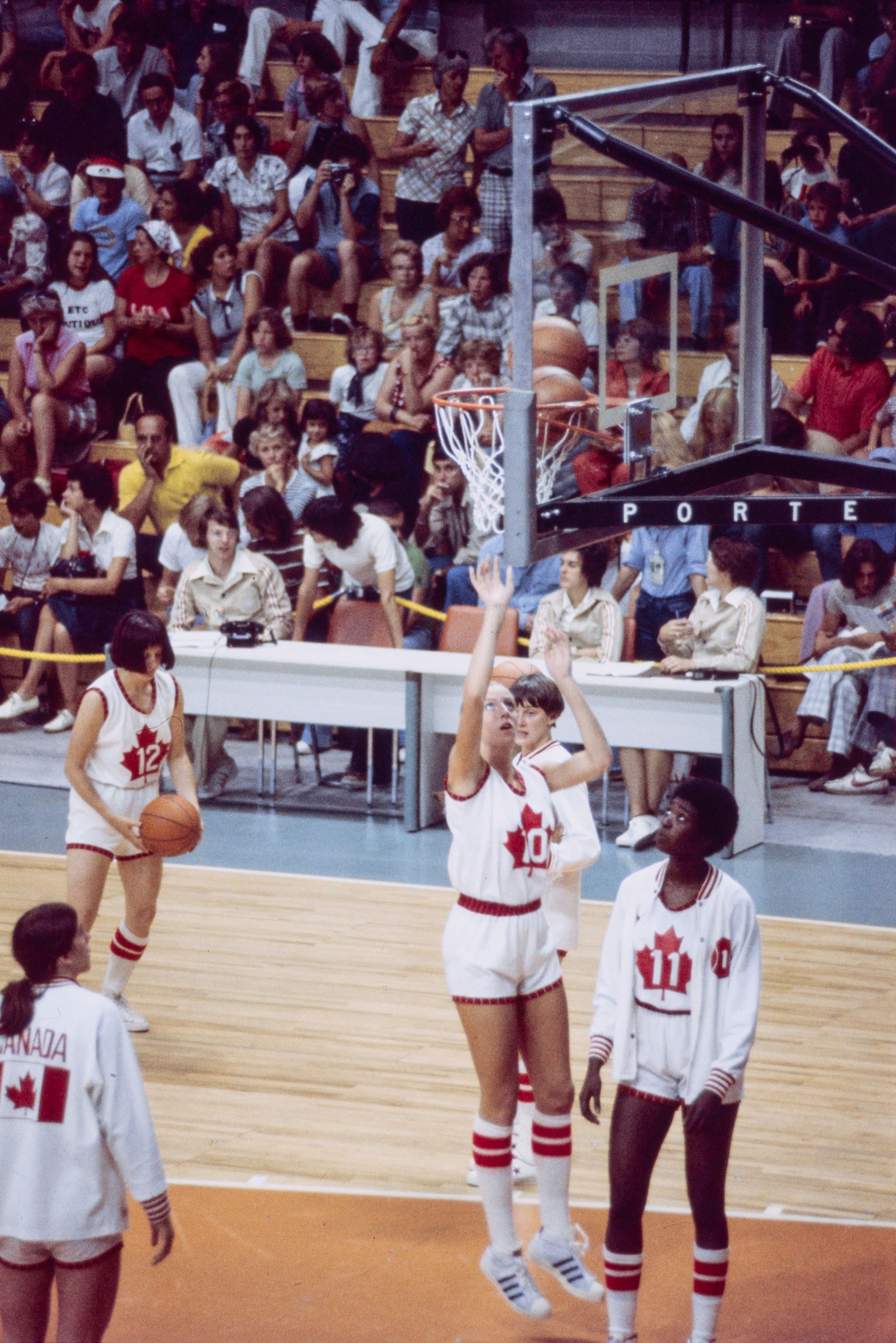
Pierre McCann, The Canadian basketball team: A new discipline opens to female athletes, July 23, 1976: “In 1976, three disciplines opened up to women’s teams: basketball, handball and rowing. So the Canadian women’s basketball team played at the Olympics for the first time. I wanted to include this photo in the exhibit because, usually, photographs show only white athletes. But there were a lot of Black athletes at the Games too. Number 11 was Montreal-born Sylvia Sweeney, who became captain of the national team three years later.”
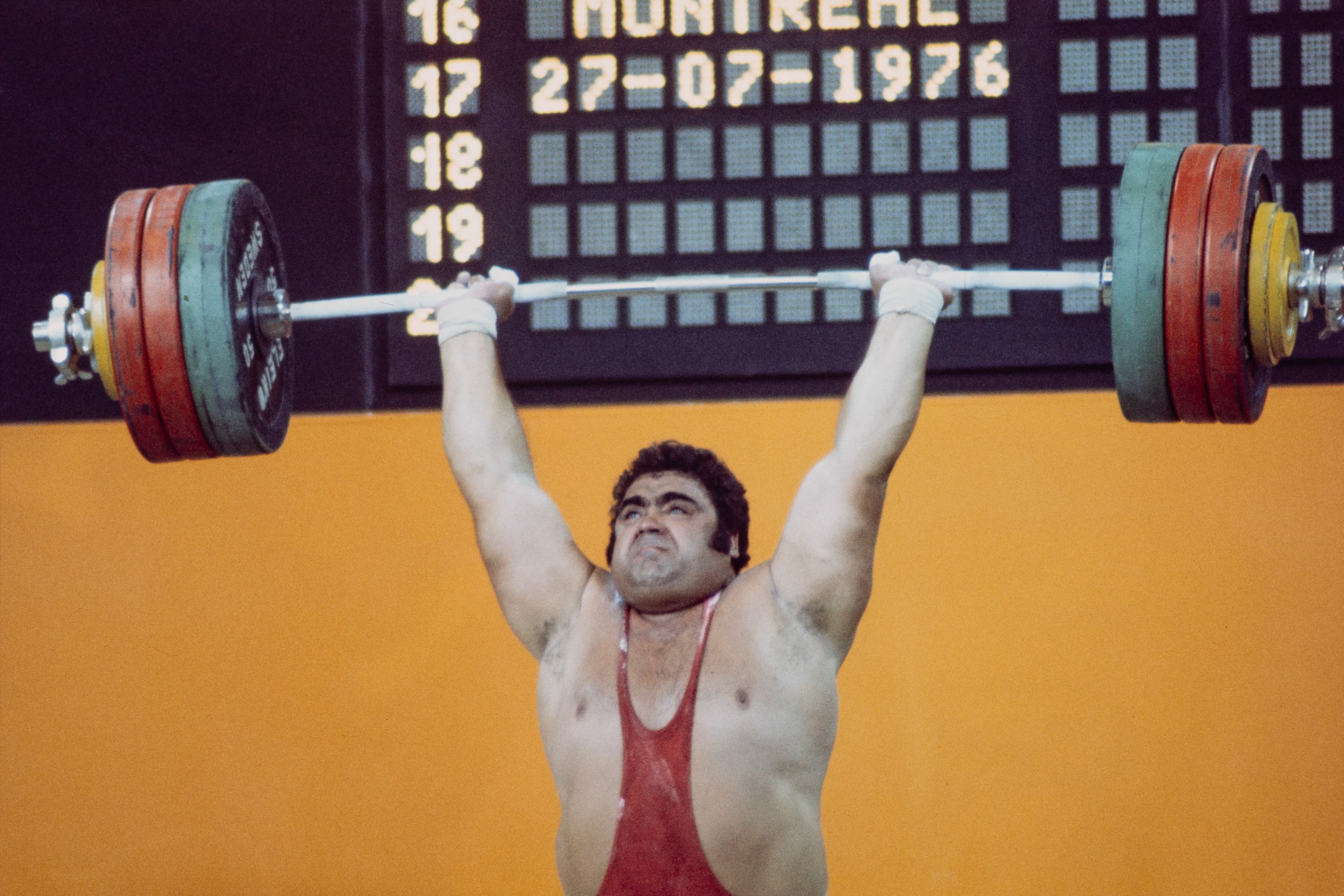
Paul-Henri Talbot, Vasily Alekseyev sets a world record to win gold in the super heavyweight category, July 27, 1976: “If Nadia was the queen of the 1976 Olympics, 34-year-old Soviet weightlifter Vasily Alekseyev was the king—some illustrations even show them paired together like that. In Montreal, Alekseyev set a world record when he lifted 255 kilograms, which won him the gold medal in super heavyweight.”
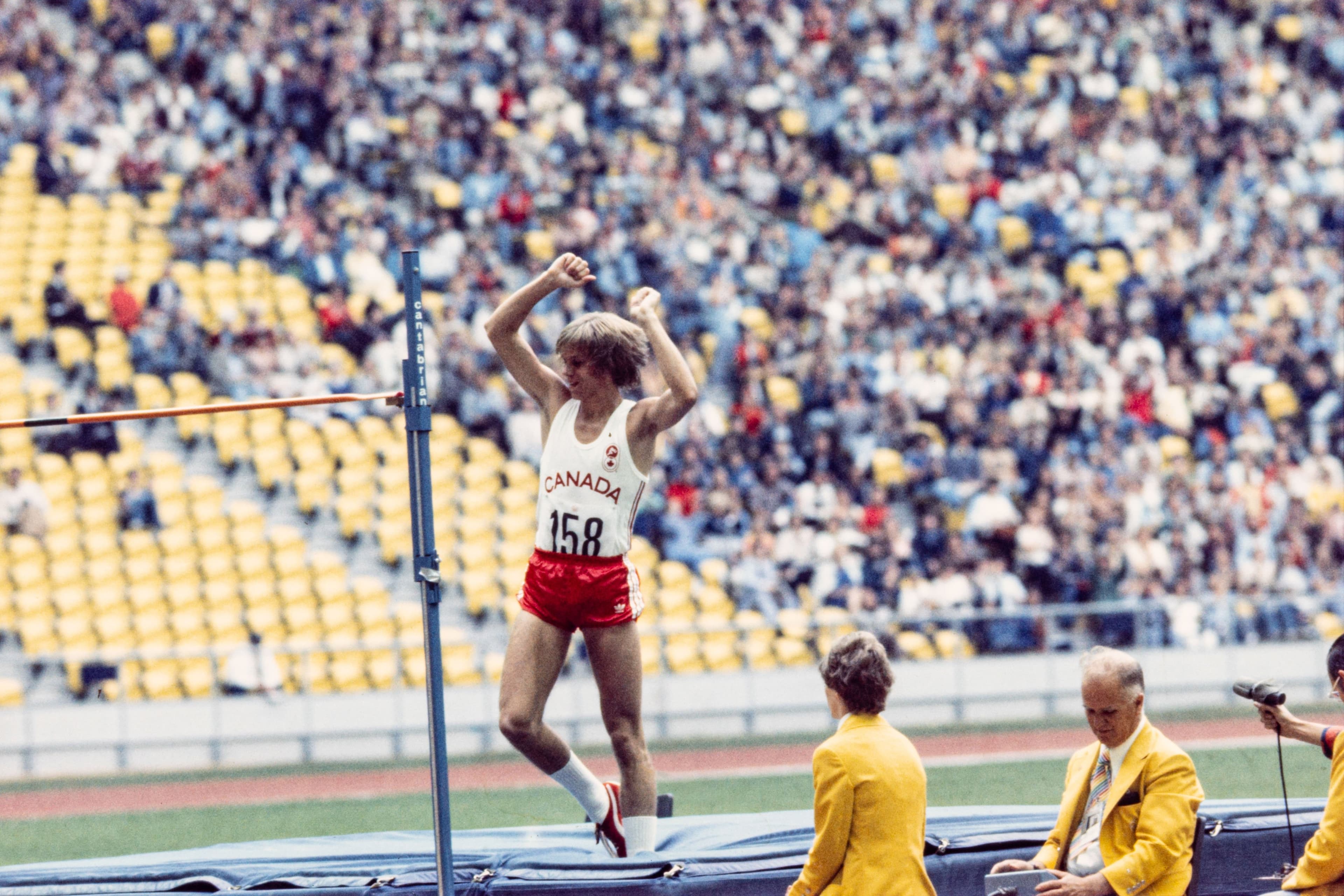
René Picard, Greg Joy cleared 2.16m during the high jump qualifying round, advancing to the final, July 30, 1976: “Canada won 11 medals—but no golds—in 1976. This is Greg Joy, who won a silver medal in high jump. He was the country’s star player at these Games, and when I ask people if they can name a Canadian athlete, he’s the one everybody remembers. Last time I went to see my dentist, she asked me what I was working on, and when I told her about this commemoration of the Montreal Games, she said, ‘Oh—Greg Joy.’ ”
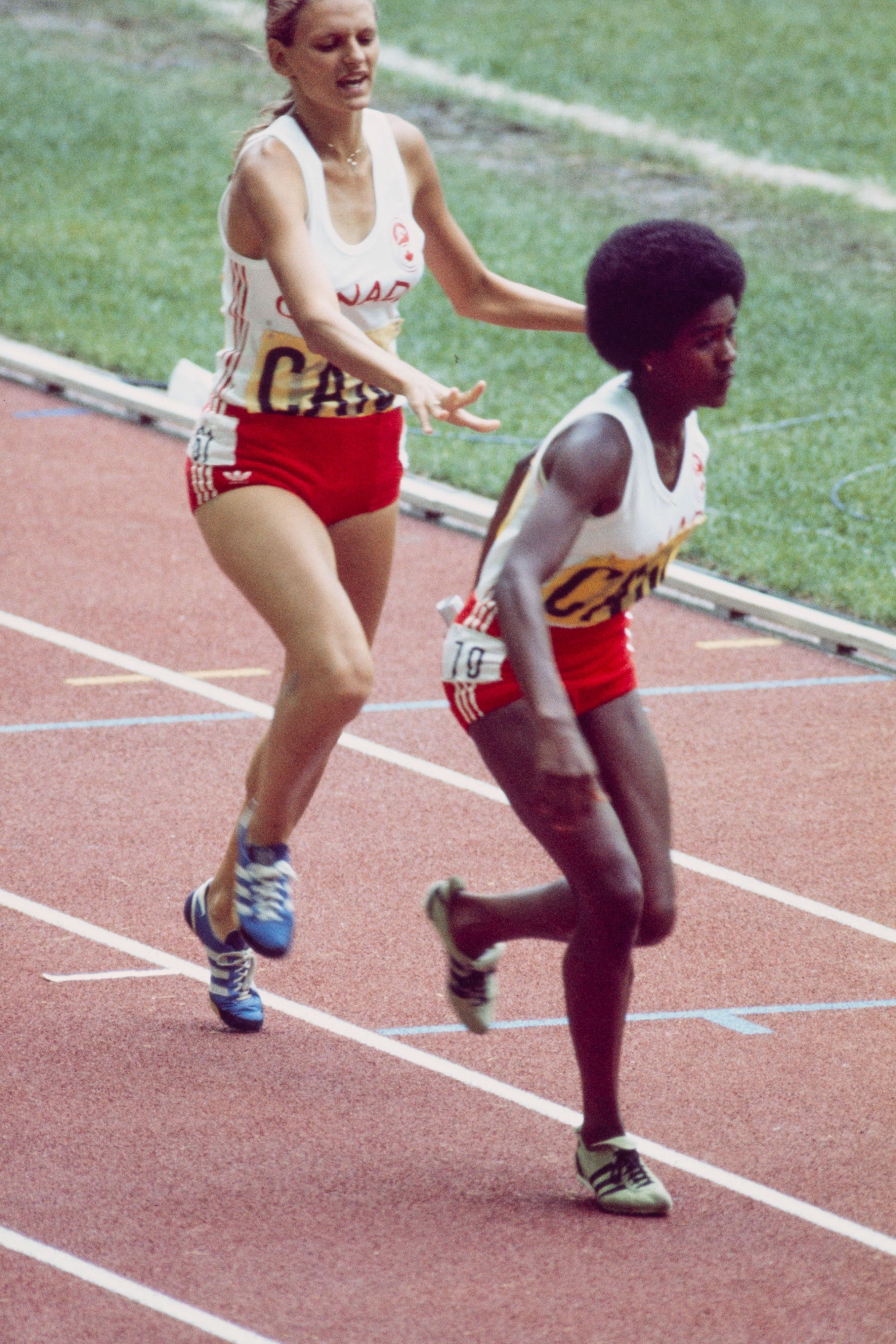
Robert Nadon, Joanne McTaggart and Marjorie Bailey, members of the Canadian 4×100 m relay team, which finished fourth in the final, July 30, 1976: “The Montreal Olympics was the first time so many women athletes had participated in the Games. So I’ve tried to show that in the exhibit. The Canadian women’s relay team almost earned a bronze medal. Here, Joanne McTaggart was the third to run, and Marjorie Bailey was the last.”
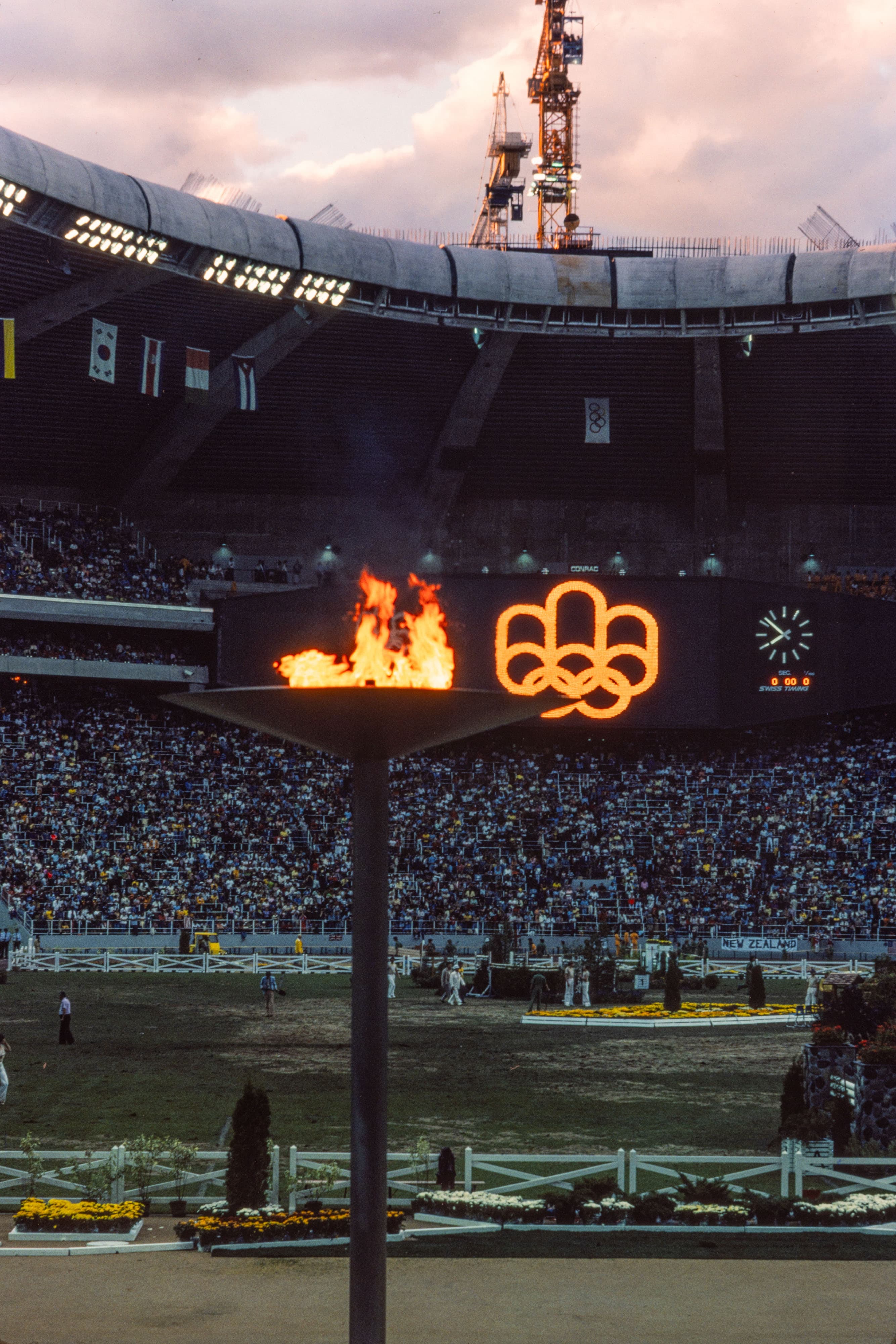
The Jumping Nations Cup on the final day of the Games, August 1, 1976: “This photograph is from August 1, the last day of the games. That day, the Jumping Nations Cup, an equestrian event, took place at the Olympic Stadium just before the closing ceremonies. In this image, you can see the torch, the Montreal Olympic logo—five rings, with an ‘M’ for Montreal—and two cranes above, reminding us that the stadium was not completed.”
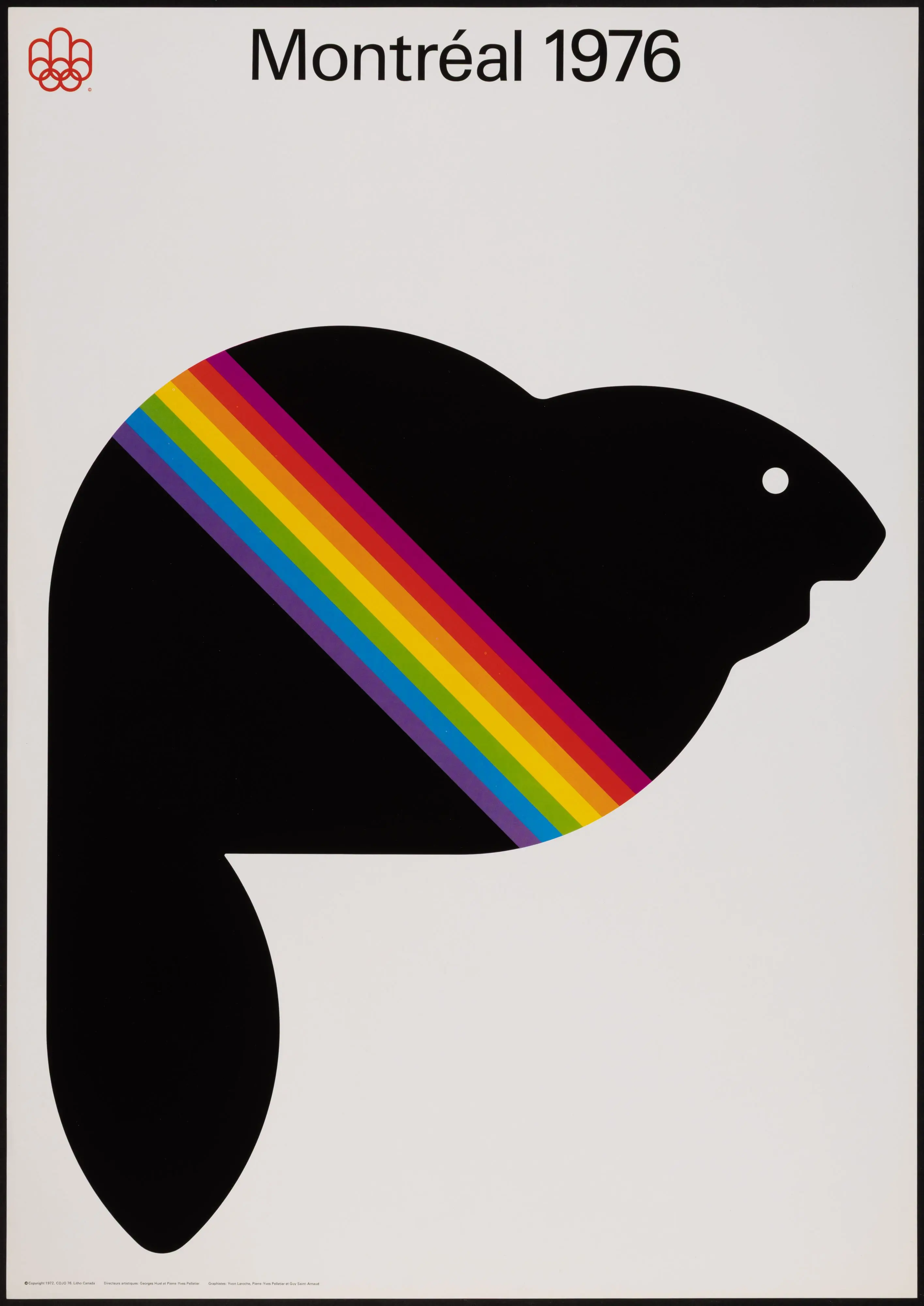
Yvon Laroche, Pierre-Yves Pelletier and Guy Saint-Arnaud, “Amik” Olympic mascot poster, 1972: “This poster shows Amik, the mascot of the Games. ‘Amik’ is the Algonquin word for beaver. Here, the rainbow represents every category of Olympic staff, who had been assigned one of seven colours for their uniforms. Workers at the Olympic Village wore green, for example, and the Arts and Culture and Protocol staff wore purple. The poster designers wanted this rainbow to look like a medal ribbon around Amik’s neck. This was before the digital era, so the design department used paper, exacto knives and glue to prepare posters like this one.”
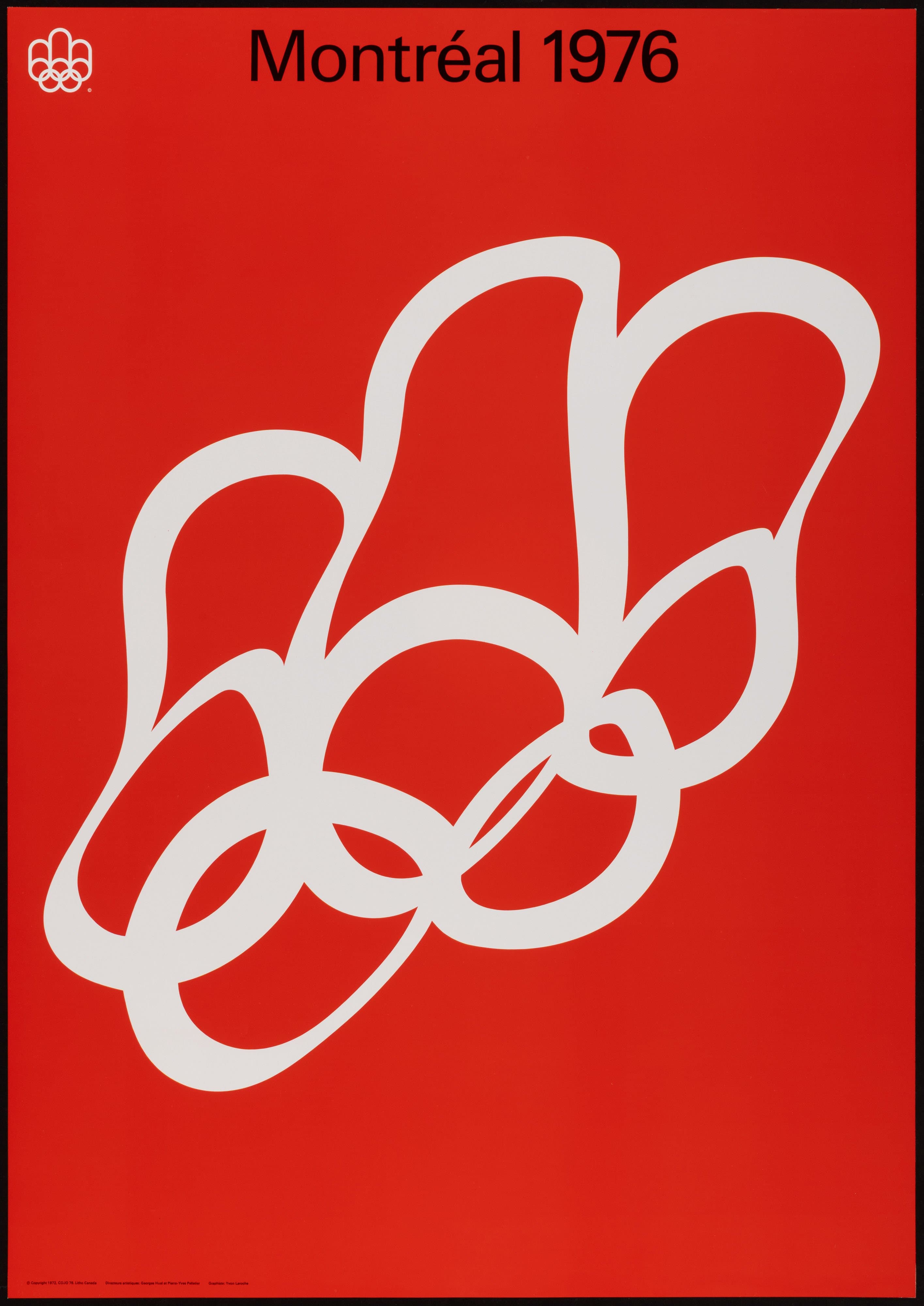
Yvon Laroche, Olympic flag poster, 1972: “Quebec graphic designer Georges Huel conceived the logo for the 1976 Olympics. Here, it looks like it’s on a flag that’s moving with the wind. One of the poster designers, Yvon Laroche, had printed sheets with the logo on them, and when he was rolling them up, he saw the way the logo deformed with the movement of the paper. He thought it’d be a good idea for a poster.”
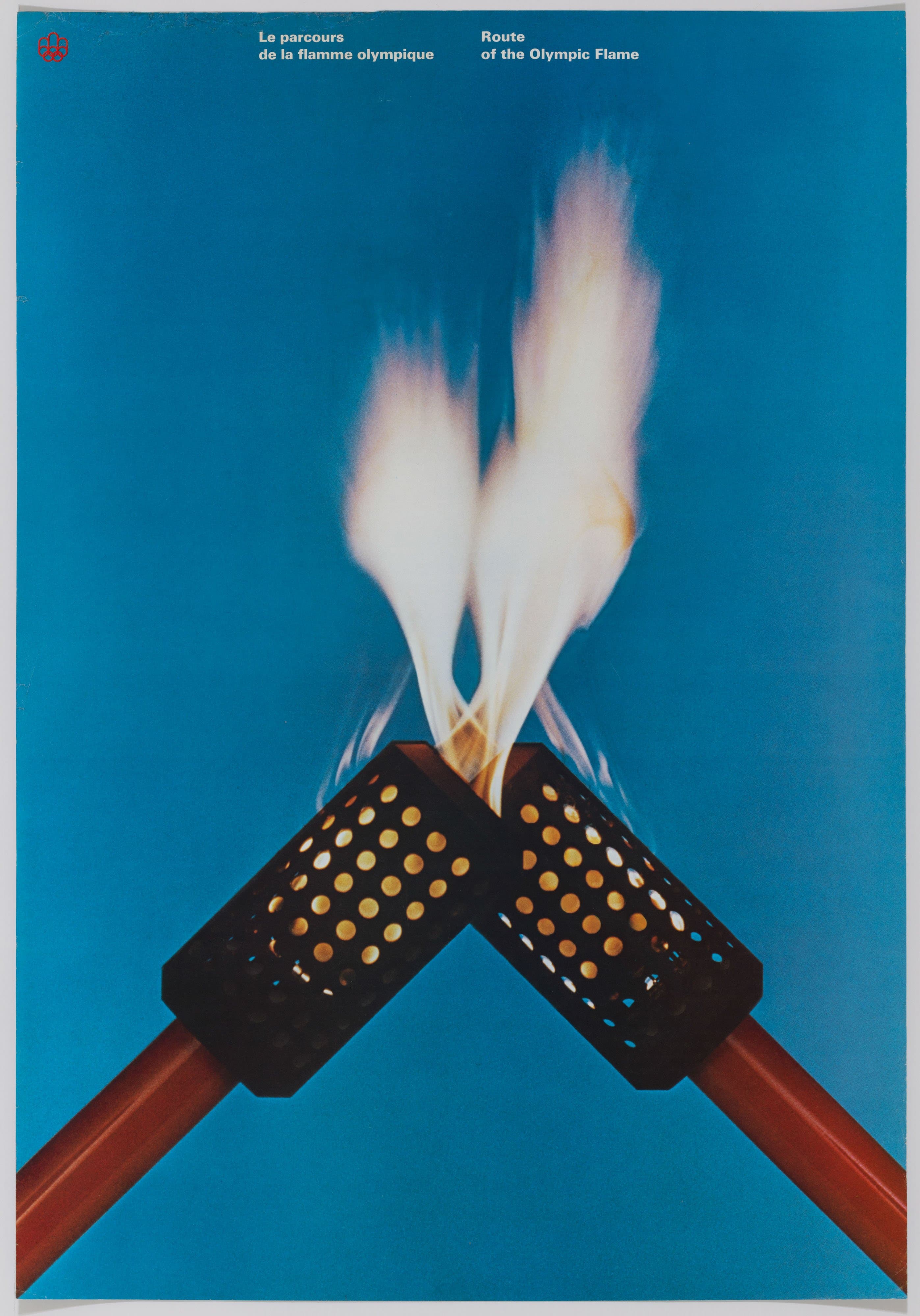
Raymond Bellemare and François Dumouchel, Olympic flame poster, 1975: “Usually there’s only one final torchbearer, a previous gold medal winner, but in 1976 Canada selected a young woman from Toronto and a young man from Quebec, to represent the country’s two founding nations. (I think that if we did this today, there would be three, to include the Indigenous people.) A Quebecer, Michel Dallaire, designed the torch in this poster in the shape of a cattail plant. The McCord Stewart Museum has a few dozen photographs from when they tried to find the proper image for this poster, and in the exhibit we’ll be showing 12 of those to explain how the poster was conceived—some with only one torch, some crooked.”
This story appears in the March 2026 issue of Maclean’s. You can subscribe to the magazine here or send a gift subscription here.
Related Posts

The Golden Age of Smut

How to Win the Westminster Dog Show

Canada’s Indiana Jones

Heated Rivalry Is Anti-Dystopia Art
Get the Best of Maclean’s straight to your inbox.
Sign up for news, commentary and analysis. Join 60,000+ Canadian readers.