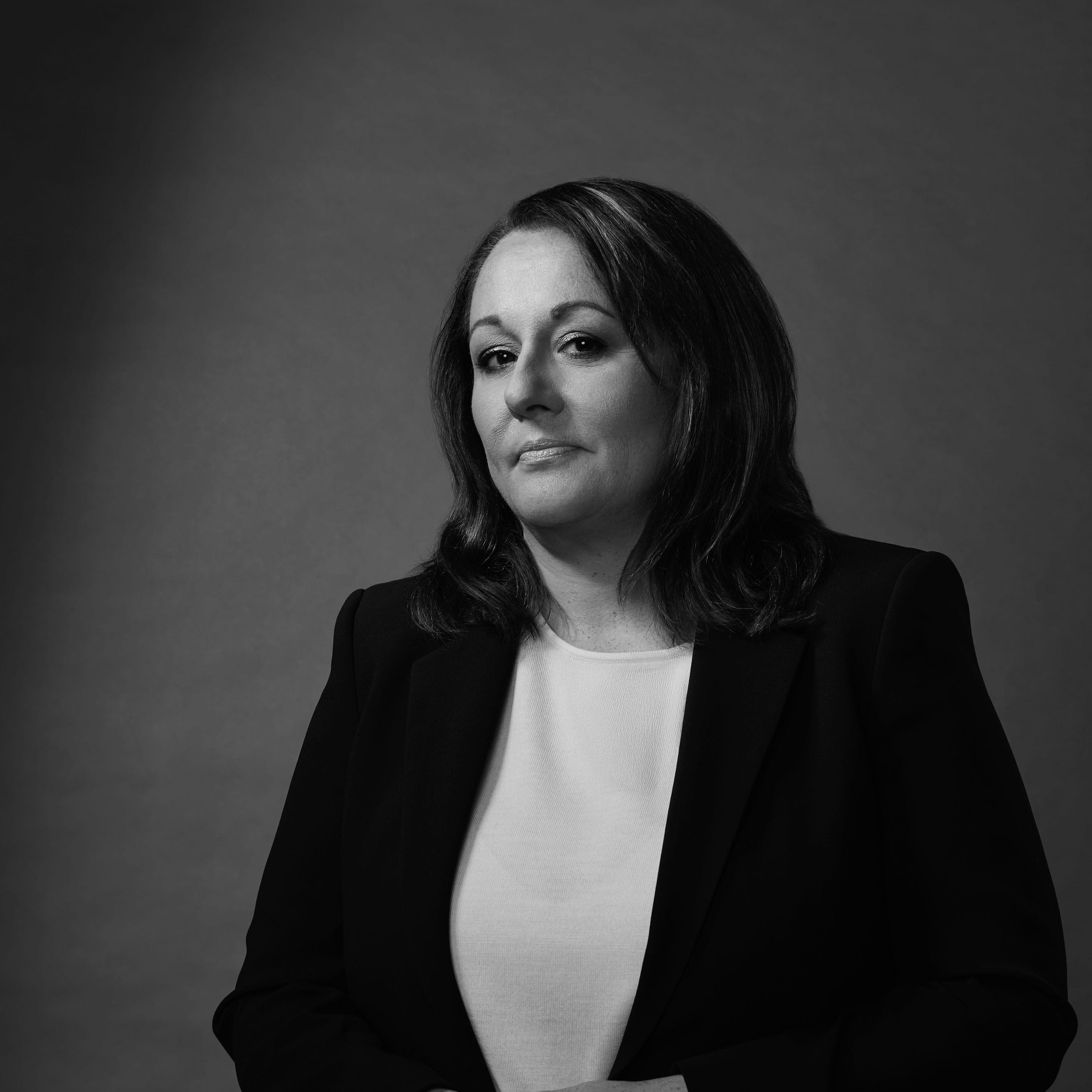
CBC’s Rosemary Barton Has No Time for Fake News
in an era when objective truth is a nice-to-have and the bar for politicians is in the depths of hell, it’s helpful to have someone like Rosemary Barton in the mix. For more than two decades, Barton, currently the CBC’s chief political correspondent, has chatted with, fact-checked and, when the occasion merits it, borderline interrogated the country’s most consequential public figures. Lately, thanks to some unusually exciting policy shifts under our refreshingly boring new prime minister, Canada’s newsmakers are commanding global headlines. But first, they’ll probably pop up on Rosemary Barton Live.
Related: Ana Bailão vs. the Housing Crisis
And yet, as any interviewer will attest—including me—her job has never been harder. If politicians would prefer to sidestep tough inquiries, The Joe Rogan Experience and Call Her Daddy offer warmer, cushier landings. But as this country embarks on a 360-degree nation-building makeover, Canadians have more questions than ever. Barton is doing her best to get answers—no filler.
Is it okay if I call you “Rosie”?
Prime ministers call me Rosie, so you can too.
Perfect. Between the endless trade war, Mark Carney’s election and his now-iconic Davos speech, the whole world seems to be experiencing the kind of Canadian-politics fever we haven’t seen since Justin Trudeau set the internet aflame. Have you felt that attentional shift, too?
Yeah. Some of it is just a function of it being a dramatic year: Justin Trudeau was forced to leave, for example. Most of it, though, is because of our proximity to the United States; we feel the strong winds of the president first. The Prime Minister has leveraged that for his own political gain—which, you know, fair enough. Canadians are also responding in ways that are unusual for us: not buying American liquor, not going to the States. The spotlight is still on the U.S., but the world is looking at us differently.
We’ve definitely benefited from that side-by-side comparison.
I covered the first Trump administration. It was jarring and busy, and they renegotiated NAFTA. But this one… it is just relentless. Relentless. Sometimes, things get a little sleepy during a majority government. Because there’s Donald Trump, I don’t think that’s going to be the case.
Maybe you’re hard to shock at this point, but I’m curious to know the last time news broke and you went, I can’t believe that happened.
It’s a blur. Someone counted how many “specials” the CBC did in 2025 to cover major news events, and it was, like, 27. Chrystia Freeland quit. Trudeau quit. Tariffs were put in place on a Saturday. Even with the recent floor-crossings, my team had an ever-changing list of six people who we heard might make a move, and Marilyn Gladu wasn’t on it. That Ottawa was able to keep the lid so tight on that was pretty remarkable for them.
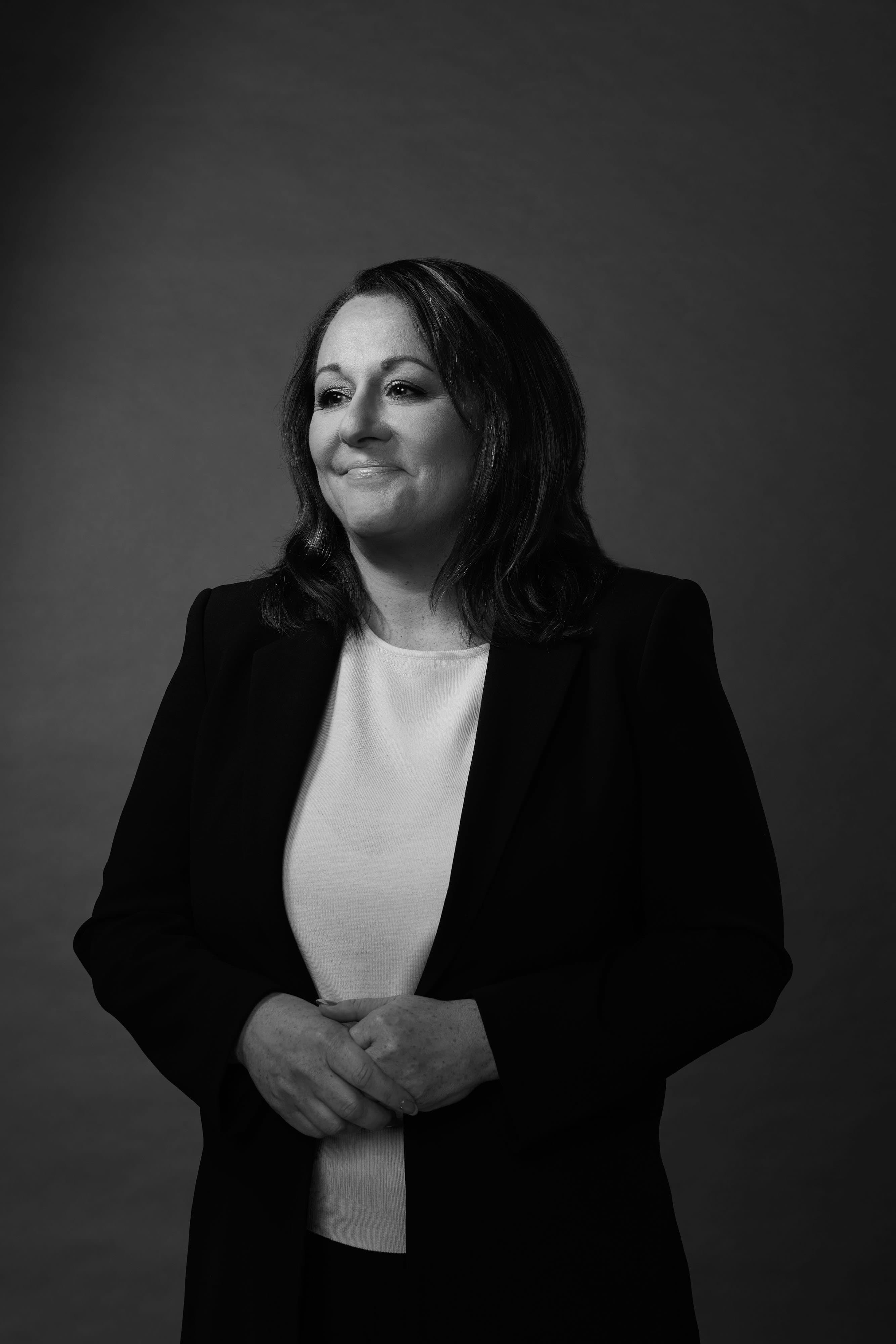
Have you noticed a difference between interviewing career politicians and one whose background is largely economics and Goldman Sachs?
Carney has a different view of the world—that’s what the Davos speech was about. He’s an economist by trade, so that’s where his head is most of the time. I will say he’s not interested in spending time on light or fluffy questions, but neither am I. On the other hand, even if he’s only really been in politics for a year, he is a politician. He’s not always forthcoming and sometimes sticks to talking points. And politicians have big personalities.
One of the best examples of his big personality peeking through was during the election, when he suggested you “look inside yourself” in response to your scrum question about his potential conflicts of interest. He seems to have gotten more of a hold on his face since then.
He did apologize to me afterward, which was the right thing to do. I don’t think he has a great poker face, but what are you going to do? It’s your face!
A current core challenge of traditional media is staying in the conversation when public figures simply do not have to speak to you anymore to get their message out. Pierre Poilievre, for example, recently appeared on Joe Rogan’s podcast. Does it irk you to see podcasters and influencers wading into your territory?
It’s not for me to decide how politicians run their communication strategies. But there’s a difference between influencers doing this stuff versus someone who has a long, established career in journalism. Even if it’s sometimes hard for audiences to distinguish those two things, they still understand the brand of the CBC. And, if politicians consistently avoid mainstream media, people will start to notice. Then the question becomes why they’re trying to avoid tough interviews.
What’s the advantage of Poilievre doing Rogan now, as opposed to when he was running for the big job?
He said it best on Peter Mansbridge’s podcast: he wants to be able to talk to all people. Rogan has a huge audience, speaks to some of the same issues as Poilievre does and even shares some of his interests. (Poilievre was just at UFC Fight Night in Winnipeg.) So, he didn’t get into any trouble, but it was a pretty risk-averse appearance, right? Joe Rogan’s not going to hammer away at what he’s going to do about climate change.
In Canada, we’re not seeing the same all-out assault on the media and news institutions as in the U.S., where members of the administration call journalists “hacks” and “piggies.” Canadians do, however, see more covert attempts to avoid scrutiny, like the Ford government’s recent legislation to deny press access to his party’s cellphone records. How would you rate the safety of the press here and now?
I agree that we’re not like the United States. We don’t have as many media outlets, and we have more political parties, so we tend to be less polarized. Still, I have never experienced a Canadian government that’s super-great at sharing all the information—that’s not their instinct. But isn’t that always what we come up against? Our job is to uncover things, to get people to talk to us who don’t want to, to get them to tell us things they shouldn’t be telling us.
Has our misinformation-saturated culture changed the way you do your job? Even a few journalists were duped into thinking that TikTok of seven dogs trying to find their way home on a highway was real.
I so wished that was real.
One of those journalists was me, by the way—for a few seconds!
At the CBC, we have a newish video-verification unit, because everyone can get fooled—me included. They look for clues that user-generated content is AI by contacting the source or scanning for fuzziness. There are actually multiple AI “Rosemary Bartons” out there trying to scam people. One involves a simulated interview of me asking Mark Carney for crypto-investment advice, and a guy in Saskatchewan got conned out of money because of it. I was devastated for him. Because this stuff is sophisticated and fast-moving, it’s caused me to slow down a beat. I used to worry about not being on top of a story, then push things out really quickly. I don’t do that anymore, because I’d rather be right than first. The other day, I saw something on Facebook that said Paul McCartney had died. I was like, How is it possible that I don’t know this yet? Well, nothing on Facebook these days is true. That’s how.
Most of the mail you used to get was hate mail. Is that still true?
Things are much rougher during election cycles—there’s a lot at stake, and people see me as someone they can go after. These days, emails are typically negative and often anonymous. Letter mail is a mix. Occasionally, I’ll get a nice little card from an older gal from southern Ontario with very delicate penmanship who says she appreciates me.
On and off, you’ve fielded accusations of partisanship—toward the Liberals and Conservatives—from the public. You once denied it by saying it’s not the way you were raised. I’m curious what your upbringing has to do with your political leanings (or lack thereof).
My parents are both immigrants from Northern Ireland, and we were not a political household. I do remember being concerned about national unity—I went to a rally about the Quebec Referendum in ’95—but that’s not what we talked about at the dinner table. I didn’t grow up reading political biographies. It wasn’t until I ended up as a legislative reporter in Quebec City, where politics is the lifeblood of conversations, that I really started to enjoy it. I now have lots of friends who work for various parties, and thank goodness there are people who want to put their name forward and volunteer. But that’s not something that’s at all appealing to me. I don’t think about the world in terms of sides or teams. Some people won’t believe that, but it’s the truth.
The issue of journalistic objectivity is incredibly old, but especially relevant in the Trump era. Some think the media played an outsized role in installing him in the Oval Office, with certain outlets more concerned with maintaining balance between “sides” than sufficiently interrogating, say, his many lies and alleged criminal activities. Is neutrality really the right course of action, when not pushing hard enough could lead to what is essentially an authoritarian government down south? I think about this quite often.
I view my job as trying to get the truth and making sure that Canadians have enough information to make decisions about who they support and how it’s going to affect their lives. If, in an interview, someone says something inaccurate, it’s up to me to correct them. Sometimes, you address it all and sometimes you don’t, because someone’s talking so much—and it’s hard to butt in 16 times. I remember chatting with Rudy Giuliani many moons ago; I’ve never done an interview like that in my life. We ultimately decided we couldn’t run it start to finish because it was so full of misinformation and gobbledygook.
I can imagine!
It was like I was saying, “Is the sky blue?” And he’d say, “The grass is green.” It was pre-taped, thankfully, so we were able to break it up into clips of the questions, which I then followed with a fact check. But when that’s happening live, it’s different. You have to decide how many times you’re going to weigh in and how harmless (or not) the spin is.
So how did you hone your bullshit detector? Telling the Prime Minister you “need to keep it moving”—as you did in your last year-end interview—comes more naturally to some people than others.
Mostly, it’s experience. But, again, I’d go back to Quebec City, where I was one of maybe three young female reporters. Two of us were with anglophone media, and it was French questions first. Sometimes, politicians wouldn’t stick around for ours, so I’d have to get in people’s faces and yell to get even one clip. That toughened me up. Actually, after that interview you mentioned, I got a lot of outraged emails because I didn’t call Carney “Prime Minister” throughout the whole thing. It’s not like I called him Mark! So funny, the things people pick up on.
You’ve claimed your impatience, though. I read that, after your first day of kindergarten, you cried because they hadn’t taught you how to read.
It’s not impatience with the world; it’s impatience with myself. There’s not a lot of room for mistakes on live TV. We do rehearsals for election nights, which are particularly technical. It’s important that you get your language right. Before the April by-elections, I said to everyone, “Just remember: I suck at rehearsals!”
You consume news from the minute you wake up to the minute you go to bed. What are your no-politics palate cleansers?
My show goes on hiatus in the summer, so I can peace out then. It’s impossible during the year. Monday is my day off—do you think I’m not watching Power and Politics? I use the Peloton app, because that’s 30 to 45 minutes of not looking at my phone. And I read a lot of fiction, which removes me from the world a bit.
What’s your niche? Any fairies in there?
Oh, I wish. I’m not into romance either. I like Sally Rooney, literary fiction—things that win prizes. Right now, I’m actually reading non-fiction: Patrick Radden Keefe’s new one. It’s fantastic and gripping, but ultimately, it’s journalism again.
You once said you’d never leave Twitter—I’m never calling it X, sorry—but what was once a journo’s paradise has become an enshittified wasteland. What keeps you logging in?
I ask myself that occasionally. During the 2015 election, I loved Twitter a lot. I’m still there because politicians still post. I saw Marilyn Gladu’s floor-crossing on Mark Carney’s feed.
All of the memes, all of us laughing at the same things…
That’s what Instagram does for me now. I send memes to my sister all day. Or watch Justin Bieber at Coachella.
Do you have Bieber fever?
I do have Bieber fever. I am a 50-year-old woman who, if he goes on tour, will be there.
He was the star of one of your most recent Instagram stories. Your feed, however, is mostly pics of your feet in different places.
I just like shoes. When I hosted Power and Politics, they’d film full-body shots, so I have an enormous collection of high heels. I also like that those posts don’t identify where I am. They show my personality—but I’m not as famous as Bieber, so people don’t have to know everything.
Is there a story you think Canadians aren’t paying enough attention to?
We see a little bit about AI impacting public-service jobs, but it’s the big disruptor, and it’s still so opaque. My show could be doing a better job of talking about the policy around it. If Canadians aren’t paying attention to something, it’s because I’m not doing enough.
This story appears in the June 2026 issue of Maclean’s. You can subscribe to the magazine here or send a gift subscription here.
What did you think of this story? Send a comment for publication to letters@macleans.ca, and supply your name and address. Comments should be fewer than 200 words, and may be edited for length and clarity.
Related Posts
How the Olympics Remade Montreal

How to Win the Westminster Dog Show
Heated Rivalry Is Anti-Dystopia Art

The Golden Age of Smut
Get the Best of Maclean’s straight to your inbox.
Sign up for news, commentary and analysis. Join 60,000+ Canadian readers.