Saint-Sauveur, Quebec City: The Vintage Revival
It’s easy to get lost in the rambling streets of Saint-Sauveur. It happened to me in 1997, and I’m still here 30 years later. I was 20 years old, and my friends had picked me up for a cross-country road trip in a 1967 Mercury Meteor. When we reached Quebec City, my girlfriend and I stumbled down a staircase to the Lower Town and wandered the winding streets packed tight with flat-roofed brownstones and older, mansard-roofed duplexes. Over the next few hours, we grew increasingly enchanted—and lost. The tiny diner we found for lunch led to the for-rent sign across the street. We had enough for the first month.
Saint-Sauveur is a working-class neighbourhood enclosed on three sides by a river with a sprawling park, a bluff separating it from the Upper Town and the more commercial Saint-Roch district. It reached peak density during World War II, with over 40,000 people in just 2.5 square kilometres. That population plummeted in the postwar years as the suburbs beckoned with wider streets and spacious bungalows. By the ’90s, the housing stock was neglected, and the main thoroughfare, Rue Saint-Vallier, filled with boarded-up storefronts and makeshift thrift stores.
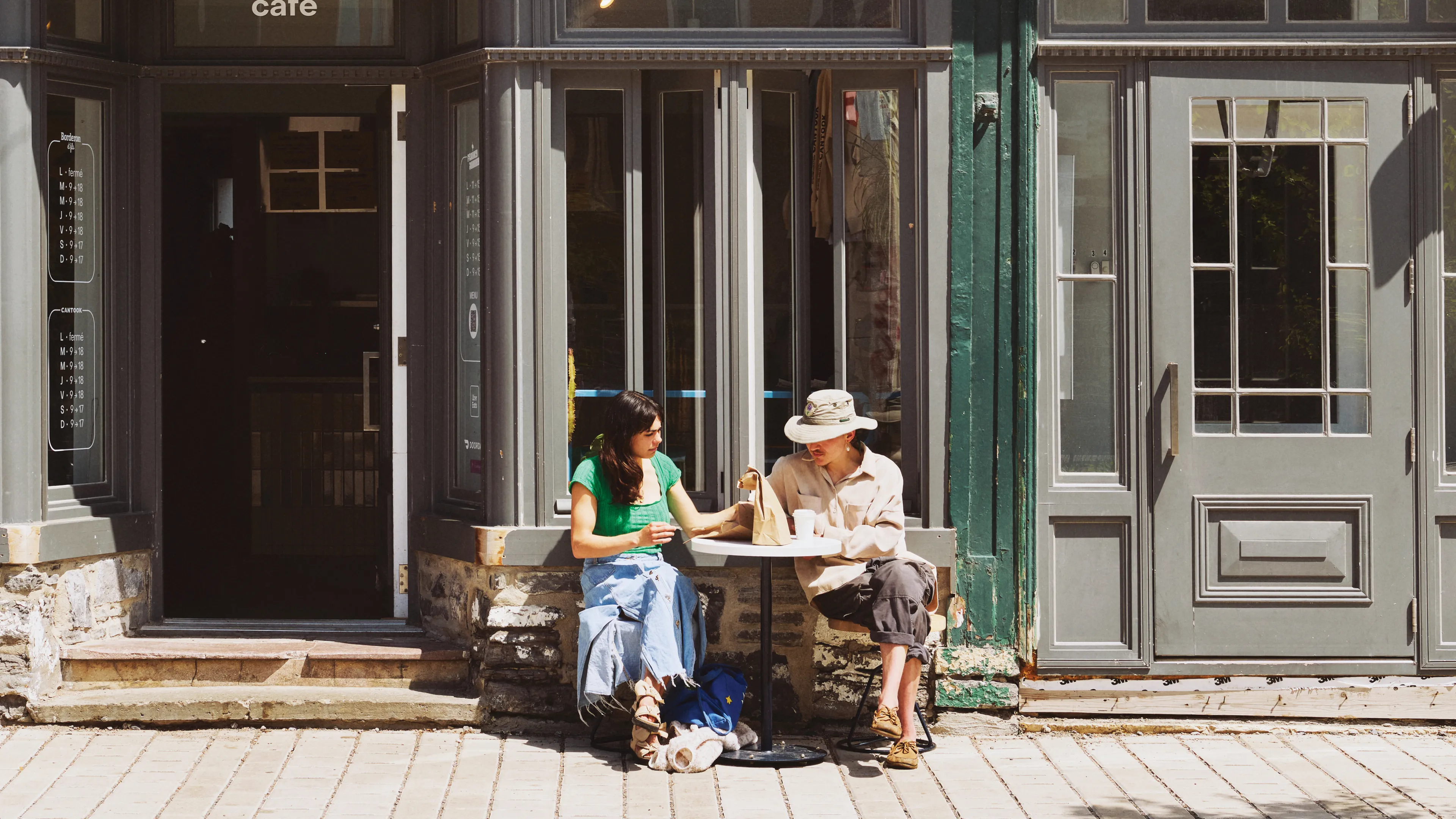
Not anymore. Today the street is vibrant with foot traffic and a healthy mix of old and new businesses—a record store and DIY music venue, cute cafés, tasty tacos and the city’s best sandwiches. Architects’ and lawyers’ offices—unimaginable 30 years ago—share real estate with preschool play spaces and adult literacy programs. Families eat ice cream on newly widened sidewalks, and a traffic-calming project has reinforced the sense of Rue Saint-Vallier as a place not to pass through but to gather with friends.
In Saint-Sauveur, I’m on a first-name basis with the local shopowners. At Zozo et Arty, Mélanie Roy, the co-owner, refills bottles with soap and shampoo while selling new and used children’s clothing and local art. At Vélo Basse-Ville, Étienne Babin greets his clients by name and always puts down what he’s doing to patch a flat tire. And while the days of small food shops on every corner may be gone, a nonprofit neighbourhood grocery store is on the way: run by Touski, a community organization, the store aims to strengthen the social fabric with sliding-scale pricing and customer input.
This once monocultural neighbourhood has also been enriched by immigration. There are pickup soccer games at Parc Victoria and lively businesses like the Colombian café Tintico. Asian grocery stores do brisk business in spring rolls and fresh soups, and specialty shops cater to a large population from French-speaking African countries. There’s no better melting pot than the summertime Saturday farmer’s markets, where kids play and adults catch up in the sun over coffee or lemonade.
Whenever I return home to Saint-Sauveur from a trip to my native Victoria, I’m struck by how the neighbourhood’s modest origins have preserved its character. Smaller homes and a denser urban fabric create tight-knit communities that may just stand a fighting chance in the economic maelstrom ahead. As prices in the neighbourhood rise, a rich tapestry of community groups greets each new challenge with small resources and big ideas: affordable day camps, toy libraries, tenant advocacy. Any optimism I can muster these days for my son’s future comes from close to home. We can’t go out without running into friends, making new ones and living out our days spontaneously in the arms of this welcoming neighbourhood.
Related Posts

How to Win the Westminster Dog Show
How the Olympics Remade Montreal

Heated Rivalry Is Anti-Dystopia Art

The Golden Age of Smut
Get the Best of Maclean’s straight to your inbox.
Sign up for news, commentary and analysis. Join 60,000+ Canadian readers.