
Justice for Stablecoins
I bought my first Bitcoin in 2011, in the middle of my MBA at the University of Alberta. Everyone was curious about crypto back then, but most businesses weren’t sure what to make of it. For users, the payment experience was confusing and clunky, and use cases were limited to the odd high-profile anecdote. Case in point: the first documented Bitcoin purchase was made in 2010 by American software developer Laszlo Hanyecz, who paid for two Papa Johns pizzas with 10,000 Bitcoin (worth roughly US$856 million today). Beyond headlines like these, there was no straightforward way for regular people to learn enough about crypto to use it to their benefit.
It’s a different story today. As of this writing, the total market value of global cryptocurrencies is US$3.2 trillion. I’m now the CEO of Coinbase Canada, the domestic arm of a global platform that allows people to buy and sell digital assets—a process that’s a lot easier than it used to be. I’ve even used crypto to buy my morning coffee in downtown Toronto. These days, the biggest barrier to widespread use is largely conceptual. Many Canadians can understand generative AI because they experience tangible, positive results from everyday interactions with tools like ChatGPT. Blockchains, invisible security databases that underpin crypto, are more abstract.
Related: Privatize Canada Post
Stablecoins can drive home crypto’s material upsides. These are designed to maintain consistent value because they’re tied to a currency. They’re effectively one-to-one fiat-backed tokens—unlike crypto assets like Bitcoin, whose value fluctuates with market demand. If you buy a U.S. dollar–denominated stablecoin, for example, the issuer—the fintech company or bank that creates it—takes your money and deposits it into U.S. treasuries. Then it issues you an equivalent token you can use online.
To grasp why this is useful, consider how money typically moves right now: when you swipe your credit card to purchase a cup of coffee, intermediaries (like payment processors and banks) are involved. Each takes a cut. Businesses spend roughly two per cent from every sale just to pay for those transaction fees—and then those costs are either absorbed by merchants or paid for by consumers in the form of higher prices. Stablecoins eliminate those go-betweens.
They also speed up cross-border payments. A bank might hold foreign wire funds for five days (or many more) until it can confirm they are legitimate. And if I send a friend a dollar via stablecoin, it’s a direct payment, settled immediately through a blockchain. Speed-wise, stablecoins are the financial equivalent of an instant message.
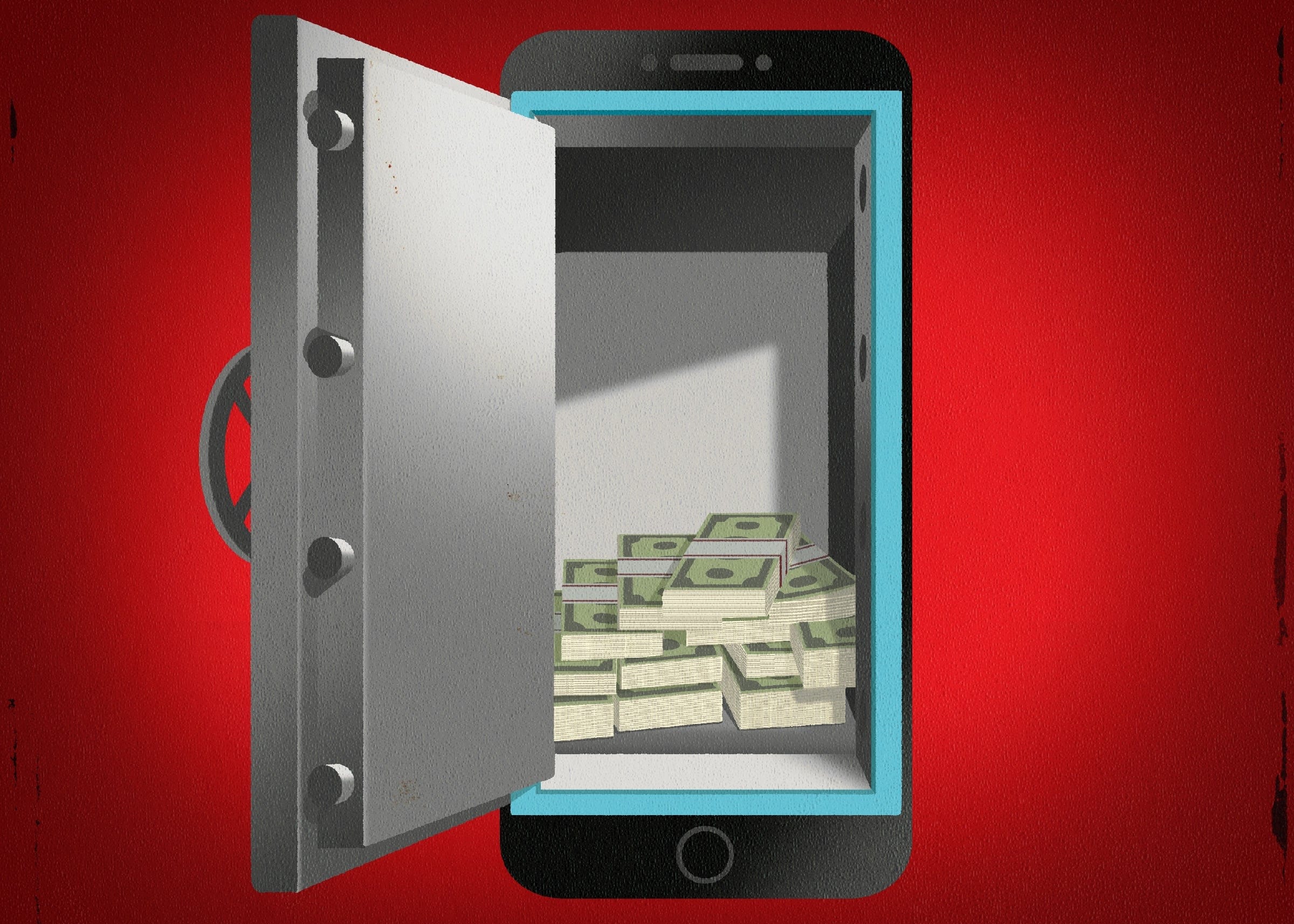
These transactions are protected by cryptographic security, which uses encrypted algorithms to prevent tampering and unauthorized access. It’s one of the most reliable financial technologies ever created. Plus, anyone with a smartphone can directly connect to and spend stablecoins via crypto wallets or blockchains like Ethereum. Equal access—regardless of where someone lives and how much money they have—is a public good.
Despite all those benefits, I get Canadians’ skepticism. According to the Financial Consumer Agency of Canada, roughly half of previous and current stablecoin owners reported negative experiences, including platform collapses, fraud and hacking—compounded by the lack of clear regulation in the industry’s early years. Governments were slow to establish rules, so bad actors filled the vacuum. Last fall’s federal budget announcement marked a turning point: the Carney government formally committed to stablecoin regulation in the near term, supervised by the Bank of Canada. That legitimized the asset class.
Canada’s regulators will primarily focus on stablecoin issuers. The Bank of Canada will maintain a public registry of companies that are authorized to issue stablecoins. They’ll also mandate independent attestation reports confirming the value of the assets issuers have in reserve. In the past, stablecoins were treated as securities, like stocks and bonds. This new framework indicates that stablecoins will eventually be treated as payment instruments.
Here’s why that distinction matters: a security is something you buy as an investment. A payment instrument is the method by which you pay for things, like a debit transfer via Interac. Treating stablecoins as securities implies they are speculative, maybe risky investments, whereas designating them as payment instruments transforms them into digital cash. This opens the door for consumers to use stablecoins to pay for basic necessities, cars—even houses. (No need for escrow.)
Before the budget dropped, Canada was the only G7 country without a stablecoin framework. The EU adopted its Markets in Crypto-Assets Regulation in 2024, while the U.S. passed the Guiding and Establishing National Innovation for U.S. Stablecoins Act, or GENIUS, last July. This has kicked off a shift from retail speculation to institutional adoption. Valuable data of all kinds is now being stored on blockchains—equities, debt, identity, car and homeownership and private health information. Even simple, mainstream mutual funds and ETFs now include digital assets as part of their portfolio, alongside traditional holdings like stocks. Last year, Shopify—a Canadian company—started allowing customers to pay natively with USDC, a U.S.-denominated stablecoin.
While waiting for a regulated loonie-supported stablecoin, some Canadians have been using ones backed by other countries’ currencies to reap some of their rewards. When they do that, though, the money behind those tokens gets invested in that country’s economy. If a Canadian buys groceries or pays a contractor with a USDC stablecoin, for example, it strengthens the American dollar. That’s exactly why we need our own.
Stablecoins could be a godsend as Trump’s trade war drags on. The less certain our economic relationship with the U.S., the more important it is for Canadian businesses to diversify who they trade with and how they move money internationally. Stablecoins allow exporters to exchange Canadian dollars for foreign currencies quickly and cheaply, without the delays and heavy fees of the cross-border payment systems in place now.
This moment is similar to when the internet became publicly available in the early 1990s. Plenty of people assumed it would remain confined to researchers or hobbyists. Some Canadians view cryptocurrency as a fad or a bubble that will eventually burst; others prefer to stick with familiar investments like stocks and bonds. Recent research reveals that only 21 per cent of Canadians can accurately define what stablecoins are. Once they’re regulated—and we start seeing the transformative effects on the country, and for ourselves—it won’t be nearly as hard to explain why they matter. In the next five years, crypto, once associated with crashes, criminals and now-legendary pizza purchases, will be as ordinary a conversation topic as banks.
Lucas Matheson is CEO of Coinbase Canada.
Related Posts

The Secret Tax on Being Single

Janine Rogan believes in the radical power of personal finance education
How Open Banking Can Fix Canada’s Financial Security Issue

Canada Protects Banks From Fraud. Why Not Investors?
Get the Best of Maclean’s straight to your inbox.
Sign up for news, commentary and analysis. Join 60,000+ Canadian readers.