Justice Institute of British Columbia
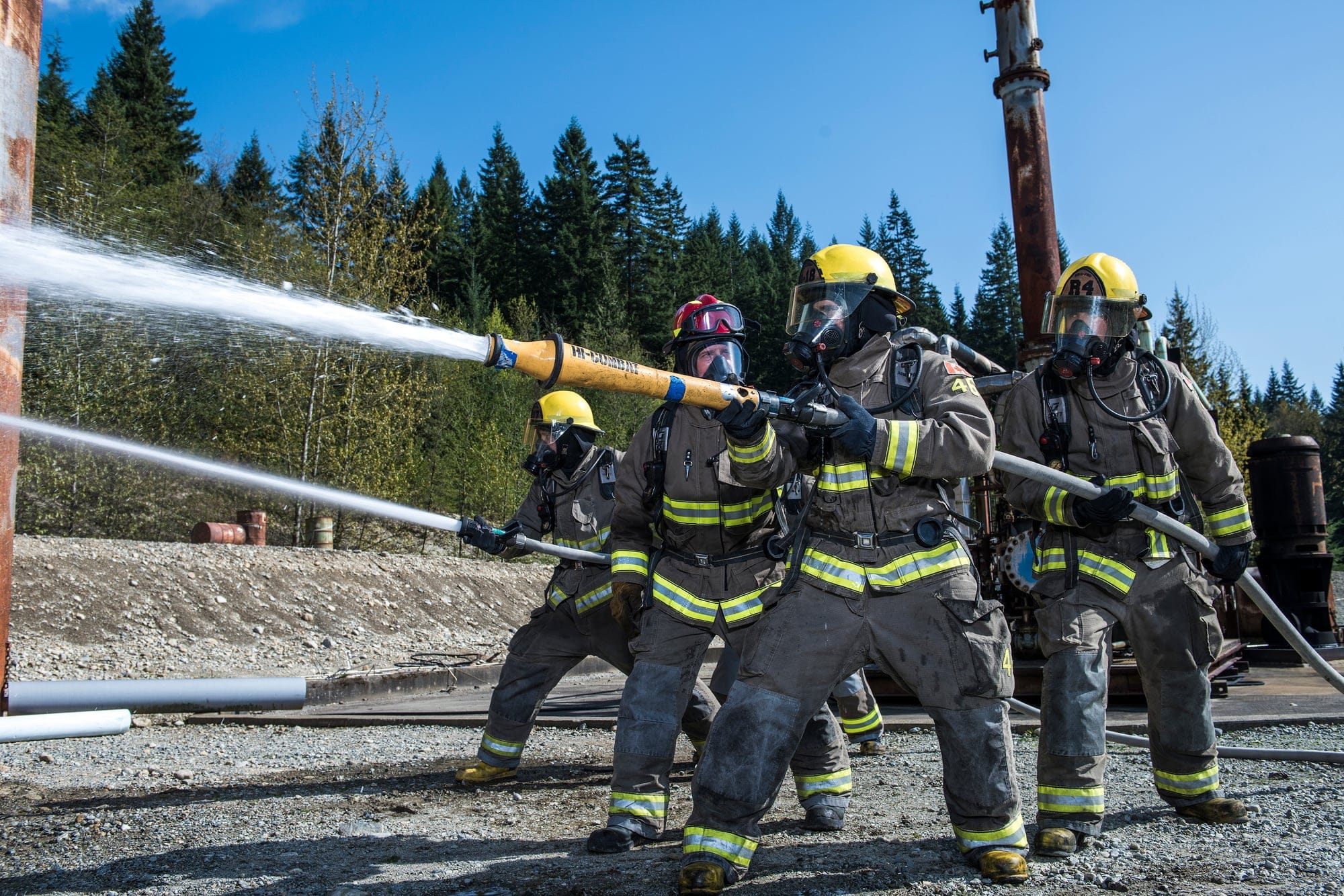
The Justice Institute of British Columbia (JIBC) specializes in training professionals in public safety, justice and social services through experiential education. The school offers career options in paramedicine, firefighting, law enforcement, security, emergency management, intelligence analysis, corrections, counselling and conflict resolution.
In 2024, JIBC added new microcredentials in emergency management: one in exercise design, to equip professionals to handle emergencies; and one in crisis communication, to provide professionals with effective communication skills during emergencies. In JIBC’s community care licensing officer program, students learn to monitor and inspect both public and private care facilities, provide support and education and bring facilities into compliance. JIBC has six campuses in B.C., and also provides distance education. In the fall of 2025, the Vancouver Island campus will move to a newly built campus in Langford, where the emergency medical responder and primary care paramedicine programs will reside. The Maple Ridge campus is Western Canada’s most extensive fire-training ground, with 27 training props, including the cargo hold of a ship and a simulated 11-car train derailment. JIBC’s web-based Praxis simulation technology is used for emergency management training both by government agencies and industry.
Quick facts
School size:
Mid-size
Tuition:
Degree $6,100-$7,100
Diploma $6,100-$7,100
Certificate $5,300-$11,400
Post-Grad $9,000-$12,400
Residence offerings:
No
Related Posts

Capilano University

George Brown College
Popular programs
Law Enforcement Studies Post-baccalaureate Diploma
Law Enforcement Studies Diploma
BC Police Recruit Training
Primary Care Paramedicine Certificate
Emergency Medical Responder Associate Certificate
Cool options
Emergency and Security Management Studies: Offered entirely online, this program is designed to meet today’s safety, security and emergency management challenges. Students focus on operational and academic skills or explore in-depth concepts, theories and structures.
Collaborative Conflict Resolution: This program coversnegotiation, mediation and coaching through an inclusivity lens.
Law Enforcement Studies: Studies in criminology and criminal law prepare students for work in enforcement and public safety.
Related Posts


Saskatchewan Indian Institute of Technologies