The Perks of Working On Campus
The cost of an education keeps going up, and many students work to help foot the bill. During the 2023–24 school year, 40 per cent of 19-year-old university students had a job and that number increased to 50 per cent for 21-year-olds. For many, the place that makes the most sense to work is right on campus.
The benefits of working where you study are plentiful. Campus employers tend to be understanding about student schedules and book shifts around lectures and exams, while working close to class makes for a short commute. The bonuses aren’t just logistical: campus jobs connect students whose paths might never have crossed otherwise and offer a supportive environment to try new things. Plus, campus jobs add structure to the unscheduled blocks of time that a university timetable offers.
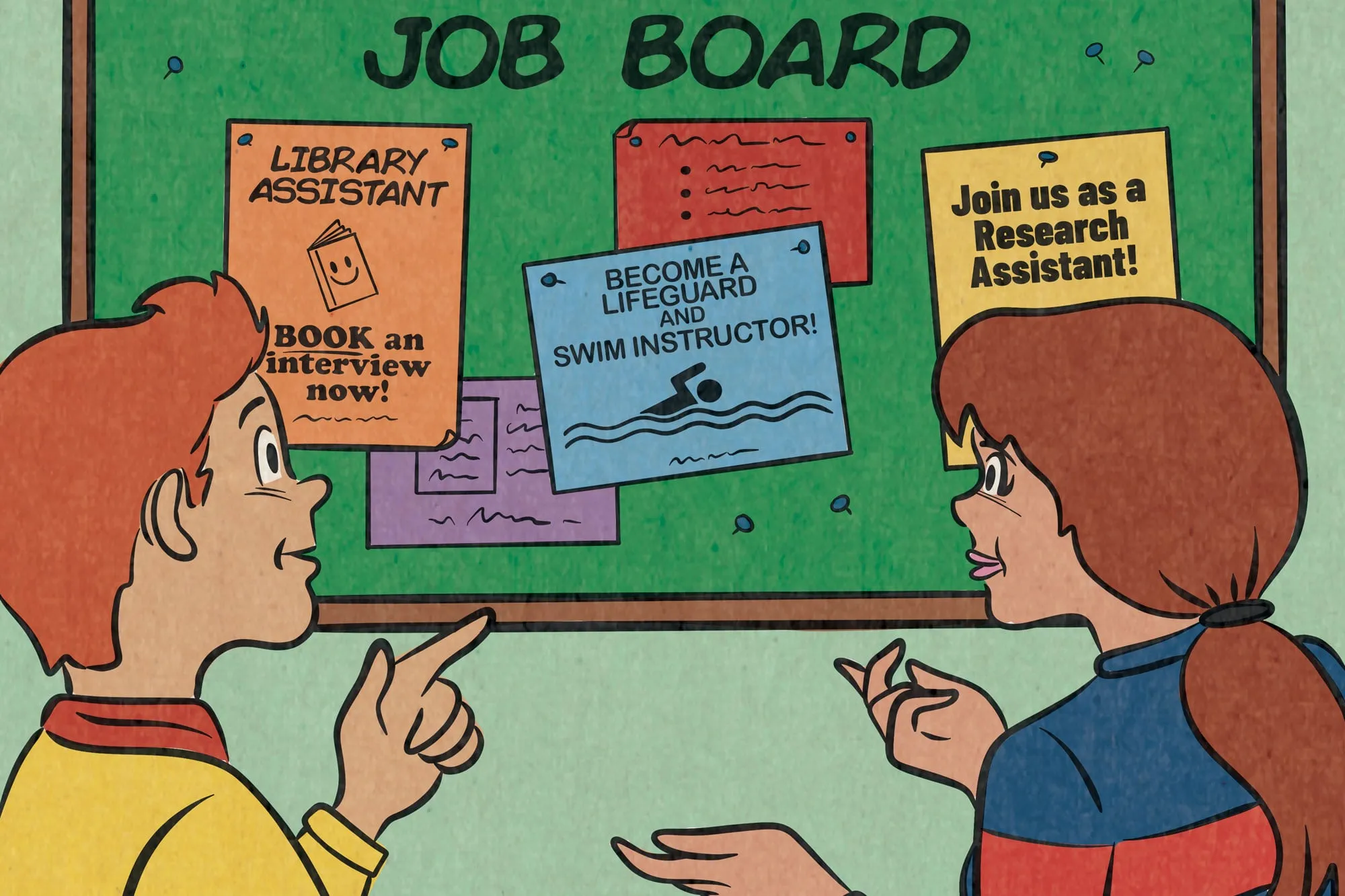
Many students search campus job boards, but getting involved in events, meeting people at campus fairs and chatting with professors after class are all possible paths to employment. Most universities also have work-study programs that students can qualify for by demonstrating financial need. They offer access to exclusive job boards with roles that have set wages and a standard number of hours.
Students can also conduct research with professors in their faculty. Most research positions take place during the summer, although some positions are available throughout the academic year.
Recreational facilities and student housing are also big employers on campus—students can work as front-desk staff, intramural officials or residence leaders. Whatever students want to learn more about—graphic design, photography, recruitment, social media—there’s likely a job on campus. Here are five examples of on-campus roles and how students landed them.
Related Posts

How School Leadership and Sports Led Me To the Loran Scholarship

5 Scholarships That Pay Big Bucks
Student Ambassador
Thomas Foltys was recruited as a student ambassador with the University of Toronto’s health and wellness department after striking up a conversation with a coordinator at the department’s annual fair. As they talked, it became clear his interests in mental health aligned with the department’s mission, and the coordinator encouraged him to apply to the department through the work-study program.
Foltys’s job involved working at health and wellness fairs, explaining to students how they can access university services such as subsidized health care and individual, group and pet therapy workshops. He also helped organize the department’s annual mental health fair.
Foltys was majoring in political science and criminology at the time and commuting from home to save money. (He’s now in law school.) He appreciated his job’s flexible hours—organized each week at a one-hour paid meeting where ambassadors signed up for events based on their class schedules and workload. His hours ranged from two to six a week (and sometimes up to 10), and pay was minimum wage.
Registrarial Coordinator
Dana Wong got her job with the Office of the Registrar at the University of Toronto’s St. Michael’s College through U of T’s work-study portal. She interviewed in August of 2023 to start in May of 2024 for the summer semester, and reapplied each term for the rest of her degree.
In her role she provided administrative support for frontline staff such as scheduling academic advising appointments, answering emails and helping to run welcome day events, alumni panels and the college’s career month. Wong, who recently graduated with a degree in criminology and sociolegal studies, says the job helped her develop clerical and organizational skills useful for future work in office environments.
As a work-study student, she was allowed to work 15 hours a week at minimum wage, and Wong’s supervisor helped her to plan out a schedule that met her desired work hours while keeping academics as the priority.
Research Assistant
After learning about research jobs via one of her neuroscience TAs, Cassia Donga began volunteering in a lab that focused on the developing brain. She then took on a research assistant position over the summer, which paid $18 an hour, collecting neuroimaging data for 10 hours a week.
After she told a professor about her aspirations of going to medical school, her lab hours were increased in third year so she could work on a project collecting neuroimaging data on newborn babies.
Donga is now a medical school student at Western, and she recently presented the lab’s work at a conference. She’s also preparing a publication. “Research is a build-your-own-steps kind of job,” she says.
Lifeguard and Swim Instructor
Western University fourth-year psychology student Ashley Kay applied to work as a lifeguard and swim instructor at Western’s recreation centre in the second semester of her second year, and started in the fall of her third year. She finds the work, which pays $19 an hour, keeps her active: she’s in the pool demonstrating skills during lessons, and works out at the gym before or after her shifts.
Staff training days, which include swimming relays, distance challenges and lifeguard fitness tests, help develop a supportive environment where she says it’s easy to make friends with a large team of like-minded co-workers. Her supervisors are understanding of her schedule as a student. “They know that to do our job well, we need to have our schoolwork under control,” she says.
Library Staff
Fourth-year student Erin Movold got her job at the University of King’s College library in Halifax, after she transferred there in second year. Now 21 years old and studying contemporary studies and creative writing, Movold works at the library for 10 to 15 hours a week and makes $17 an hour. Her tasks include shelving books and helping students find research materials. When the library is quiet, she can work on her own schoolwork.
Working at the library has also helped Movold make connections with other students. When she sees someone checking out several books on the same topic—whether it’s something they share in common or a topic Movold wants to learn more about—she often strikes up a conversation and asks them for coffee. “The library is like a community hub,” she says. “My friends know my schedule and visit me.”
This story appears in the 2026 edition of the Ultimate Guide to Canadian Universities. You can buy the issue for $19.99 here or on newsstands.
Subscribe to Message Board, our weekly newsletter guide to planning your post-secondary journey
Whether you’re a student, parent or guidance counsellor, Message Board is a resource you won’t want to miss out on.
Related Posts

Getting the Most Out of RESP Savings

I Got My Community a Greenhouse and Won a $70,000 Scholarship

These 8 Scholarships Should Be On Everyone’s Radar