Canada Will Miss Its Climate Targets. Here’s How We Prepare.
In 2015, the Paris Climate Agreement pledged to limit global warming to two degrees Celsius above pre-industrial levels, with an aspirational goal of 1.5 degrees. It’s clear now that this ambitious goal is unreachable. A recent UN report (appropriately entitled “Off Target”) warned that the world will overshoot the figure. No less an authority than James Hansen—one of the pre-eminent American climate scientists—proclaimed the two-degree target “dead” last year.
Instead, humanity is now on an irreversible course to reach two degrees of warming by the 2040s and likely three degrees by 2090. The reasons why are no mystery: CO₂ levels are still rising due to human activity; methane, an even more potent greenhouse gas, is increasing as the world warms and as methane-containing permafrost melts. There are also some factors out of human control, like a projected increase in solar radiation. And, ironically, efforts to reduce air pollution will exacerbate warming—for years, we’d struck a kind of Faustian bargain, in which particulates spewed into the atmosphere by burning fossil fuels partially blocked sunlight, slowing the pace of temperature increases.
Climate change has never occurred this fast in the history of human civilization, and we know that the world of two degrees and beyond will be very different than today’s world. The societal, financial and geopolitical effects will be enormous. We can refer to these effects as the Five Horsemen of the Climate Apocalypse: human migration, energy insecurity, debt, political conflict, and food and water shortages. All of these are interconnected, but the impacts will differ dramatically in different parts of the world.
We’ve created a climate model to understand better how the world—and Canada—will fare in this new reality. Our model divides the world into three categories of climate impact: mixed, severe and catastrophic. Mixed areas will experience both negative and positive effects. Severe areas will experience overwhelmingly negative impacts, but their societies should be able to persevere, with difficulty. Regions in the catastrophic category will undergo changes so extreme that their populations likely won’t survive in their present forms.
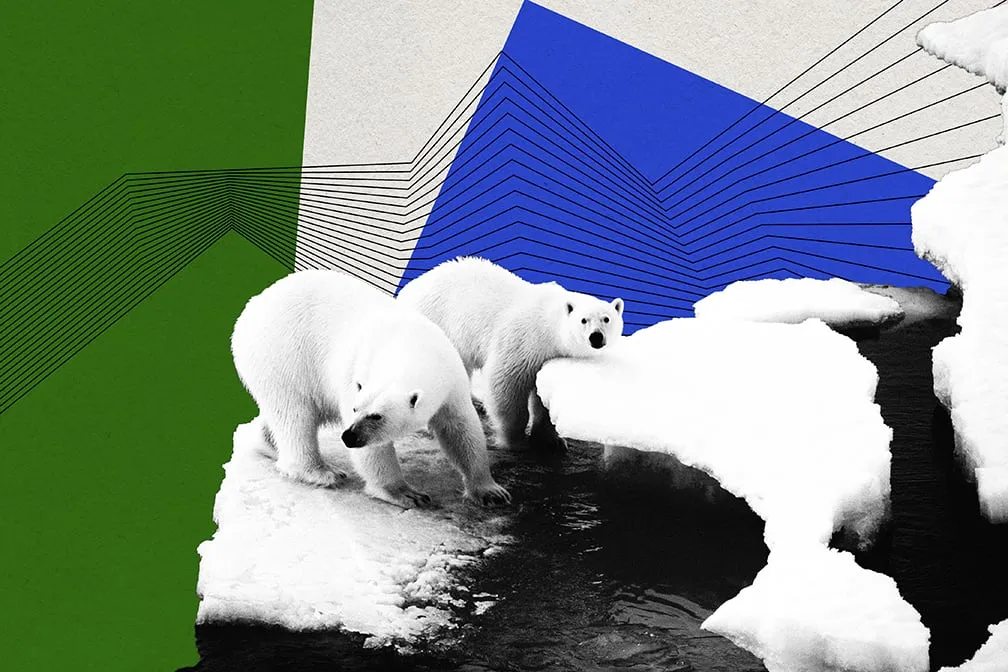
Most of the world, within temperate latitudes, will have severe impacts. That includes much of the Americas, as well as parts of Africa, the Mediterranean and southeastern China. Other areas will experience catastrophic change, where the combination of increasing heat, drought, sea-level rise and extreme weather could push societies toward collapse this century. Some regions categorized as severe may tip into catastrophic as warming speeds up and we pass climate tipping points. We’ve already passed tipping points ensuring the disappearance of coral reefs and a late-summer, ice-free Arctic Ocean. These will both occur within the next 20 years. If emissions follow our models, the tipping point where the Amazon rainforest will begin turning into savannah will occur by around 2070. The most disastrous event would be the overturning of the Atlantic Meridional Overturning Circulation, which carries heat from equatorial regions to the North Atlantic. As ice sheets melt, salty surface water in the North Atlantic is being diluted by fresh water, becoming less dense and staying on the surface, blocking the flow of warmer, southern waters. If this circulation stops, as it has in the distant past, it will plunge much of Europe into frigid conditions.
The only two large nations we categorize as having mixed outcomes from climate change are Russia and Canada. We won’t escape consequences, of course: coastal dislocation, more frequent floods, new diseases, crop pests and wildfires. But our cold climate will adapt more readily than most of the world. It will become slightly wetter, preserving soil moisture for agriculture despite hotter weather. We will enjoy a longer growing season and, as permafrost melt extends north, there will be more arable land. With greater access to the Arctic, we could build northern deepwater ports for exports to Europe and Asia. In many ways, Canada will be a rare thing: a net beneficiary of climate change. This presents us with opportunities for agriculture, industry and more. But it also means Canada must shoulder more responsibility for global wellbeing, and we will need to contend with a new array of social and political threats, arising from a hotter, more turbulent world in which climate migration, food insecurity and natural disasters all grow. Chief among those threats will be the ones posed by the United States—a country that will become hungrier, thirstier and more desperate for the resources Canada will have in relative abundance. If we aren’t prepared for the world as it will soon be, we may find our very existence as a sovereign nation threatened by our southern neighbours, who may simply decide to take what they need by force.
Climate-driven mass migration will present both threats and opportunities. Between 2020 and last year, Canada admitted nearly two million new permanent residents—an influx that stressed housing, health care, transportation and every other system Canadians rely upon. Now imagine that we’re confronted by millions of refugee claimants every single year, hailing from parts of the world where the effects of climate change have been catastrophic—where food and water are increasingly scarce, where social structures are fracturing and where, quite simply, it will often be too hot to live. Who will we welcome? How can we prepare to absorb newcomers in a way that is beneficial, rather than burdensome? With proper planning, we could welcome many millions who will strengthen our nation and help produce the food, energy and other resources needed in Canada and throughout a stressed world.
Related: How We Got to 41 Million
First among those needs will be energy. Canada was once a leader in producing low-carbon electricity, but we lost our way. Hydroelectric production hasn’t meaningfully increased in 30 years. We’re one of only two countries with a complete nuclear-fuel supply chain, but we haven’t built a new nuclear plant since 1993. We have world-class regions for wind power—the Prairies, northeastern Labrador and the Atlantic coast—yet we generate a far smaller share of our electricity with wind than other nations with far less potential. We have huge reserves of critical minerals needed for vehicle electrification and battery tech, but production is lagging due to bureaucratic and political delays, underinvestment and a lack of focus. There is a clear economic imperative for Canada to do better.
Ironically, we should also discard the net-zero ambitions that have caused us to lose sight of the bigger picture. Canadian emissions are a small fraction of global totals, less than 1.5 per cent. What truly matters is not how much CO2 Canada produces, but whether emissions globally are reduced due to Canadian energy. For example, increasing exports of LNG to replace dirty coal burned in Asia has the potential to lower the world’s greenhouse gas emissions by as much as Canada’s emissions in total, because producing LNG in the cold Canadian north makes that production much more energy efficient. And as permafrost melts, the potential grows for northern ports that can provide shorter shipping routes to Asian markets. This is an opportunity to find new markets for our oil and gas industry, which is otherwise beholden to the U.S. Those same ports will also allow us to ship Canadian agricultural products to new customers, as the warming world grapples with food insecurity, and they’ll strengthen our claims to our Arctic. NATO allies, especially nations such as Finland and Sweden, have significant Arctic expertise and could be valued partners as we boost our Arctic presence.
All these economic initiatives will create jobs, which, along with those in a greatly expanded agricultural sector, can be filled by a growing Canadian population. Yes, this will all be expensive, and we’ll require international investment. That’s a big challenge, because past financing for major Canadian projects has largely come from the U.S. A new world order is emerging, more reminiscent of pre–Second World War power struggles than the comparatively peaceful, U.S.-dominated order that followed. Canada needs new alliances and new investment partners. These required connections should be available—Canada has potential strengths in energy, minerals, agriculture and low-carbon technologies, which should serve as magnets to attract financing for major projects.
And we’ll need those new allies and new sources of capital to stave off the threat from a struggling America. By the second half of this century, the U.S. may suffer as much as a 50 per cent drop in agricultural output, due to warmer and drier growing conditions. Many current suppliers of agricultural products to the U.S. will suffer severe disruptions in agricultural production, themselves, and the U.S. is very likely to experience high levels of food insecurity. No doubt it will be sizing up Canada’s relative abundance with envy. A hungrier America will still be a powerful America, and we’ll need to start now to establish the communities and agricultural infrastructure needed to support much higher levels of agricultural output, to supply ourselves, and to sell to the rest of the world—and the U.S., rather than waiting for them to come and take it.
The same is true of water, which is already drying up in the U.S. The Ogallala aquifer, the mainstay of the U.S. midwestern water supply, is seriously depleted. With reduced snowpack, declining precipitation levels and rising temperatures, the Colorado River, which supports approximately 40 million people in the U.S. southwest, is running dry. We have seen how little the current U.S. administration values signed agreements with foreign nations. Do we have any faith that existing water treaties will be honoured if Americans are thirsty and crops are failing? Infrastructure to provide new sources of water for Canadians, from sources that are farther from the U.S. border, may take decades to develop. The planning to mitigate this foreseeable danger must begin now.
Underlying all of this is a need to recognize Canada’s vulnerability in a hotter world. It’s sadly too late to hope that a rapid energy transition can stave off serious, even catastrophic, effects from climate change—though of course it can stop things from getting even worse beyond that. Our government will have to take a leading role in deciding what Canada will look like as the 21st century progresses, and must do so far more quickly and more decisively than the incremental pace we have become used to. If we don’t, we may find Canada’s sovereignty itself under threat.
Ray Leonard is a 40-year veteran of the energy industry and the president of Anglo-Eurasia LLC.
Jon Hykawy is a clean-energy analyst and the president of Stormcrow Capital.
Related Posts

Home Prices Are Finally Dropping
What to Expect From the 2026 Maclean’s Ideas Summit: The Year Ahead

How to Win the Westminster Dog Show

How Mental Health and Addiction Grads Are Tackling the Opioid Epidemic
Get the Best of Maclean’s straight to your inbox.
Sign up for news, commentary and analysis. Join 60,000+ Canadian readers.