
Maclean’s, Toronto Life, and Amazon Canada Presents AI, Robotics, and The Future of Work
On June 22, Maclean’s and Toronto Life partnered with Amazon Canada to host a panel called AI, Robotics and The Future of Work. That evening, leaders from across the fields of technology, media and business assembled to discuss how AI will shape the outlook of Canadian workplaces.
The guests met on the breezy terrace of the TOOR Hotel in Toronto. In celebration of Pride month, the event started vibrantly with a special performance by a Canadian drag performer, Van Goth, who was crowned the winner of season six of Canada’s Drag Race earlier this year.
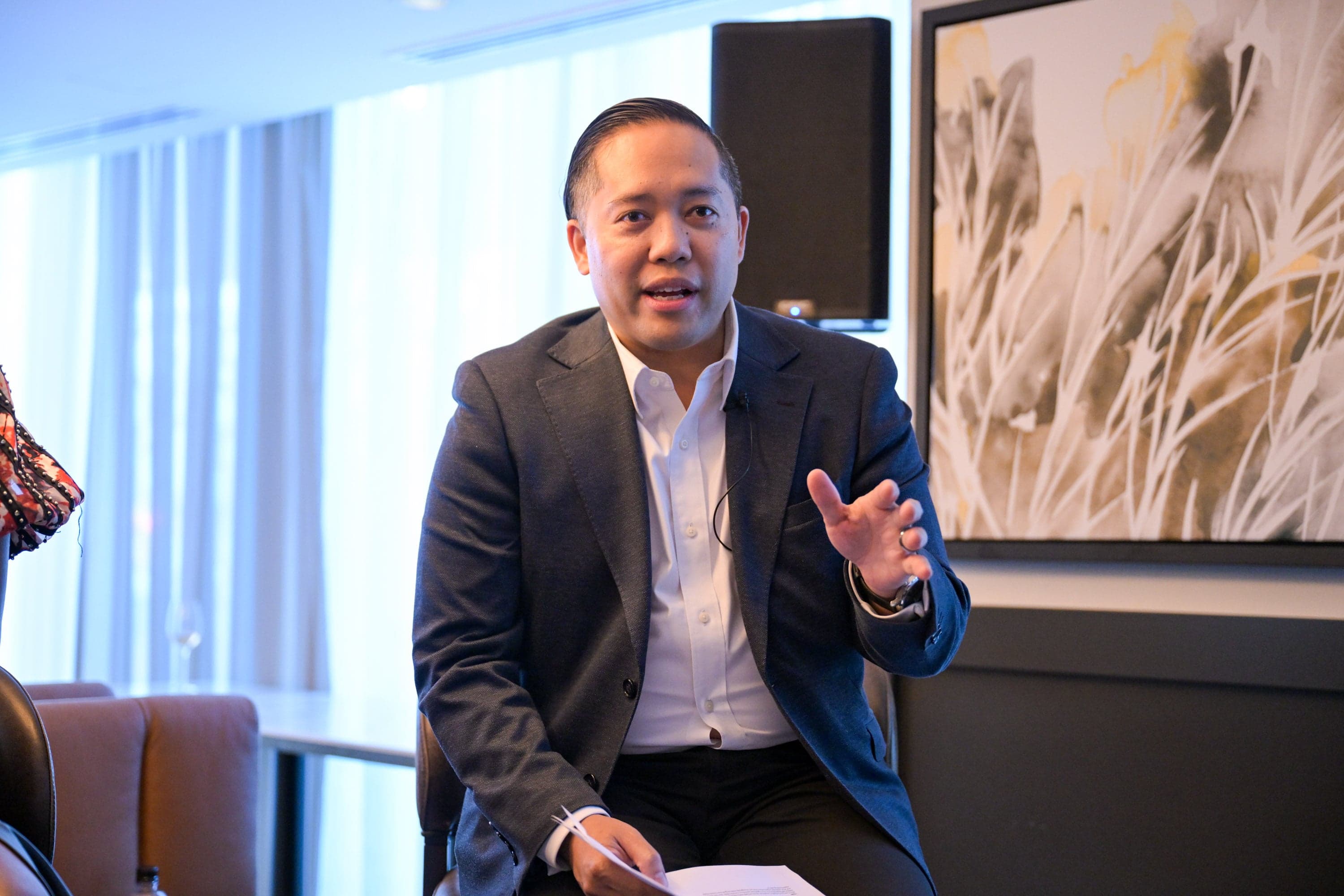
Jason Maghanoy, publisher of Maclean’s, moderated the panel. He kicked the evening off with opening remarks about AI: “It is being integrated into everything we do. What skills are required in this new future economy? And how do we make sure that this technology doesn’t leave people behind?”
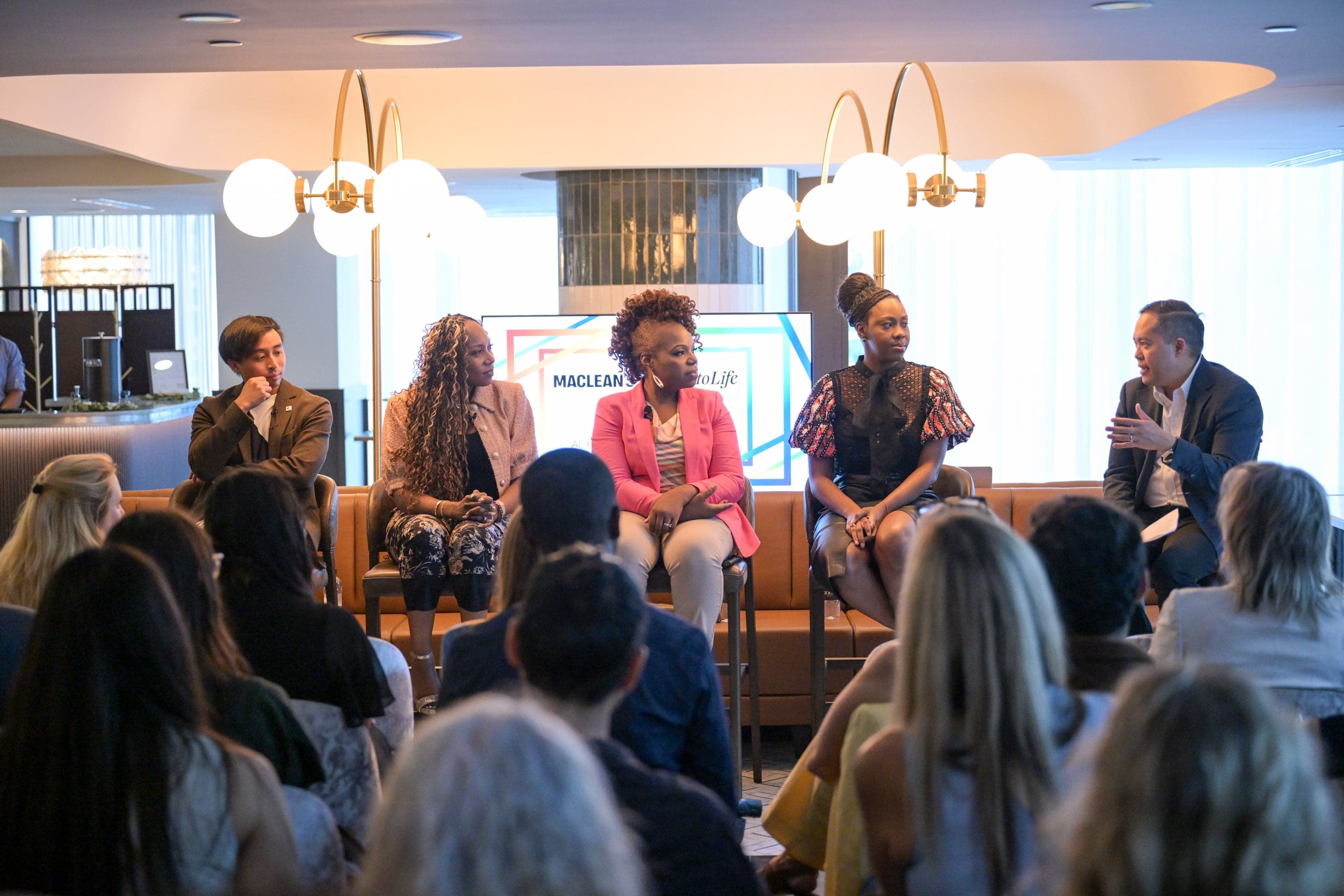
To kickstart the discussion, he posed this question to panelists: how do people prepare for a world in which tons of technologies are rapidly emerging? What skills should people prioritize?
“It’s about preparing for the now and also for the future. AI has completely shifted the way we think about how people do their work,” said Tonya Hallett, Amazon Vice President for People, eXperience & Technology (PXT). But while AI now has a strong presence in workplaces, she said that skills only humans can offer should still matter. To her, curiosity, creativity, communication and judgment earned from lived experiences remain valuable now and in the future.
Related Posts
Inside the 2025 Maclean’s Ideas Summit: Education
What to Expect From Maclean’s Ideas Summit: The Year Ahead

The panel discussion strongly encouraged further AI adoption in a wide range of sectors. Tomi Gbeleyi is a Go-To-Market executive and drives enterprise revenue at CoLab, a software and AI company. She highlighted that small businesses, which tend to still be in the early stages of adoption, are at risk of being left behind.
“AI is going to impact every sector,” Gbeleyi said. “That’s why we’re having this conversation, because it’s going to impact all of us in the room in some way.” The rest of the panel agreed that AI tools have to be paired with training, support and access, and that greater adoption will require trust.
That led to the next question: how can organizations build trust with their employees and communities, when AI remains a very new, controversial concept? How do companies maintain meaningful trust with workers while still moving fast?
Diya Wynn, Principal Responsible AI Lead at Amazon Web Services (AWS), argued that it’s ultimately cheaper and quicker to develop AI responsibly. “If you deploy something that ends up being harmful to someone, you have to go back anyway. That is much more costly than investing the time and intention initially,” she said. “Responsible AI is the foundation for trust. If we want to scale and drive greater adoption of the technology, those things have to be in place.” Employers, she added, have a continuous obligation to interrogate their AI systems to make sure they are functioning as intended, not just at launch but as they evolve.
Maghanoy noted that AI-driven layoffs are already happening, and that eroded employee trust is a real consequence of those decisions. Viet Vu, Manager of Economic Research at The Dais, a public policy and leadership think tank at Toronto Metropolitan University, argued that the fix will call for more than offering employees retraining programs. “Building trust in AI is not just about teaching someone how to use AI,” he said. “It’s also about how we actually bring them along in the decision-making process.” He said that workers should be given “democratic power” over a technology, not just access to it.

On the workforce question, Vu noted that the data is not offering a clear picture. "It’s not changing the labour market yet, but you also certainly see a lot of numbers that show otherwise,” he said. Gbeleyi noted that new roles are already emerging because of AI adoption, pointing to the rise of GTM engineers at sales organizations. “Companies are trying to understand how to go from the chatbot to people across the board using AI in their every day.” The economic opportunity, she emphasized, is too significant to sit out. “I think this is probably the cheapest time to engage with AI. Now is the time to build architecture within your business that will outlast the price change.”
Hallett agreed that companies must offer their employees practical training and entry points. As an example, she pointed to AWS Impact and AWS Skill Builder, programs that Amazon Canada offers internally, but also externally. ”We have launched over 900 courses through AWS that are available to the public to go out and use,” said Hallett. The company also provides its employees with a training benefit program, called Amazon Career Choice.
These programs reflect a broader challenge highlighted in a report from the AI Adoption Initiative and Carnegie Mellon University, The AI Labor Stack: Rethinking the Workforce from the Ground Up, which identifies three groups that will shape the AI economy: innovators, facilitators and users.
The report argues that facilitators, who help organizations deploy and integrate technology, are often the “missing middle” of AI strategies. It also reinforces that skills development must be practical, continuous, responsive to employer needs and accessible to workers at different stages of their careers, a point raised throughout the panel.
Toward the end of the discussion, Maghanoy pointed out that many younger people are distrustful of AI and concerned about its impact on their career paths. Vu emphasized that, to ensure a trustworthy AI-integrated environment, companies must review existing rules, policies and legislations regularly to see how AI is interacting with them. If necessary, they need to be able to revise those rules, he said.




Related Posts
What to Expect From the 2026 Maclean’s Ideas Summit: The Year Ahead
What to Expect from the 2025 Maclean’s Ideas Summit: Education
Here’s the scoop from Maclean’s Ideas Summit: The Year Ahead
Inside the 2024 Maclean’s Education Summit
Get the Best of Maclean’s straight to your inbox.
Sign up for news, commentary and analysis. Join 60,000+ Canadian readers.