How gold mining forever transformed a river in the Yukon
Peter Mathers
A look at a unique and scarred landscape in the Yukon
Sept. 27, 2019
Trail of golden dreams
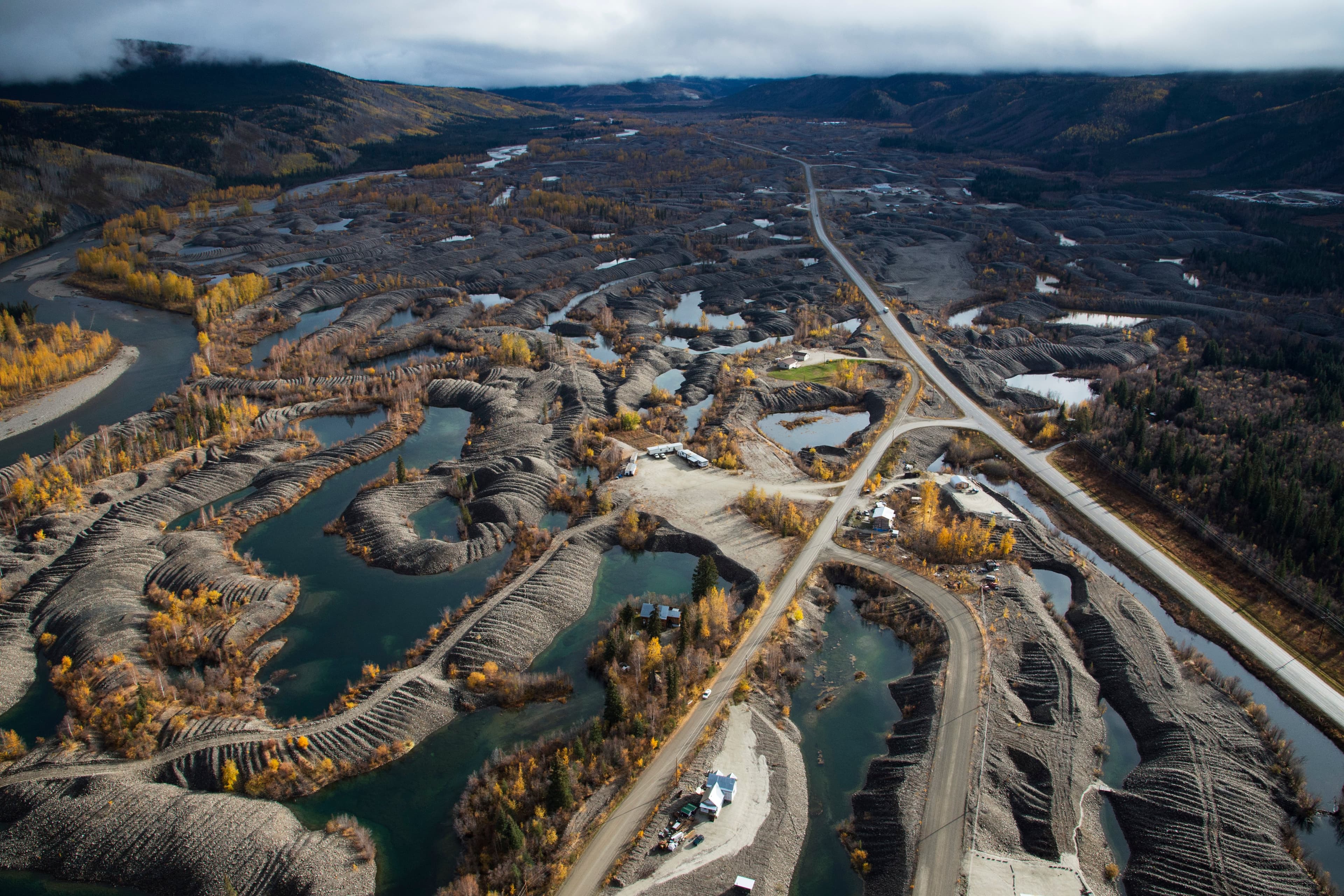
This photo may look as though sandworms have had their way with the landscape, but this isn’t a scene from Beetlejuice—it’s the Klondike River in Dawson City, Yukon, where the mining fever spawned by the Klondike Gold Rush has left the tributary with some unique features. Placer mining in this area involved large machinery called dredges that roved through riverbeds, sifting for gold while discarding rocks and sand, and leaving so-called dredge piles. These are the wormy landforms snaking their way through the valley. The disruption of the river’s natural flow, however, caused a major decline in populations of salmon that use areas of the Klondike River to spawn. The scarred land serves as a reminder of the unique cultural history of the area and also includes Tr’ondëk Hwëch’in territory—both reasons why Canadian officials are working to renominate the 85-km stretch for status as a UNESCO World Heritage site, having withdrawn their initial bid last year.
This article appears in print as The Big Picture in the October 2019 issue of Maclean’s magazine with the headline, “Trail of golden dreams.” Subscribe to the monthly print magazine here.
Share on FacebookShare on Twitter