
The Farmers Who Fought a Data Centre—and Won
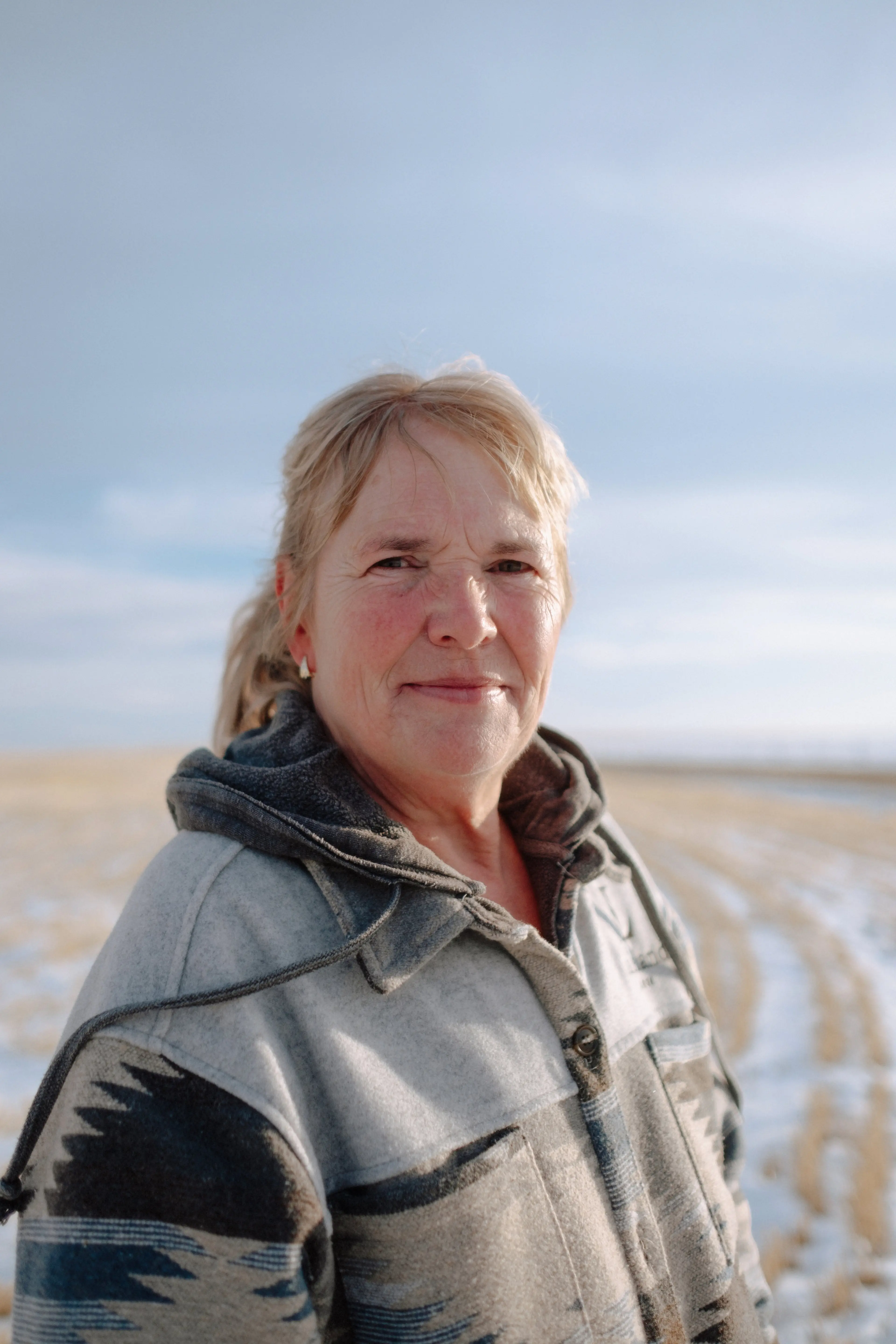
Twin Lakes Ranch has been in Brenda Ralston’s family for more than a hundred years. In 1918, her great-grandfather bought 320 acres of gently rolling prairie northeast of Calgary and bred cattle to feed the frontier. Over the next century, his descendants did the same. “My grandpa farmed it. My dad farmed it. My husband and I farm it,” says Ralston. One day, she expects to hand it down to her son, who’s studying animal sciences at the University of Saskatchewan. “He’ll be the fifth generation,” she says.
In late May of 2025, Ralston received a letter calling that future into question. It was from Kineticor, a power-generation company that had purchased the land immediately adjacent to Twin Lakes’s calving pasture. Reading the letter, Ralston felt her body tense up with anxiety. There was nothing but farmland for miles around. What were they planning to build? The notice provided few details, but it included an invitation to an information session. So, two weeks later, she drove to a nearby community hall to learn more.
Related: AI has Entered the Cubicle
Ralston wasn’t the only one with questions. Roughly 100 locals attended the open house, packing the hall to capacity. A Kineticor representative thanked everyone for coming and then made the grand reveal: the company wanted to build a data centre. The crowd rumbled in perplexed unison. “We were all asking, ‘What the heck is a data centre?’ ” says Ralston.
A data centre, the representative explained, is a warehouse filled with row after row of computers. There are about 12,000 such facilities scattered across the globe, including roughly 300 in Canada, and together they represent the physical bedrock of the online world. Whenever someone opens Gmail, checks Instagram, watches Netflix, plays Fortnite or prompts ChatGPT, they’re accessing servers housed in these digital storage facilities. There may be one near you right now. They tend to be housed in unmarked, unremarkable buildings: squat brick structures surrounded by strip malls, or grey industrial boxes wedged between shipping depots and warehouses. Most draw five, 10, maybe 20 megawatts of electricity, a little of which might go toward your barber’s website, or fuel your next YouTube binge.
What Kineticor wanted to build, however, was of a different breed: a hyperscale data centre, a new type of facility that is orders of magnitude larger, and vastly more energy-intensive, than older data centres. These are designed to service the extraordinary computing needs of the AI era. According to a dozen poster boards on display at the open house, Kineticor’s would be built in five phases over 15 to 20 years and occupy 1,120 acres of land—more than Manhattan’s Central Park and only slightly less than Calgary’s entire downtown core. Put another way, it would be 1,000 football fields’ worth of warehouses, generators and cooling towers.
Related Posts

My Misadventures in Gentle Parenting

My Secret Addiction
These colossal operations have been sprouting up rapidly since ChatGPT kicked off the generative-AI craze in 2022. They provide the computing power needed to train and operate large language models (the architecture underlying chatbots like ChatGPT, Claude and Gemini) and diffusion models (the systems behind image and video generators such as DALL-E and Midjourney). Most of the existing hyperscale facilities are in the U.S., many of them in northern Virginia, which has long incubated high-tech industry. Loudoun County, just a few miles from Washington, D.C., is known as Data Center Alley, and is home to the world’s densest concentration of data centres. Ireland, too, has turned itself into a hyperscale hub. Data centres currently consume about a quarter of its total electricity supply, and developers are now building natural-gas power plants to keep up with demand.
At the open house, Kineticor framed its development as an opportunity for Alberta to get in on the action. Founded in Calgary in 2013, Kineticor currently operates two power plants west of Edmonton, with another in development. The company said the project would be a job creator, a foothold in an emerging industry and a boon for the local economy.
Ralston didn’t buy it. She wasn’t opposed to data centres in general, but she worried all the commotion would affect the fertility of her herd; cows are sensitive to noise. She fretted about the extra traffic, too. The area was hilly, with poor visibility, and there were already plenty of collisions. Ralston questioned why Kineticor wanted to build on farmland, rather than set up shop in an industrial area closer to Calgary. “This is the best soil in Alberta,” she says. “Once you strip all that soil off, you are hooped.” And what precedent would the development set, she wondered—would more local farmland be sold, too?
But what most roiled Ralston was the project’s timeline. Her municipality, Rocky View County, usually spent several years considering major developments. But council was scheduled to vote on Kineticor’s proposal in three months, which Ralston suspected had to do with Kineticor’s schedule, not the county’s. The timing couldn’t have been worse. Between seeding, spraying, haying and preparing for harvest, that would be the busiest stretch of her year. But unless she found the time to fight the data centre, she feared the ranch might not have a future, for her or the next generation.
Ralston and her neighbours aren’t the only Canadians grappling with the prospect of a data centre moving in next door. Across the country—in Nanaimo, B.C., Saint John, New Brunswick, and dozens of towns between—developers have proposed at least 70 new facilities, amounting to hundreds of billions of dollars of potential development. In B.C., Bell wants to build six hyperscale data centres. At least 15 more are under consideration in Ontario; together, these would require 2.2 gigawatts of electricity to operate, about one-tenth of the province’s peak demand, enough to power about two million homes. But it’s Alberta that leads the pack, with 40 proposals in the pipeline. The most ostentatious of the bunch is Wonder Valley, a cluster of AI data centres that could be built in Greenview, about 500 kilometres northwest of Edmonton. Led by celebrity investor and unlikely Hollywood star Kevin O’Leary, the $70-billion project would occupy at least 7,000 acres of land and generate 7.5 gigawatts of electricity for its servers, which would be enough to power every home in Alberta, and then some. If it gets built—and that’s a big if—it will be the largest such operation on Earth.
Canada is attracting these projects because it has all the ingredients they need: robust fibre-optic infrastructure, plenty of natural gas to power servers and abundant fresh water to cool them. The influx of interest has left locals scrambling to figure out what these facilities will mean for their communities. In other countries, hyperscale data centres have been known to emit a constant, nerve-shredding hum, cause water shortages and send electricity bills skyrocketing. Developers claim these concerns are overblown.
One thing is clear: the demand is staggering. McKinsey predicts that, by 2030, global investment in data centres could reach US$6.7 trillion—enough to bankroll Canada’s federal budget 16 times over. In the race for AI dominance, deep-pocketed tech giants like Google, Meta and Microsoft are competing to amass more computing power. With Silicon Valley’s wallets splayed wide open, the rest of the world is jostling for a share of the spoils. It’s not just developers like Kineticor; it’s governments, too. The federal Liberals are investing $700 million in AI data centres in hopes of attracting millions more in private-sector investment. Alberta’s minister of technology and innovation, Nate Glubish, wants to attract $100 billion worth of AI data centres by 2030.
Related: Canada Needs Homegrown AI Infrastructure
Canadian politicians have framed these efforts not only as a strategy for courting international investment, but as a means of serving the national interest. The vast majority of Canadians’ online activities are routed through American servers, which makes our data susceptible to surveillance and seizure by the U.S. government. By building data centres on home turf, supporters say, Canada reduces its dependence on American servers and, in so doing, takes a step toward “digital sovereignty”—the ability to control our own data. Speaking at an AI conference last September, Evan Solomon, the federal minister of artificial intelligence and digital innovation, described digital sovereignty as “the most pressing policy and democratic issue of our time.” Without it, he suggested, Canada would remain susceptible to the whims of American tech execs—as well as the guy who keeps threatening to turn us into the 51st state—who could snoop on Canadians’ online lives, or cut off access to U.S.-owned digital platforms. “Data is king,” Solomon said. “Whoever controls it, whoever uses it, whoever governs it will determine our collective prosperity and our security and our values. Canada has got to build a digital backbone that reflects and protects and projects our core values.”
As Canada decides whether to embrace hyperscale data centres, two points of view are clashing. One contends that missing out on these critical pieces of digital infrastructure would be the real mistake—a lost opportunity to support Canada’s energy sector, ensure digital sovereignty and create thousands of jobs. The other holds that these projects are an environmental, agricultural and aesthetic disaster. This debate is already beginning to play out in the halls of Parliament, as well as the C-suites of Silicon Valley. But the most consequential decisions will be made in less exalted environments. Municipal governments, after all, are the bodies that dictate zoning bylaws, approve site plans and grant permits. Many of these developments—and the future they promise, for good or ill—will live or die in rural council chambers, where constituents like Brenda Ralston still hold some sway. Ralston may not have known a whole lot about data centres last spring, but, leaving Kineticor’s open house, she was certain of this much: she needed to fight.
N
ate Glubish is the driving force behind Alberta’s emergence as Canada’s primary data-centre destination. He is a wonkish, well-spoken 44-year-old who spent 15 years working in finance, most of it as a VC investor in Alberta tech companies. He was elected as an Edmonton-area MLA in 2019 and made waves in Jason Kenney’s United Conservative Party by expanding broadband access and digitizing Service Alberta, the government department responsible for registering births, marriages, deaths, vehicles, businesses and land titles, among other bits of day-to-day administration.
When Danielle Smith became premier in the fall of 2022, she established a new cabinet portfolio, Technology and Innovation, and picked Glubish as its first minister. He was a natural choice—the kind of guy who gets jazzed about cybersecurity, or AI’s ability to save taxpayer dollars by making government more efficient.
This was right as generative AI was entering the collective consciousness. Glubish looked for ways to support the burgeoning industry and harness its power within government. In early 2024, that effort led him to attend a Bay Area AI conference. Several of the field’s Canadian luminaries were in attendance, including computer scientist Richard Sutton and AI pioneer Yoshua Bengio.
During one of the conference’s panel discussions, Glubish glommed onto a statement from Dario Amodei, CEO of AI giant Anthropic. The company, Amodei said, had spent a billion dollars on AI computing power in 2023, would spend $10 billion more in 2024 and planned to add another $100 billion in 2025. That’s huge, Glubish thought. As the conference carried on, he learned Anthropic was not an outlier. Google, Meta, Microsoft, Amazon, OpenAI—they all planned to invest similarly eye-popping sums in data centres. “That was when everything started to click for me,” he says. “I realized there was a big infrastructure play here.”

To expand their computing capacities, Glubish understood, these companies would need power, and lots of it. He figured that Alberta, which has some of the world’s largest proven natural-gas reserves, was well positioned to provide that energy; three-quarters of the province’s power already comes from gas-fired plants, and Smith has not been shy about her desire to build lots more. Bringing AI data centres to the province felt, to Glubish, like a win-win. These companies would enjoy a business-friendly government and what he describes as “a virtually limitless supply of natural gas” (Alberta has roughly 26.6 trillion cubic feet of the stuff). The province would rake in tax revenues, gain thousands of new jobs (both temporary construction gigs and permanent high-tech careers) and develop a new and enduring market for its resources. “We would love for all of Canada to be powered by Alberta natural gas,” says Glubish. “Unfortunately, not every province shares that vision.”
Glubish came home from the AI conference dead set on making Alberta a global hot spot for data centres. He got Smith onside, explaining that these developments would be a surefire way to create jobs and attract investment. He then instructed his assistant deputy minister to establish a “concierge” program that would pair provincial staffers with developers to help them access gas, navigate the permitting process and cut through red tape. He flew back down to Silicon Valley and pitched developers on Alberta. In December of 2024, he and Premier Smith held a press conference unveiling the province’s official AI data-centres strategy—including a goal to attract $100 billion worth of development.
Developers will not have unfettered access to Alberta’s electrical grid, says Glubish. They will be expected to generate their own electricity, often by building natural-gas power plants next to their data centres. Nevertheless, Alberta’s electricity operator offered up 1,200 megawatts of power to data-centre developers—as much as the grid could give, says Glubish, without compromising reliability or affordability for Albertans. By the summer of 2025, the province had received roughly 40 proposals to access those 1,200 megawatts. One of them was from a company called Kineticor, which had set its sights on a parcel of land in Rocky View County.
N
ot long after Kineticor’s information session, Brenda Ralston and several of her neighbours held their own meeting. They formed a coalition of landowners, including more than a dozen local farmers, ranchers and agrologists opposed to Kineticor’s proposal. Among them was Tracy Hanson, a lawyer who runs a cow-calf operation north of the proposed data-centre site with her husband, an agricultural economist named Earl Munro. Like Ralston, Hanson has deep roots in Rocky View; her ancestors arrived in 1913. She, too, was concerned that the development could spell disaster for local farms. Part of the problem, says Hanson, was just how little they knew about the project. “We had no information. All we had were those poster boards,” she says. To teach themselves what might be headed their way, they read widely. Two key issues quickly emerged: power and water.
At the open house, Kineticor hadn’t specified how it would power its data centre (the company itself did not yet know). It only said that the project would need a “reliable energy source.” As the landowners saw it, there were two possibilities, neither of them appealing. If the development drew from the grid, the price of power might skyrocket—Bloomberg News has reported that, in the U.S., data centres have caused surrounding residents’ electricity bills to spike by as much as 267 per cent, as utilities attempt to recover the costs of building new substations and transmission lines. Alternatively, if Kineticor were to build a natural-gas plant on the site, the potential noise and air pollution could pose an existential threat to nearby farms.
Besides power, there was another big question mark: how much water would Kineticor need? Alberta is home to 12 per cent of Canada’s population but only two per cent of its water. It is prone to drought. To complicate matters, most of the water supply is in northern Alberta, while most of the demand is in the south. To manage these challenges, Alberta carefully governs who can use water, requiring private enterprises to apply for licences—and, when water gets tight, older licences take priority over newer ones. Those rules will apply to data centres, according to Glubish. “They’re not getting any exceptions from Alberta’s strict water-protection rules,” he says.
Data centres, the landowners learned, are extremely thirsty operations. The computers inside never stop working and generate extraordinary amounts of heat; their GPU chips can reach 90° C at full bore. To avoid overheating, they need to be constantly cooled. In smaller facilities, powerful fans can keep the hardware at an ideal temperature. But ultra-hot hyperscale centres need liquid, a far more efficient conductor of heat. There are several ways to cool computers with liquid, including lifting heat directly off chips using polyethylene glycol or immersing servers in specially engineered dielectric fluids. But old-fashioned water is often the cheapest and simplest option. Many hyperscalers control the temperature of their servers by routing hot air through water-logged cooling pads—a process that can evaporate millions upon millions of litres of potable water.
When Ralston and the other Rocky View landowners went online, they found a plethora of water-related horror stories. Microsoft had projected that one of its data centres in the Netherlands would require roughly 20 million litres of water per year—in reality, the facility used more than four times that, guzzling H₂O even as Dutch authorities told citizens to limit their own water usage due to drought. Meanwhile, in Uruguay, which was suffering its worst drought in 75 years, protesters were banging empty plastic bottles in the streets of Montevideo to protest a proposed Google data centre that was expected to use 7.6 million litres of fresh drinking water every day. All told, researchers at the University of California estimate that data centres will consume up to 600 million litres of water in 2027.
For Ralston, these were frightening figures. Rocky View County had already experienced half a dozen droughts in the 21st century; in 2021, it declared an “agricultural disaster” due to high temperatures and little precipitation, and rising temperatures are expected to make future dry spells even more severe. And Ralston had learned that the data centre would draw water from the same aquifer many local farmers used. “If there’s a drought and water’s short, will they cut farmers off, or are they going to cut the data centre off?” she says. “If you have no water, you have no livestock. That’s the bottom line.”
Hanson had water worries, too. “Water has always been an issue,” she explains. “Mom and Dad drilled over 10 times trying to find it.” When Hanson asked the county how much water the data centre would need, she says they told her it would be negligible—just enough to “make coffee and flush toilets,” she says. “Which flew in the face of everything we’d read in other jurisdictions where data centres exist.”
Over the course of the summer, the landowners’ coalition had several calls with both the county and Kineticor. The company proposed to install stoplights to address traffic concerns, and it assured them the complex would create minimal noise and light pollution; there would be a landscaped 100-foot buffer between the road and the data centre. But the landowners’ core concerns remained unresolved. They still didn’t know how the centre would be powered, nor how much water it would need. So they hatched a plan.
They’d learned that, all over the world, locals like them were pushing back against data centres and, in some cases, quashing them altogether. According to the research firm Data Center Watch, grassroots opposition movements blocked or delayed roughly US$98 billion worth of American data-centre developments in the second quarter of 2025 alone. The landowners wondered whether they, too, could convince their local council to reject Kineticor’s proposal and defeat the data centre.
They invited residents from across Rocky View County to attend a town hall. Only some of the 50 attendees lived near the Kineticor site; many of them hadn’t even been aware of the proposal. But Ralston, Hanson and their allies implored them to join the fight by writing letters of opposition to their county councillors. “It didn’t affect them, because they weren’t going to be looking at warehouses for the rest of their farming lives. But they needed to know that this, for it to be pushed through like this, was a threat to all of us,” says Hanson. “Our message to them was, ‘This could happen in your backyard.’ ”
I
n many Canadian backyards, it already is happening. North of Rocky View, another group of landowners is fighting to stop a company called Synapse from building a 1.4-gigawatt, 300-acre power plant and data-centre campus in the town of Olds. Just outside Regina, Bell Canada’s proposed $12-billion, 300-megawatt AI data centre has drawn the ire of many locals. Southeast of Winnipeg, the tech companies Jet.AI and Consensus Core are planning to construct a 350-acre complex that would include six natural-gas turbines; an online petition to stop that development has garnered nearly 9,700 signatures.
While the details of these developments vary, they tend to provoke the same response. People have packed town halls, written letters to their local representatives and asked the kinds of questions that Ralston and her neighbours have, about water use, power needs, pollution and noise. In many cases, as in Rocky View, there are complaints that things are being rushed, with little transparency provided to residents.
As these communities consider whether or not to open their doors to the hyperscalers, they will try to square the trade-offs between economic activity and environmental impacts. Besides sucking up huge volumes of water, the new data centres proposed in Alberta will require burning vast volumes of natural gas in the middle of a climate crisis when more than half of Canadians want to phase out the use and production of fossil fuels. Renewables like solar and wind can help power data centres, but the energy they produce is generally not reliable enough to do so alone; and new nuclear power, which comes with its own set of obvious challenges, would take more than a decade to come online. Hyperscale data centres are already obliterating any hope that big tech firms will reach their own environmental goals. Google, for example, says it wants to be net-zero by 2030 and claimed in a 2023 report that AI has a “significant potential to help address our environmental challenges.” But thanks in large part to data centres that train Google’s AI products, the company’s carbon emissions have increased by 48 per cent since 2019.
It’s also true that data centres will create new jobs—thousands during construction, a smaller but still significant number of permanent positions upon completion, and many more in supporting industries. An Albertan company called CoolIT, for instance, manufactures cooling systems for data centres and employs 650 people, mostly in Calgary. But from a broader vantage, the existence of hyperscale data centres—or more specifically, the AI products that they train and sustain—represents a profound threat to the global labour force. Amazon, Microsoft and Salesforce have already laid off tens of thousands of workers, citing AI as the reason. Both McKinsey and Goldman Sachs report that hundreds of millions of jobs will be lost to AI in the near future.
Predictions like these are part of what inspired Avi Lewis, the new leader of the federal NDP, to call for a moratorium on data-centre development, as well as an immediate withdrawal of the Liberals’ $700-million data-centre fund. “There are trillions of dollars being invested in this bubble-fuelled rush to build data centres,” he told me. “But there is no actual business model to return even a fraction of these trillions of dollars of investment, except for amorphous claims of ‘productivity gains.’ Those productivity gains really mean cutting millions of actual jobs.”
Lewis is also skeptical of his political adversaries’ rationale for building data centres: digital sovereignty. He, too, was initially drawn to that idea—why wouldn’t Canada want to protect its data from American surveillance? But he grew more skeptical after talking to people in the industry and learning that data sovereignty is about much more than on whose soil information is stored.
Blayne Haggart, a professor of political science and a data governance expert at Brock University, argues that, to truly achieve digital sovereignty, Canadians would also need to use Canadian software, relayed along Canadian fibre optic cables, to and from Canadian-produced hardware in Canadian-operated data centres. This is a vision of digital independence so unlikely that it’s practically fantastical. “Just having a program hosted on a Canadian server doesn’t mean much,” says Haggart. About one-quarter of data centres in Canada are American-owned, despite being on Canadian soil. And even Canadian-owned facilities are filled with American clients, including Amazon Web Services, Microsoft and many smaller companies.
Moreover, the vast majority of digital services that Canadians use on a daily basis—email clients, office suites, streaming services, social media platforms—are owned by American firms. That makes them susceptible to the CLOUD Act, a piece of American legislation that requires digital-service providers to comply with warrants for data stored outside the United States. In theory, the U.S. government could compel a company like Meta to hand over data about its Canadian users, whether it resides in a Canadian or American data centre. Per the CLOUD Act, the state would technically need a subpoena or court order to request that data. But the current president, Haggart says, doesn’t seem to be overly concerned with such rules. “The Trump administration does not follow the law, and it doesn’t see a problem with leaning on companies like Google or Apple and saying, ‘Nice company you got there. Shame if something happened to it,’ ” he says.
If data centres don’t advance the cause of digital sovereignty, if they support a technology that endangers Canadian jobs and if they push us closer to climate disaster, why build them at all? In his forthcoming book, Hyperscale, St. John’s–based journalist and tech critic Paris Marx argues that we simply shouldn’t. These facilities are increasingly dedicated to training and operating generative AI, a technology that, he argues, is already causing mass social harms, such as chatbot-induced psychosis, suicides and mass shootings like the one in Tumbler Ridge, B.C. “And that’s on top of questions about impacts on education, on creativity, on critical thinking,” Marx says. “These companies are pushing really far ahead, sacrificing environmental goals, communities and quality of life on the altar of technology when it’s not clear that the benefits make the costs worthwhile.”
There’s another danger, Marx adds: the possibility that generative AI won’t end up being as popular or profitable as big tech predicts, and that hyperscale data centres will saddle us with unnecessary, overbuilt digital infrastructure. Canada has certainly experienced such boom-and-bust cycles before: in Saskatoon, a number of developers are hoping to build a data centre inside an abandoned cannabis grow-op.
A
s last summer wore on, the landowners’ coalition learned that the first phase of Kineticor’s data centre would be managed by a Montreal-based company called eStruxture. The project would be eStruxture’s first hyperscale operation, though not its first data centre. Founded in 2017, eStruxture is Canada’s largest data-centre operator, with a total of 16 small and mid-sized facilities in Vancouver, Calgary, Toronto and Montreal. Its vice-president, Taylor Hammond, lamented last year that the data-centre industry has been “painted with a broad brush.” His company’s facilities, he argues, are not the monstrosities discussed in the media, but low-profile operations that use almost no water at all. To prove it, the company offered to give some Rocky View residents a tour of CAL-2, a data centre it operates in Balzac, a semi-industrial area northeast of Calgary, best known for a massive mall, racetrack and casino. It’s only about 10 kilometres from the Kineticor site.
Not long ago, I travelled to Balzac to see CAL-2 for myself. Located in the heart of an industrial park, the building is just one warehouse among many, sandwiched between a food distribution centre, a truck-rental lot and a concrete and gravel supplier. When I first arrived, I wasn’t even sure I was in the right place; there was no sign above the door, no ominous hum. But there were a few giveaways: a row of dormant diesel generators behind the building and a tall black fence running the perimeter of the facility. Security is paramount in the data-centre world.
After buzzing my way through several locked doors, talking to a security guard, providing my ID, signing in on an iPad and donning a lanyard, I was greeted by Strahan McCarten, eStruxture’s senior vice-president of strategy and business operations. He’s worked in the data-centre and cloud-computing sector for 20 years. “For the first 17 years of my career, if I told somebody at a cocktail party that I was in the data-centre business, they would politely walk away,” he told me. “But in the last three years, people have started to stick around. They have a lot of questions.”
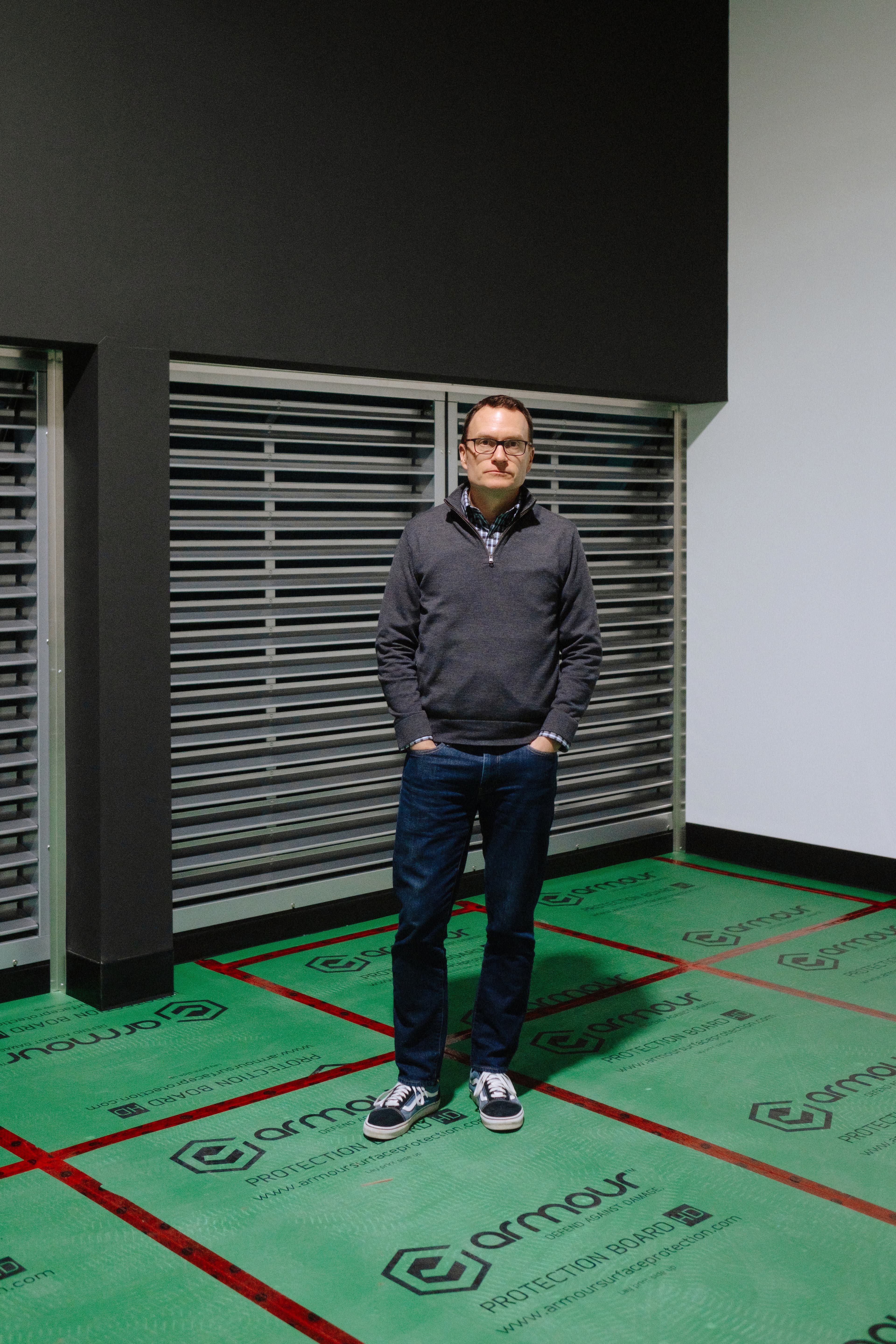
McCarten and eStruxture’s western regional manager, Norbert Mazur, gave me a tour of the facility—or at least part of it. Visitors are forbidden from entering its four so-called data halls, the sterile inner sanctums containing all those whirring, flashing cabinets of computers. Hypothetically, if I were to trip on a wire inside one of those rooms, “Netflix goes down,” Mazur explained. “That’s a no-no.”
I was allowed inside the many rooms that keep all those computers powered and cool—a series of sparse white spaces filled with black and grey utility boxes containing breakers, transformers, batteries, fans and pipes. The building draws 26 megawatts from Alberta’s grid, not much more or less than many of the surrounding businesses. “And we do not use any liquid cooling. This is all air-cooled,” Mazur said, pointing to a vent in the floor blowing cold air at one of the few racks of digital hardware I was permitted to see. During the winter, the data centre can even use Alberta’s naturally frigid air to help cool the computers. In this regard, he argues, Canada is a natural destination for data centres. “There’s no data centre in Canada today that’s a massive consumer of water,” he says.
As my tour came to a close, Mazur joked: was this the big, bad data centre I’d been expecting? The place, I had to admit, was discreet, clean and quiet—as boring as you’d imagine a building of computers to be. It supported 30 full-time jobs, provided work to many more technicians and tradespeople, and kept the internet running for millions of Albertans. What was so awful about that?
But the hitch was that CAL-2 bore little resemblance to Kineticor’s proposed facility. CAL-2 is a 26-megawatt cloud computing centre occupying 106,000 square feet in an industrial park. Kineticor’s would be a several-hundred-megawatt AI campus, occupying a footprint hundreds of times bigger. The challenge was obvious. Could eStruxture operate a much larger, vastly more powerful setup just as quietly and cleanly? Or, as critics feared, would such an undertaking compromise the electrical grid, pollute the local environment, drink up enormous volumes of water and create an infernal racket for its neighbours?
McCarten assured me that, even as eStruxture ventured into gigawatt-scale facilities, the company would remain committed to responsible development. “If we don’t,” he said, “we’re going to get run out with pitchforks and torches.”
O
ne morning late last summer, on the day Rocky View County was set to vote on Kineticor’s proposal, Brenda Ralston and dozens of other landowners filed into the county’s council chambers, determined to convince their representatives to kill the data centre. By the time the special council meeting commenced, the room was packed.
Kineticor made its case first. The company’s executive vice-president, Raymond McKay, told council that the development was aligned with Nate Glubish’s strategy. “It will establish the county as a leader in high-tech data-centre development, attracting investment and infrastructure and employment for residents for years to come,” he said.
But then he dropped a bombshell: Kineticor had not won any of the 1,200 megawatts on offer from the province—that power would be allotted to two hyperscale projects near Edmonton—so the company was considering building a 900-megawatt natural-gas power plant on the site.
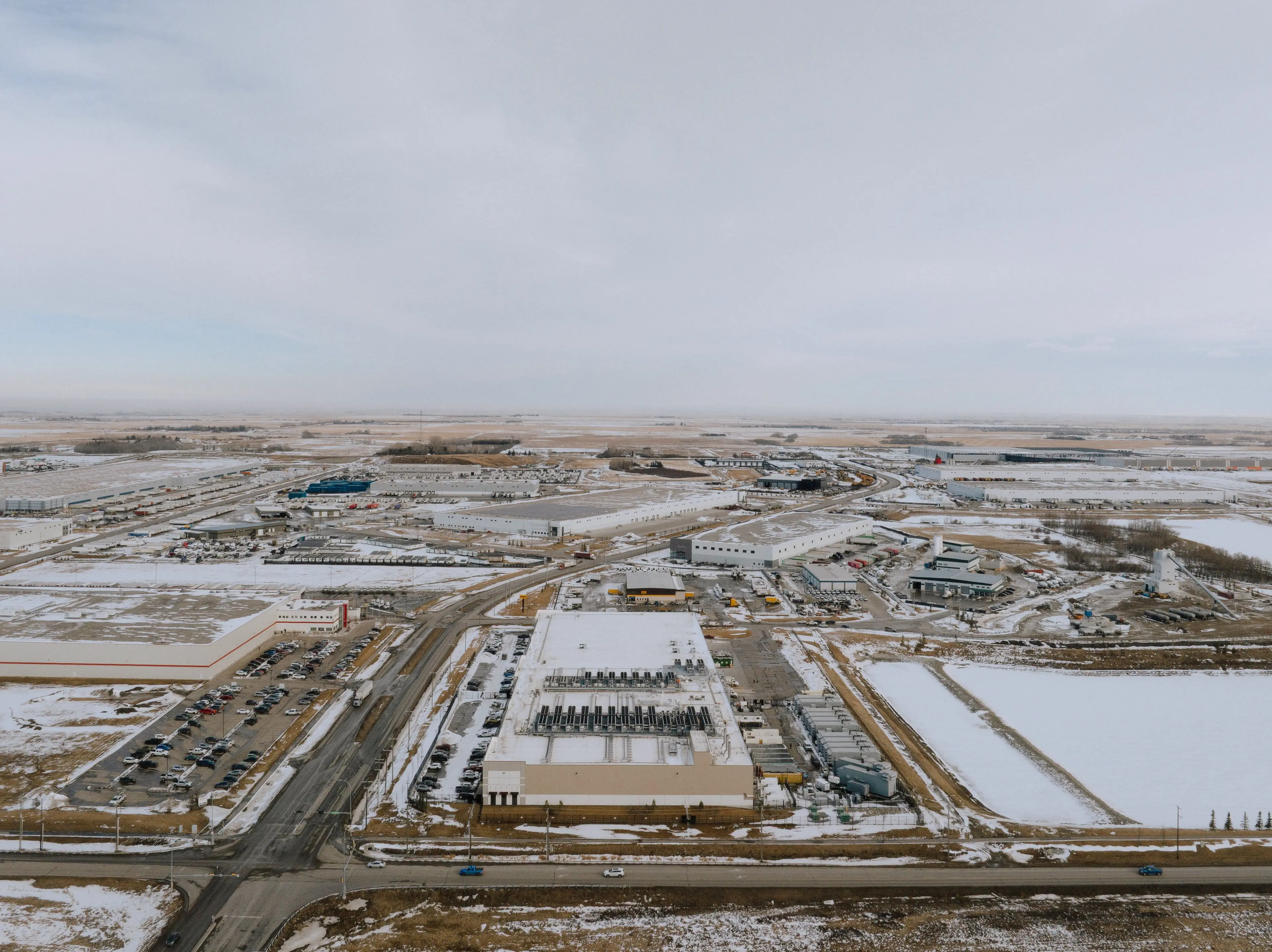
Councillors wondered why the project wasn’t situated in an industrial park, like CAL-2. Ken Venner, a consultant representing Kineticor, explained that there wasn’t enough industrially zoned land available to accommodate a project of this magnitude. The company’s proposed site was the next best thing: there was an interested seller, it was located along a utility corridor and it was near both a provincial highway and an urban centre, making it easily accessible. “A lot of thinking, a lot of strategy went into this,” said Venner.
When council opened the floor to members of the public who supported the project, only four people approached the podium: an eStruxture exec, a representative of a company interested in leasing space inside the data centre, an energy-sector worker and one local farmer. When the meeting moved on to those opposed, Rocky View reeve Crystal Kissel produced a list a page and a half long. “Here we go,” she said.
Over the next seven hours, roughly 50 Rocky View residents implored council to reject the data centre. One after another, they complained that the process was rushed and poorly timed, that Kineticor hadn’t sufficiently answered questions about water and power use, that the project would almost inevitably harm surrounding farming businesses. Several residents pointed out that the county had, only a month earlier, approved an agricultural master plan that encouraged the preservation of farmland. How did this data centre align with that? About halfway through the submissions, Ralston spoke, focusing on the irreversible loss of top-tier soil. The land in question, she said, was capable of producing 3.5 million loaves of bread or 210 tons of beef per year—1.6 million quarter pounders.
Finally, after 10 hours of deliberation, Kissel called a vote. One councillor supported the project; six opposed it. The data centre was dead. The room erupted in cheers and applause. “I was shocked,” Ralston says. “And absolutely thrilled.”
T
his past March, I met Ralston at the entrance to Twin Lakes Ranch. To the south, a long, tree-lined driveway extended to her farmhouse; to the north, fields of yellow stretched out under a grey, late-winter sky. Had things gone differently, much of the windswept prairie surrounding us would have already been transformed into a clanging construction site.
We got into Ralston’s car and started driving along a country road. Out her window, Twin Lakes’s herd was grazing peacefully; out mine, almost all the land I could see would have been dedicated to the data centre. “I don’t begrudge the people who own the land,” Ralston told me. “They were offered twice what it would be worth otherwise.” She had similarly diplomatic sentiments for Rocky View council—“I thought they were very balanced; they were willing to listen”—and even Kineticor, which has since turned its attention to other projects, including an 1,800-megawatt power plant north of Edmonton: “Do I hold it against them that they wanted to make some money? Absolutely not. I’m as capitalistic as they come.”
But, she qualified, “Land is what grounds you. It’s your heritage. We produce food for people, which I think is a humble and noble pursuit. I think at one point, I said, ‘You can’t eat data centres,’ and one of the people in our group wanted to make T-shirts.” They decided against it. As they saw it, they weren’t fighting against the data centre; they were fighting for the land.
After a few minutes in the car, Ralston and I met Tracy Hanson’s husband, Earl Munro, whose ranch sits directly north of the land in question. He looked back on the episode with gratitude. “The longer we get from it, the more I am pleased that I live in Canada,” he said. “There are many places in the world where we would have a data centre beside us and have had no say in it.”
But he was under no impression that the matter was now settled. “Tracy and I have been approached by five friends across Alberta who have said, ‘Wow, we just heard there’s a data centre proposed within two miles of our place.’ ” His daughter, who lives a few towns north, had just called to inform him that there was another one in the works near her. She wanted to know if her parents had any advice.

This story appears in the June 2026 issue of Maclean’s. You can subscribe to the magazine here or send a gift subscription here.
What did you think of this story? Send a comment for publication to letters@macleans.ca, and supply your name and address. Comments should be fewer than 200 words, and may be edited for length and clarity.

Luc Rinaldi is a National Magazine Award–winning journalist based in Toronto. His work has appeared in Maclean’s, Toronto Life, The Walrus and Report on Business, among other publications. He has taught magazine feature writing at his alma mater, the School of Journalism at Toronto Metropolitan University.
Related Posts

The Doom Spenders
Big Tech v. Me

The Rich List

The Battle for the Soul of the University
Get the Best of Maclean’s straight to your inbox.
Sign up for news, commentary and analysis. Join 60,000+ Canadian readers.