Canada’s Flu Seasons Are About to Get a Lot Worse
I’ve been the chief medical officer for the Winnipeg Regional Health Authority since 2022, and I see firsthand how flu season aggravates the pressures on our already strained hospitals. On average, the flu causes 12,200 hospitalizations and 3,500 deaths in Canada every year, placing it among our top 10 causes of death. The onslaught of flu sufferers affects everyone else in the ER as well—people have to wait longer to get stitches, have their broken bones set, get their symptoms assessed. Surgeries are often cancelled because there’s just not enough space in the hospital.
I heard from a colleague about a man who came in to the ER just last month complaining of elbow pain. At the same time, 15 other people came in, many with respiratory issues related to the flu and other viruses. The man’s case was deprioritized while the one physician on shift took care of everyone. By the time it became clear that his pain was actually a stroke symptom, it was too late. He was urgently transferred to a stroke centre, but he still died the next day.
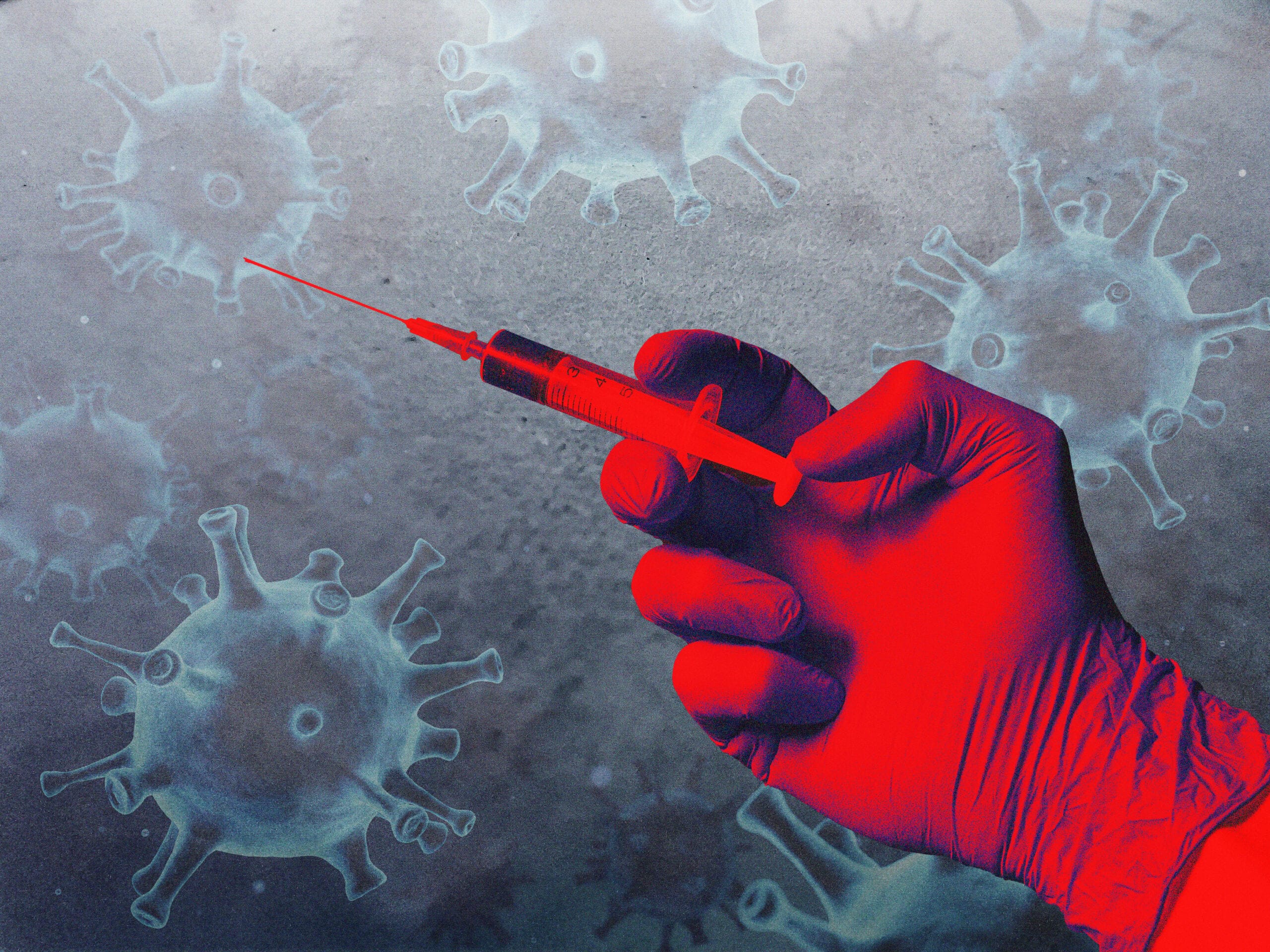
Flu vaccines reduce the number of hospitalizations each year, and genetic sequencing is crucial to creating an effective vaccine. When humans are infected with the flu, our bodies react to antigens, the proteins that help our immune systems identify threats. The flu antigens can vary year to year, creating subtypes of the virus. Scientists analyze positive cases to figure out which subtype is circulating, in order to design a vaccine that will properly fight it. Canada’s own data-gathering is reasonable for our population size, but we generate only a few hundred partially genetically analyzed samples each year. This sample size is not nearly big enough to effectively predict what vaccine to use.
Related: Canada Needs a National Vaccination Registry
Canada, and the whole world, rely on U.S. flu data, which is used to produce effective vaccines. The U.S. not only collects enormous amounts of domestic data on active flu subtypes, it also gathers surveillance information from its American military personnel around the world. Thousands of positive cases are sent to CDC laboratories each year for full genetic sequencing.
But we’re expecting a dramatic decline in the U.S. flu-surveillance data going to the World Health Organization, all thanks to Robert F. Kennedy Jr.’s explicit anti-vaccine agenda. The U.S. will officially withdraw from the WHO in January, which means the organization that oversees vaccine selection will lose about $1 billion each year—around 12 per cent of its funding. American officials have also signalled an intent to stop sharing public-health data with other countries. Even if the U.S. shares some data, it may no longer be usable. Historically, scientific organizations like the Centers for Disease Control, or CDC operated independently from politicians so ideological bias didn’t sway results. When they do interfere, the data they produce is unreliable. RFK’s own bias is obvious: he has made millions of dollars off of anti-vaccine sentiment and anti-vaccine activities—including a salary from the anti-vax Children’s Health Defense.
Without U.S. data, the sample size of genetically sequenced flu cases becomes too small to reliably determine which strains will dominate the coming season. This increases the risk of vaccine mismatch, infections, hospitalizations and deaths. It’s still possible for a mismatched vaccine to provide some immunity, but the protection is significantly weaker.
The other loss is in the realm of expertise. In June, RFK fired all 17 members of the CDC’s advisory committee on immunization practices, or ACIP—the leading vaccine scientists whose analysis guides vaccine recommendations. Although a few experts were brought back, several anti-vaccine advocates were added, prompting some health care organizations, including the American Pediatric Society, to say they will no longer trust ACIP’s guidance.
If the United States withdraws its contributions, Canada faces a stark choice: accept more frequent vaccine mismatches—and the resulting hospitalizations and deaths—or invest in domestic sequencing capacity. The scientists at Canada’s National Microbiology Laboratory in Winnipeg work with public-health partners to fight the spread of infectious diseases like the flu. The lab already expanded its testing on respiratory viruses during the pandemic, but its capacity for genetic sequencing is small compared to the U.S. We would require significant additional federal funding to expand the lab, hire and train additional scientists, and potentially increase lab space. There’s not a lot of time to make these investments. The vaccine for the current flu season was formulated in the spring of this year with the help of existing U.S. data. But there’s a strong possibility that we won’t have enough data to consistently make a well-matched shot, starting with the flu season next fall.
We’ll also need other WHO countries to increase their genetic sequencing capacity, and we’ll all need to contribute more scientists to the expert committees that analyze, interpret and communicate the data. In this, there’s a potential silver lining. A more diversified global data network—rather than one dominated by a single country—would ultimately be more resilient to geopolitical upheavals. The U.S. decided decades ago that it wanted to be a major contributor to global public health, in part as a tactic to increase the country’s influence in the world. One of my worries is that a country like China or Russia will step in to fill the void. Similar to the present-day U.S., we don’t know that we’ll be able to trust the data that comes out of China or Russia, because their health agencies are entirely government controlled.
The effects of the U.S. withdrawal may not be noticeable on a community level. Most flu deaths occur among older adults or people who are already ill, so the impact is less apparent than a novel disease outbreak. In a small town, a less effective vaccine may mean just one or two extra hospitalizations. Anti-vaccination advocates might see this as a sign the vaccines weren’t doing much, but it’s not true. On a national scale, the outcome will still be worse—it’s just hard to predict how much worse without knowing what subtype we’ll have next year. But if our flu shots perform badly, that affects how our health systems function. So even if flu infections only increases by 10 per cent, that’s another bed in the hospital, another surgery cancelled, another death of a loved one.
Joss Reimer is the chief medical officer of the Winnipeg Regional Health Authority.
Related Posts
Canada Needs a National Vaccination Registry

The Secret Weapon in Canada’s Sewers
A Doctor’s Plea for Civil Discourse
AI Could Save Canada’s Health-Care System
Get the Best of Maclean’s straight to your inbox.
Sign up for news, commentary and analysis. Join 60,000+ Canadian readers.