
Student Visa Limbo Is Wrecking My Life
In 2015, I set my sights on getting a master’s degree in computer science. I decided to apply in Canada: many of my friends who studied there recommended it. They said that people are friendly, it’s safe, and the public infrastructure and health care are good. It was also much cheaper than going to university in the U.S.
The following year, I enrolled at Concordia University in Montreal, which had a comprehensive computer science program and some fantastic professors and courses in AI research. I was excited to live in Montreal: I’d heard it was considered the “Paris of North America.”
It was my first time so far away from home, and I didn’t know what to expect. But from my very first week, people were so warm and welcoming. They wanted me to feel comfortable as a foreign student. And the program was incredible. I still remember my computer networks professor, who had an amazing way of making complex knowledge feel simple. Everything I learned stayed with me.
Related: These International Students Wanted Citizenship. Canada Killed That Dream.
I graduated in 2019 and went back home to China. I was sad to leave because I felt like I was part of a community in Montreal. I’d hoped to return for further education, but the pandemic upended those plans. So I decided to gain work experience. I got a job at an international technology firm called WiseTech Global, then switched to Microsoft in 2021.
In China, it’s rare to find a company that values its employees like Microsoft does. Most employers in this country only care about results and force people to work long hours, sometimes until midnight. In comparison, my manager would insist that we leave at the end of the standard workday. We also received higher salaries than at many other companies; I was making around $70,000 to $116,000 each year.
It was hard to think about giving all that up. But I kept finding subjects I wanted to research further, like predicting bugs accurately and using AI to automatically improve code. These were technical problems I couldn’t solve, and neither could anybody at the company. I decided to apply to the Ph.D. computer science program at the Université de Montréal. My manager even provided a support letter for my application, promising there would be a position open for me at Microsoft after I completed my degree.
Last winter, I had an interview over Zoom with a professor and, in December, I received an oral acceptance offer from him to start in the fall. I was overjoyed. I couldn’t wait to return to school and the city I love.
I told my manager about the offer, who said the first half of the new year would be a bad time for me to leave. To avoid causing problems for him, I quit my job that same month. I’d saved up enough money to cover my rent in Beijing, insurance, groceries and other living expenses until school started. Once I received my official letter of acceptance the following May, I applied for my Canadian study permit. The Immigration, Refugees and Citizenship Canada website states that study permits take around four weeks to process. I submitted all the required paperwork and waited, thinking it would go smoothly.
When I didn’t hear back in that time frame, I followed up with IRCC through their web form—still nothing. In the following months, I wrote to them many more times to offer more information about my educational background and work history in an effort to be transparent. I couldn’t believe Canada was leaving students in limbo like this, and I told them so. As the semester loomed closer, I grew desperate, making access-to-information and privacy requests to the Canadian Border Services Agency and the Canadian Security Intelligence Service, seeking answers about my application. That’s when I found out that it was stuck in the security-screening stage.
As of mid-September, my classes at the Université de Montréal had already begun. But beyond a generic response that my application was received, there was still no update from IRCC on my permit. I never expected this; when I had applied to Concordia years earlier, the approval had come through quickly. But a lot has changed since then: Ottawa has imposed sweeping reductions on study permits, and applications from Chinese students in particular are facing intense scrutiny.
I’d joined a social media group for Chinese students going through Canada’s security screenings and learned that a few hundred international graduate and Ph.D. students were facing study-permit processing delays in the past few years due to extensive background and security screening. The large majority of them—I would say about 90 per cent—are STEM students, and some have been waiting for a response since 2022. A former CSIS director recently gave an interview suggesting Chinese STEM students were being vetted carefully because two scientists in Winnipeg had been caught sharing classified information with China in 2019. This made me angry: there’s no evidence that there is a higher risk of Chinese international STEM students being involved in such incidents.
Related: When Asylum Seekers Have Nowhere To Go
For almost a year, I’ve been living without an income. I’m socializing with friends less often so I can save money for when I (hopefully) start my program. My family isn’t rich—my parents are both government workers—so I can’t expect them to support me financially. Even if I were to work, I wouldn’t be able to focus. I struggle with insomnia, and I see a psychologist every week to help me deal with the uncertainty. My parents worry about me: I don’t smile anymore. I’m constantly worried that time is running out. This opportunity is important to me, and I’ve already given up everything to prepare for it. All my efforts will have been for nothing if it doesn’t work out.
In July, Yixin Cheng—another prospective computer science Ph.D. student in the social media group—reached out to me. Cheng, who is in the same situation, told me about a federal lawsuit he’s launching. He organized students to submit a writ of mandamus, which is a federal court order that forces government agencies to perform their legal duties when there have been unreasonable delays. Twenty-five students from China, including me, are participating in the lawsuit. If it’s successful, the IRCC will be compelled to make decisions on our permits quickly.
I believe that if the IRCC actually looks into my background, they would clear me. I’ve worked at two well-known international companies, so I’ve already gone through national security checks before I was hired. I was also cleared to attend Concordia before. I know of other students from the U.S. and the U.K. with the same background as me, who applied for the same program, and they got their permits within a month. Meanwhile, some students from China who are part of the lawsuit have endured exhaustive CSIS reviews, and yet they’re still waiting for a decision.
All I want is to receive a quick decision about my study permit. I also hope IRCC reorganizes how they evaluate applications for international students in the future. They need to establish a strict timeline for each step and check if those timelines are being followed; they need to make sure they’re not delaying people’s studies and lives. The process should be transparent, and there needs to be a human response—not just an automated one—to keep applicants updated on their status.
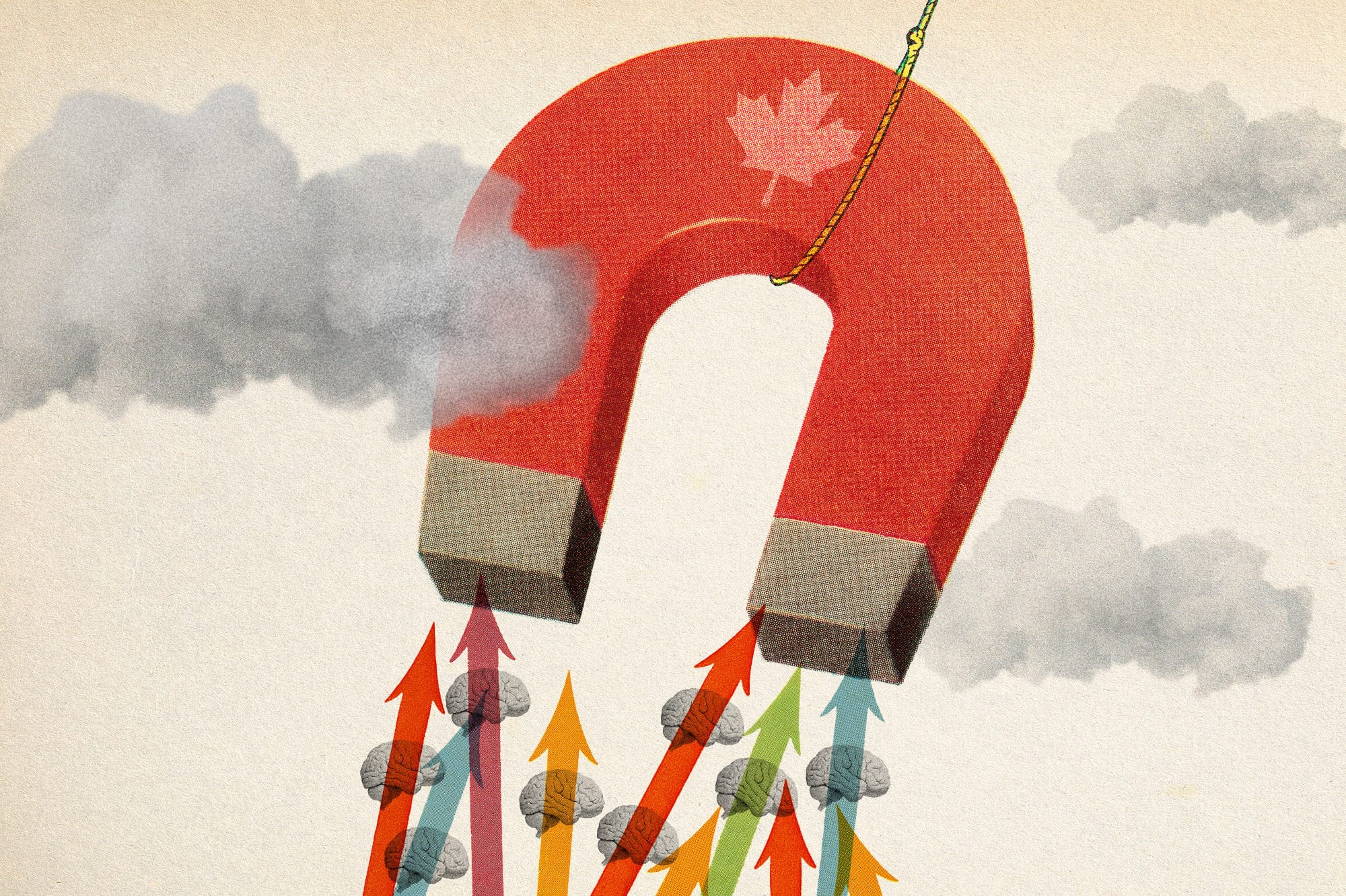
I know of two Chinese professors who chose to go to American universities after facing permit delays in Canada. Countless other talented people are jumping ship to other countries. Canada needs highly skilled people to develop its AI centres, boost productivity and innovation in the STEM fields, and attract global investments and research partnerships. How will it achieve this if it makes the process difficult for international talent?
After the lawsuit was covered by the media, some university professors shared our story online and wrote support letters for students who are affected. Luckily, I was able to defer my acceptance to January of 2026, but I’m afraid of losing my spot if I don’t receive my visa by the end of November. I’m 32 years old, and I can’t afford to waste any more time.
—As told to Sanam Islam
Related Posts

Can Canada Survive Trump’s Attack on Science?

Canada’s Aging Infrastructure Is a Ticking Time-Bomb
Canada Can Be a Refuge for America’s Grad Students

How to Stop the Gen Z Slowdown
Get the Best of Maclean’s straight to your inbox.
Sign up for news, commentary and analysis. Join 60,000+ Canadian readers.