Companies Replaced Humans With AI. Now They Regret It.
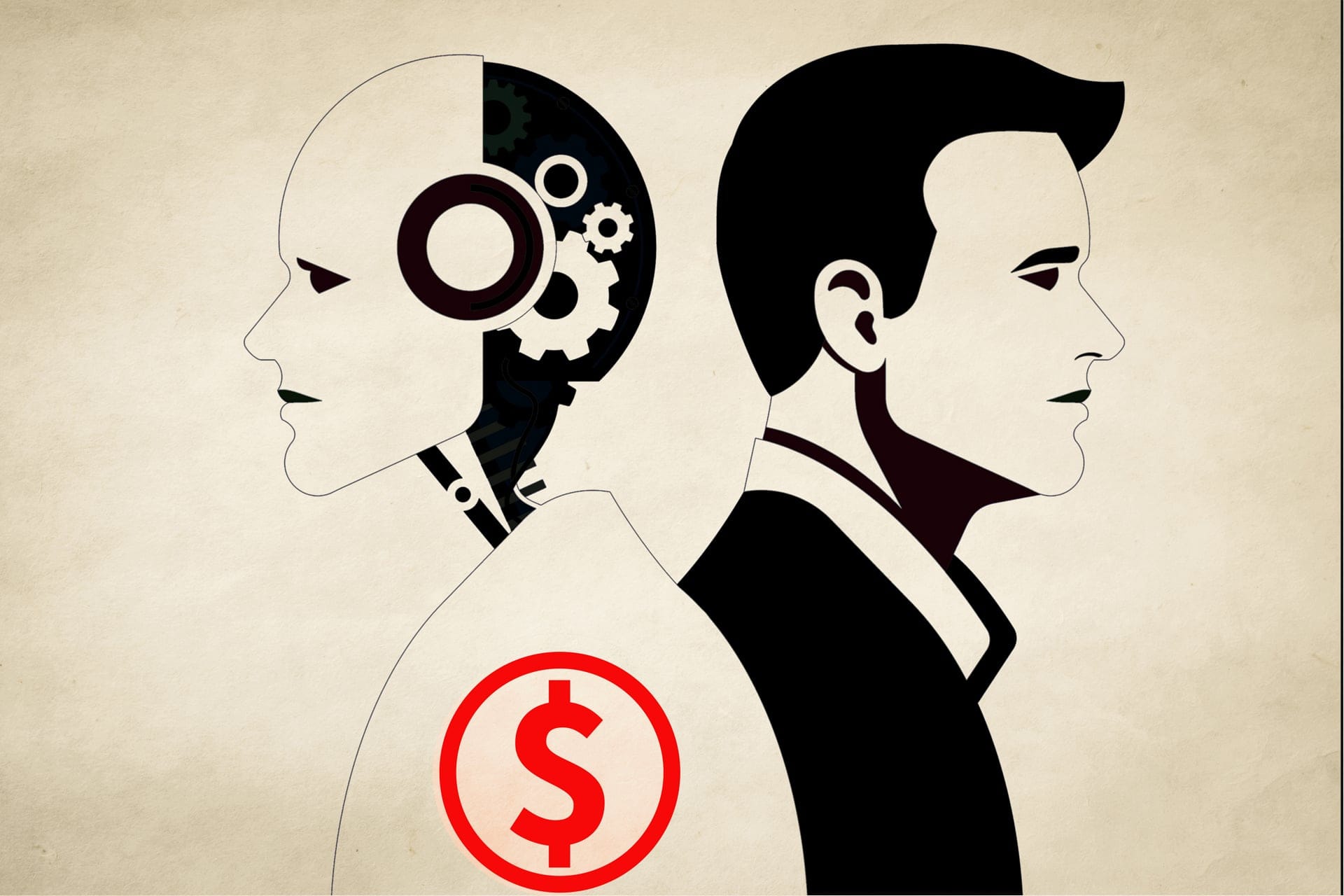
For the last few years, Klarna, a Swedish buy-now-pay-later app, has been one of the most bullish corporate champions of replacing employees with AI. The firm laid off hundreds of workers in 2022, then froze most hiring while incorporating AI across the company. In early 2024, it announced that its customer-service chatbot was handling the equivalent workload of 700 full-time agents, answering routine questions involving payments, purchases, refunds and returns. The move, it said, was saving the company US$10 million a year.
But customers were deeply unhappy with the decline in service. They said AI couldn’t handle complex issues like fraud claims and financial disputes, and it lacked empathy in situations that required it. Customers also complained about getting stuck in chatbot loops and struggling to talk to a real person. Last year, Klarna’s CEO finally admitted he’d cut positions too aggressively in pursuit of cost savings, and the company started hiring human workers again.
In Canada, it’s hard to say exactly how many companies have dismissed workers because of AI. Layoffs are often announced as part of broader restructurings, while companies simultaneously cite automation, efficiency and new investments in tech. But we know that some employers are taking a cue from Klarna and reversing course. In a recent Robert Half survey of 1,365 Canadian hiring managers, more than a third of those who laid off staff due to AI say they’ve since added the same or similar positions back. In another survey of 600 hiring managers conducted by global workforce company Careerminds, 91 per cent of those who cut staff believed AI didn’t deliver what it had promised. Many said AI required more oversight than expected, critical skills and expertise were lost, and the tools simply underperformed. More than half rehired staff within just six months as they realized the value of the roles they’d replaced.
There’s also little evidence showing how much AI-related layoffs collectively improve bottom lines. Cutting payroll can create immediate savings, as it did at Klarna. But according to the Careerminds survey, when companies laid off workers, 75 per cent of the time they either lost money or cancelled out their savings when they had to rehire because they paid for additional recruitment costs and lost institutional knowledge. Workers’ trust can also break in the long term.
These layoff reversals suggest that the race to replace people has mostly been driven by excitement around AI, rather than a clear understanding of which parts of a job it could realistically replace. Employers have this new shiny tool, but they don’t know what it’s useful for, so they just integrate it everywhere.
Related Posts

Schools vs. Screens

Why Gen Z Is Addicted to Location Sharing
This is a common mistake. The right way to introduce any new tool in the workplace is by identifying the business problem, which is often social in nature because it involves people. In sales, for example, it’s crucial to build rapport and trust with potential new customers. Using AI to write the sales rep’s emails can be counterproductive to building that connection. A better way to solve the problem while maintaining the social aspect of the job could be to use AI to support the employee—transcribing conversations with customers or setting reminders about when to follow up—rather than replacing that employee entirely.
I believe many rash decisions have been made partly due to a fear, often instilled by those selling AI, that unless you move quickly, you’ll be left behind. But technological change rarely happens overnight: computers and the internet transformed workplaces gradually, giving companies and workers time to adapt. So far, AI’s impact on productivity and employment in Canada remains modest—nowhere near the cataclysmic labour-market disruption many have predicted. Its broader effects will likely take up to 10 years to become clear. Companies have time to be deliberate.
Many leaders evaluate AI by asking how often it comes up with the right answer. But the more important question is what happens when it gets something wrong. An error in routine meeting notes may be harmless; an error involving a mortgage application, legal advice or cancer diagnosis carries serious financial, legal or human consequences. In those settings, the employee is not merely completing a task but providing judgment and assuming a type of liability machines never should. When organizations replace these workers, AI adoption will likely fail.
Even when AI performs some tasks cheaply and well, it doesn’t mean it can do an entire job. In areas like customer service, AI may be helpful in routine processes like recovering lost passwords or requesting updated flight information, but it’s less effective when it comes to managing complicated issues like tracking fraudulent credit card activity or making changes to a complicated year-long travel itinerary. It’s good at calculations, coding or programming-related tasks, especially in finding cybersecurity vulnerabilities, but AI-written code tends to be longer than human-written code, so it runs a little slower and less efficiently.
Ultimately, we have to take company announcements about AI-related layoffs with a grain of salt. The reality is that many businesses are experiencing other negative shocks, like trade disruptions and post-pandemic corrections. Rather than telling investors they’re laying people off because the economy is bad, they can create a more positive spin by attributing redundancies to AI.
For businesses looking to adopt AI, I’d urge caution. It’s okay to dream big, but companies require trust from their employees, and there’s no faster way to burn that trust by replacing them en masse with AI tools—especially if they haven’t been properly tested.
Viet Vu is the manager of economic research at The Dais, a public policy and leadership think tank at Toronto Metropolitan University.
What did you think of this story? Send a comment for publication to letters@macleans.ca, and supply your name and address. Comments should be fewer than 200 words, and may be edited for length and clarity.
Related Posts

Teach Kids Digital Nutrition

The Terrifying Rise of Ransomware Gangs
Canada Needs More Robots

A Canadian in Space
Get the Best of Maclean’s straight to your inbox.
Sign up for news, commentary and analysis. Join 60,000+ Canadian readers.