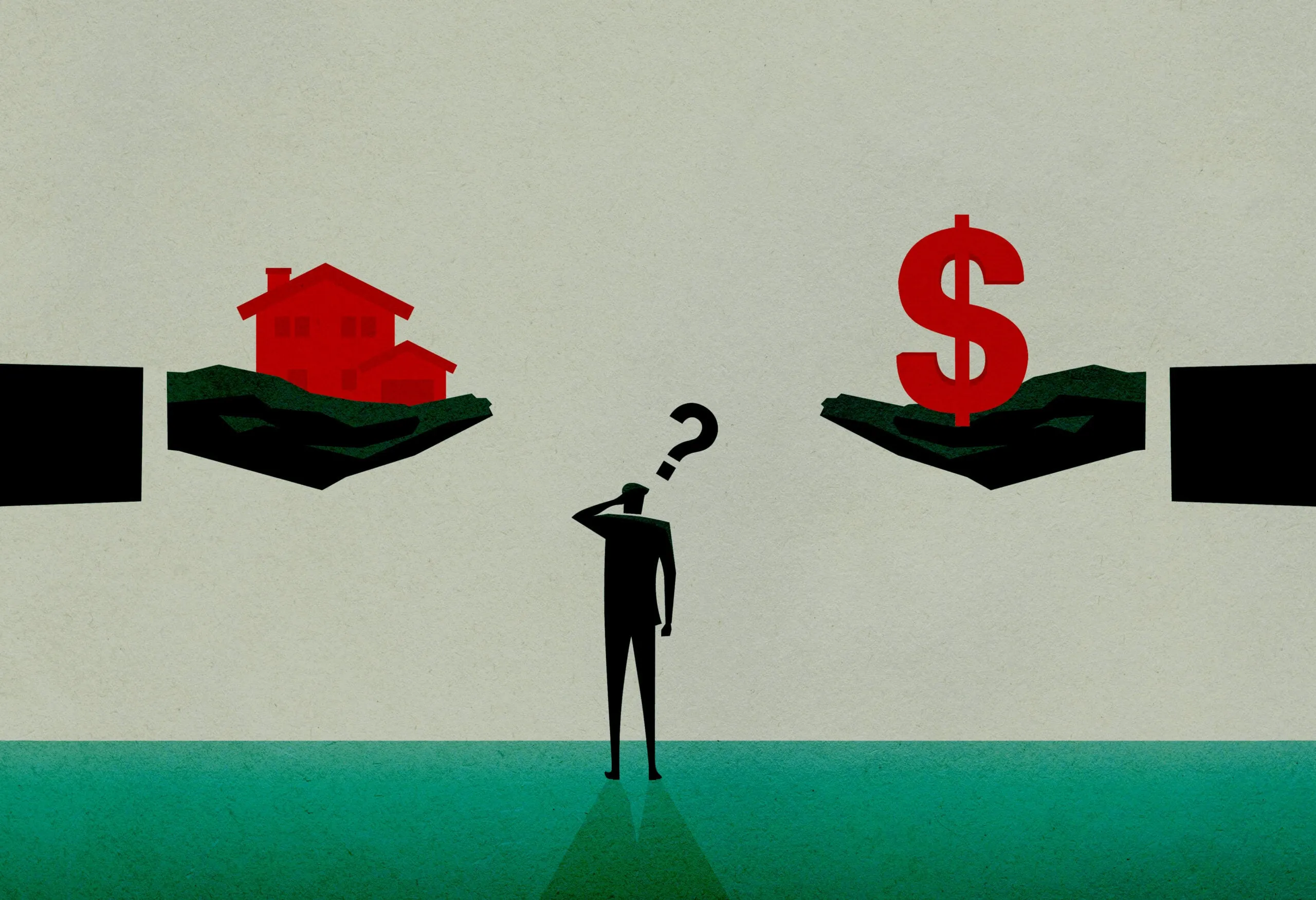
The Case for Lifelong Renting
When I was growing up in Toronto in the 1990s, one message kept coming from older generations: purchase a house as soon as you can. I heard it everywhere. If you rent, you’re throwing money away. Buy land, they’re not making any more of it. Those lines were repeated so often that I internalized this pressure to get into the housing market as quickly as possible.
That mindset has been pervasive for decades because homeownership has delivered enormous wealth gains for many families. Between 1990 and 2023, Canadian housing prices increased by an average of 6.3 per cent annually, which helped multiple generations of homeowners build substantial equity. Back in 1999, the median net worth of homeowner households was $226,000, compared to $14,000 for renter households. Homeownership was the best financial strategy for so long that it became ingrained in our social narrative. Homeownership isn’t just seen as a financial choice; it’s treated as a marker of adulthood and responsibility.
Related: The End of Homeownership
When I started working in the financial sector in my mid-twenties, I looked at house prices and thought: there’s no way I can afford that. I was young and my income was relatively low. When my parents bought in the area in 1993, the average sale price was $206,000—that might cover a 20 per cent down payment today. Today, the average house in the Greater Toronto Area sells for just over $1 million. In 2000, the typical Canadian household needed about 35 per cent of its income to cover ownership costs. By 2024, that figure had climbed to 59.5 per cent nationally, and in Vancouver it reached an astonishing 98.6 per cent. For younger Canadians aspiring to be homeowners, the numbers have become so daunting that many don’t even bother running them. There’s no world in which they can afford to live where they want to and maintain the quality of life they want.
Many younger Canadians are now dependent on parental help to buy homes. In 2024, CIBC reported that the average down-payment gift for first-time homebuyers was $115,000—a 73 per cent increase from 2019. Thirty-one per cent of first-time homebuyers received financial help from family, compared to 20 per cent in 2015. But what does that mean for Canadians who don’t have access to family help and can’t accumulate sufficient wealth? Are they frozen out of the homeownership market forever?
That’s the situation I found myself in, and it didn’t help that I wasn’t financially literate. After I got my first credit card, I racked up $20,000 in debt because I was overspending, and I didn’t understand that making only the minimum payment barely touched the accumulating principal. That experience was a wake-up call. I started taking my finances seriously, reading books and learning all about the world of money, which sparked my passion for helping others.
As I built my finance career, working as a stockbroker and a wealth-management adviser, I also started blogging and interacted with an online community that taught me as much as the industry did. I had a growing suspicion that homeownership wasn’t all it was cracked up to be. When I was younger, I looked at the interest homeowners typically paid over a mortgage’s lifetime. Over 25 years, it was possible to pay more than the house’s purchase price in interest alone. That always stuck with me, but when I mentioned it to proponents of buying, I found it odd that it was often surprising to them as well—why make such a big decision without running the numbers? It seemed to me that the narrative I kept hearing about buying a house as soon as possible was more complicated than that. Homeownership is still a great option for most, but I want to challenge the idea that it’s the only way to be financially responsible.
I kept the perspective that buying wasn’t the automatic, no-brainer investment people made it out to be when I started looking for a new home in Toronto in 2013. By then I was earning more and had built up some savings, and my partner and I found ourselves deciding whether to buy or rent a two-bedroom unit in a building where suites were selling for $1.2 million and leasing for $2,800 a month. We would have paid about $1,100 more a month to own than rent. When we did the math, we saw that if we rented and invested the difference, we could build equity faster than if we bought the place. And over the next decade, that’s exactly what happened. My investment portfolio ultimately outperformed the condo equity I would have accumulated after accounting for transaction costs. And given how sharply the Toronto housing market has fallen in recent years, it also turned out to be a much better financial decision.
A fundamental thing I understood about buying a house with a mortgage is that it’s still renting—it’s just leasing money instead of space. Interest is the fee people pay for the privilege of borrowing money. Sure, it comes with eventual ownership and hopefully appreciation of an asset in the long run, and yes, there’s something to be said for pride in homeownership, stability and the ability to modify your home. But there are also huge ancillary costs; land transfer tax alone can run into the tens of thousands. Legal fees typically fall in the $1,500 to $3,000 range. Then there’s mortgage insurance if your down payment is under 20 per cent, which can be another few per cent of the purchase price. Then appraisal fees, home inspections and title insurance each tack on a few hundred dollars. By the time everything is tallied, buyers can easily find themselves paying three or four per cent of the property’s value in closing costs. That’s $30,000 to $40,000 for a $1 million home.
And for many people—myself included—there’s the hassle factor. I hate the idea of doing maintenance and upkeep, of mowing the lawn or worrying about a potential $50,000 foundation repair. Renting is often less stressful because renters aren’t exposed to interest rate swings the way homeowners with variable-rate mortgages are, and they’re not tied to the ups and downs of the housing market. Their main responsibility is paying rent, which is generally more stable because it’s tied to local incomes, not interest rates. The trade-off is the possibility of a difficult landlord, although in many places there are strong tenant protections that help balance that risk.
Ultimately, I came to see that homeownership isn’t always the smartest path. In many situations, renting can make more financial sense, both in the short-term and over a lifetime. Look at the recent market downturn. Talk to anyone who bought in Toronto or Vancouver, or even in smaller cities like Halifax or Guelph, Ontario, within the past five years, and a lot of them regret it. They bought because everyone around them was doing the same. Many stretched themselves far beyond their comfort zone.
Then the perfect storm hit. People on variable mortgages watched their rates climb until the interest they owed exceeded their monthly payment, and suddenly they were running in the red. For instance, at the peak of the rate hikes, 62 per cent of BMO’s variable-rate borrowers were in negative amortization, meaning their monthly payments didn’t fully cover the interest owed. In Toronto, the mortgage delinquency rate rose by 60 per cent between the second quarter of 2024 and the second quarter of 2025. It left many wondering what people were talking about when they insisted that homeownership was the ultimate sign of financial responsibility.
Instead of blindly following the usual advice to buy as soon as possible, people looking to buy need to consider if they’re likely to stay put for the next 10 years; if not, homeownership may not be the best option. Transaction costs rack up quickly from back-to-back purchases and can wipe out gains from property appreciation. I’ve seen people buy real estate with partners they weren’t serious about, break up, sell, then repeat the cycle. One person I knew bought and sold three times in six years, and likely spent more than $30,000 in transaction costs each time. On the other hand, buying could be a better option for new parents. The flexibility of renting may be convenient for young people who aren’t settled in long-term relationships, but in major cities, many rentals simply aren’t big enough for a growing family. It often makes more sense for families to buy once they know where they want to raise children and what kind of space they’ll need.
On top of deciding if they’re in the right stage of life, potential buyers also need to get serious about the numbers. Buyers need to be able to afford the full cost of owning a home while still saving for the future. That means covering the mortgage, property taxes—which in Canada range from about 0.3 per cent to 2 per cent—and ongoing maintenance, which many people don’t budget for properly. In Toronto, for example, the property tax rate is roughly 0.75 per cent, so a $1 million home costs about $7,500 a year in taxes alone. To stay on solid footing, a buyer should be able to manage those expenses and still comfortably save around 10 per cent of their monthly income.
We need to change the narrative that’s all-in on homeownership at all costs. That means challenging the mindset of people who bought decades ago and still give the same advice. Ask them whether they could afford to buy the very house they live in today. The honest answer, for most, is no. That alone should tell us something. Many long-time owners couldn’t qualify for their own homes under today’s conditions, yet they often don’t recognize how dramatically the landscape has shifted.
Much of the argument against renting is emotional rather than rational. This completely overlooks the real benefits that renting can have, saving people money and stress. I’m not anti-homeownership; for many people, buying can still be the right move when the numbers make sense. But it makes far less sense for today’s first-time buyers. Pressuring people to buy simply because past generations benefited does real harm. These are high-stakes decisions that shape people’s finances and happiness. What we need is a conversation grounded in responsible decision-making, not nostalgia. Homeownership can still be a worthwhile goal. It’s just way harder than it’s ever been.
Preet Banerjee is a personal finance commentator and developer of the app Your Money Degree.
Related Posts

Canada’s Aging Infrastructure Is a Ticking Time-Bomb

How to Stop the Gen Z Slowdown

Can Canada Survive Trump’s Attack on Science?
Canada Can Be a Refuge for America’s Grad Students
Get the Best of Maclean’s straight to your inbox.
Sign up for news, commentary and analysis. Join 60,000+ Canadian readers.