Canada’s Essential Role in Global Emergencies
In addition to responding to the world’s largest humanitarian emergencies, including those in Ukraine, Sudan, Gaza, Türkiye and Syria, the Humanitarian Coalition provides life-saving assistance for under-reported emergencies, which are no less devastating to those affected. The organization has provided food, shelter, clean water and health services to over one million people since 2021.
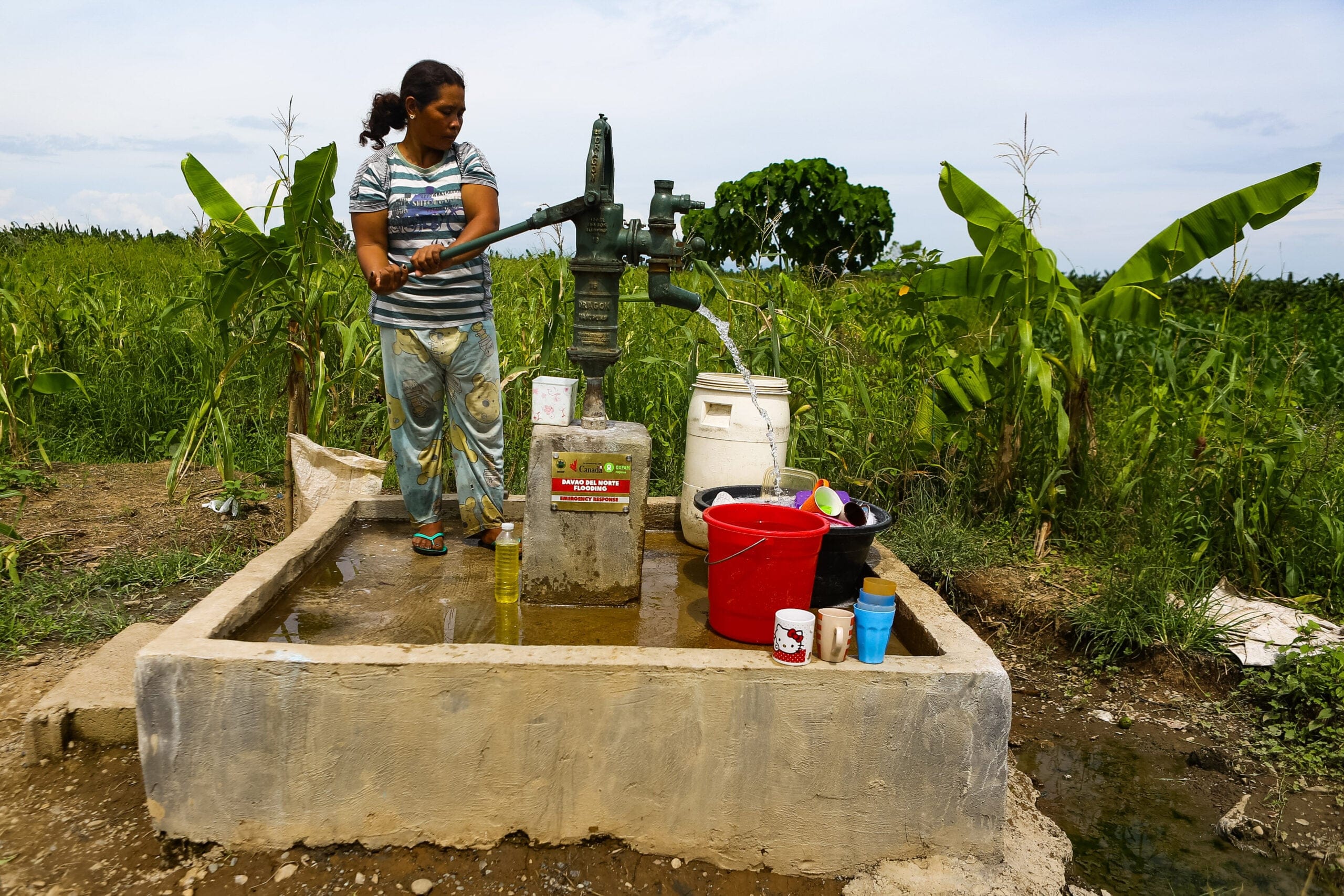
That includes the Davao del Norte floods and severe tropical storm Trami, two major weather disasters that struck the Philippines in 2024. “Storm Trami caused widespread flooding and landslides, impacting two million families and forcing 685,000 people to leave their homes,” says Bren Melles, manager of humanitarian programs with the Humanitarian Coalition. With funds from CHAF, Humanitarian Coalition member Oxfam Canada responded with emergency water, health services and cash to the most vulnerable families who lost their homes and livelihoods, supporting more than 20,000 people.
Likewise, when a violent 7.7 magnitude earthquake shook Myanmar in March 2025, forcing nearly 200,000 people from their homes, Humanitarian Coalition members CARE Canada, Oxfam Canada, Plan International Canada, Save the Children and World Vision Canada rushed to respond with CHAF’s support. Working alongside local partners, these organizations provided water purification tablets and hygiene kits; constructed and repaired latrines; distributed cash assistance for basics like food, shelter and medical needs; and provided protection services including psychological first aid for more than 40,000 people.
Getting help to those who need it
Amid these fast-moving, emergency situations, CHAF is committed to ensuring that funds are used effectively. “We take efficiency and transparency seriously,” emphasizes Melles. “Every dollar is tracked through clear reporting systems, and we work only with vetted organizations that have proven capacity to deliver quickly and responsibly. Ultimately, our goal is to make sure that aid reaches those who need it most — without delay and without waste.”
For Golda Ibarra, the Country Representative overseeing a response to devastating flooding in Colombia on behalf of Humanitarian Coalition member Canadian Lutheran World Relief , CHAF helps her provide the assistance that she’s been invested in her entire life. “Humanitarian service has been my life’s work,” she affirms.
Specifically, Ibarra leads the effort to help more than 122,000 families in Colombia who have officially registered as flood victims since mid-2025. In Medio Baudó municipality, nearly 2,000 families were affected by the flooding caused by the overflow of the Baudó River. Roads, bridges and community infrastructure were damaged, cutting off access to isolated villages. Afro-Colombian and Indigenous communities saw their crops destroyed by floods, causing a rise in food insecurity from 18.9 per cent in 2023 to 36.3 per cent in 2024.
Partnerships are key
With fellow partners, Ibarra’s agency, Lutheran World Federation, works to provide emergency shelter and household items, access to safe water and sanitation, and improved access to basic needs through cash assistance. To date, this project has benefited more than 30,000 people in eight severely affected communities in Medio Baudó and Litoral del San Juan.
“Communities we serve face multiple, overlapping challenges,” says Ibarra. “Many of them live in remote areas marked by poverty, lack of access to basic services and the constant threat of armed conflict and violence. On top of this, sudden emergencies arise—flooding, mosquito outbreaks or lack of clean water—which add even more complexity. Women and girls in Colombia and Venezuela are especially vulnerable: they face displacement, gender-based violence, weak health services, economic precarity and intersectional discrimination.”
Juggling these challenges requires constantly managing logistics with limited funds. But having partnerships like those through CHAF is invaluable. “My days are a mix of tasks and emotions,” Ibarra says. “An essential part of my day is connecting with other humanitarian organizations and donors. These conversations are not just about partnerships and resources, but also about sharing lessons and learning from each other. Every day brings something unexpected, so staying flexible while keeping the bigger mission in mind is key.”
In fact, none of CHAF’s work would be possible without partnerships. Global Affairs Canada provides most of the funding for CHAF, supporting Canada’s leadership in humanitarian response. Humanitarian Coalition member agencies bring expertise and operational capacity while local partner organizations, like Ibarra’s, have on-the-ground experience, local knowledge and connections to affected communities.
“Partnerships are critical for CHAF’s success,” affirms Melles. “Together, these partnerships ensure that aid is delivered rapidly and responsibly to meet the needs of people impacted by disasters.” Through CHAF, both the Government of Canada and everyday Canadians are making a tangible difference for families in their most vulnerable moments.
Learn more at humanitariancoalition.ca
Related Posts

Boosting Canadians’ employability for the clean economy

What went down at BMO’s BlueCarpet Premiere of Spotlight - Women in Asset Management

The beauty industry’s innovative shift to inclusivity and sustainability

An insider’s guide to epic winter exploration in the Yukon
Get the Best of Maclean’s straight to your inbox.
Sign up for news, commentary and analysis. Join 60,000+ Canadian readers.