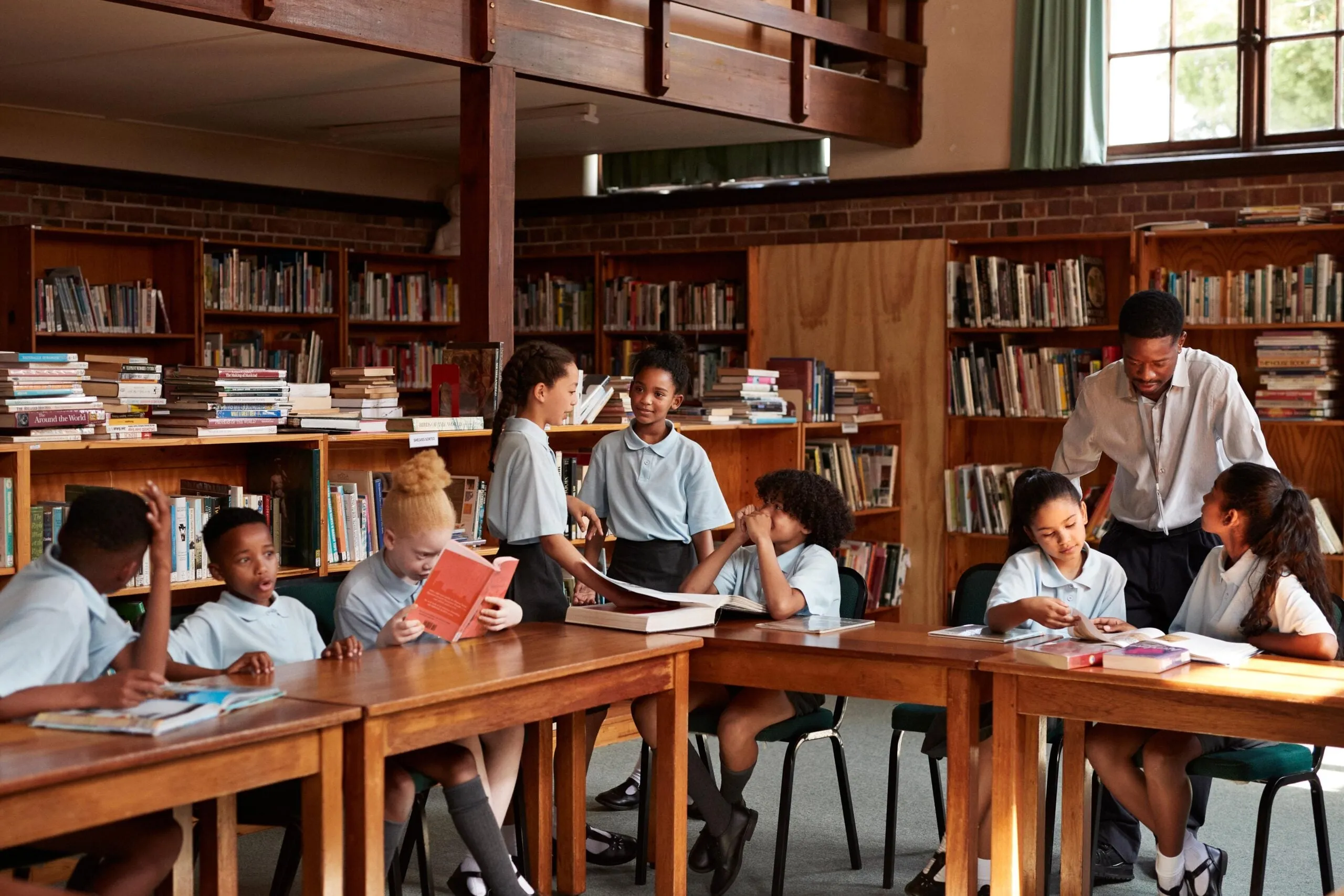
Four Unique Types of Private Schools to Consider
In Canada, the term “private school” is a broad umbrella, and the choices for parents considering sending their child to a private school are vast. All private schools have the same core ingredients—small class sizes, a strong focus on academic achievement, a rigorous curriculum, and exceptional teachers—but different types of schools have their own unique features and benefits.
Boarding schools
At boarding schools, students and staff live on campus, creating an immersive, all-encompassing education experience. “Boarding school isn’t just where students go to school, it’s where they live their lives,” says Davide D’Alessandro, director and founding family member of Canadian College Italy, a private boarding high school located in Lanciano, Italy. “Learning extends into every part of the day: academics, yes, but also how students manage their time, solve problems, build relationships, and navigate independence.” Maggie Houston-White, executive director of strategic enrolment management at Toronto’s Havergal College, agrees. “It helps them gain independence and provides them with valuable experiences that will set them up for success at university and beyond,” she says.
Canadian boarding schools also attract international students. “Having peers from all over the world allows them to learn from one another, broadening their perspectives and deepening their understanding of different cultures, experiences, and identities,” says Suzanne Ranson, director of enrolment at the Bishop Strachan School in Toronto. Anne-Marie Kee, head of school and foundation at Lakefield College School just north of Peterborough, Ont., says the results are lifelong friendships and a true sense of belonging. “Students live, learn, and grow in a close-knit, intentionally diverse community,” she notes. “The experience builds independence, confidence, and a stronger sense of responsibility.”
Montessori schools
Created by Dr. Maria Montessori in the early 1900s, these schools offer an alternative approach to education–one focused on student autonomy, discovery, exploration, multigrade classes, and hands-on learning, rather than standardized, structured lesson plans. “In a Montessori setting, the teacher is a facilitator, who guides each individual student based on their educational needs,” explains Atiya Husain, principal of the Maplehurst campus of Central Montessori School, which operates various locations in the Greater Toronto area. “Students work at their own pace, choosing activities and projects based on their interests and needs. And classrooms are designed to promote independence, allowing children to choose their activities and manage their own work.”
Jacqueline Richman, head of school at Toronto’s Bannockburn School, says the Montessori approach fosters a lifelong love of learning in students, promotes collaboration, and encourages independence and self-expression. “The curriculum nurtures confident, academically enriched students who are naturally inquisitive, skilled in time management and public speaking, knowledgeable about global issues and advocacy, and grounded in self-respect,” she says. “Programs are purposefully designed to treat each child as an individual, encouraging them to explore deeply in areas of personal interest and academic learning, which results in engaged, self-motivated learners.”
Single-gender schools
Whether all-boys or all-girls, these private schools offer a tailored education that also fosters improved self-expression and growth. “Single-gender schools provide space to explore identity, build confidence, and learn to form healthy relationships,” says Jennifer Colleran, vice-principal at the Sterling Hall School, an all-boys school in North York, Ont. “[They] have a purpose-built approach that focuses all resources on students’ intellectual, physical, social and emotional development.”
Catherine Hant, head of school at St. Mildred’s-Lightbourn School, an all-girls school in Oakville, Ont., says students at single-gender schools are “freed from the social math of mixedgender dynamics.” Hant continues,“Students aren’t performing for the room or managing how they come across,” she says. “They don’t apologize for being ambitious. Or quiet. Or both. They channel their mental energy into bigger ideas, harder questions, and daring to try.” And Richard Vissers, director of enrolment at Toronto’s all-boys Crescent School cites the value in understanding and celebrating the different ways boys and girls learn, and employing different teaching methods catered to their unique strengths and needs. “Boys develop and learn at a different pace,” Vissers says. “Boys’ schools understand and celebrate these differences.”
Specialized schools
Sometimes called a “specialty” or “special-emphasis” private school, these types of schools offer a particular focus, learning environment or teaching modality, with a curriculum and facilities tailored to support their specialty, and to help students hone distinct skills. Specialized private schools in Canada include: faith-based schools; military academies; special-needs schools; schools of the arts; schools centred on STEM (science, technology, engineering and math); and those that offer language immersion.
Faith-based private schools are one of the most common types of specialized private schools in Canada. In fact, a 2016 study revealed that nearly 50 per cent of all private/independent schools in the country have a religious orientation. These schools focus on a particular religion or belief system, which is then woven into the fabric of the education experience, from the mission statement and curriculum to everyday student life, and may include dedicated time for prayer or religious celebrations. Often preferred by parents who want to instill specific values and beliefs in their children, faith-based private schools can also help students connect more deeply with their family’s culture.
French immersion schools are also becoming increasingly popular among Canadian parents. “There are well-known cognitive and social benefits to learning a second language,” says Ronan Le Guern, director of communications and strategic planning at TFS: Canada’s International School in Toronto, “especially when that language is the medium of instruction.” In addition to cultivating fluency, French immersion schools offer students a number of benefits. “The advantages of a multilingual education are almost too numerous to mention,” says Amy Murray, assistant head of school: community & early learning at Calgary French & International School. “Language learning–leading to strong language proficiency–enhances brain development, and supports problemsolving and critical thinking in unique ways. Language is a key that opens so many doors over a student’s entire lifetime.”
Related Posts

What went down at BMO’s BlueCarpet Premiere of Spotlight - Women in Asset Management

An insider’s guide to epic winter exploration in the Yukon

The beauty industry’s innovative shift to inclusivity and sustainability

Boosting Canadians’ employability for the clean economy
Get the Best of Maclean’s straight to your inbox.
Sign up for news, commentary and analysis. Join 60,000+ Canadian readers.