
More Than Skin Deep: The Hidden Toll of Chronic Spontaneous Urticaria

From the time she was a young child, Kandace, now 39, experienced blisters, hives, and rashes all over her body. Not only were they uncomfortable and unsightly, but they would come and go unpredictably, causing her parents and others in her life to doubt what she was going through. She was constantly told: “It’s all in your head.”
“The doctors thought I was allergic to dairy, but then I’d have a new flare-up and get in trouble from my parents for eating dairy even though I hadn’t had any,” Kandace recalls. “I was even diagnosed with scabies twice. It wasn’t scabies but my mom had to tell the school. So, then I was known as the kid with bugs. It was a really tough time.”
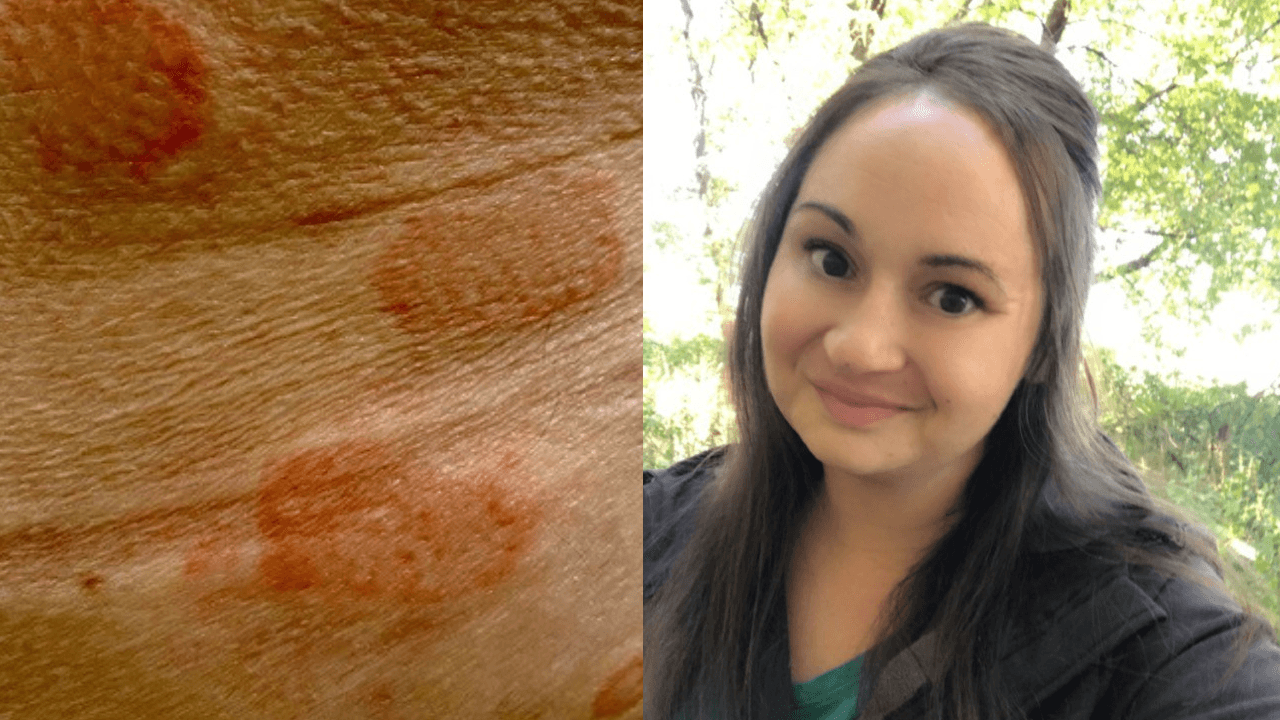
Right: Kandace, who lives with CSU
When hives feel like fire
As she got older, Kandace’s condition didn’t improve. “When I have hives, it’s like my skin is on fire. It’s like the worst sunburn of your life, and you can’t get any relief. You can try ice packs, you can try aloe, you can try calamine. Nothing helps. You just have to wait it out.”
As time went by, flare-ups took a greater and greater toll on her—physically and emotionally.
“It really limits what you can do in a day because you don’t want that pain and you don’t want people looking at you as if you have some flesh-eating disorder,” Kandace says.
Decades after her first symptoms appeared, things finally changed when Kandace was diagnosed by Dr. Hermenio Lima, a dermatologist and immunologist who is one of Canada’s top experts on chronic spontaneous urticaria (CSU).
After just a single visit, Lima—who helped found UCaN (the Urticaria Canadian Network) and brought UCARE (Urticaria Centers of Reference and Excellence) to Canada—was able to properly diagnose Kandace.

A widely misunderstood autoimmune disease
Unlike hives and rashes triggered by allergies or skin irritants, CSU flare-ups have no obvious cause. And that’s only part of what makes the condition so maddening.
“Imagine waking up in the morning and having severe swelling in the face or being itchy on your whole body,” Lima says. “CSU looks just like other hives. But there are two main differences. One is that it’s chronic, meaning it has a duration of more than six weeks. The other is that it’s spontaneous, meaning there is no obvious trigger. The hives just appear on their own.”
According to Lima, CSU occurs when the body develops antibodies to proteins in the skin, causing the immune system to attack. Lima says that one of the challenges with CSU is the lack of awareness. Even many physicians aren’t familiar with it, which leaves countless Canadians struggling for years before finally receiving the right diagnosis.
And while treatments exist, without the right diagnosis, relief is out of reach.
“Only when you identify the cause can it be treated,” Lima says.
CSU is not only physically painful with relentless itching, irritation, and visible outbreaks, it can take a deep emotional toll on an individual. For certain individuals, the burden of CSU extends beyond the skin, leading to depression and even suicidal thoughts.
Aligning on care and goals
It’s so important to track flare-ups and note triggers—or lack thereof—to help doctors differentiate CSU from other types of hives. Keeping a photo record or symptom journal provides physicians clearer insight, while giving patients a voice—helping both sides stay aligned.
“Keep advocating for yourself,” Kandace advises. In particular, she says, the peekaboo nature of CSU hives can make things tricky because the rash may disappear by the time you get in front of a doctor. “Document what you were doing (when the hives occurred). Most importantly, take all the pictures you can. They’re the best possible proof and they allow you to show the doctor something they can’t necessarily see at the time.”
Stories like Kandace’s highlight how easy it is for people with CSU to be left behind or dismissed, and the challenges care teams face in assessing the impact when symptoms come and go. Once a diagnosis is made, setting goals and building alignment around what patients are experiencing day to day helps ensure those challenges are fully recognized in the care plan.
The advice she shares now is exactly what she wishes she had heard years ago. “Today my condition is well-managed. I feel content but I’ve had to go through a lot of therapy to get to where I am,” Kandace says. “I’d really like families to have the knowledge I have today. It can be a real struggle to face CSU in isolation. If telling my story helps to raise awareness and reaches one person to ask about CSU, I’ll know it made a difference.”
Visit chronicurticaria.ca/en and canadianskin.ca/chronic-idiopathic-urticaria to learn more about CSU.
FA-11525709E
Related Posts

An insider’s guide to epic winter exploration in the Yukon

Boosting Canadians’ employability for the clean economy

What went down at BMO’s BlueCarpet Premiere of Spotlight - Women in Asset Management

The beauty industry’s innovative shift to inclusivity and sustainability
Get the Best of Maclean’s straight to your inbox.
Sign up for news, commentary and analysis. Join 60,000+ Canadian readers.