Tackling Canada’s Health Care Crisis Head-On

Canada is facing a severe health care crisis driven by widespread staff shortages, burnout and high attrition rates. Physician shortages are at critical levels, and 5.7 million Canadians lack a regular health care provider. In response, RBC and RBC Foundation are investing in the people, skills and infrastructure needed to help rebuild the system, particularly in underserved rural communities where it’s needed most.
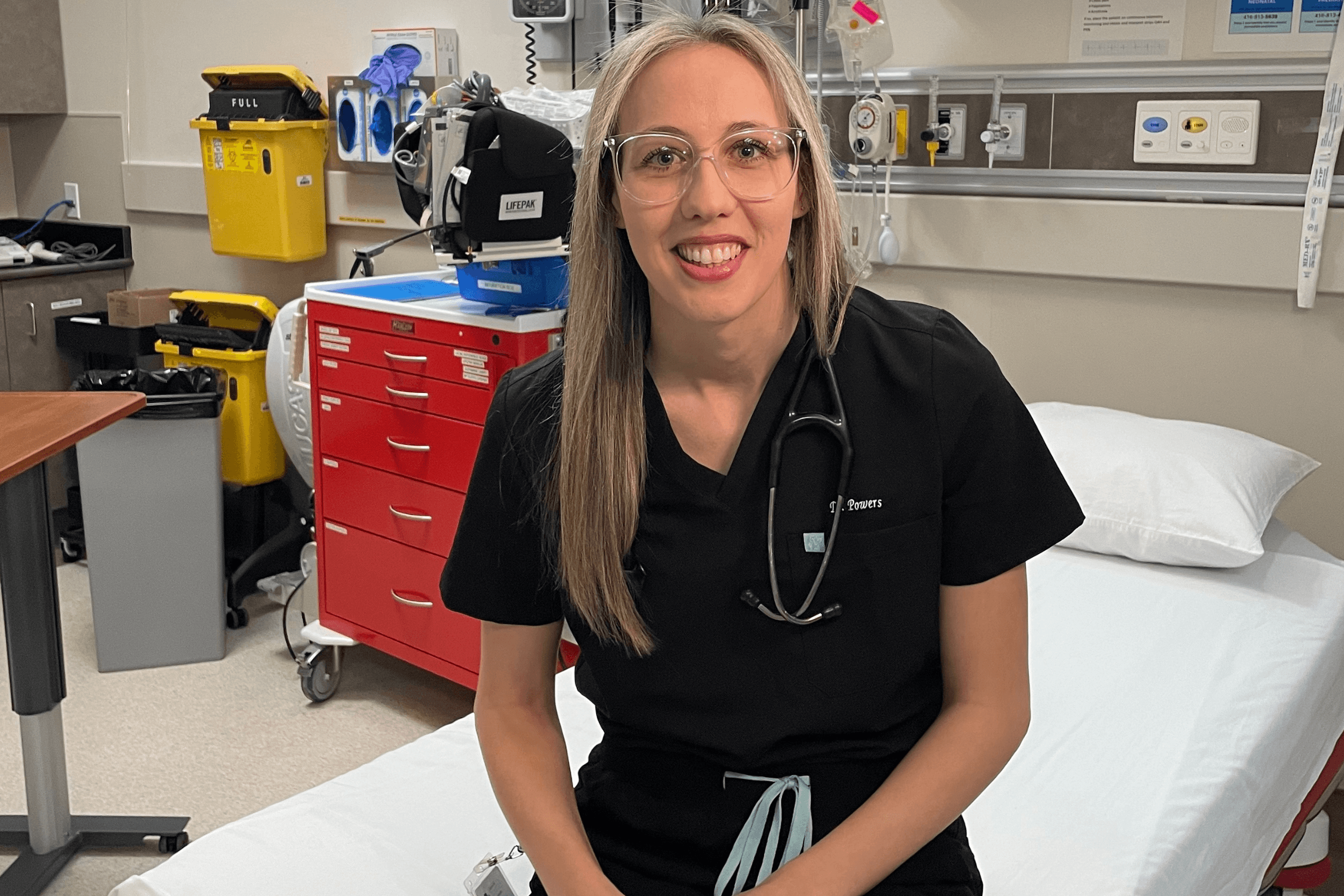
That need is deeply personal for Dr. Chantal Powers, who first experienced the impact of rural health care while playing on the floor in her parents’ dental clinic in Northern Ontario.
“I saw the challenges that the people coming through the doors faced, especially in terms of cost and how far they had to travel,” says Powers, currently a family medicine resident in Northern Ontario School of Medicine University’s (NOSMU) rural generalist pathway program.
Training the next generation of rural doctors
This experience inspired Powers to pursue rural medicine and encourage others to follow her path.
“Because there are so few of us, I would say that compared to urban medical students, we get the chance to be far more hands-on at a much earlier stage,” says Powers, who is currently based in her hometown at the Espanola Regional Hospital and Health Centre. “The scope of what we learn is also different, because with so few specialists here we have to have a very broad skill set.”
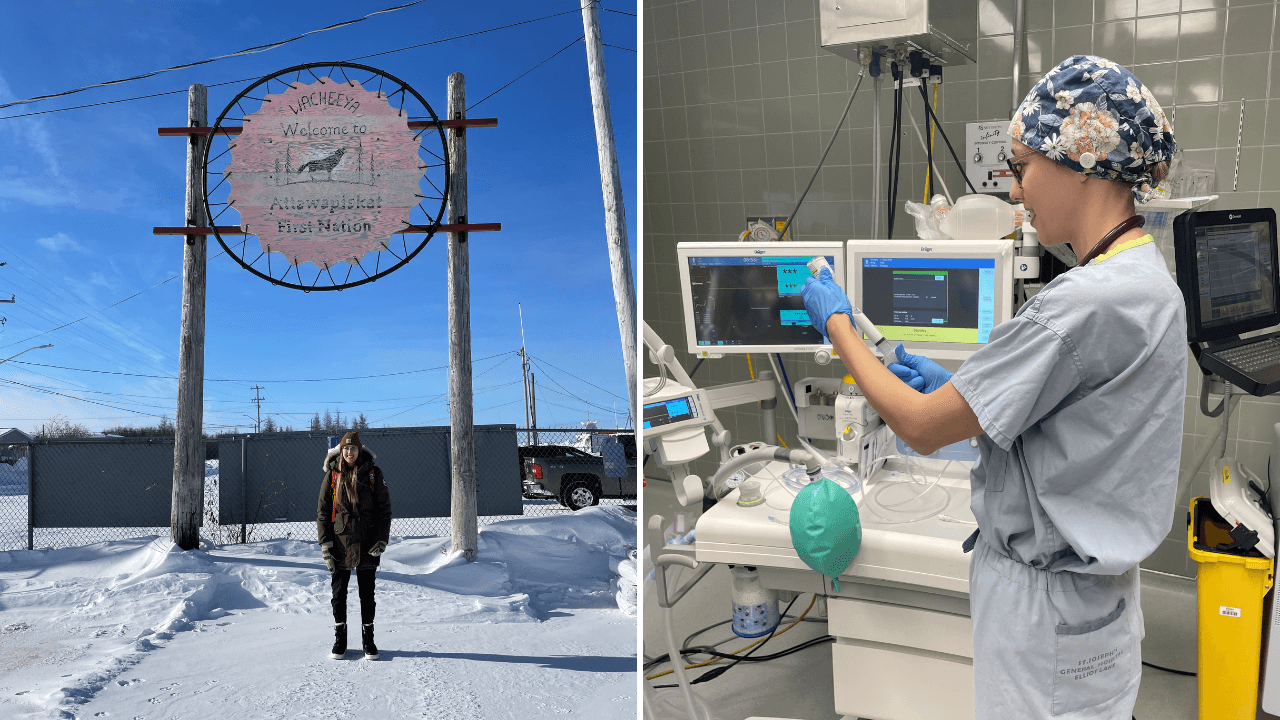
NOSMU’s unique rural generalist pathway program is specifically designed to help improve access to health care in Northern Ontario by supporting learners who want to be generalist family doctors. The program provides the enriched learning, mentorship and leadership development required to practise in low-resource rural, remote and Indigenous communities.
According to a 2024 report from the Canadian Medical Association, lack of access to health care, especially in rural areas, is part of why Canada is experiencing a “severe health care crisis.”
“In Espanola, where I grew up, I didn’t have a family doctor for 15 years, and that is still the case for hundreds of people here,” says Powers. “It’s pretty incredible to think about the impact I could have when I graduate. Not only the hundreds of potential patients, but also in emergency room settings, which is really exciting.”
Empowering health care workers across Canada
The NOSMU rural generalist pathway program recently received support from RBC Foundation to help increase undergraduate enrolment and support skills development for family medicine residents undertaking rural training. The goal is to help achieve a more sustainable workforce and provide the region with more inclusive access to health care.
Many internationally trained health care professionals practise in underserved rural and remote communities, helping fill critical gaps where doctors and nurses are in short supply. Improving rural health care requires both training rural specialists and supporting newcomer professionals who serve these areas. The donation to NOSMU complements RBC’s commitment to Windmill Microlending (helping 850 internationally trained physicians afford the cost of recertifications to restart their careers in Canada) and the Nanji Foundation School of Nursing at Seneca College.
“At RBC, we believe a health care system that works for everyone requires more than investment—it requires commitment and collaboration,” says Andrea Barrack, senior vice-president, sustainability and impact, RBC. “When we support people and skill-building, we don’t just help solve workforce challenges—we help remove some of the barriers preventing Canadians from getting access to the care they deserve.”
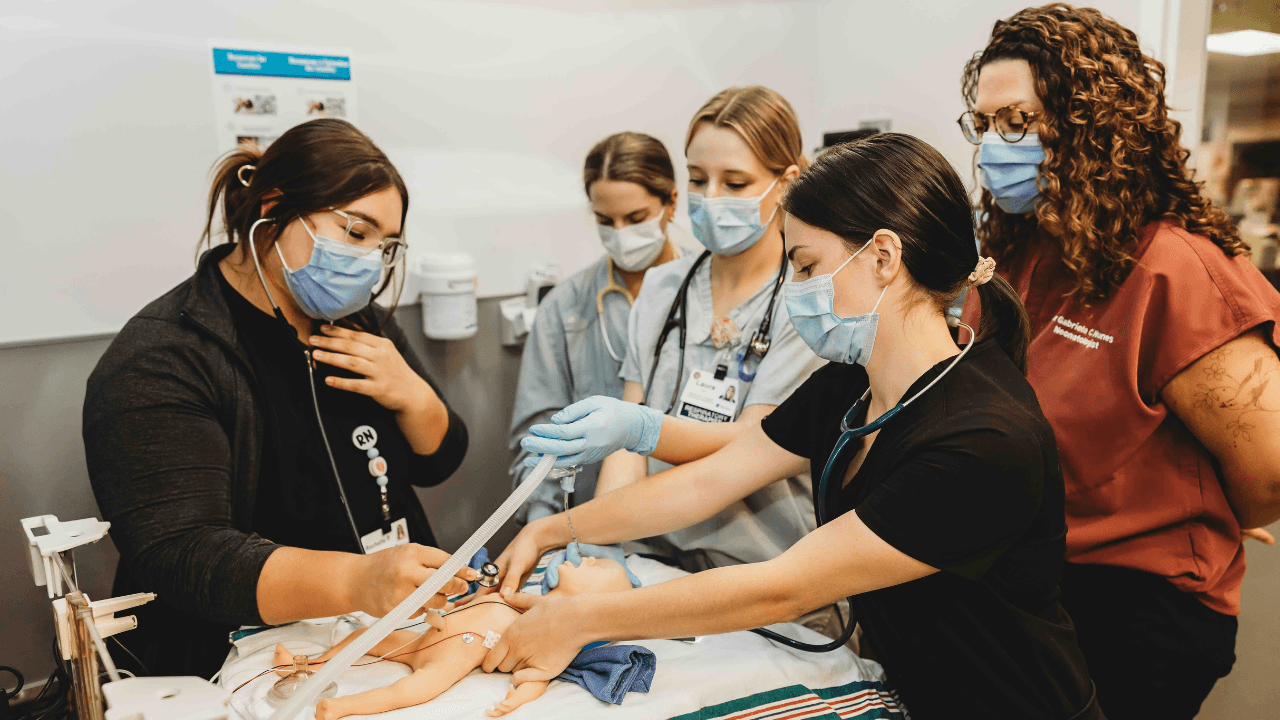
Responding to Canada’s health care crisis, RBC and RBC Foundation are committing millions of dollars in single- and multi-year donations. These funds support upskilling opportunities for staff, infrastructure upgrades in nearly 100 Canadian hospitals and putting more internationally trained physicians and nurses into the labour force.
St. Joseph’s Healthcare in Hamilton, Ont., will use its recently announced donation to help train health care professionals in robotic surgery.
At Maisonneuve-Rosemont Hospital in Montreal, Que., RBC Foundation is helping to provide tools so that its health care providers can more easily overcome cultural and language-related barriers faced while treating patients.
Hospitals in other parts of the country are using the support for everything from purchasing training equipment, like CPR mannequins and IV auscultation simulators, to subsidizing the costs associated with charge nurse and emergency department nurse certifications.
Creating spaces for healing and healthier communities
In addition to enabling access to care and skills development in the health care sector, the RBC Foundation Community Spaces Grant is making the actual physical spaces where health care happens more sustainable and accessible.
In British Columbia, an RBC Foundation Community Spaces Grant is helping to renovate patient ensuite washrooms at Royal Inland Hospital in Kamloops, making them more accessible and mitigating infection risk. In Ontario, the new Prince Edward County Memorial Hospital is using its grant to install a solar panel system to create clean energy and reach net-zero carbon emissions.
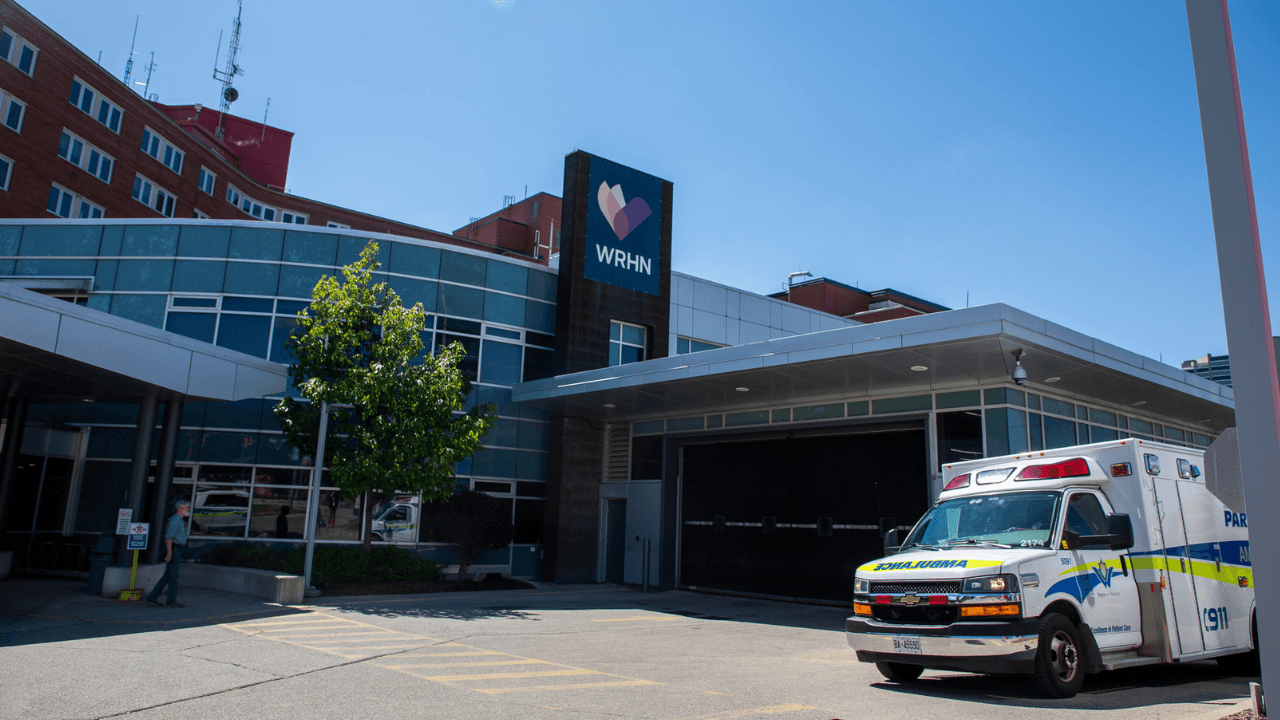
“Through the RBC Foundation Community Spaces Grant, we’re helping hospitals become more accessible and environmentally sustainable—upgrading signage so people can navigate with ease, widening doors to welcome everyone and installing solar panels that support healthier environments,” says Barrack. “This is just one of the ways we’re helping expand access to health care, breaking down barriers and creating spaces designed for healing and sustainability.”
From supporting skills development for nurses to helping put more physicians into the labour force to improving hospital infrastructure, RBC is strengthening communities by investing in the people, skills and infrastructure needed to keep Canadian communities healthy. These initiatives are part of RBC, RBC Foundation and RBC Foundation USA’s overall commitment to providing CDN $2 billion in community investment by 2035. As one of Canada’s largest corporate donors, RBC is working with thousands of charities and not-for-profits across Canada and beyond.
Related Posts

The beauty industry’s innovative shift to inclusivity and sustainability

Boosting Canadians’ employability for the clean economy

What went down at BMO’s BlueCarpet Premiere of Spotlight - Women in Asset Management

An insider’s guide to epic winter exploration in the Yukon
Get the Best of Maclean’s straight to your inbox.
Sign up for news, commentary and analysis. Join 60,000+ Canadian readers.