
Shingles: An Unexpected Wake-up Call for a Busy Working Mom

Deanna didn’t have time for a health crisis. Between the demands of motherhood and her career, she needed all her strength all the time. So, when her lower back started hurting again, she promptly went to visit her chiropractor. Ever since dealing with a serious car accident a few years prior, these appointments had become a regular entry in her already overflowing calendar.
“At the appointment, my chiropractor made an adjustment and then asked me if I felt any better,” Deanna recalls. “I told her, no, it still hurts, so she asked to take a look at my back. She took one glance at my lower back, looked me in the eye and said, ‘Kiddo, you’ve got shingles.’”
Deanna’s chiropractor sent her straight to the doctor, and the diagnosis was quickly confirmed. The varicella zoster virus had been lying dormant in her nerves for decades — ever since a childhood bout of chicken pox — and now it was back with a vengeance. Deanna was in shock. She’d thought she had years to go before she needed to start worrying about shingles. But, as her doctor explained, age isn’t the only risk factor, and while treatment options for shingles are available, they may not be suitable for everyone.
Stress can trigger a shingles outbreak
“Apparently stress can bring it on,” says Deanna. “And if you run down a list of the various causes of stress, I think I had most of them going on in my life at the time. I was still recovering from a car accident, I was experiencing some hormonal changes, and I was grieving the recent deaths of several friends and family members. I had my kids home from school full time, all while advocating for and supporting adults with intellectual and developmental disabilities (IDD) in the developmental services sector in Toronto. I was also actively providing resources and promoting sexual health to adults with IDD who were high risk in the community. I don’t do light work. I know I wasn’t prioritizing my own health and had no way to release the stress, so it all just kept piling on.”
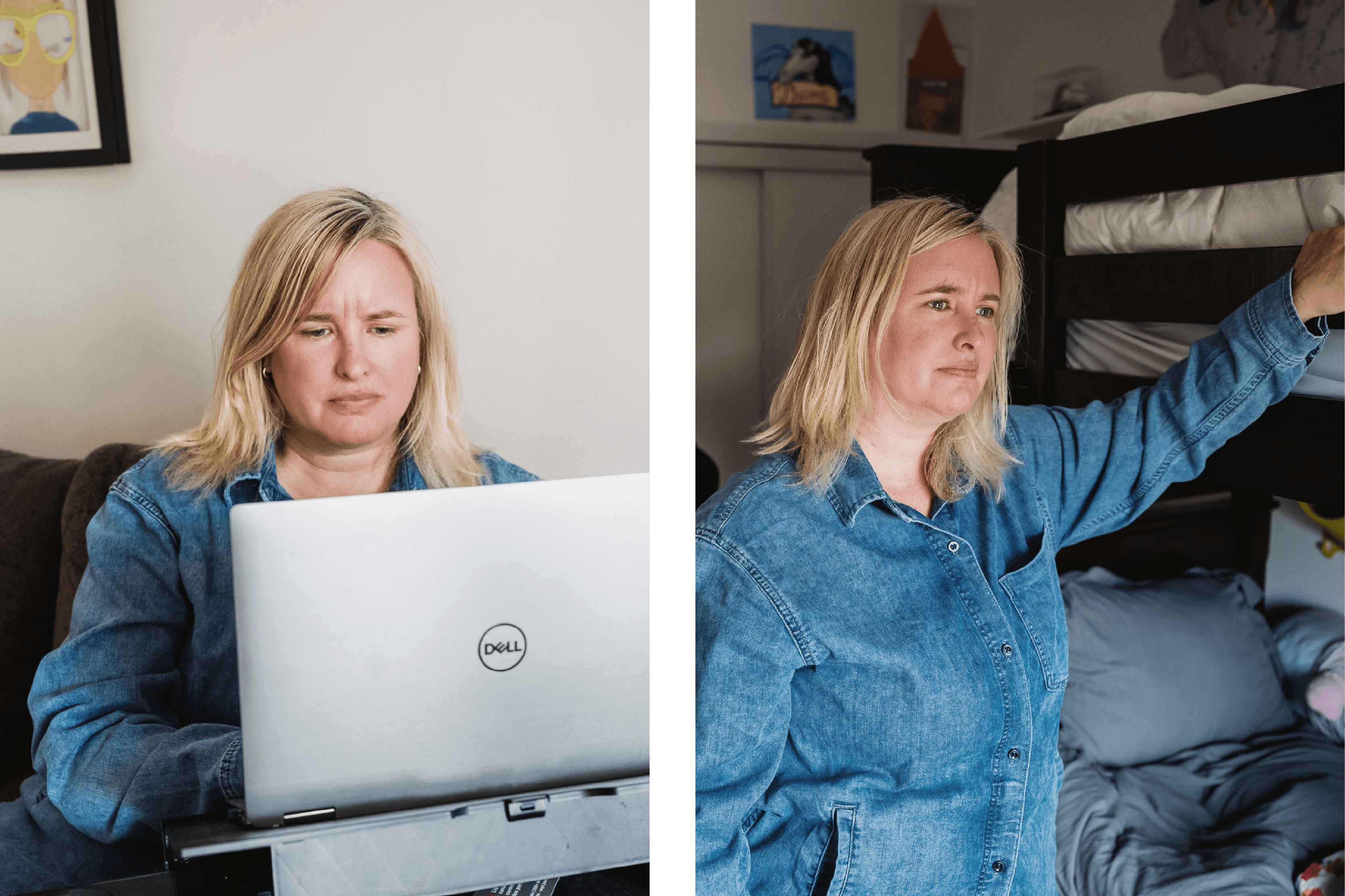
It was the worst possible timing for shingles to flare up seemingly out of nowhere, but everything had to be put on hold. The blistering rash that started on Deanna’s lower back quickly grew until it wrapped around her waist almost to her belly button, and then began to spread to her lower right leg. And the rash itself was just the tip of the iceberg when it came to the actual experience of shingles, as the inflammation extended deep into Deanna’s nervous system, which caused excruciating pain and crushing fatigue.
Unbearable pain without respite or relief
“I was completely flat out for days,” Deanna says. “The pain was so immense, life became impossible. No word of a lie, it felt like someone was taking a blowtorch to my skin. I’ve since described it to other moms by saying it’s the only pain I’ve ever experienced that’s on the same level as childbirth, except it lasts for days or weeks and there are no breaks.”

“It affected my ability to work and care for my kids,” Deanna continues. “I was fortunate that it landed on a Friday and that my kids were going out of town that weekend, so I was able to mostly suffer through the very worst of it at home with the support of my partner. I don’t know what I would have done otherwise.”
One in three adults who’ve had chicken pox will get shingles — but you can help prevent it
Looking back on a shingles experience that was so jarring in so many ways, Deanna highlights that one of the most upsetting parts was how unprepared she felt for it. She had heard there was a vaccine to help prevent shingles, but no one had ever suggested that she consider it. She knew it wasn’t something you catch, and she was aware that having had chicken pox as a child put her at risk, but she’d never had cause to think too hard about who shingles affects or why. Frankly, with everything going on in Deanna’s life, the only way shingles prevention could have ever broken the top 10 list of things competing for her attention would have been if people—whether peers or health care providers—had been talking about it. But there was never a discussion of shingles within her circle until she got it herself.
“I’d literally never had a conversation about shingles with my peers,” Deanna says. “It wasn’t even on my radar. Since having this experience, though, I’ve been making a point of talking about it, and I’ve been surprised to discover how many other people I know have had shingles without ever saying anything about it. We need to normalize this conversation so other adults over 50, like me, know they may be at risk, and so they know there’s a vaccine that can help prevent shingles.”
Shingrix is a vaccine that helps protect against shingles (herpes zoster) in adults 50 years of age and older and in adults 18 years and older who are or will be at increased risk of shingles due to immunodeficiency or immunosuppression caused by known disease or therapy. One hundred per cent protection cannot be guaranteed, and adverse reactions may occur. Shingrix is not for prevention of chicken pox or for the treatment of herpes zoster and does not treat or prevent complications.
Talk to your health care professional to see if Shingrix is right for you. Full product information can be found at www.shingrix.ca. To report an adverse event, please call 1-800-387-7374.
This article was created by Patient Voice with support from SHINGRIX.
105026 07/25
Related Posts

The beauty industry’s innovative shift to inclusivity and sustainability

What went down at BMO’s BlueCarpet Premiere of Spotlight - Women in Asset Management

Boosting Canadians’ employability for the clean economy

An insider’s guide to epic winter exploration in the Yukon
Get the Best of Maclean’s straight to your inbox.
Sign up for news, commentary and analysis. Join 60,000+ Canadian readers.