The Co-op Advantage: How York University Prepares Students for Career Success

For students to prepare for the workplace, learning in the classroom is only one part of the journey. Students and employers are looking for educational paths that blend strong academic foundations with real-world experience and York University has made that connection a cornerstone of its approach. The university offers more than 36,000 experiential education opportunities each year across co-ops, internships, community placements and capstone projects.
These opportunities give students the chance to apply their learning, build industry networks and graduate with the confidence and experience employers are looking for. And with three campuses across Toronto, students are uniquely positioned to access job opportunities in one of Canada’s most dynamic economic hubs. The university offers opportunities for students in most areas of study including commerce, science and engineering all the way over to those in social sciences and liberal arts programs.
For Tri Nguyen, a fourth-year Information Technology student within the Faculty of Liberal Arts and Professional Studies (LA&PS), that combination of academic depth and workplace exposure was exactly what he wanted when he chose York University.
“I wanted an education that prepared me to understand both the technical and organizational sides of technology,” he says. “York’s curriculum aligned very well with that goal and the co-op opportunities played a role in my decision. Learning hits differently when you can actually apply it in a real workplace.”
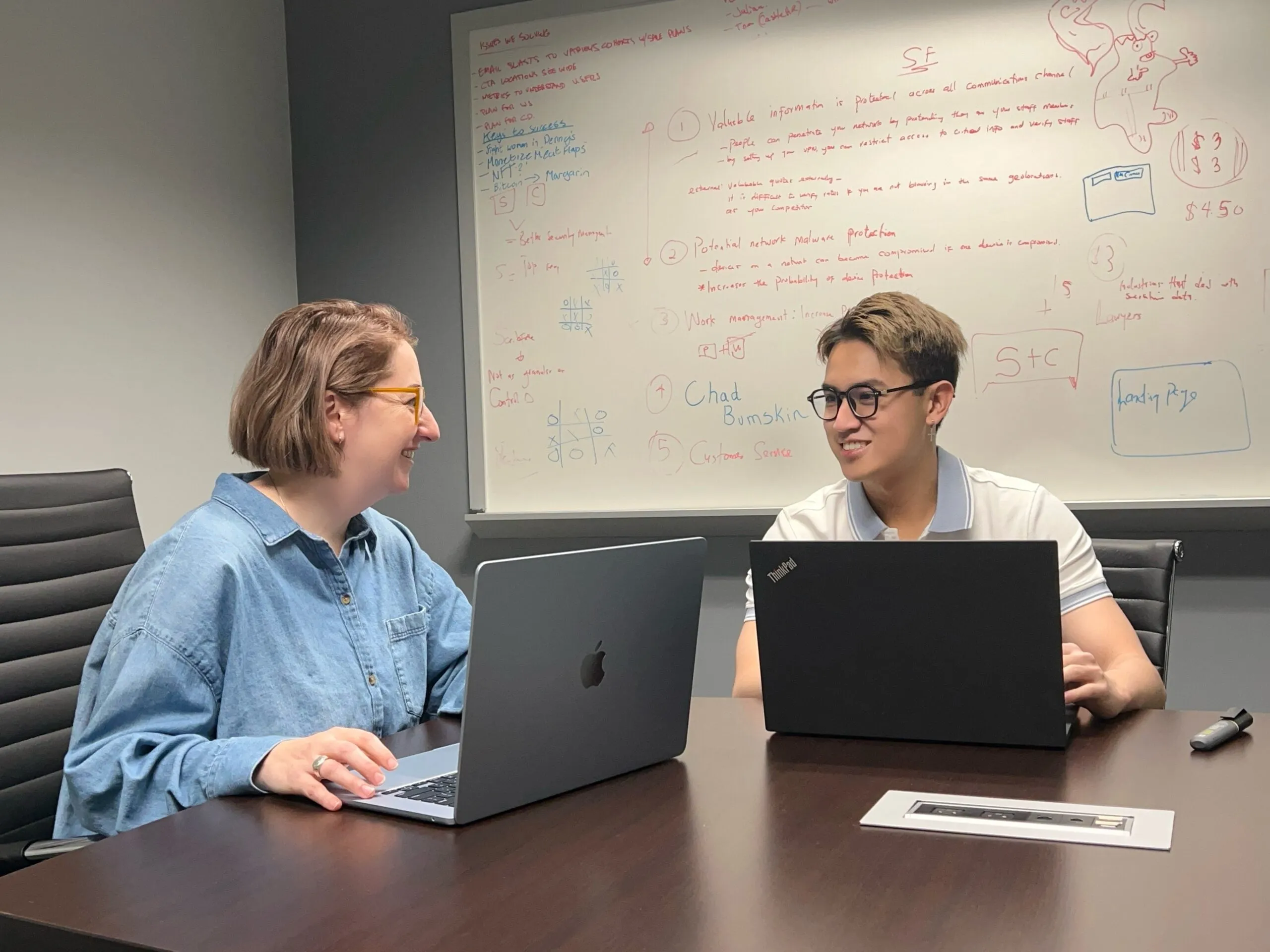
Today, Tri is completing a paid co-op as a web content and CMS intern at Windscribe, a Toronto-based internet privacy and security company, where he’s gaining hands-on experience that’s already shaping his future career direction.
Finding the right opportunity, and the right support
York University’s co-op offerings are designed to be flexible, affordable and accessible. More than 70 per cent of the school’s programs offer a paid co-op option; students can pursue terms of four, eight, 12 or 16 months; and co-op fees are among the lowest in Ontario.
Perhaps most importantly, York’s exclusive co-op job board makes opportunities easy to find.
“I found my co-op placement at Windscribe through the LAPS Co-op Program,” Tri says. “The job board made it easy to discover roles that matched my interests. The workshops and support sessions especially on resumes, cover letters and interview skills were extremely helpful.”
He also credits the program’s career fairs and networking events with helping him understand what employers look for and how to present his strengths.
Real-world learning in action
In his role with Windscribe’s growth team, Tri works daily within Directus, the company’s content management system. His responsibilities include editing, formatting and publishing SEO-optimized materials, reviewing content for clarity and consistency and building new web pages with proper structure, metadata and accessibility in mind. He also supports the team’s visual production by generating photorealistic AI images to support new content.
“The most meaningful part has been contributing to the website’s overall content quality and search visibility,” Tri says. “I’ve gained hands-on experience in keyword research, on-page optimization and tracking performance metrics. Seeing how classroom concepts come to life in a production environment has been eye-opening.”
This kind of applied learning is the heart of York University’s experiential education model: students not only strengthen their technical skills, but also learn collaboration, communication and project planning in real workplace settings. These are skills that set students apart when entering the job market.

How employers see the York advantage
For Windscribe, bringing on a York University co-op student was an easy decision. “York has a solid reputation for turning out job-ready students,” says Rebecca Rosenberg, a growth team member at Windscribe — and a York alum herself.
“When we interviewed Tri, it was clear the program doesn’t just focus on theory. There was a good balance of technical knowledge, communication skills and a willingness to learn.” That blend of readiness and initiative stood out immediately to Rosenberg. “Tri was comfortable jumping into real work with real impact, instead of needing everything broken down into tiny ‘school-style’ tasks. That kind of readiness is exactly what we look for.”
One of Tri’s most impactful contributions was helping the team build out more than 250 new SEO-driven pages, a major project that directly supported the company’s growth goals. “This wasn’t a side project,” Rosenberg says. “Tri structured pages, ensured discoverability, created AI images and worked within our workflows to get everything live. It was real, meaningful work.”
For students, projects like this build technical experience but also something equally valuable: ownership. “Students in these roles learn how marketing, product and tech intersect,” Rosenberg says. “They get to see a project go from idea to live on the site. That’s the kind of experience they can point to in future interviews.”
A win-win for students and industry partners
York University’s co-op students are supported by a network of thousands of employers who recruit on campus each year, from startups to global organizations across finance, tech, business, government, healthcare, media and more.
For employers, hosting a co-op student offers an infusion of energy and perspective along with the chance to build a future talent pipeline. “A co-op term is a great way to see how someone works in real life,” Rosenberg explains. “If it’s a good match, hiring becomes much easier. In fact, we’ve already brought Tri back for a second term.”
The experience pays off for students, too: 92 per cent of York graduates are employed within two years of graduation, a statistic driven in part by the university’s emphasis on applied, career-focused education.
Shaping the future, one co-op at a time
For Tri, the impact of his co-op experience goes well beyond a single work term. “Working hands-on with web content and CMS platforms has shown me how much I enjoy the intersection of technology, content and user experience,” he says.
Through the role, he also discovered an interest in backend development after collaborating with Windscribe’s engineering teams. He’s now expanding his skills by studying Go, the Gin framework and other backend tools — knowledge he hopes to apply in future roles.
“I’d like to pursue a career where I can contribute to both frontend and backend development,” he says. “This experience has given me the confidence and direction to pursue that path.”
York University’s co-op programs are designed to help students translate learning into action, whether they’re building technical expertise, deepening industry knowledge or exploring new career possibilities. With customizable work terms, paid opportunities, strong employer partnerships and a learning environment rooted in real-world relevance, students have the tools they need to succeed.
For today’s learners and tomorrow’s leaders, that’s an advantage that lasts long after graduation.
Learn more about the endless possibilities offered by York University’s Faculty of Liberal Arts and Professional Studies.
Related Posts

Boosting Canadians’ employability for the clean economy

The beauty industry’s innovative shift to inclusivity and sustainability

What went down at BMO’s BlueCarpet Premiere of Spotlight - Women in Asset Management