Beyond the Bedside: The Evolution of Nursing at UCalgary

Experiencing trouble speaking and weakness on one side of their body, a patient is rushed into an emergency room.
Nurses must quickly conduct a neurological assessment for early recognition and intervention in what turns out to be a stroke.
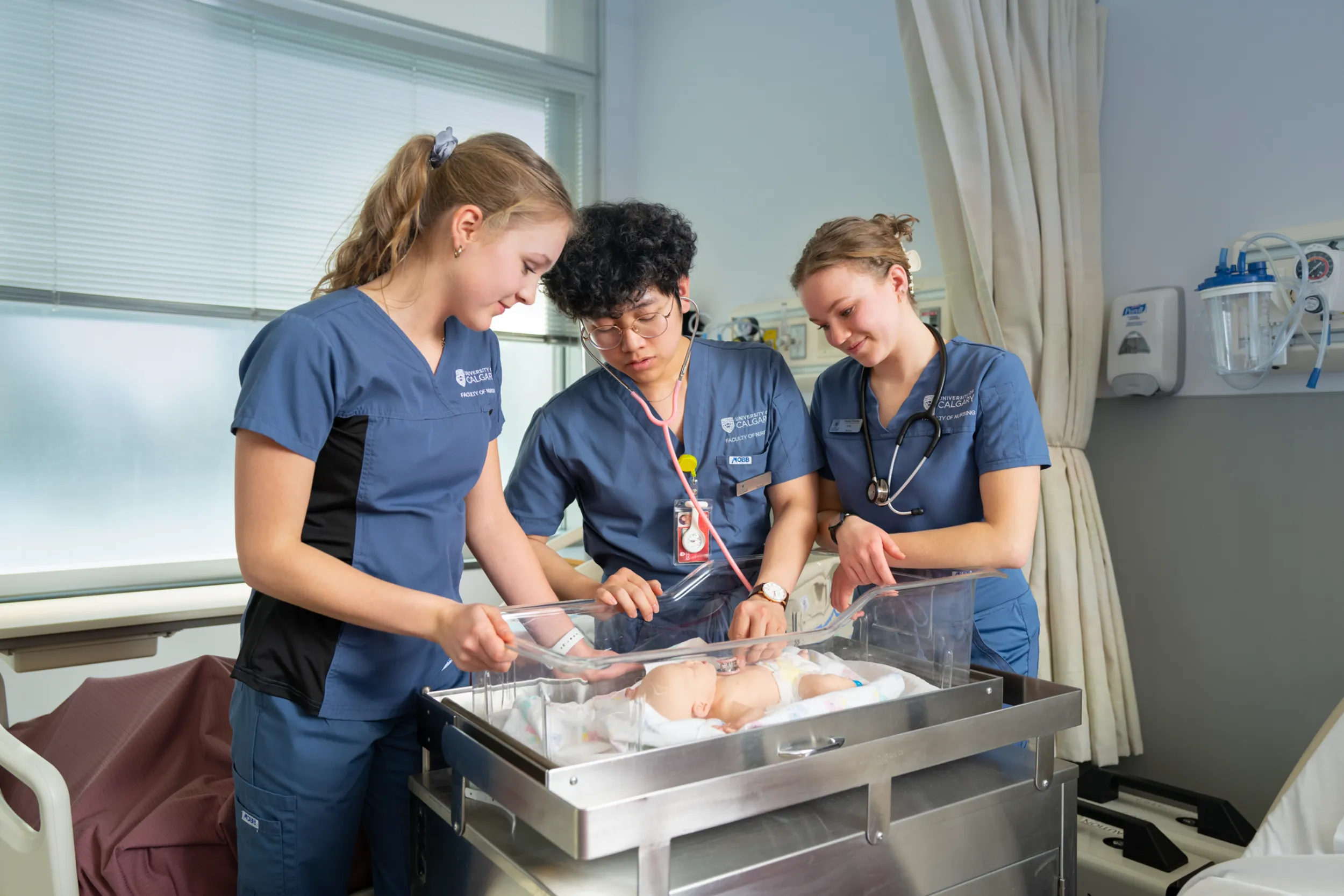
While it’s something seen regularly in a hospital setting, it’s a first time for students inside the Clinical Simulation Learning Centre at the University of Calgary’s Faculty of Nursing.
A 13,000-square-foot state-of-the-art lab provides a variety of experiential learning opportunities—from the most minor of injuries to one person to catastrophic emergencies with numerous patients—so undergraduate students are confident in their knowledge and skills when they enter the workforce.
A decorated associate professor with accolades including the Canadian Nurses Association Order of Merit for Nursing Education and Canadian Association of Schools of Nursing (CASN) Award for Nursing Education Excellence, Dr. Lorelli Nowell, MN, PhD, sees first-hand the benefits of hands-on experience at the undergraduate and graduate level.
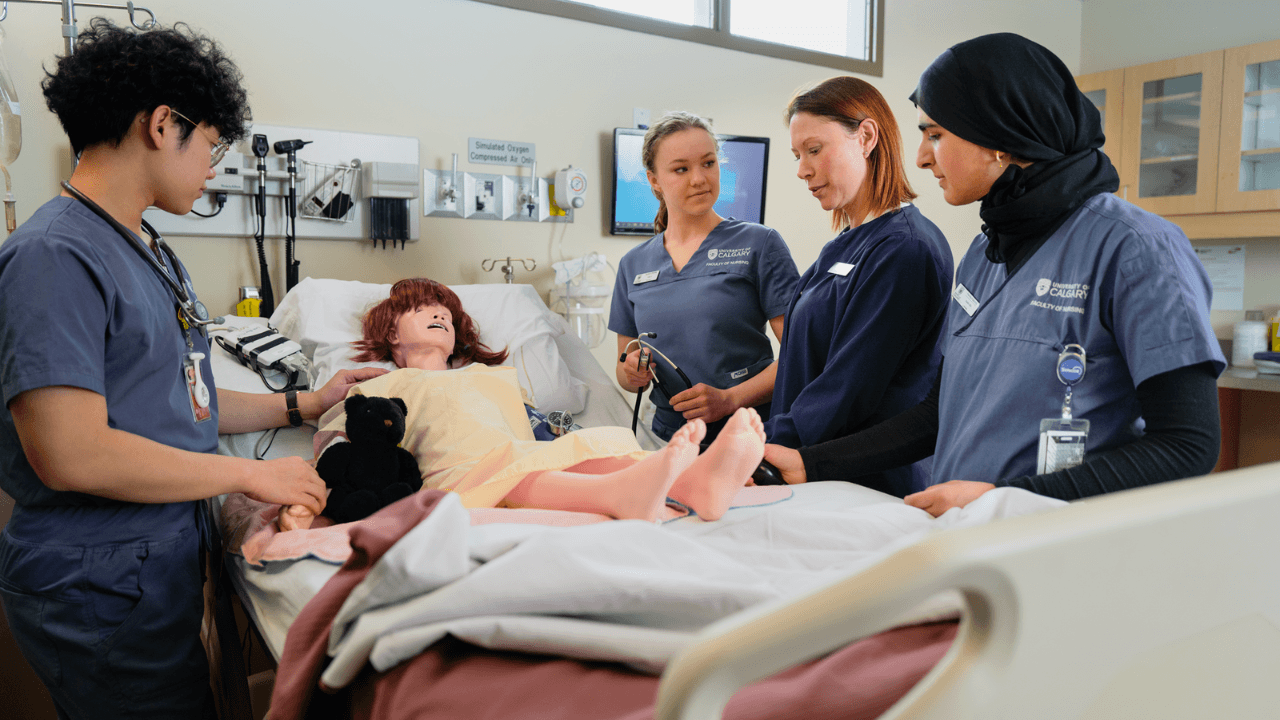
“We are able to put the students in situations that are high-stress and high-risk while no one is getting hurt,” says Nowell, an associate professor and the associate dean of graduate studies in the Faculty of Nursing.
“Students learn to read a room, pick up on warning signs and make quick decisions. Then we sit down together afterward to talk through what happened so they can go back in and do it better.”
The “beyond the bedside” mindset has permeated every facet of the faculty, allowing undergraduate and graduate students to gain the confidence to make life-saving decisions in the emergency room or life-changing discoveries through their research.
Birth of a faculty
Nurses have always been at the front lines of the health-care system, taking on significant responsibilities.
From triaging injuries and illness and conducting initial assessments to monitoring vital signs, administering medication, advocating for patients and providing emotional support to families in crisis, nurses are often the first and most constant presence at a patient’s side when the unexpected happens.
Through the profession’s evolution, the Faculty of Nursing has been leading the way in inspiring nurses through its teaching and research.
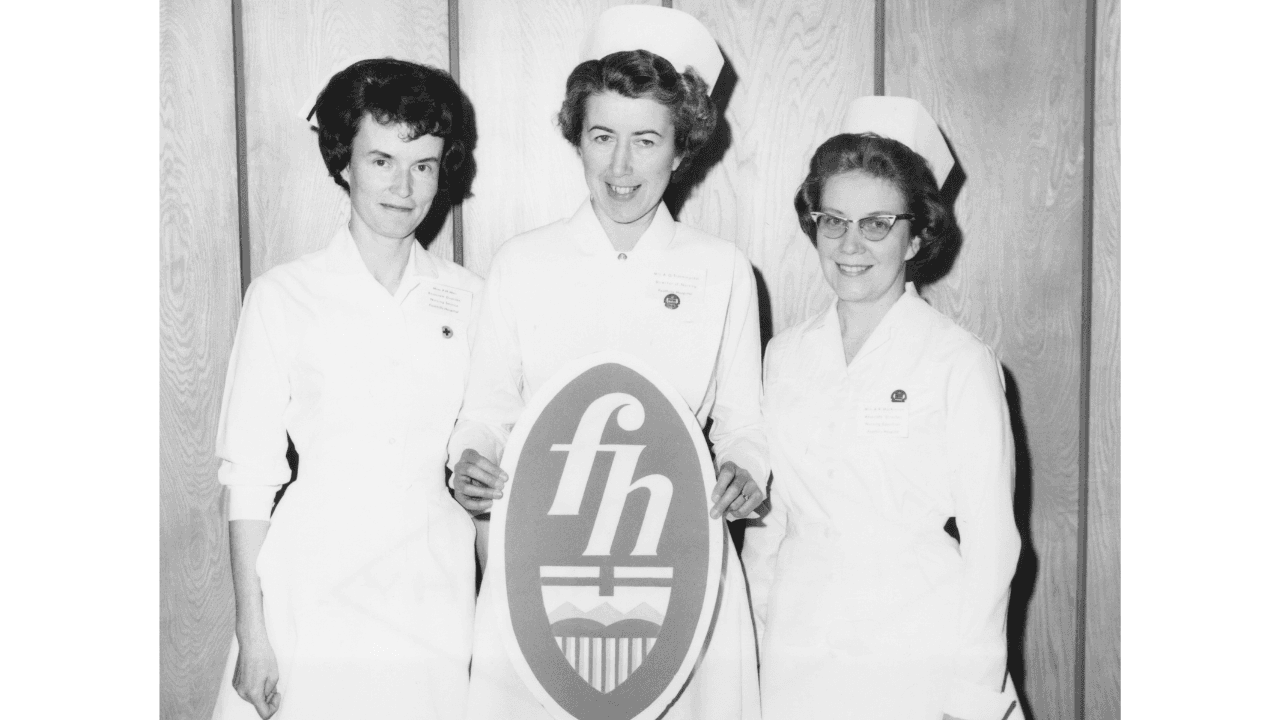
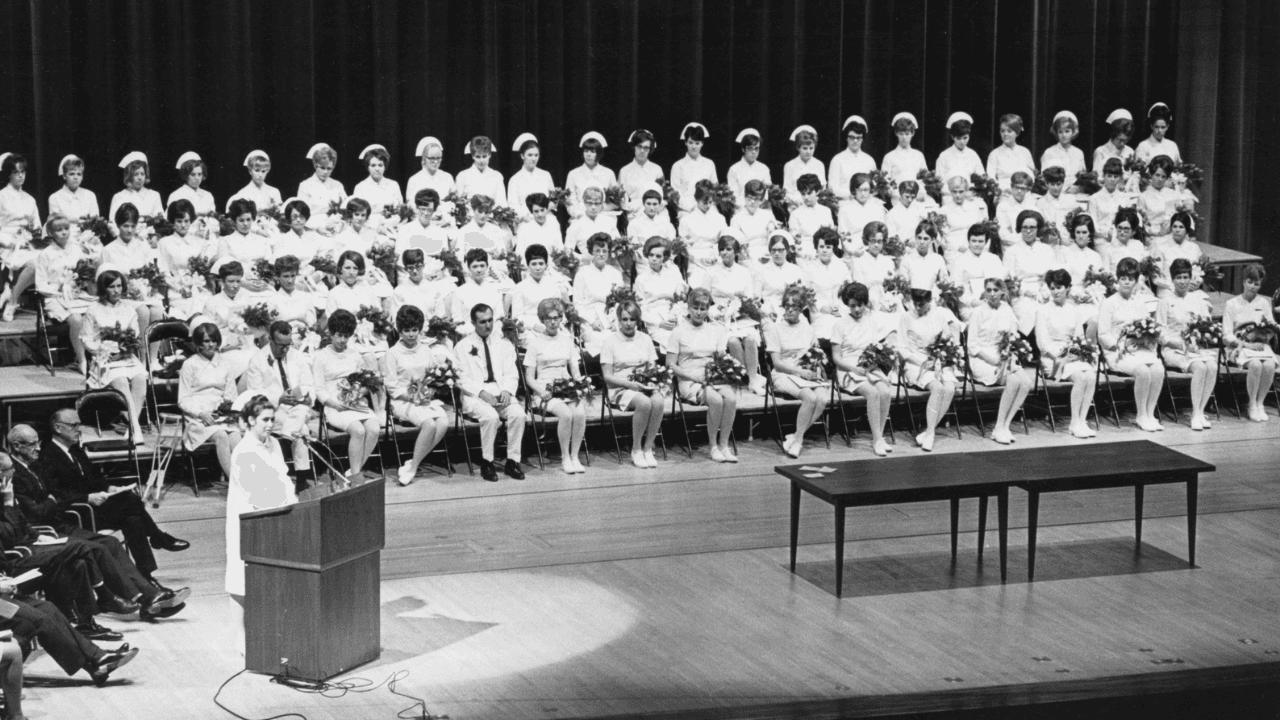
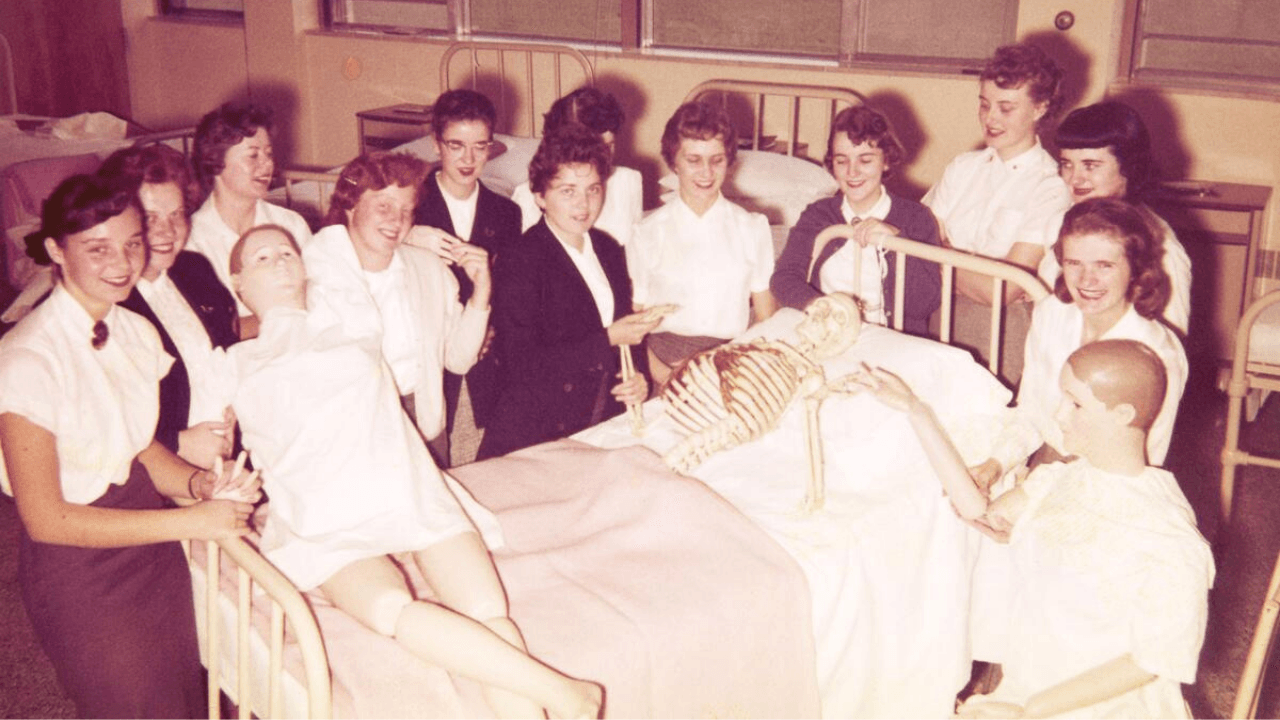
Prior to the 1970s, nurses were traditionally trained in a hospital setting. Higher-education options became available in Calgary in 1954 when bachelor of science nursing students from the University of Alberta took their first year of courses here.
After gaining autonomy in 1966, the University of Calgary opened its new School of Nursing in 1970 to help train nurses for two recently built hospitals.
Evolving into the Faculty of Nursing in 1975, it has expanded in the half-century since and now, as Nowell notes, offers a range of postgraduate routes of study and is one of only two Canadian institutions to offer a doctor of nursing degree, designed for those in mid-senior health-care leadership.
Learning with new experiences
While the role and prominence of nurses in the health-care system has evolved, one thing has stayed the same: community service remains at the heart of all that nurses do.
Nowell says nursing extends far beyond the walls of traditional hospitals. You’ll see nurses in schools, libraries, community health centres, food banks, correctional facilities, remote and rural communities, corporate offices and on the front lines of public health and disaster relief.
She says those varied experiential learning opportunities have become central to how students experience nursing before they graduate, giving them the chance to discover which area of care they are most passionate about and step into their career ready to make a meaningful impact.
The range of experiences also stretches to communities of different sizes, as proven by the massive success of the Rural and Indigenous Community Route program.
With placements in Drayton Valley, Wainwright and Siksika, Alberta, among other towns, the program, Nowell says, will serve its respective communities while giving students the chance to potentially work where they are from.
“We’re building nursing capacity in rural communities while not straining the system in the available clinical placements in urban centres,” she says. “I think the idea that people can live and work in their rural communities and become a nurse where it wasn’t possible before is positive in so many ways.”
A seat at the leadership table
While nurses have gained more autonomy and respect in Canada and many other countries, Nowell admits there are still gaps to address.
Nurses make up the largest segment of the health-care workforce. However, she says, that fact doesn’t always equate to a strong nursing voice around the leadership table.
It’s part of what Nowell and other faculty members are trying to impart to their students: to continue advocating for themselves and their profession to hopefully shift the system.
“We’re sending nursing graduates out into the world ready to think differently and lead, but the health-care system can be slow to change, and that disconnect between what nursing students have been prepared to do and what they are allowed to do can be a real source of frustration,” she says.
“Nurses have earned a place in the conversations and decisions that shape health care, and we are graduating nurses who are ready to claim that place, because the perspective and expertise they bring to the table is too valuable to be overlooked.”
“We’re trying to create these innovative nursing leaders, and they’re graduating into a system that might not be ready for them to be able to do those types of things, which is a challenge for them,” she says.
“We deserve a seat at the table, and we’re graduating nurses who are asking for those seats, as we have a lot to offer. I think it’s time for people to listen to us and take our point of view into consideration.”
The school is also finding ways to better equip students with the tools needed to combat the stresses of the job, which has led to an attrition problem in recent years.
The faculty’s Nurse Practitioner (NP) Mental Health and Wellness Clinic, launched in 2021, was created to support the well-being of students, faculty and staff by encouraging support through community.
Leading health care into the future
During the COVID-19 pandemic, many people would go to their decks and balconies to cheer and bang on pots and pans to make noise for health-care providers at shift change.
Nowell says nurses are respected in the community, and the forward-thinking approach taken in the programs and research at the Faculty of Nursing have her excited about the future.
She’s impressed by the wealth of research being done to make the lives of patients and their families better.
As just two examples, faculty members are studying the impacts and stigmas between breast-fed and formula-fed babies, and how cuddling with babies impacts a child’s development.
While the system might not be ready for an exponential amount of change right away, Nowell says students are also keen to make their voices heard.
“We are preparing nurses who will graduate with the leadership and problem-solving skills needed to tackle the real challenges facing our health-care system,” Nowell says. “I truly believe that as these nurses move through their careers, their influence will spread throughout the system and drive the kind of meaningful, lasting change we so desperately need.”
Just like in the emergency room with the stroke patient, the future nurses Nowell sees every day are ready to use their knowledge and skills to grow their leadership role in health care.
Related Posts

An insider’s guide to epic winter exploration in the Yukon

What went down at BMO’s BlueCarpet Premiere of Spotlight - Women in Asset Management

Boosting Canadians’ employability for the clean economy

The beauty industry’s innovative shift to inclusivity and sustainability
Get the Best of Maclean’s straight to your inbox.
Sign up for news, commentary and analysis. Join 60,000+ Canadian readers.