
Training the Leaders Who Will Shape Canada’s Health Care System

The state of Canadian health care can be succinctly summarized: it’s complicated.
On the positive side, there are new technologies and innovations streamlining patient care and improving outcomes, and massive investment in health care, nearly $400 billion or 12.7 per cent of our GDP, according to the Canadian Institute for Health Information’s National Health Expenditure Trends report for 2025. But health care professionals are also dealing with greater complexity than ever before: shifting factors that directly influence Canadians’ needs and health outcomes, and ever-growing strains on health care workers, to name just a couple of the forces at play.
As a long-time educator and associate dean of the Master of Health Care Management (MHCM) program at University of Niagara Falls Canada, Dr. Secil Ertorer is preparing the health care leaders of our future, starting with a deep understanding of where health care begins. Hint: we need to focus on patients’ needs long before they ever set foot in a clinic, doctor’s office or hospital.
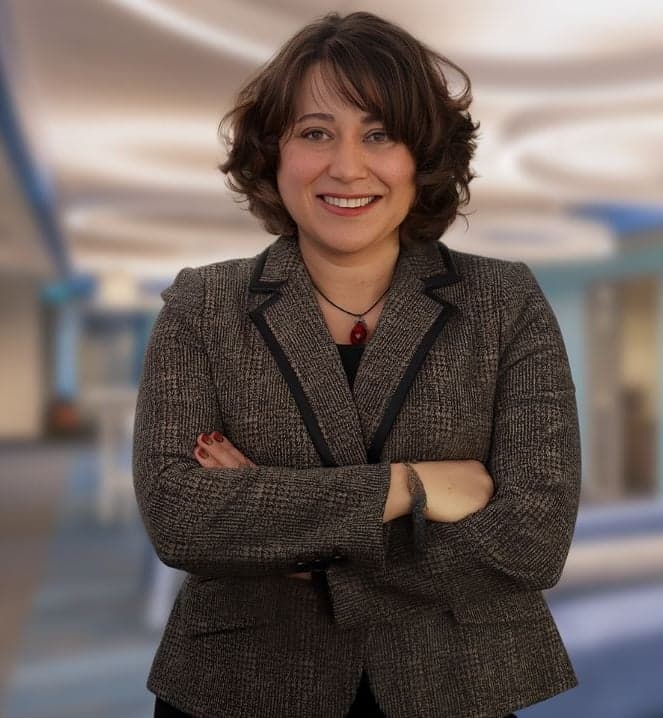
“Clinical care matters,” says Dr. Ertorer. “But it accounts for only a fraction of what actually makes people healthy or sick.” Social determinants of health, such as income, housing, food security, education and working conditions, play a critical role in shaping outcomes. At University of Niagara Falls Canada, this understanding lays the foundation for a robust experiential immersion designed to develop the strategic, financial and operational skills our health care system demands.
Changing populations, changing needs
Dr. Ertorer believes the evidence is clear. “Social determinants don’t just explain why people get sick. They shape the entire arc. How a disease progresses, whether someone can follow a treatment plan, whether they come back for follow-up care.” Many Canadians also face systemic access barriers, including transportation, work schedules, child care and insurance complexities. Dr. Ertorer believes these usually land hardest on low-income communities, racialized populations, newcomers and people in rural areas.
Then there’s language. Canadians speak nearly 500 of them, according to census data. While we often think of language as simply a communication issue, it has a direct impact on health outcomes. According to Dr. Ertorer, “If patients cannot fully understand their health care providers, they are less likely to follow treatment plans, return for follow-up care or feel confident navigating the system. [And] cultural safety goes even deeper than that.” Dr. Ertorer also asserts that the gap is not always due to language and interpretation, noting, “It is also influenced by cultural perspectives on health care and the importance of building trust between patients and health care providers.”
Addressing complicated realities
Health care leaders must be able to navigate real complexity on the ground, and that’s where the MHCM program starts. “Drawing on my research with ethnic minorities and collaborations across the health sector, I see a clear gap between traditional management education and the realities of modern health care leadership,” says Dr. Ertorer.
Traditionally, graduates have brought a service-delivery mindset: they know how to identify a need, design a program and deliver it. But this approach can’t address the growing gaps in the system because it usually starts with an outsider view of those needs. “We can design all the right policies and frameworks at the system level, but if the person leading the organization does not understand the community they serve, their history, their barriers and their strengths, none of it translates into meaningful health care improvements,” says Dr. Ertorer.
The widest gap she sees right now is around community relationships. “Social determinants, cultural safety and equity are still treated as enrichment in many programs rather than core competencies,” says Dr. Ertorer.

“The system needs managers who can build genuine, sustained partnerships with communities, particularly Indigenous communities, racialized communities and newcomer populations,” says Dr. Ertorer.
That is where health care leadership training needs to go. It’s how to properly build on the core competencies of health care management programs in order to deliver a curriculum that truly prepares our next generation of health care leaders.
Rather than view the complexities as an insurmountable obstacle, Dr. Ertorer sees them as an opportunity.
According to her, it’s important to see where the disparities are. Otherwise, she says, “You can’t effectively allocate resources, design the right interventions or know your decisions are actually making a difference.”
The challenge for educators like Dr. Ertorer is no longer simply building awareness. It is developing leaders who can translate these principles into meaningful skill sets that improve decisions, build more effective and resilient organizations and, at the end of the day, deliver better care and outcomes for all.
Learn more about the Master of Health Care Management program at University of Niagara Falls Canada.
Related Posts

What went down at BMO’s BlueCarpet Premiere of Spotlight - Women in Asset Management

Boosting Canadians’ employability for the clean economy

The beauty industry’s innovative shift to inclusivity and sustainability

An insider’s guide to epic winter exploration in the Yukon
Get the Best of Maclean’s straight to your inbox.
Sign up for news, commentary and analysis. Join 60,000+ Canadian readers.