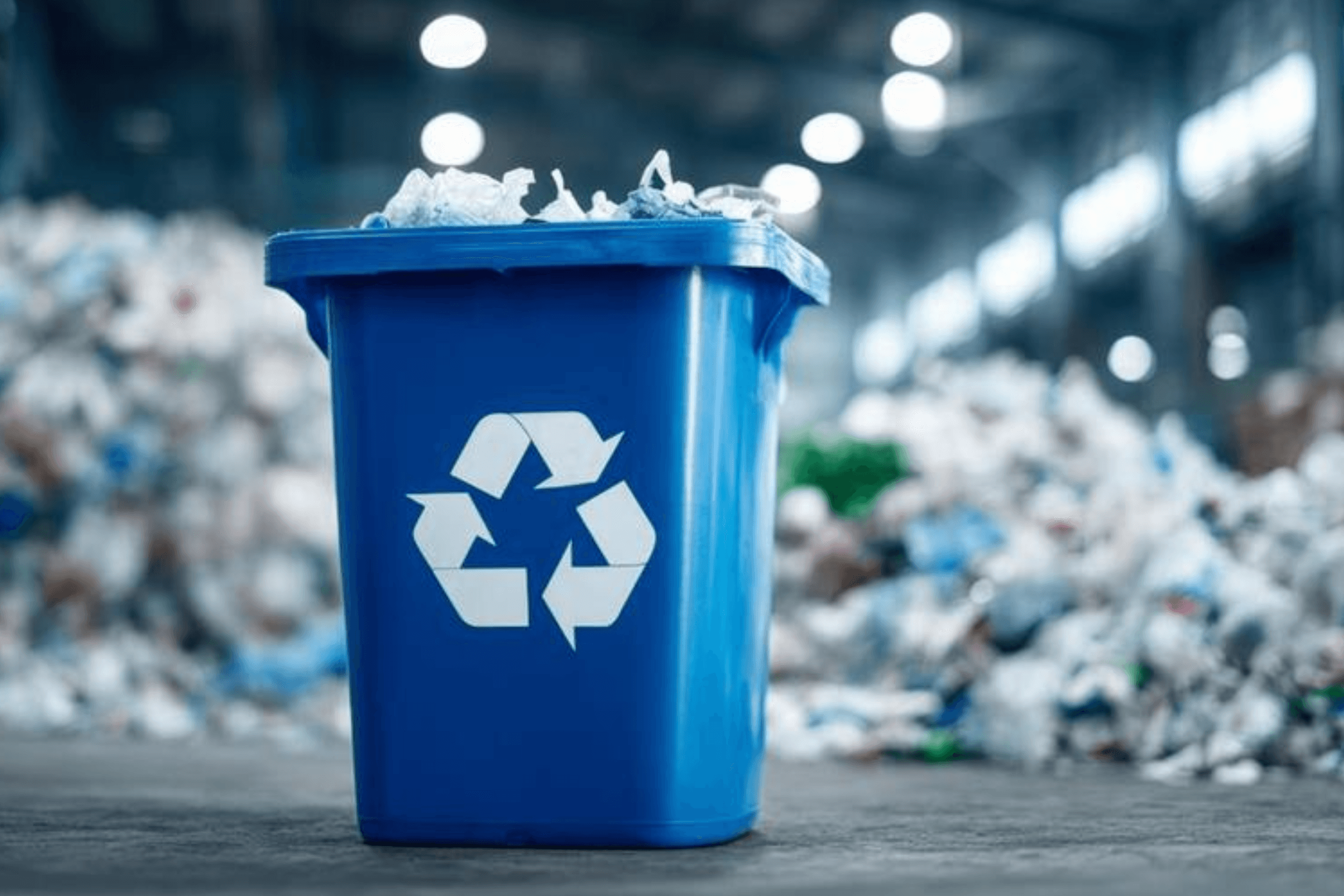
Why Businesses Need to Ask Harder Questions About Recycling

For many organizations, their recyclable materials disappear the moment a truck pulls away from the loading dock. But that journey—and whether the material is truly recycled—often remains cloudy and largely invisible to the businesses that generate it.
Across Canada’s commercial sector, companies are increasingly expected to account for their environmental footprint. Although the government continues to introduce more environmental regulations, such as extended producer responsibility, the task of properly diverting recyclable materials from landfills is still being passed on from facilities to service providers. In practice, many businesses and institutions frequently rely on service providers to manage the process with little verification or documentation.
“It may just be that these organizations that generate recyclable materials aren’t thinking about it at all,” says Tullio Bugada, CEO of Toronto-based waste and recycling management company Waste Reduction Group. “They’re either knowingly or unknowingly handing off responsibility and accountability to their service provider.”
The accountability gap
This lack of oversight can create a gap between intention and outcome. Businesses often invest a lot of time and resources into sorting recycling internally, only for those materials to be consolidated and discarded as waste further down the chain. Since waste moves through a network of collectors, transfer stations and processing facilities, its final destination can become difficult to trace.
Some simple indicators can show your recyclable materials are ending up in landfill:
- Recycling material recovery facilities (MRFs) won’t accept common contaminants like material collected in black plastic bags, liquids or food waste.
- Organics composting facilities, including both aerobic and anaerobic, will not accept material collected in black plastic bags, or any plastics or liquids.
The economics of recycling vs. waste
The challenge is particularly evident with materials that are harder or more expensive to recycle—such as mixed recyclables (metal, glass and plastics) and organic waste. Although high-value materials like scrap metal and cardboard are almost always recovered because of their inherent financial value, other recycling streams can be more complicated.
“Certain materials are simply more expensive to process properly than to send to landfill,” Tullio explains. In major urban regions such as the Greater Toronto Area, limited infrastructure can further complicate matters. Facilities capable of processing mixed recyclables or organics are relatively few and far between, meaning material handling costs are higher, and hauling the material is more time-consuming and costly. In fact, the cost to recycle materials or compost organics can be up to 50 per cent higher than waste sent to landfill.

Tullio Bugada, CEO of Waste Reduction Group.
At the same time, rules and regulations around this are evolving quickly. Government policies such as the Environmental Protection Act and the recently introduced Extended Producer Responsibility Act are intended to place greater accountability on the organizations that generate waste in the first place. As sustainability reporting and ESG commitments expand, transparency around waste and recycling streams is increasingly becoming a matter of governance and risk management—not simply environmental optics.
Making recyclables visible
For businesses, the first step toward accountability is understanding where their materials actually go. According to Tullio, organizations should be able to verify where their waste and recycling material is delivered and request documentation from their service providers to confirm that the loads reach legitimate recycling and composting facilities.
“Real responsibility and leadership starts with asking more from your waste and recycling service providers,” he says. “They should be sharing contamination photos and material delivery tickets, and arrange site visits to recycling facilities.”
Providing that level of transparency and assurance is central to the approach taken by Waste Reduction Group for the past 25 years. The company works with some of the most sustainable organizations, ranging from universities, hospitals and commercial property owners to small businesses. They help them design custom waste diversion programs and track where their materials ultimately end up. By providing their expertise, guidance, traceability and documentation on proper sorting and contamination standards, Waste Reduction Group helps clients ensure that waste, recycling and organics programs function as intended.
As expectations and public accountability around sustainability continue to grow, analysts say businesses can no longer afford to treat recycling and waste management as an afterthought. The organizations that ask the right questions—and demand clear answers—won’t just meet expectations, they’ll set a new standard for accountability in how recycling is managed.
For organizations looking to better understand and take responsibility for all of their waste streams, visit wastereductiongroup.ca.
Related Posts

The beauty industry’s innovative shift to inclusivity and sustainability

Boosting Canadians’ employability for the clean economy

What went down at BMO’s BlueCarpet Premiere of Spotlight - Women in Asset Management

An insider’s guide to epic winter exploration in the Yukon
Get the Best of Maclean’s straight to your inbox.
Sign up for news, commentary and analysis. Join 60,000+ Canadian readers.