Railway Tycoons Shaped Canada. Don’t Let AI Barons Do the Same.
Before I was an AI researcher, I was a professional magician. I performed to sold-out theatres in every major Canadian city. On stage, I often used a technique I called “mystified surrender” to keep the audience focused on the experience of the show rather than on trying to solve my tricks. To accomplish this, I devised two opening bits. The first was a mind-reading miracle so impossible-looking that it fooled many seasoned magicians. The second was a card trick wherein I made several mistakes on purpose. I let the observant audience members think they’d seen a crack in the armour. Little did they know, I was setting them up for an even bigger fall. My hope was that by doing these tricks, I could convince them that trying to catch me was frivolous. I was always one step ahead. And thus, through sheer force of being overwhelmed, the audience would cognitively surrender. For the rest of the show, I could take more risks and I could cheat more brazenly, without their prying eyes.
I thought I had left mystified surrender behind when I ventured into academia. But I’ve often found myself surprised by how much the business of AI and magic have in common. My fear is that we have cognitively surrendered to the AI industry, that we have allowed ourselves to be mystified into surrender. AI is a lot like magic; its feats seem impossible. It is a bewildering technological advancement. I worry that we have become so mesmerized by AI, and so overwhelmed by its complexity, that we have deferred our sovereignty to those who created it. That we have deferred the task of imagining what our shared future should look like to technocrats and technologists, who created AI in the first place.
Related: They Lost Their Kids To Fortnite
On the surface, this makes sense. AI is an extremely complicated technology. It’s also rapidly evolving. Keeping up with and understanding AI has been my full-time job for the past six years, and even I feel behind the eight ball sometimes. So how can we expect our politicians, workers and business leaders to keep up with it? It’s only natural that we look to those from the AI world, who best understand the technology, to help us. That’s exactly what we are doing. Governments around the world have filled AI advisory boards with CEOs from every major tech company. The non-CEOs are typically still from AI and tech backgrounds. In the United States, the federal government’s AI advisory board is vice-chaired by a Google VP, and its membership includes executives from tech giants such as Anthropic, Workday, Salesforce and IBM, to name a few. These groups are tasked with advising governments on how we should foster and manage AI—to help politicians understand what AI can and can’t do, and explain how we should welcome it into our society.
Shouldn’t we want the experts, those who understand the technology, advising our governments? Yes—but my concern is that we’re undemocratically giving the technologists immense power to shape our society. AI is not an average technology, and the foundational decisions we make now will have consequences for generations to come. History shows us this, and I was reminded of it on a recent visit to Calgary, a city that only exists because of a technology similar to AI.
Related: The Diabolical World of Phone Scams
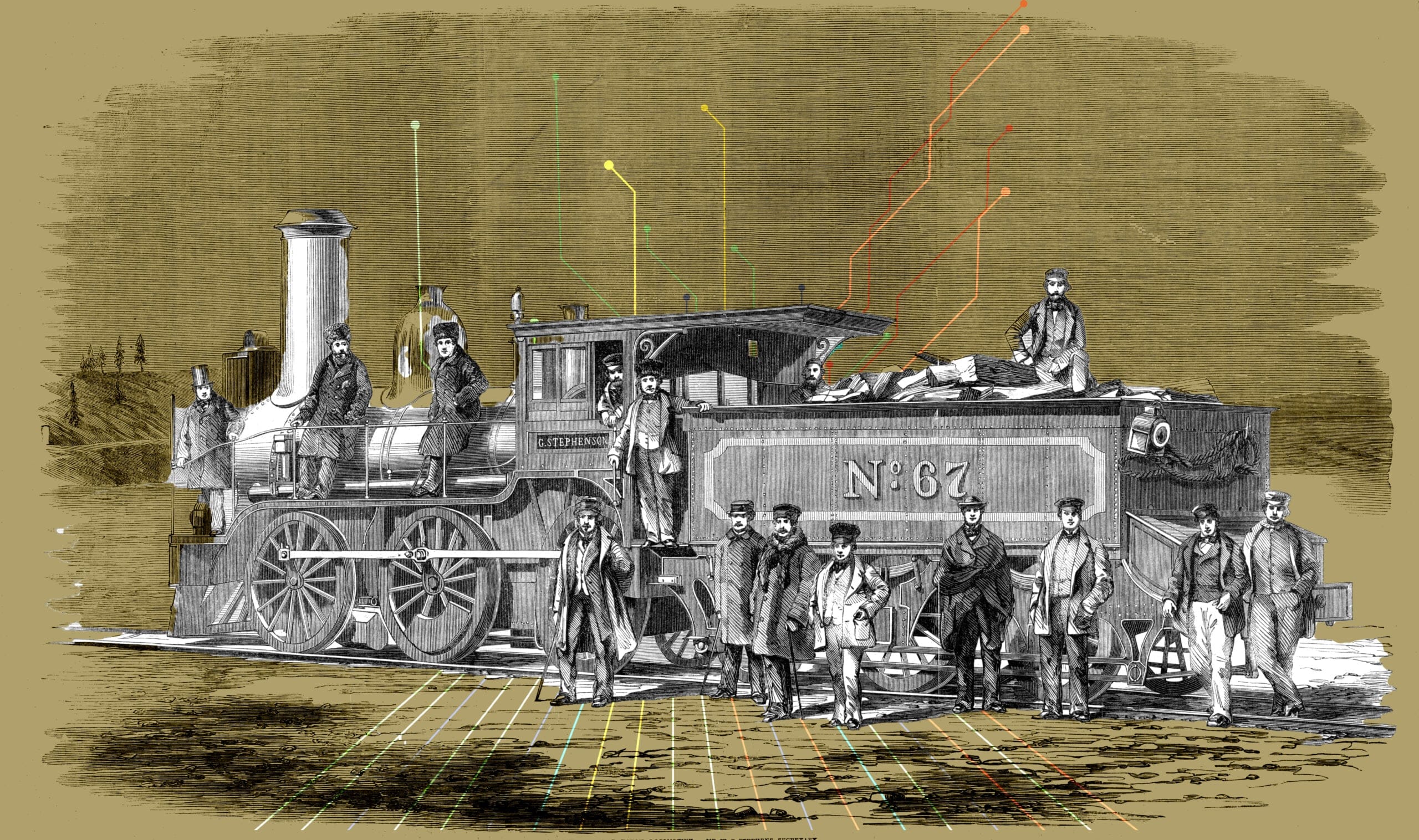
During its early years, Calgary was an insignificant settlement. When the Canadian Pacific Railway built a station there, it became one of Canada’s most important cities. The railway transformed Canada as a whole—in many ways, it built our nation. And although it may seem trivial now, decisions made by a few politicians and railway barons in the late 1800s still shape our lives. Countless Canadian cities exist because they were located along the railpath; other towns died because they weren’t. In cities with stations, entire new industries emerged, reliant on the opportunities created by the technology. Our national park system exists in part because of a lobbying effort to create tourist attractions along the rail line. Eternal symbols of Canadian identity such as Banff National Park exist because of the railway.
The impacts aren’t just geographical. Policy decisions regarding the governance of the railway shaped Canadian politics—and our economy—for decades. Monopolies and business empires were forged from the early decisions of how to manage the track. The railway, like AI, was a nation-building technology. It is not self-contained. It is a framework that society builds from. The type of society we can build depends on the foundations we lay.
The lesson of the railway is simple: when a transformative technology arrives, the choices made by the few can shape a nation for generations. AI is our railway moment. And once again, the tracks are being laid by a very specific group of people: technologists. They are getting to steer the conversations of what types of rules and guardrails should be built for AI, which industries we should promote, and what our government should invest in to help develop an AI society. Those who sit on advisory boards, or have the ear of politicians, are not necessarily acting with any ill intent. It’s true that some are motivated by self-interest, but many are guided by a sincere commitment to using technology for the public good. What I’m most concerned about is that the voices shaping the future of our country only represent one idea of what an AI society can be. The society they envision is not necessarily a bad one. But it will be one shaped by their values, beliefs and desires.
It seems inevitable now that AI will affect all of our lives. We are right now building a framework that will shape how we work, how we write, and even how we love. But no one can know how AI will affect your community or industry better than you. We should not so easily give up our sovereignty over these decisions. They are too important. The good news here is that we live in a democracy—a system that thrives on citizen engagement. Unfortunately, the work of a democracy is, well, work.
To meaningfully participate in democracy, people need two things: knowledge and access. We need knowledge about our conditions to be able to advocate for ourselves. This is why the AI industry and technologists have an advantage in the current conversation. They have the technical know-how necessary to advocate for what they wish to see. To keep our democracy healthy, we must commit to sharing this knowledge. We must provide avenues for everyday people to learn about AI—not just how to use it, but how it works, what we need to build to support it, and the technology’s history, too. We must meet people where they are and give them the opportunity to engage in this great conversation.
From there, the responsibility lies with the people, to demand the future we wish to see. When I’m asked if I’m scared of AI, I often say no, because I have faith in democracy. No, because I believe that we have the power to come together and demand a better world. But to do that, those with the knowledge must actively pull back the curtain. Then we must take on the responsibility of learning about AI, and of forming our own opinions so we can advocate for ourselves and our communities.
In my magician days, I used to fight to keep my secrets hidden. The dirtiest secret is that most illusions are actually quite simple. Learn a few basic principles and you can probably figure out 90 per cent of the tricks out there. Could you perform them? No. But nevertheless, knowing how they work takes away their power, and it shields you from mystified surrender. But AI isn’t a magic show. The stakes are real. And if we don’t pull back the curtain, the job of shaping the world will fall to the charlatans.
David Eliot is the author of the upcoming book Artificially Intelligent: The Very Human Story of AI
Related Posts

Canada Needs Homegrown AI Infrastructure

Can AI Save Us From Misinformation?

In Defence of Screentime

Why iPad Babies Have More Tantrums
Get the Best of Maclean’s straight to your inbox.
Sign up for news, commentary and analysis. Join 60,000+ Canadian readers.