The New Rules of Workplace Etiquette
COVID lockdowns may be well in the rearview, but our social skills never fully recovered. As Canadian workers are slowly ushered back to the office—one, three or five days a week—vestiges of our full-time home lives have returned with us. Our work pants are softer. We’re adjusting to the fact that, in the hybrid age, lunch breaks sometimes require staff-wide Slack announcements. We’ve had to relearn the art of commuting. Recently, AI entered the chat—and sometimes co-authors chat messages with us. Work looks nothing like it used to. Neither does workplace etiquette.
Rather than let Canadians cast about during the great return-to-office reformation, Maclean’s asked 20-plus experts at the top of their games for their tips on how to be the most respectful, responsible and fun IRL and WFH colleague you can be. Here, how to eat, meet, dress, DM, AI and all-around behave in Office 2026.

At Desks
The good neighbour’s guide to shared workspaces
“Don’t be the ‘phantom of the office.’ Some people begrudge the notion that they have to commute to work, so while they’re physically present, they’re also mentally absent. It’s one thing to stay quiet over Zoom, but it’s even more awkward in person. Do your part to stay engaged. Raise your hand when your manager asks if anyone has something to say. Add to the culture. It’ll help Gen Zers learn how to behave in a work setting, too. Because of COVID, some of their first offices were their bedrooms.”
—Chi-Chi Egbo, founder, Workthrough
“Keep fragrance to a minimum. We’re not in high school.”
—Jennifer Bernard, president and CEO, SickKids Foundation
“Don’t wear headphones while walking around the office. Hallways offer a chance to connect with a colleague, comment on a recent project, chat about the weather or share book recommendations. Stay open to whatever might arise from a random encounter.”
Related Posts

Inside Google’s super-sustainable new Montreal HQ

How Lindsay Somers takes the awkward out of on-screen nudity
—Kristin Cochrane, CEO, Penguin Random House Canada
“Take pride in what you wear. The pandemic injected many offices with a healthy dose of casualness, but the way you present yourself still matters. ‘Appropriate’ attire depends on your work setting, but general best practices include wearing clean, pressed clothing (not athleisure or sweats) and dressing up for important meetings—even polishing your shoes.”
—Brendan MacArthur-Stevens, partner, litigation and dispute resolution, Blake, Cassels & Graydon LLP
“Embrace caffeine and snack breaks to bond with co-workers and spark creativity—the kind you can’t schedule into Teams. Every so often, I’ll do check-in walks with team members and we’ll say, ‘Wouldn’t it be great if A, B or C happened?’ And then, sometimes, we make it happen! People also hang out in the office kitchen, which has a cupboard stocked with granola bars and crackers and overflows with carbs during the holidays (it’s incredible). That kind of face time helps you discover that your colleagues are cool people—or what’s on their Spotify Wrapped that year.”
—Teresa Resch, president, Toronto Tempo

On Screen
Best practices for online communication—emailing, Slacking and, yes, voice memo-ing
“Sometimes you just need to pick up the phone. Negotiation, or anything complex, is impossible to do via text. I’ve seen situations deteriorate just because of the medium of conversation. (It definitely surprises some people when the mayor replies to their email about a sidewalk fix with a call, though.) So much time gets wasted when a quick verbal chat would do the job. We could go back and forth on a scheduling app to find a meeting time—or just phone and say, ‘4 p.m.?’ ”
—Olivia Chow, mayor of Toronto
“Don’t begin a DM with ‘hi’ or ‘quick question.’ Just ask the question! Suspense is for Netflix, not admin assistants or journalists or engineers pushing a cement-decarbonizing pilot (in my company’s case).”
—Phil De Luna, co-founder and chief technology officer, CURA
“Voice notes are great if they include important context—or if they’re just for fun. But the minute someone memos me with to-dos, I’m enraged. I have ADHD, so if an action item isn’t written down, I forget it immediately.”
—Arati Sharma, founding partner, Backbone Angels
“Using ChatGPT to help you write emails is fine—and can even be helpful—so long as you don’t abdicate authorship. If you wouldn’t speak a certain way in a meeting, or say something aloud in a hallway, don’t send that message just because AI made it sound credible.”
—Sirish Rao, co-CEO, Vancouver Art Gallery
“This is a case of do as I say, not as I do: pick one messaging platform and stick to it. Don’t force your colleagues to hop between email, texts, Teams and Signal like they’re on a cross-app scavenger hunt. Keep conversations in a single thread.”
—Lana Payne, national president, Unifor
In Meetings
How to behave in a brainstorm, online or in person
“Avoid multitasking (I know it’s tough). For me, that’s mostly about removing temptation. Camera on, phone down, Slack muted, one window open—for the meeting you’re actually in. Otherwise, why join at all?”
—Andrew Macdonald, president and COO, Uber
“Please, please, please include an agenda in the meeting invite. If you can share links or a project brief beforehand, even better. Humans are just like large language models: the more context we have, the better.”
—Adeyinka Adesesan, Black innovation programs manager, DMZ, Toronto Metropolitan University
“If you’re leading a meeting that finishes early, avoid the phrase ‘I’m gonna give you back the next 15 minutes’ at all costs. You’re not doing anyone a favour, and they shouldn’t feel obliged to thank you. They probably need to run to the bathroom before their next Zoom anyway.”
—Richard Davis, organizational psychologist and author of Good Judgment
“Your co-workers should be fully aware if you’re using AI transcription during a meeting. It’s a helpful tool for synthesizing key points and making sense of next steps, and being transparent about its use will help maintain trust among the team.”
—Edith Law, Google Research Chair in the Future of Work and Learning, University of Waterloo
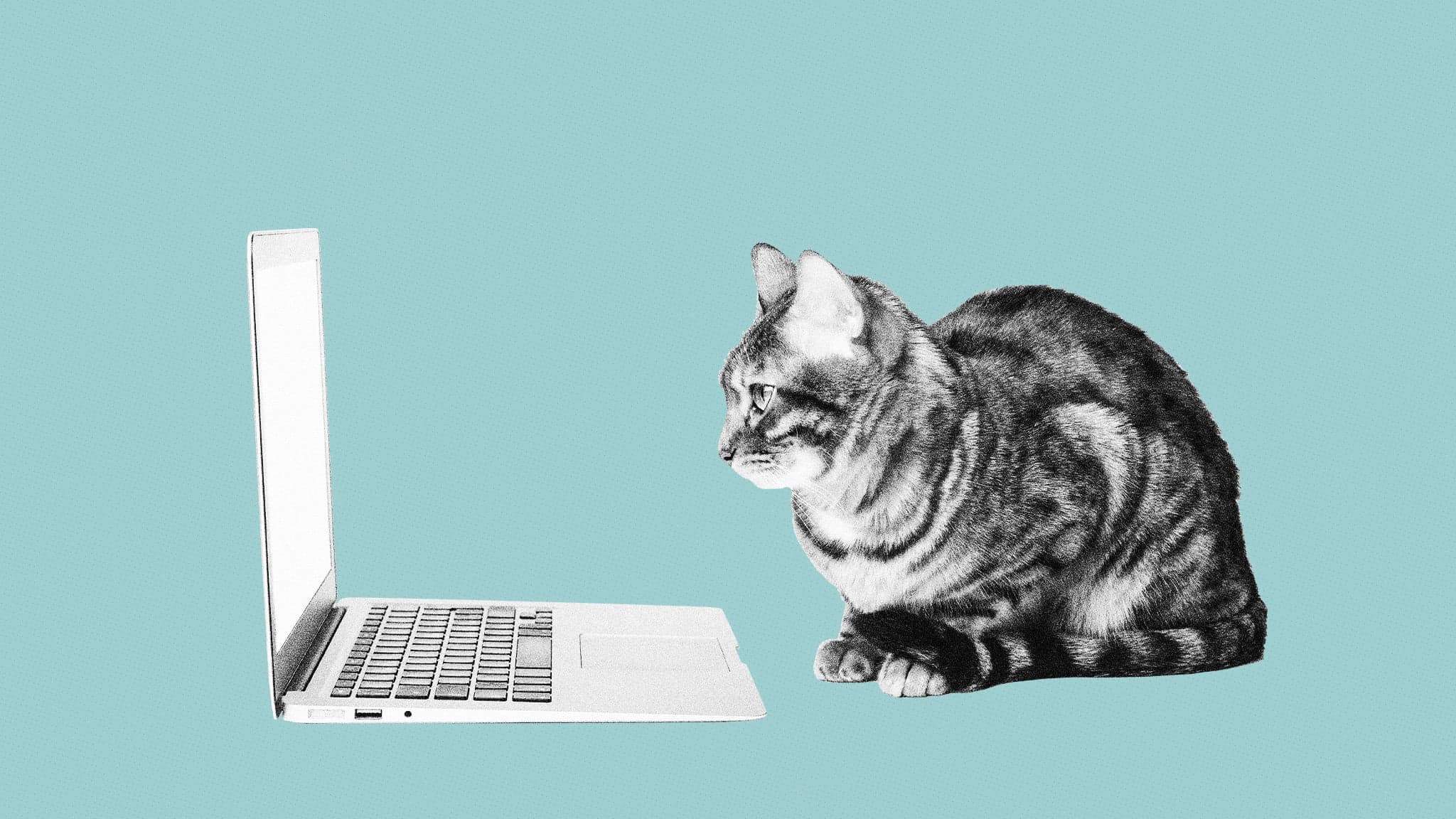
“Never apologize for your cat jumping onto the desk or your lap during a Zoom. We all want to see your cat.”
—Catherine Connelly, director, McMaster Centre for Research on Employment and Work
“If a meeting has more than three people, do it standing up. It sounds silly, but it’s a simple way to keep things focused, efficient and mercifully short.”
—Edward Tian, co-founder and CEO, GPTZero

From Home (Or Elsewhere)
A primer for our brave new hybrid world
“It’s okay to be a coffee addict (like me), but don’t ‘coffee-badge’—the cute term for showing up to the office only briefly, just to prove you were there. It’s disrespectful to your colleagues who are adhering to the hybrid schedule.”
—Sue Haas, chief growth officer, Numeris
“You don’t need to announce every coffee break. But if lots of colleagues depend on you, and you have to step out for an hour or so, say so. It’s not about tracking people; just avoiding potential friction.”
—Simon Poulin, co-founder and CEO, Upside Drinks
“Turn off your camera if you’re eating during a video call—and tell everyone why you’re doing it. It’s not a date.”
—David Shoemaker, CEO, Canadian Olympic Committee
“If you’re sick, stay home. Even after the pandemic, there’s a lingering culture of heroism—the idea that working while ill signals dedication. (I’ve been there many times: feeling awful, showing up and wearing it as a badge of honour.) Now that I run my own office with a small team, I don’t question whether someone is ‘sick enough’ when they take a day. I’m relieved they’re not taking the whole office down with them.”
—Alexandra Gater, YouTube creator and founder, Gater Studios Inc.
“If your internet keeps getting disconnected, you’re not in business. You’re not a player. If I see this in an interview, I’ll probably put your resumé in the garbage. The quality of your signal says as much about you as how you look and your choice of background. I don’t stay at hotel chains with crap, low-upload internet anymore. When people say to me, ‘I’ll give you a ride on my plane,’ the first thing I say back is, ‘Does it have Starlink?’ ”
—Kevin O’Leary, businessman and actor, Marty Supreme
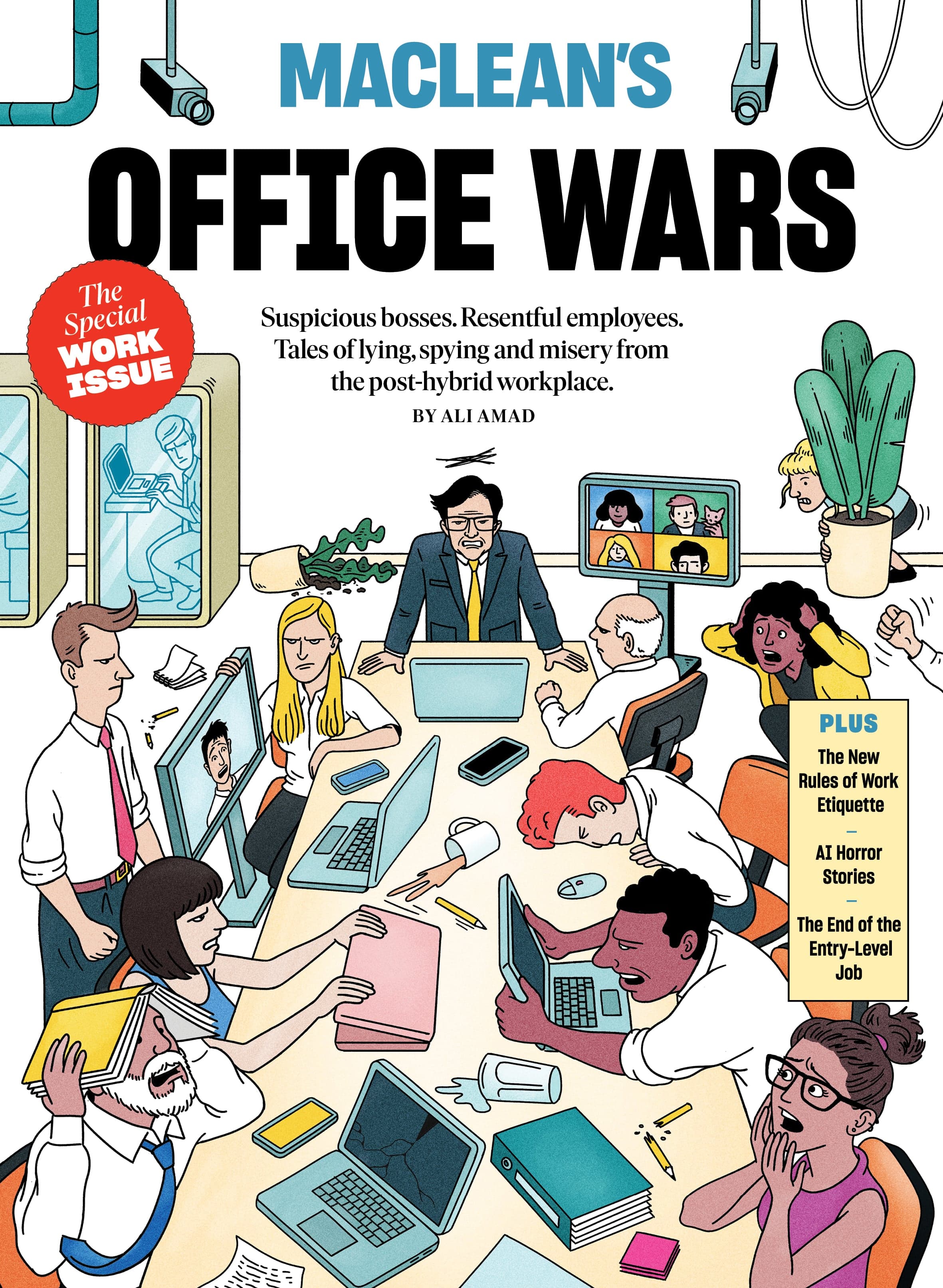
This story appears in the March 2026 special issue of Maclean’s. You can buy the issue here, subscribe to the magazine here or send a gift subscription here. Read the cover story here.
Related Posts
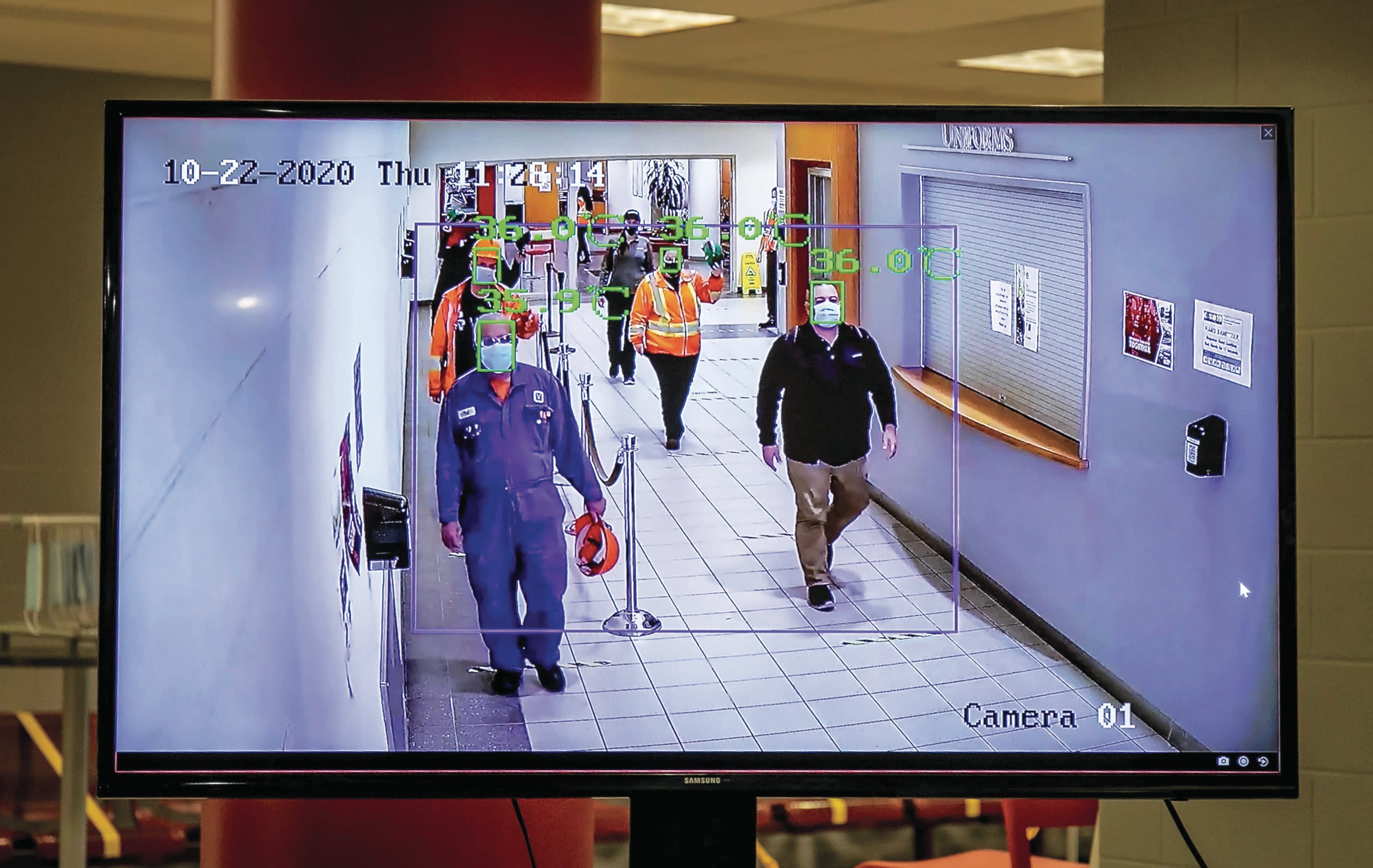
The workplace of the future will probably remain under surveillance

Embracing technology has allowed companies to flourish amidst the pandemic

The push to fill Canada’s critical PSW shortage
Young, working Canadians face a dilemma: eat, or pay the bills?
Get the Best of Maclean’s straight to your inbox.
Sign up for news, commentary and analysis. Join 60,000+ Canadian readers.