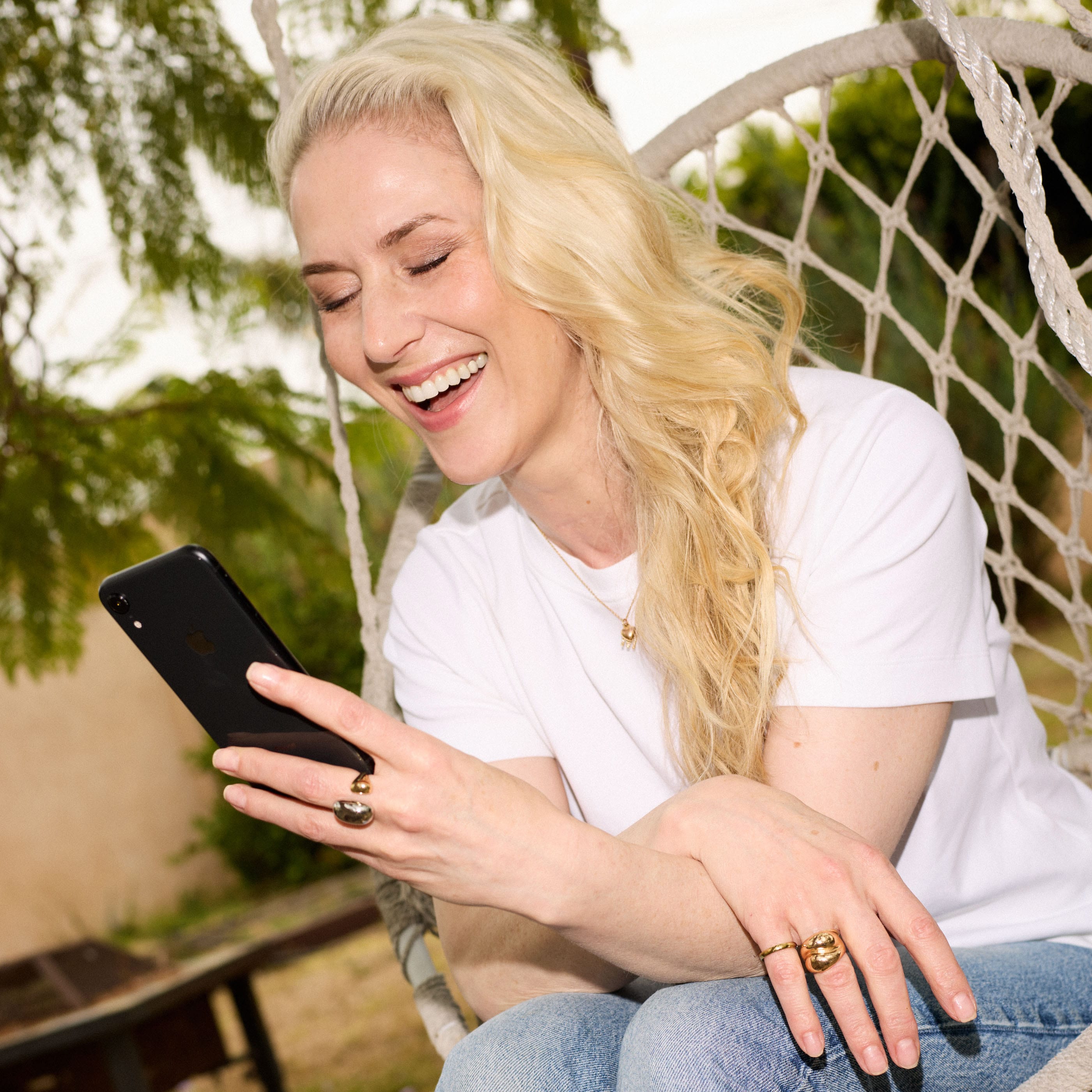
The Future of Cinema Is on Your Phone
When I was 13 and living in Los Angeles, I was cast as the Evil Queen in my junior high’s production of Snow White. I remember standing on stage in front of the entire student body, teetering around in high heels—one of which fell off my foot. The spectacle wasn’t written into the script, but I ran with it, dragging the shoe across the stage. The audience howled with laughter. At that moment, I fell in love with being on stage. I wanted to do plays by Shakespeare, Mamet and Shanley. In 1998, I went to a small theatre school in Vancouver, the Gastown Actors Studio, and started working as a theatre actor as soon as I graduated.
I became pregnant when I was 29. As a single mother, my version of being responsible was to step away from acting entirely. I built a career in the beauty sector doing branding, marketing, sales and PR for innovative, disruptive beauty brands, all from my kitchen table. I got my clients into Vogue and Harper’s Bazaar, and on shelves at Holt Renfrew, Neiman Marcus and Goop. I did that work for more than 20 years. But the desire to return to acting never disappeared. In 2022, when my daughter was 17 and I was 48, I finally came back.
Related: I Quit Dating Apps and Found Love Offline
It was post-pandemic. Productions had left Vancouver to shoot in cheaper regions, and the film and TV industry was entering a period of strikes and slowdowns. The opportunities I had as a younger actor in the late ’90s were not as available to me. In our region, it can take years to get your first union credit. I hustled like crazy, auditioning constantly and doing independent films and regional commercials, but I still wasn’t booking traditional film and television. Major casting directors would tell me, “We love your tapes, but we’re not hiring non-union right now.”
I started to think my ship had sailed. But then there was a new boat—and it was very shiny. In August of 2024, I got a call from my agent to star in a microdrama. These are short-form series, typically shot vertically for smartphone viewing, with 50 to 80 episodes running only 90 to 120 seconds long—essentially a feature-length movie broken up into bite-sized chunks. The scripts, editing and acting are all specifically designed for mobile-native viewing behaviour. They have their own storytelling architecture, with every episode built around a hook, an emotional spike and a cliffhanger. The performance style is over the top and outrageous, reminiscent of Latin American telenovelas, and the plotlines are packed with romantic betrayal, rivalries and revenge. The titles sound like Harlequin novels: one of the most popular releases of 2026 is Ms. CEO’s Baby Daddy Is the Merchant of Death, with almost 370 million views since it aired in February.
Originating in China around 2018, microdramas, or duanju, exploded in popularity during the pandemic; there are now more than 800 million viewers in the country. In North America, the audience for microdramas is mostly women aged 40 to 65 who watch alone on their phones. Increasingly, microdramas are produced for Western audiences, but the leading platforms—like ReelShort, GoodShort and DramaBox—are Chinese-owned. The format follows a “freemium” model: viewers watch the opening episodes for free, often on social media, then pay to unlock the remaining episodes on dedicated microdrama apps. The industry generated US$11 billion globally last year, and is projected to grow to US$14 billion by the end of 2026. The ecosystem now includes over 300 dedicated platforms and distributors around the world, with China remaining the dominant production and distribution market.
The first vertical microdrama I booked was called My Substitute Lover, for the Singaporean platform DreameShort. I drove to a mansion in West Vancouver expecting something small and disorganized. Instead, I found a fully crewed production with two RED cameras and nearly 50 people on set. I was handed a movie-length script and given four days to memorize it. Once cameras rolled, we worked 12-to-14-hour days. I played an evil stepmother orchestrating elaborate schemes so her ruthless daughter could marry a billionaire. There were slapping scenes, an attempt to poison the heroine with pastries, and a scheme to plant a "stolen" necklace worth millions to send her to prison. The tone was campy, melodramatic and emotionally explosive.
After My Substitute Lover, the roles kept coming. Suddenly, I was booking back-to-back productions, playing one villain after another—just like my first role as the Evil Queen. Since August of 2024, I’ve shot 23 microdramas. I don’t do small dayplayer roles—only supporting leads or leads. At one point, I turned down five shows in a month. My screen work has been seen more than 400 million times. For context, Netflix’s most popular show, Wednesday, has just over 250 million views.
My first Los Angeles set was located beside the Warner Bros. lot. Our green room overlooked their massive parking structure; it was practically empty, while our own production was bustling with activity. We had an Emmy Award-winning art department. My hair and makeup team came from General Hospital and Days of Our Lives. My director of photography had just shot the Peaky Blinders movies. All this time I had been trying to get onto a union studio set, and suddenly it felt like I was. The only difference was that I wasn’t getting union pay or a union credit.
Hollywood is starting to take vertical microdramas seriously; the audience engagement is difficult to ignore. Disney recently selected the microdrama platform DramaBox as part of their Accelerator incubator program. Last fall, Fox Entertainment invested US$8 million in Holywater, the owners of popular microdrama app MyDrama. Taye Diggs partnered with Lifetime to produce a microdrama called Tides of Temptation. And brands like Maybelline, Crocs and Native deodorant have all launched microdrama campaigns.
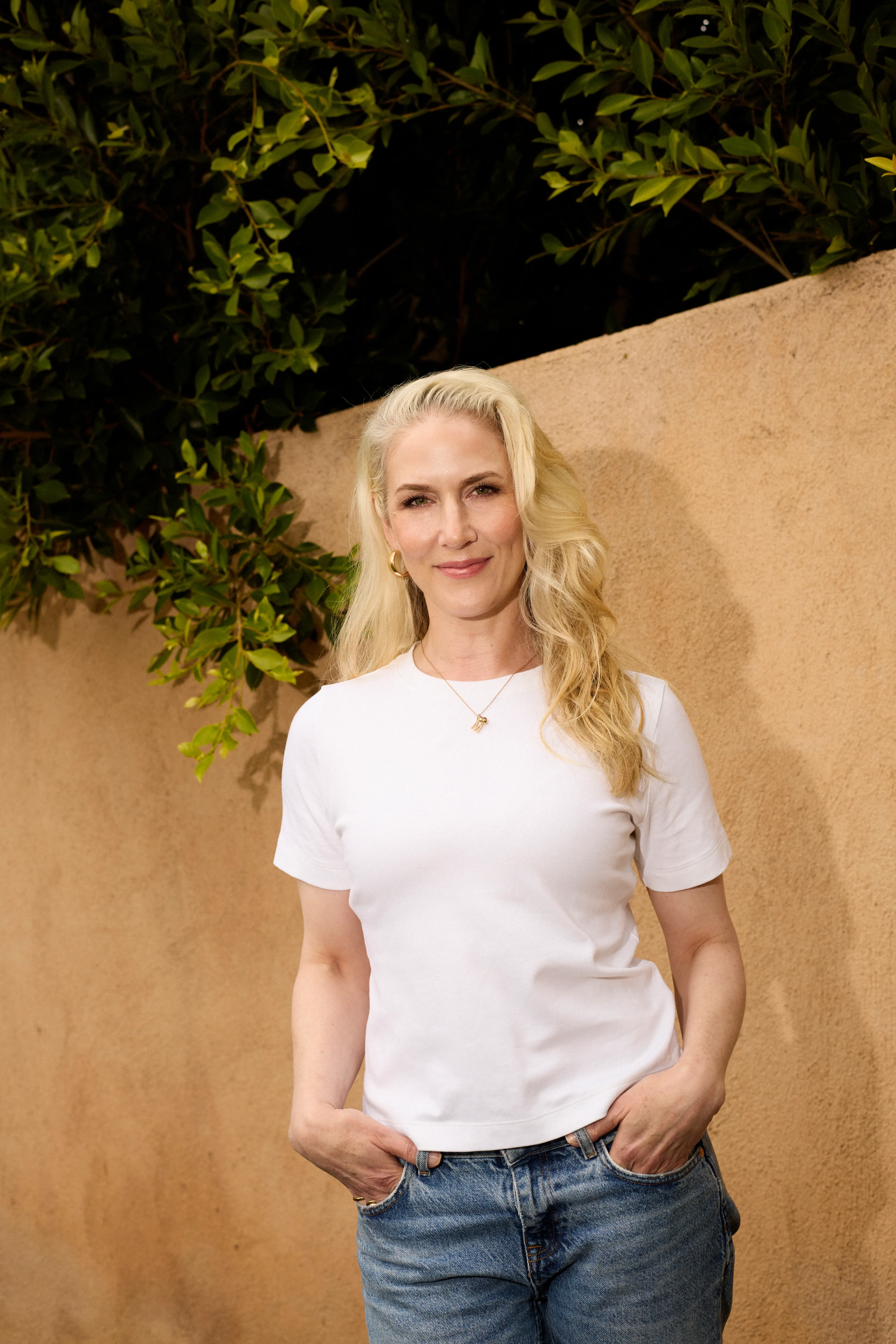
Last spring, I co-founded the Vertical Film and Short Series Alliance alongside casting director Monika Dalman and media entrepreneur Andy Chu. Our goal was to help professionalize this rapidly growing industry through education about permits, insurance, production standards and intimacy and stunt coordination. We also work to bridge understanding between traditional film and television industries and the evolving vertical microdrama space. We help experienced creative professionals understand where the format originated, how it functions operationally and commercially and how established entertainment expertise can adapt successfully within this emerging storytelling model. We’re dispelling the myth that this is simply filmmaking for TikTok.
Vancouver has become one of the most active vertical microdrama production centres in North America, second only to Los Angeles. Many of the format’s strongest performers, directors, writers and creative teams are based in Canada, and our country has already proven its ability to consistently produce globally successful content. With strong tax incentives, scalable infrastructure and an experienced and adaptable creative workforce, Canada has an extraordinary opportunity to be a world leader in this industry.
Related: How My Book, Heated Rivalry, Became A TV Phenomenon
The VFSSA conservatively estimates that Vancouver production has generated $65 million in economic activity between 2024 and the beginning of 2026. We formed the alliance because we wanted to sustain this work and help crew and cast to make their livelihoods. Crews were just sitting around idly during industry slowdowns, and now they’re bouncing from set to set. In Canada, non-union performers now have access to steady work. Productions are highly efficient and our budgets are not big. We shoot a whole microdrama movie in eight to 10 days for US$200,000—a fraction of the cost to make an episode of television, which can be in the millions.
People want in on microdramas, whether they’re union or non-union performers, independent filmmakers or senior Hollywood executives. I consult with directors and producers who’ve made top-performing projects for Netflix and Hallmark. These teams are now training in the vertical microdrama format. In the coming years, we’re going to see networks and studios adopt this format for their own programming. We’ll see other genres emerge—not just telenovela-esque microdramas, but horrors, thrillers, comedies and more. This entertainment ecosystem won’t just feature Canadians, but it will be owned by us.
As for me, the shift has been deeply personal. At 51, I didn’t expect to find myself at the centre of a rapidly evolving entertainment format. I was just trying to find my way back to acting. The stage just happens to fit inside a phone now.
What did you think of this story? Send a comment for publication to letters@macleans.ca, and supply your name and address. Comments should be fewer than 200 words, and may be edited for length and clarity.
Related Posts

The Hydrostone, Halifax: The Historic Makeover
Davenport, Toronto: The Food Lover’s Paradise

Lower Lonsdale, North Vancouver: The Oceanside Getaway

Get the Best of Maclean’s straight to your inbox.
Sign up for news, commentary and analysis. Join 60,000+ Canadian readers.