How to Boycott American Bourbon
I met Dan Plenzik in 2016 in the Okanagan, at a workshop on the foundations of commercial distilling. We had lots in common from the jump: we were both engineers by training and hobbyist brewers (I was making beer in my garage, and Daniel dabbled in winemaking), and we were both exploring the possibility of a second career. We had similar visions for the kind of distillery we would start: a boutique that would combine the best local ingredients with traditional distilling techniques. Within two years, we’d quit our jobs and founded Bridgeland Distillery in Calgary.
We wanted to produce a Canadian whisky inspired by the local produce in Alberta. Every year in late summer, trucks line up on the sides of Alberta’s highways selling Taber corn, named for a town in southern Alberta known as the “Corn Capital of Canada.” The town gets a lot of sunshine, so the crop there is famously sweet and flavourful. Daniel and I spent a lot of effort testing and tweaking to create the perfect spirit.
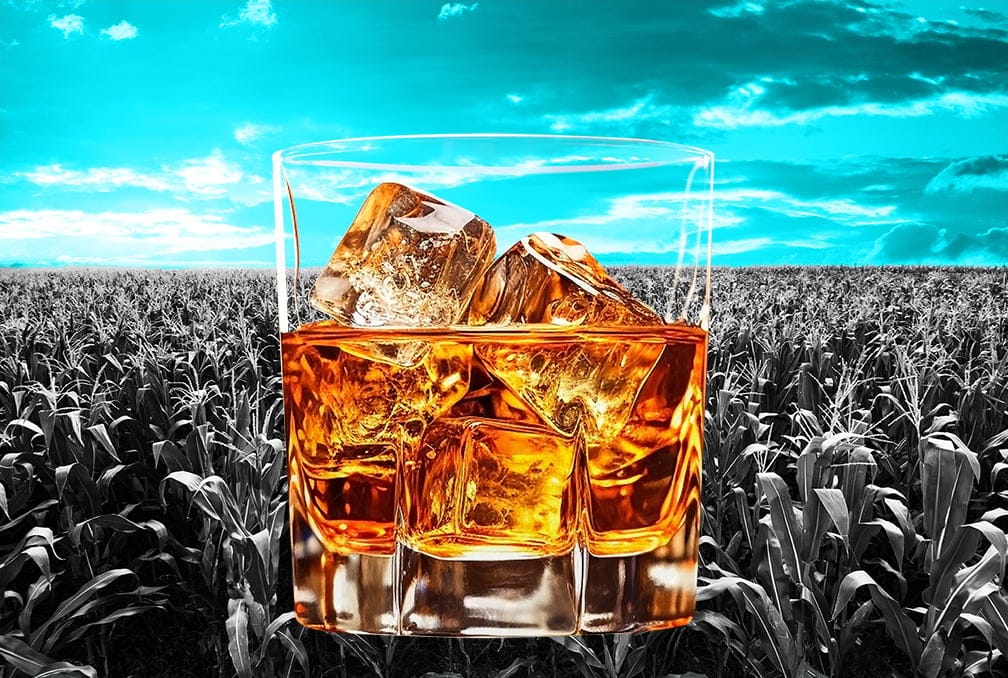
We released our first whisky in 2020, a Canadian spin on the quintessentially American Kentucky bourbon that we called Taber Corn Berbon. Bourbon is distinct from other types of whisky in two ways: it’s made from at least 51 per cent corn, and it’s aged in a new American oak barrel. The result is a smoky whisky with stronger caramel and vanilla notes. By contrast, scotch and Irish whiskies are made from other grains, like malted barley. They’re aged in barrels that have already been used to age other products, so their flavour profiles tend to be more subtle. There is a legal backstory as well: in 1964, the U.S. Congress passed a resolution that deemed “bourbon” a uniquely American product, preventing foreign producers from marketing their spirits as “bourbon” in the States—hence the name Berbon (which uses the same spelling as “Taber” and “Alberta”)
Related: The Quest for Canadian Wine Sovereignty
Opening a distillery is no easy task. The upfront investment costs were steep. We had to secure and lease the space for the factory, order custom-designed copper pot stills, and design and procure our bottles. Because whiskies take time to age, two years went by before we had a product we could sell. It didn’t help that our whisky came on the market at the height of the pandemic. In Alberta, each liquor store is privatized, so we go store to store to sell our products. During COVID, many liquor stores were not taking appointments to meet with salespeople. We had cause to be optimistic, though. Our products started winning awards in 2021. Taber Corn Berbon, for example, won gold in the Alberta Spirits Award and silver in the Canadian Artisan Spirits Awards that year. It also went on to win gold medals in the Canadian Artisan Spirits Awards in 2022 and 2023, as well as a silver medal in the Canadian Whisky Awards in 2023 and finally a gold medal this year.
Related: 20 Reasons to Eat Canadian Right Now
When murmurs of a trade war began to circulate after Trump’s second election, Dan and I were torn. We didn’t want U.S. producers to be barred; American or not, it’s always frustrating to be excluded from a market, like we are in places like Quebec and Ontario because of interprovincial trade barriers. On the flip side, we were excited by the possibility that Canadian liquor stores might start stocking more homegrown products like ours. We weren’t too worried about supply-chain issues because we source most of our ingredients locally. We only rely on U.S. producers for oak barrels, and we discovered early on that they’d be exempt from tariffs. The Canadian government was careful to only levy American goods that could be replaced by Canadian producers.
Last March, Alberta Premier Danielle Smith announced that the provincial government would limit the purchase of U.S. products, including liquor, in response to the 25 per cent tariffs the U.S. had placed on Canadian goods. As a result, Liquor Connect, the central distribution warehouse in Alberta, was prohibited from distributing any American liquor. Other provinces, including Ontario, Quebec and Nova Scotia, adopted similar bans that spring. Alberta eventually rolled back its ban on U.S. liquor in June, but the three months in between changed everything. Local liquor stores suddenly had a considerable amount of open shelf space left vacant by American booze. They also faced increased consumer demand for Canadian products, spurred by people looking to replace their favourite American liquors.
Related: How to Rescue Canada’s Wine Supply
Bridgeland’s phones were ringing off the hook. Liquor stores and restaurants around Alberta suddenly wanted to feature previously overlooked Canadian brands. They were especially excited about Bridgeland because we’re one of the few distilleries in Canada that make a bourbon-style whisky. We went from sending our stock to 120 liquor stores in Alberta to 165, and we were even able to expand to Saskatchewan. We sell our product in cases of six bottles. In the past, stores would order one case a month, but by last February and March they were ordering two or three cases, sometimes even four at a time. We had to speed up our bottling and labelling process, but fortunately, we had a decent amount of backstock from our early days so we were able to meet the bump in demand.
Bars and restaurants from Toronto, Montreal and beyond reached out to us as well, but it’s been a challenge getting our products into Ontario and Quebec. For example, Ontario’s liquor control board only accepts proposals for new Canadian whisky products once a year. Last year, the deadline fell over the summer, when Bridgeland was busy expanding our presence in Alberta, so we missed the cutoff. We hope to try again this June, when the LCBO reopens its applications. It’s surprising that the organization hasn’t increased its frequency in light of the Buy Canadian movement. The Ontario liquor supplier also demands promotional and marketing commitments from suppliers that are hard for small businesses to fulfill. Other Canadian alcohol producers are running up against these barriers too—groups like Wine Growers Canada and the Canadian Federation of Independent Businesses have called for the provinces to remove the current barriers to interprovincial trade for our industry.
Still, our revenue increased by 40 per cent last year, and so far, it’s holding steady. Even after U.S. liquor was allowed back on Alberta store shelves last summer, managers have told us that demand is down. Albertans are still committed to buying Canadian spirits even though they don’t have to, and we’re proud that the Taber Corn Berbon continues to be our most popular product. Dan and I are now looking to expand to markets in East Asia. There’s no telling how far the appetite for Canadian Berbon goes.
Related Posts

How Do We Keep Canada Insurable?

Canada is Funding its Own Economic Decline
The Case for Tourist Taxes

American Carmakers Are Leaving. Bring on the Chinese EVs.
Get the Best of Maclean’s straight to your inbox.
Sign up for news, commentary and analysis. Join 60,000+ Canadian readers.