The Case for Tourist Taxes
Every July, the Calgary Stampede draws more than a million visitors from around the world. Hotels in the city fill quickly, and when they do, many visitors end up staying in nearby communities like Airdrie, where I’m mayor. We sit right along Highway 2, the main transportation corridor connecting Calgary and Edmonton. We’re also close to the Trans-Canada Highway and a 20-minute drive from Calgary International Airport. If people or goods are moving through southern Alberta, they almost always pass through our city.
Airdrie is also a hub for regional sports. In the next six months alone, we’ll host 12 provincial or national tournaments for sports like hockey, ringette and gymnastics. These events can bring anywhere from 1,000 to 10,000 visitors at a time to our city of 92,000. During peak periods last summer, Airdrie’s seven hotels hit 92 per cent occupancy, while our Airbnbs achieved 87 per cent occupancy at comparable rates. A single provincial-level weekend tournament with roughly 300 participants can generate $150,000 to $225,000 in local economic activity—far beyond a typical weekend.
That influx is good for local businesses, but it comes with real costs. Airdrie is one of the fastest-growing cities in the country, with its population expanding by about five per cent annually. Last year, 42 per cent of all new housing starts in Alberta (excluding Calgary and Edmonton) were in Airdrie. Growth like that is exciting, but it’s also expensive. We’re responsible for building new roads and extending utilities, which consumes a significant share of our resources and makes it more challenging to maintain the infrastructure we already have. Visitors then use that same infrastructure—our roads, water and power systems, recreation centres, health services and more—without contributing to its upkeep.
At the same time, the cost of maintaining that infrastructure has skyrocketed, driven by pandemic-era supply-chain disruptions and the ongoing U.S. trade war. In some categories, prices have increased by as much as 30 to 200 per cent. A new fire engine can now cost up to $500,000, far more than it did just a few years ago.
Related: You Can’t Run a Tourist Town Without Foreign Workers
One of the hardest parts of this problem is that Alberta’s municipalities have limited ways to raise revenue. Under the Municipal Government Act, or MGA, our main tools are property taxes and grants from other levels of government. Raising property taxes is, understandably, unpopular with residents, and grants are difficult to rely on consistently. And while visitors spend money at local hotels, restaurants and attractions, that revenue flows primarily to private businesses and does not automatically return to municipalities. The result is that cities like Airdrie bear the costs of tourism without a reliable way to recover them.
I knew we needed to get more creative about how we fund the services and infrastructure tourists use every day. Working with members of city council, we landed on a simple idea: an accommodation tax that functions as a user fee, collected from visitors who stay in our hotels and short-term rentals. This isn’t a radical concept. It’s already in place in most provinces, including British Columbia and Ontario, and it’s standard practice in major tourism destinations around the world, like Barcelona and New York City.
In Toronto, for example, the city has had an accommodation tax since 2018 and temporarily raised it from six to 8.5 per cent to help cover the costs of hosting six World Cup matches this summer. That increase is expected to generate $56.6 million, which will go toward added transit costs and maintaining the roads and public spaces visitors will use. Milan also temporarily raised its accommodation taxes this year in anticipation of the tourism influx of the winter Olympics. In 2023, Vancouver, Canada’s other World Cup host city, introduced a new 2.5 per cent tax on short-term accommodations during major events.
For Airdrie, we looked at comparable accommodation taxes across the country, and three per cent emerged as a reasonable, widely used benchmark. At current occupancy levels, that rate would generate roughly $500,000 a year. It would apply to Airdrie’s hotels and short-term rentals, including Airbnbs and bed and breakfasts. For visitors, it would appear as a small line item on their bill, collected by the hotel or host and then remitted to the city. On a $150/night hotel stay, for example, a three per cent tax would amount to about $4.50. This revenue could support both tourism promotion and the infrastructure that makes tourism possible in the first place: roads, utilities and public spaces. It would also be transparent, city-managed and mandatory, ensuring that everyone contributes and everyone benefits. Over time, as more hotels open and visitation grows, that revenue would grow too.
Related: Flight of the Snowbirds
For a municipal accommodation tax to become possible in Alberta, the provincial government has to amend the MGA. In November of 2025, I brought forward a resolution at the Alberta Municipalities convention in Calgary, where nearly 300 municipalities were represented, calling on the province to make that change. Communities across Alberta immediately recognized the problem we were trying to solve, because many of them are living with the same pressures.
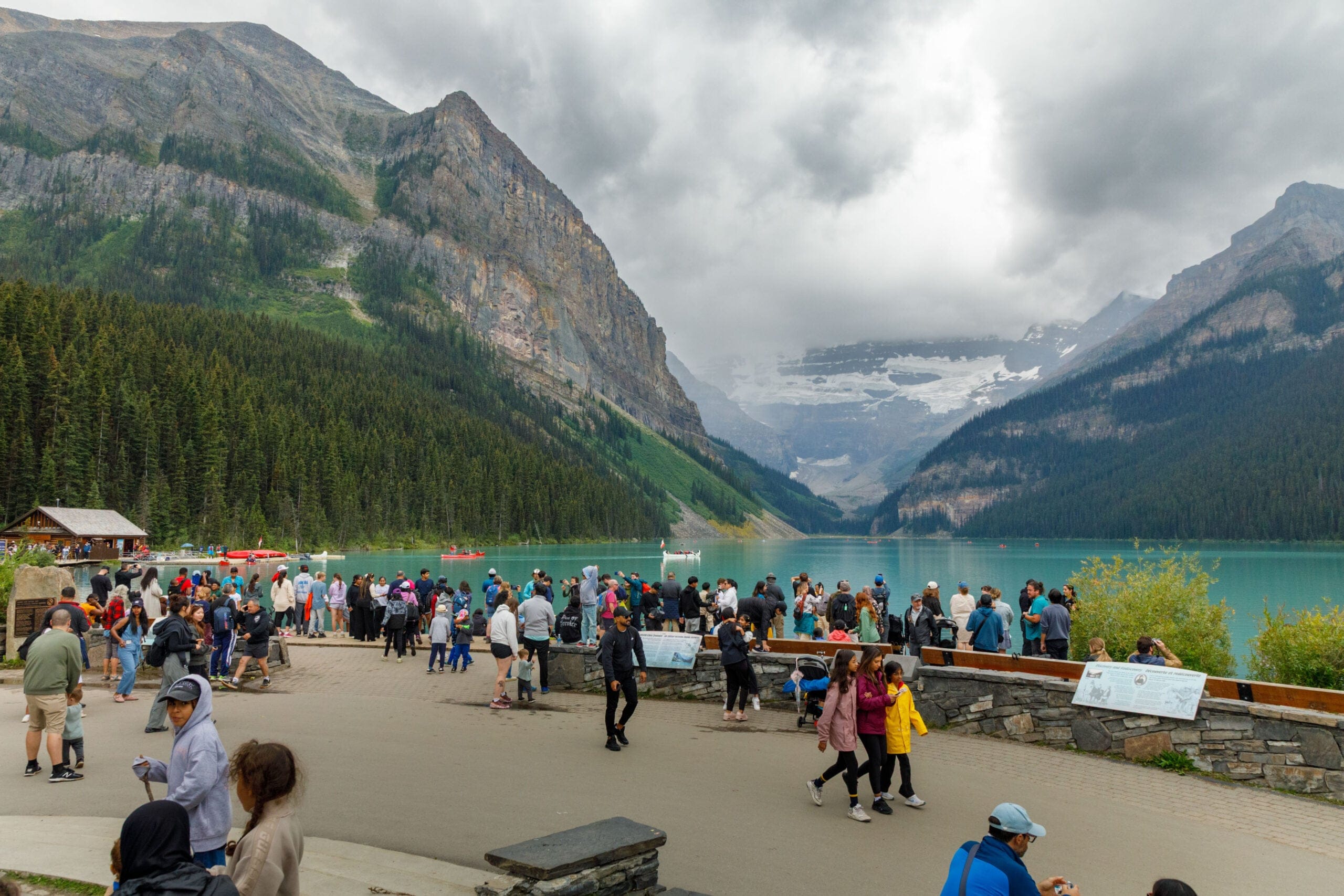
We’ve seen how sports events can transform a community, like with the success of the Western Canadian Baseball League. Their collegiate baseball games draw thousands of fans to places like Sylvan Lake, a town of 18,000 situated halfway between Calgary and Edmonton. Sylvan Lake welcomes nearly a million visitors each summer, placing immense pressure on its water systems, roads, and public services.
There’s also Canmore, a similar-sized town near Banff that experiences seasonal population surges of up to 200,000 people in peak summer and winter months. Short-term rentals dominate the housing stock, and the pressure on municipal services is relentless. Yet under provincial rules, Canmore can’t collect an accommodation tax to help manage those impacts; for communities like theirs and ours, having visitors help support the infrastructure they rely on can be transformative.
By the end of the convention, the resolution passed overwhelmingly. More than 74 per cent of the membership voted in favour of allowing municipalities to charge hotel and short-term rental guests a fee. The proposed amendment would give cities the flexibility to set rates and direct funds toward local needs. For many of us, it felt like a rare moment of alignment around a practical solution to a shared problem.
The most common concern I hear is that an accommodation tax will scare visitors away and hurt hotels by making stays more expensive. That argument came up in Toronto when the city increased its accommodation tax for the World Cup, and hotel operators worried it would dampen tourism and cut into their already-thin margins. Those concerns are understandable—no one wants to make it harder for visitors to choose their community.
But the reality is that accommodation taxes are already the norm in most global tourism destinations. No one skips Paris or Las Vegas because there’s a small accommodation tax on their hotel bill. They come because they want the experience. And the same is true here. People visit Airdrie for events, family trips or proximity to Calgary, not because the nightly rate is a few dollars lower than other places.
Amending the MGA could take 12 to 18 months, and we’re hopeful the change can be completed before the next provincial election in the fall of 2027. Legislators will, I believe, see eye to eye with us on at least one point: when someone visits cities like Airdrie, it’s reasonable for them to contribute a few dollars to the community they’re using. That small contribution helps maintain the facilities they enjoy, supports future growth and eases the burden on residents. It’s a modest, practical way to make tourism work better for everyone.
Related Posts

Venezuela Can’t Deliver the Oil America Needs. Canada Can.
American Carmakers Are Leaving. Bring on the Chinese EVs.
How Do We Keep Canada Insurable?
Canada is Funding its Own Economic Decline
Get the Best of Maclean’s straight to your inbox.
Sign up for news, commentary and analysis. Join 60,000+ Canadian readers.