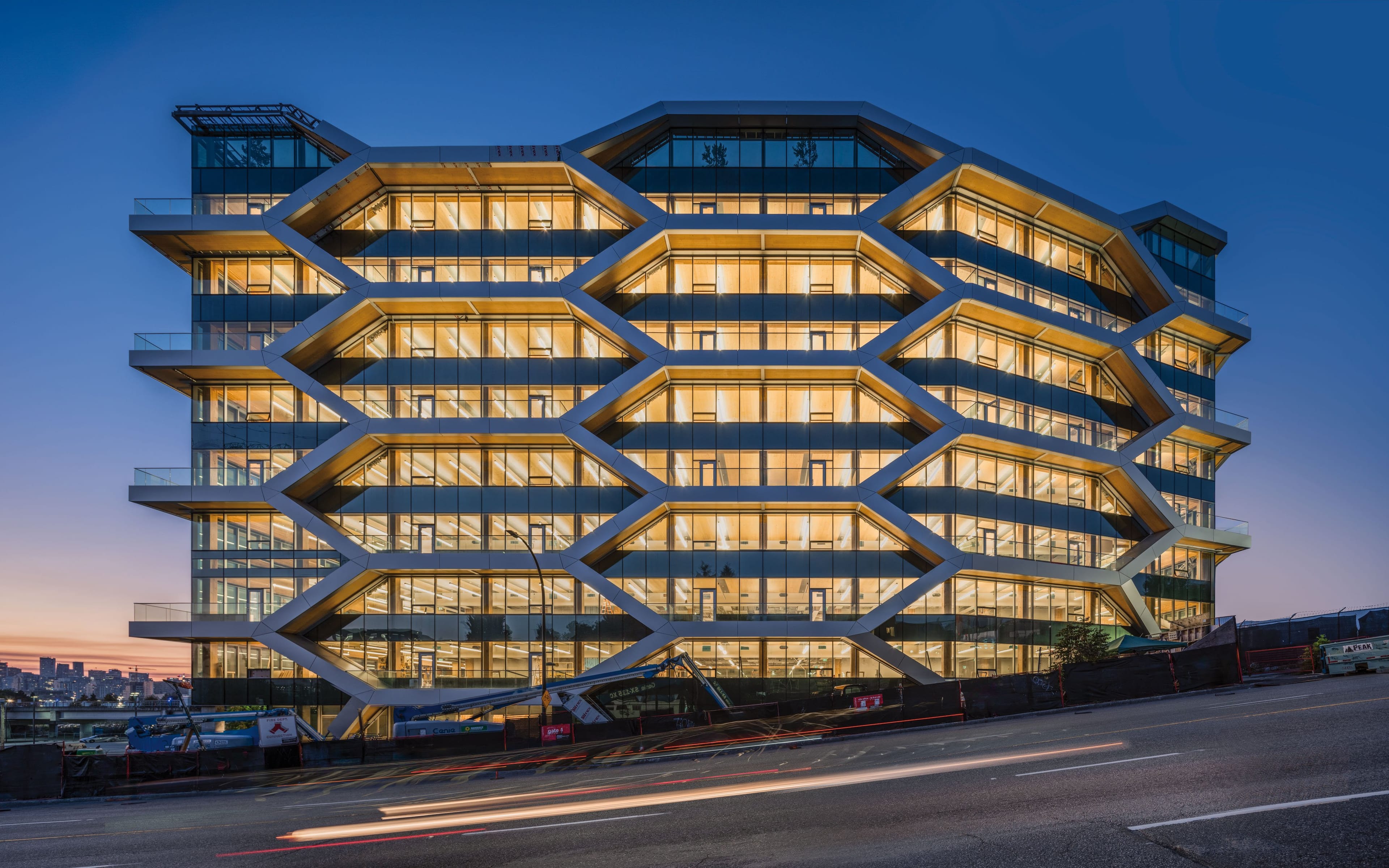
Behold Vancouver’s New Earthquake-Resistant Highrise
Last February, B.C. residents got a scare when a 4.7-magnitude earthquake hit near the beach community of Sechelt, rattling the province’s southwestern coast. Aside from some cracked drywall and burst pipes, the damage was minimal. But that quake was nothing compared to what might yet come: Vancouver sits directly on the Cascadia Subduction Zone, a 1,000-kilometre fault line that runs from Northern California to Vancouver Island, and there’s a 37 per cent chance that the catastrophic earthquake known as the Big One will hit the region in the next 50 years. The city updated its building code in 2024, but many of Vancouver’s mid-century concrete highrises are still seismically vulnerable.
Not the Hive. The new mass-timber office building in Vancouver’s False Creek Flats neighbourhood, designed by the architecture firm Dialog, has a distinctive honeycomb-style exoskeleton fitted with seismic dampers. Created by the New Zealand manufacturer Tectonus after Christchurch’s deadly earthquake in 2011, these giant springs act as massive shock absorbers that allow the building to wiggle in a quake, then resettle.
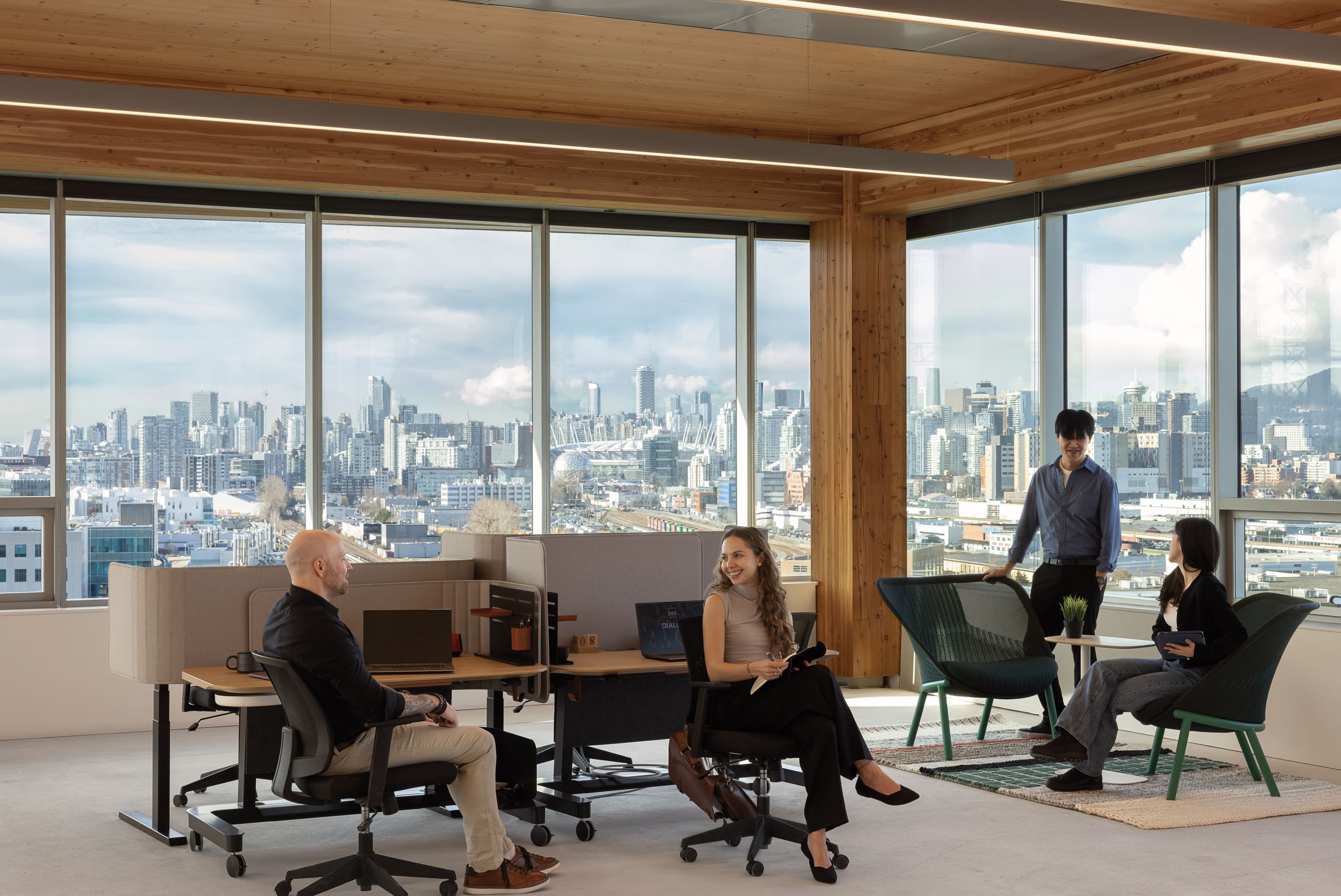
Early on, structural engineers from the firm Fast + Epp suggested swapping out the traditional concrete core common to most high-rise office buildings and instead moving the structural system to the perimeter. Exterior braces have been used before in steel and concrete builds, but never in mass timber. It seemed like the perfect candidate: wood has more natural give and is more resilient to seismic activity than steel and concrete.
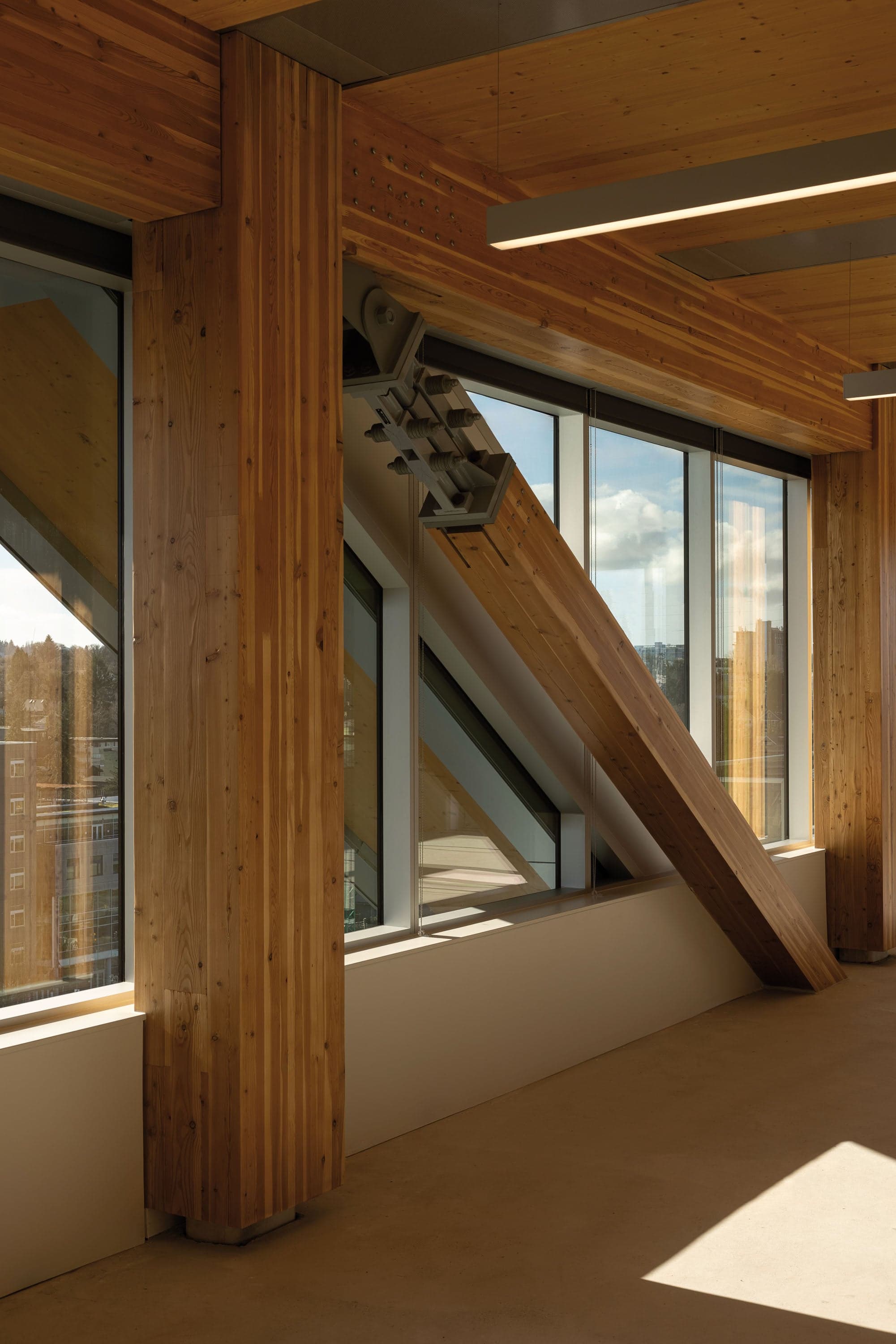
The team extensively tested the reimagined design to meet a strict safety standard, including full-scale seismic simulations at the University of Alberta. Researchers were especially focused on ensuring the connections between the timber beams and columns held up after an earthquake. The Hive passed with nary a tremble.
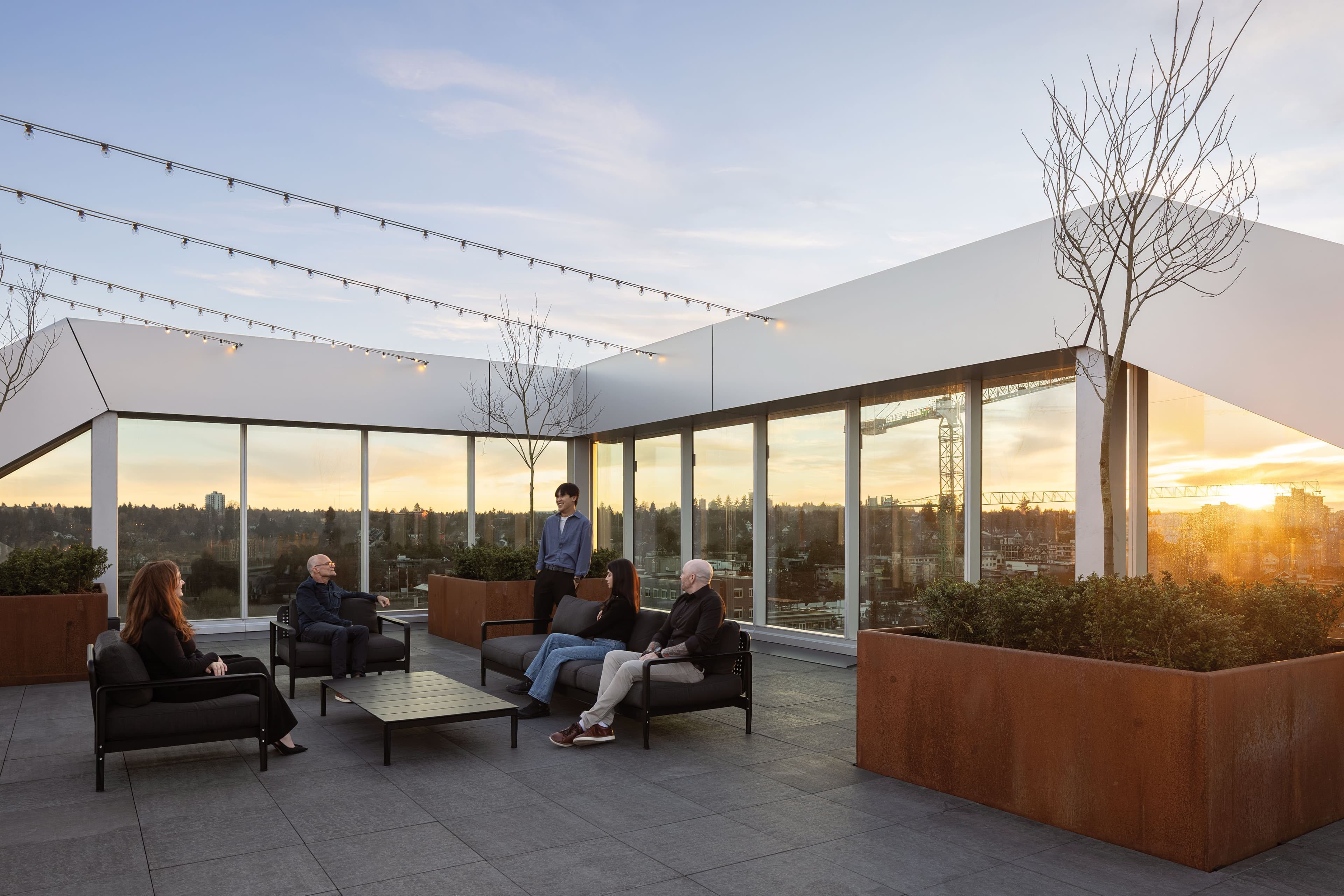
The Insurance Corporation of British Columbia leased the entire 160,000-square-foot building this past March, with occupancy for up to 2,000 employees set for 2027. With any luck, the Hive is a prototype for a new breed of Vancouver building—one that stands for generations after the Big One, plus any other quakes, large or small, that may follow.
What did you think of this story? Send a comment for publication to letters@macleans.ca, and supply your name and address. Comments should be fewer than 200 words, and may be edited for length and clarity.
Related Posts
Inside a Canadiana-Themed Island Cottage
Little House in the County
The Great Unbuild
Home Prices Are Finally Dropping
Get the Best of Maclean’s straight to your inbox.
Sign up for news, commentary and analysis. Join 60,000+ Canadian readers.