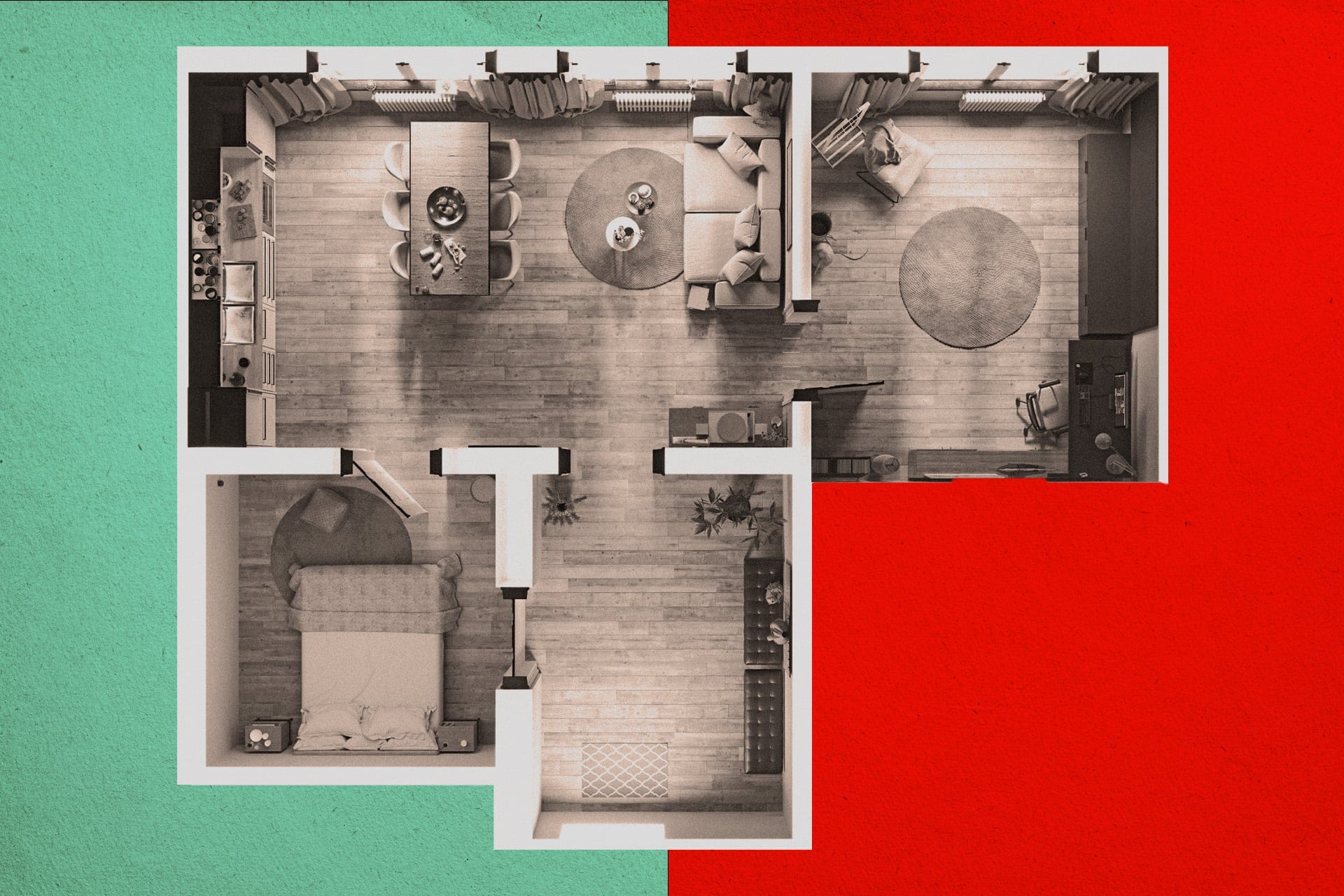
Canada Needs Condos People Actually Want to Live In
I come from a family where the nuances of architecture, design and construction were daily conversations at the dinner table. At an early age, my brother and I got exposed to every little detail about what went into designing and building a home. My dad, an architect, and my mom, an interior designer, had their own large architecture and project management firm back in Iran. When we immigrated to Canada in the ’90s, they started from scratch, starting a custom home company in Toronto, which became our family business. After my brother and I graduated from university, we joined them. He studied architecture, I studied structural engineering, and together we started a sister company in 2011 called Devron, focused on building multifamily condos in Toronto. While working on our first-ever condominium project, I discovered that Canada’s approach to building condos is deeply flawed.
On our first project with Devron, we followed the typical Toronto condo approach: find a site, maximize density, keep costs down and most importantly, tailor the product to investor buyers, because it was well established that they’re the ones buying pre-construction. That left us with a glass box full of small units. After we finished the building, there was this voice in my head saying: “Who are we building this for, and what’s the impact of creating a city full of buildings like this?”
That voice became impossible to ignore when we started taking buyers on tours through the units. We’d show them to couples and young families, and you could see the underwhelmed look on their faces. The condo playbook was creating buildings that are not what real people want for their families long-term. At this moment, we decided we need to rethink how we develop condominiums.
Related: The Condo Crash
The average Canadian spends more than three quarters of their time inside their home. It’s the space where we connect with our loved ones, raise families and make memories. For most of us, buying a home is the most important purchase we make. And yet, here in Canada, we have built a housing development system that makes that process difficult for people.
It all starts with how condominium projects are financed: in Canada, approximately 70 per cent of suites need to be pre-sold to buyers before a project can get financing to start construction. And that means that if you want to buy a new condo in a city like Toronto, chances are you’ll have to commit years in advance to a unit that you’ve only seen through a floor plan, that you can’t properly experience and evaluate. The problem is, most people cannot anticipate their home needs three to five years in advance. In that time, their family may change, their jobs may take them to another part of the city, or even out of the country. We don’t buy our cars or phones like this, so why do we expect people to acquire the most important and expensive purchase of their lives sight unseen?
In Toronto, some estimates suggest that 80 per cent of pre-construction sales go to investors. The result is that developers have no choice but to cater to what these buyers want, rather than what end users desire. End users make a nuanced assessment of livability and affordability, where investors often place outsized priority on price and efficiency. The result is tower after tower of glass boxes with several hundred small suites where efficiency is king and livability is de-prioritized. It’s not just that these condos are too small—they often lack the qualities that make a comfortable home. When suites are sold on paper, a buyer cannot experience the building’s lighting, the durability of the windows, elevator wait times, sounds and smells. If a buyer toured the building during an open house, any one of those issues could be enough to turn them away, regardless of how attractive the price is on a dollar-per-square-foot basis.
The other problem is that we have an unstable flow of supply that’s tethered to market speculation rather than real end-user demand. In the years when interest rates were low and market sentiment was strong, Toronto had more cranes up than any other city in North America. In the third quarter of 2022, for example, the Greater Toronto Area had 230 cranes—the most of the 14 major cities tracked by the Rider Levett Bucknall’s Crane Index and almost as many cranes as the other 13 markets in the survey combined. Now, Toronto pre-sales are down more than 90 per cent from their pandemic-era peak, contributing to cancelled projects, layoffs, defaults and the lowest level of condo starts since 2010.
We need to ask ourselves: did we need as many condos as we built in the pre-pandemic era? And, conversely, have we stopped needing new developments now? The answer to both questions is no. What we need is a housing and development system where what we build is tightly tied to real user demand, not market speculation. A lack of preconstruction buyers has now forced many developers to put new housing projects on hold—a slowdown that could ultimately trigger a housing supply crisis down the road.
After our first Devron project, we decided to design our units for the people who were going to live in them, not the investors that were going to flip them as soon as they were finished. For starters, we made the units bigger. In our second building, our average unit size was 875 square feet—nearly 40 per cent bigger than the average in Toronto at that time. We built more two- and three-bedroom units. We also shifted our focus to natural materials like brick and stone. Research has shown how big a difference natural materials can make in our perception, emotions and even health. When people walk by endless glass and metal facades, their stress responses increase. Human bodies are not biologically wired to live in glass and metal towers.
Related: How To Fix Canada’s Housing Crisis
What a lot of people don’t realize is that smaller units are actually more expensive to build on a per-square-foot basis. If you have a building with 200 small units instead of 100 larger ones, you need to pay for 200 kitchens, 200 bathrooms, more plumbing, more electrical systems, more of everything. There are also municipal development charges, which average $60,000 per suite. By building fewer, larger units, developers can save millions. Those savings can then be redirected into better architecture, better materials, more elevators—all while maintaining similar pricing per square foot. The pre-sale model also incentivizes corner-cutting: if the units are already sold to investors, there’s little financial incentive to build a high-quality tower.
I believe there’s a negative perception of multifamily housing, especially in Toronto. This is a uniquely Canadian issue. In most major cities in the world, multifamily living is the most common form of housing: my family in Iran occupied a 1,000-square-foot, three-bedroom suite in a six-storey building. I’ve heard the argument that people in Canada are still attached to the idea of the single-family home with the white picket fence. However, more than half of the people living in Toronto today were born outside of Canada, and many of them likely grew up in multifamily housing before immigrating here. The problem is that we’re just not building the right kind of multifamily housing.
To help break this cycle, we need to move toward a system where projects are built first and only sold to end users once completed. Developers should have the freedom to prove demand instead of forcing nearly every unit to be sold years in advance. The logic is simple: the quality of design and construction would be much higher if units were completed first, then sold. And more people would buy condos if they could actually walk through the building, see the quality in person, and move in immediately instead of purchasing it off a floor plan and hoping it meets their life needs in a few years.
We’ve tried to carry that philosophy into the projects we’re working on today. Our new project, 1 Marlborough in Toronto’s Rosedale neighbourhood, is 13 storeys and only 58 suites, with homes starting at around 1,800 square feet. It’s almost all two- to three-bedroom units. We’ve focused heavily on the small things that don’t necessarily jump out to people on a listing, but matter enormously once they actually live somewhere: better soundproofing, more high-speed elevators, high-performance windows, humidifiers and materials like brick and stone instead of endless glass walls.
Even with our larger projects, like 101 Spadina at Spadina and Adelaide, we’ve taken a similar approach. That building still prioritizes larger, more livable homes, with an average suite size around 775 square feet. When people talk about “end-user housing,” it can sound abstract or idealistic. But these are real projects being built in Toronto today, while the broader condo market is struggling precisely because of the disconnect from the people actually living in these buildings. The majority of our buyers are people planning to live in the units themselves. They’re not looking at these condos purely as investments. They’re looking for a home.
Canada isn’t just grappling with a shortage of housing—it’s dealing with a shortage of the right kind of housing that allows people to stay in their cities. We absolutely need more homes, and it’s important to put shovels in the ground quickly. But building fast doesn’t help if we’re building the wrong thing.
Pouyan Safapour is the president of Devron Developments.
What did you think of this story? Send a comment for publication to letters@macleans.ca, and supply your name and address. Comments should be fewer than 200 words, and may be edited for length and clarity.
Related Posts
Inside a Canadiana-Themed Island Cottage
Home Prices Are Finally Dropping
The Great Unbuild
Little House in the County
Get the Best of Maclean’s straight to your inbox.
Sign up for news, commentary and analysis. Join 60,000+ Canadian readers.