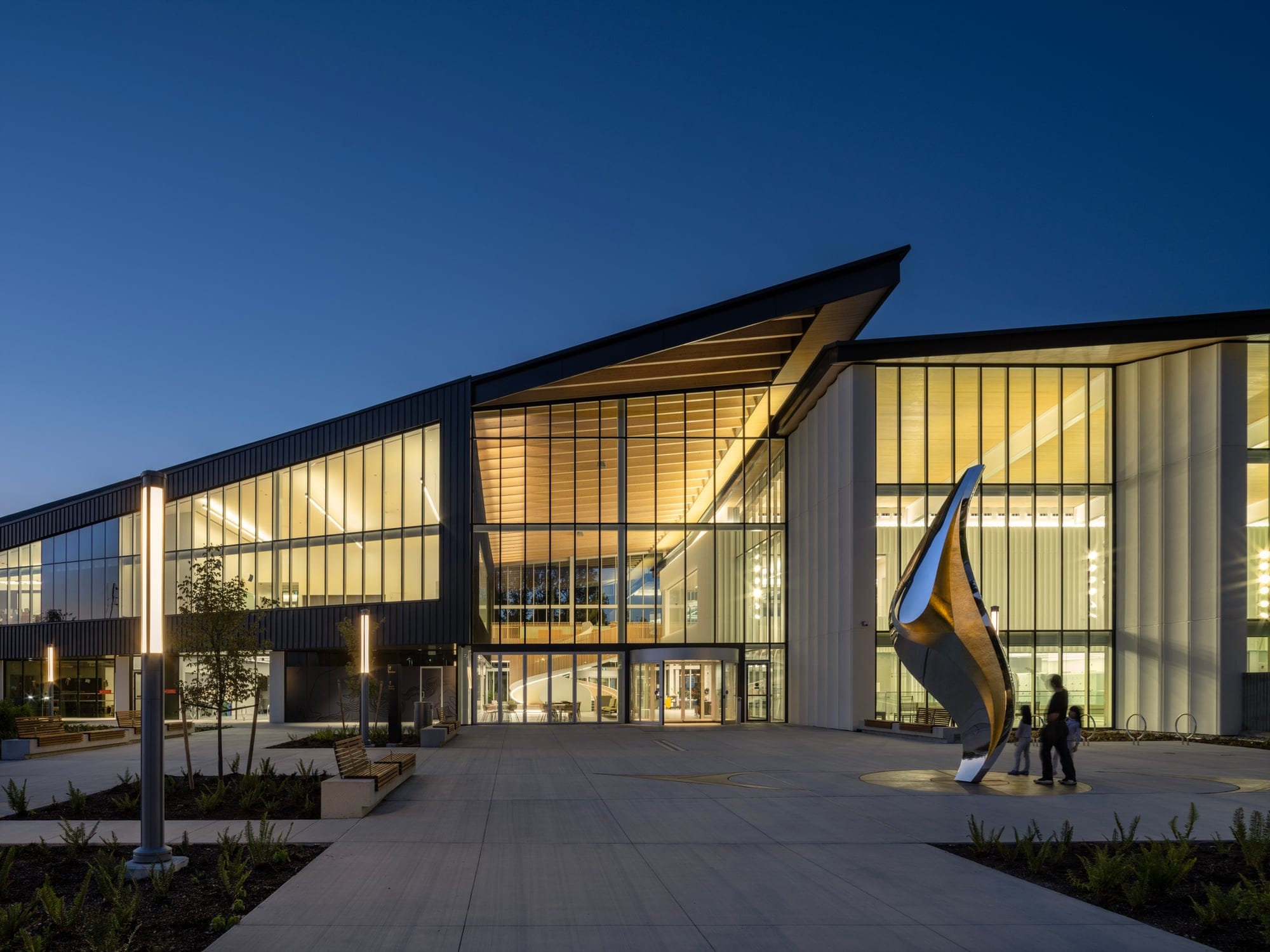
An Indoor Swim Spot With an Outdoorsy Feel
The former fishing village of skʷəkʷtɛ’xʷqən, now known as the city of New Westminster, B.C., was historically a lush, wooded gathering place for the hən̓q̓əmin̓əm̓-speaking peoples. Then, over time, officials slowly backfilled the area’s vast ravine to accommodate development. By 2021, however, the city was keen to pull a reverse–Joni Mitchell, unpaving one specific parking lot at the request of 3,000 community members. They had a few ideas for how to fill the space: a replacement for the nearby (decaying) Canada Games pool, along with recreational facilities for local kids and celebrations (like powwows) and a recreation of the original green space.
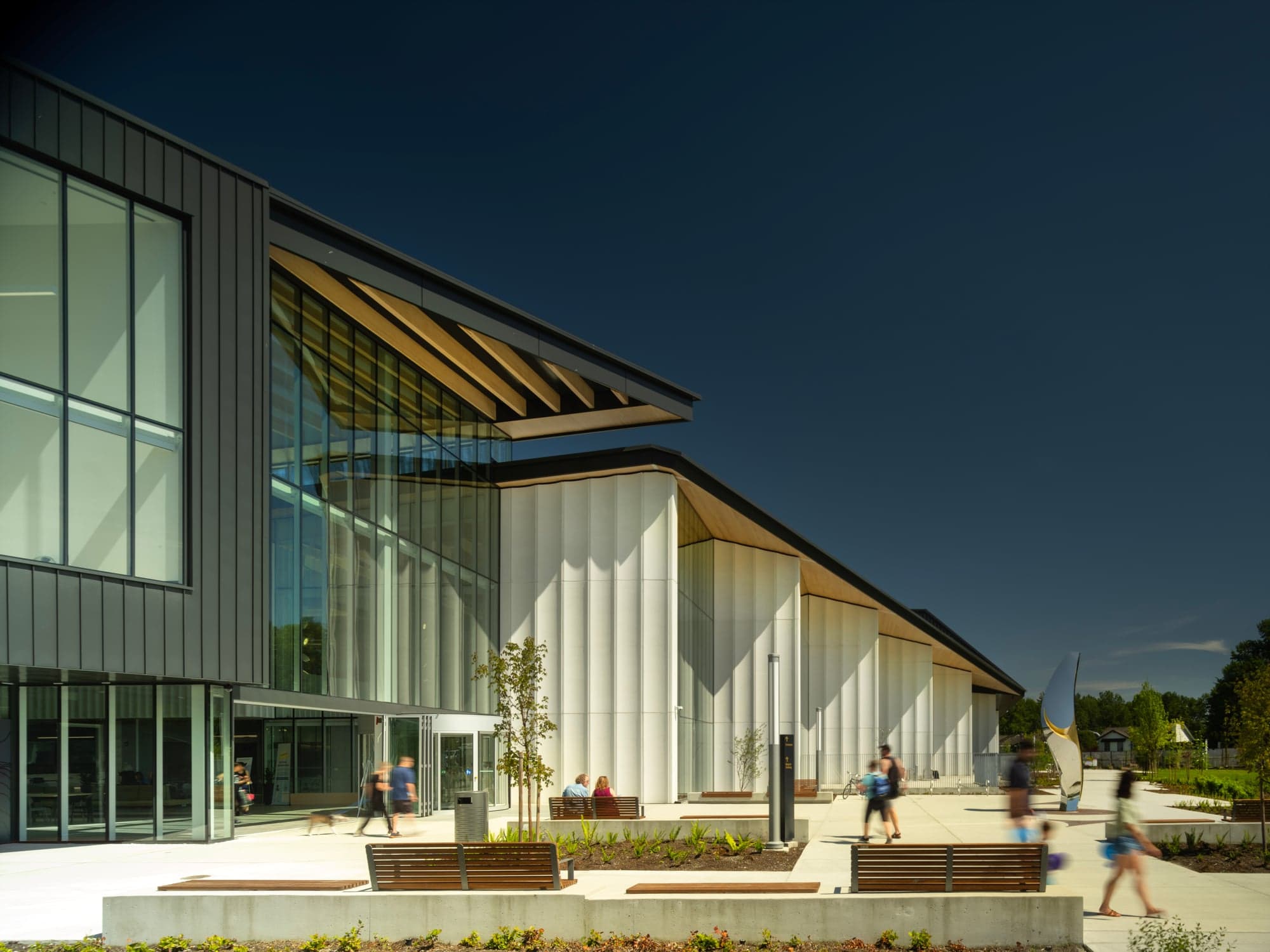
Over the next three years, construction workers and architects from HCMA Architecture and Design excavated the ravine, encountering buried car parts and such poor-quality soil that a structural engineer had to tweak the initial foundation designs to stop the structure sinking into the ground. Last April, the final product was unveiled: təməsew̓txʷ (pronounced Thomas-out) Aquatic and Community Centre, a 115,000-square-foot facility home to an Olympic-sized lap pool, a lazy river, a leisure pool, fitness rooms, childcare facilities and a soaring, 30-foot lobby that doubles as an admission-free hangout space for visitors. With a price tag of $107 million, it’s the city’s most expensive capital project to date.
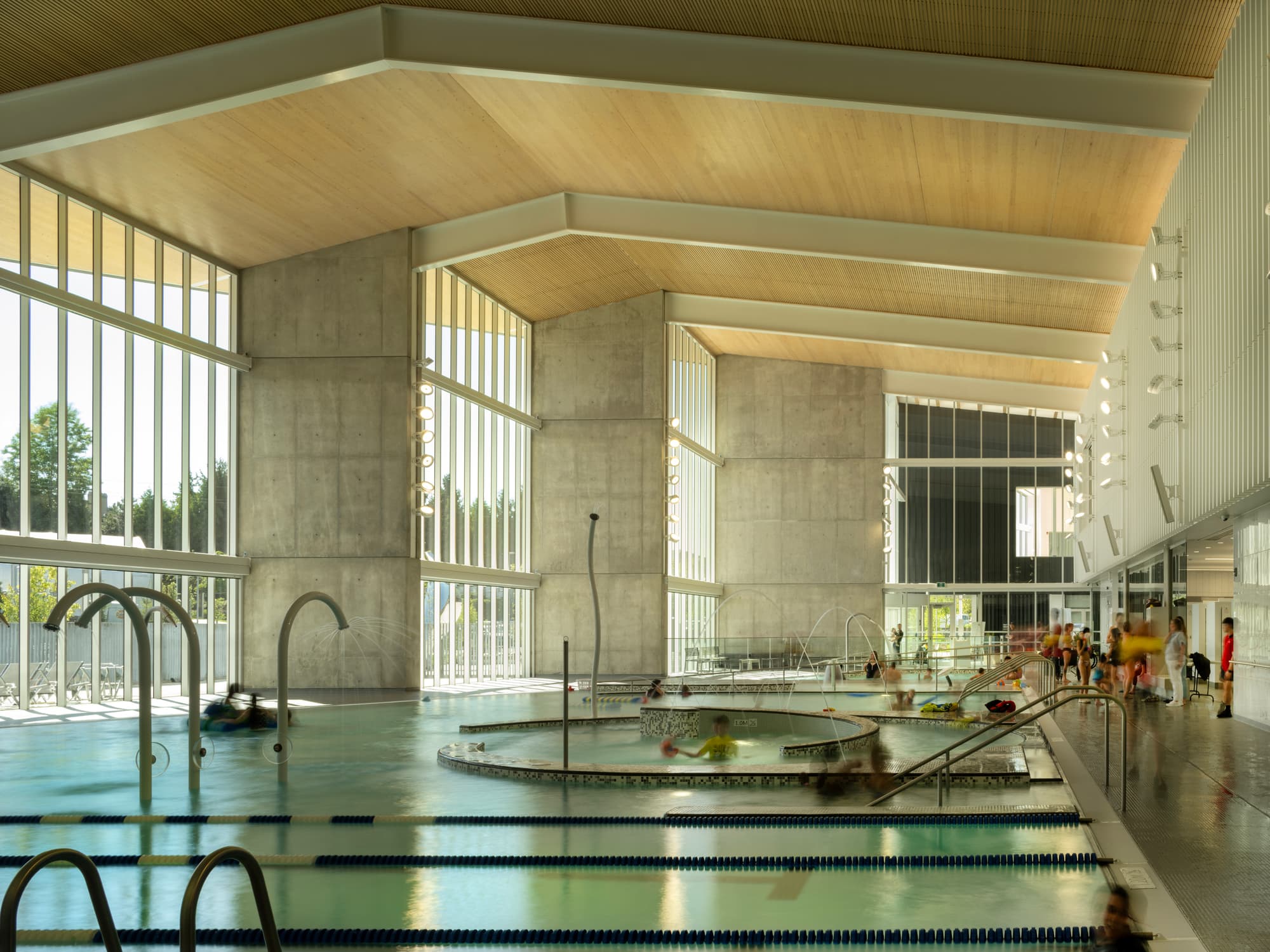
təməsew̓txʷ is also the first aquatic centre in the country to earn a zero-carbon design designation. Unlike other public pools, which can be notorious greenhouse-gas emitters and typically rely on gas boilers to heat water, təməsew̓txʷ runs partially on solar panels. Above the lap pool, a wooden, zig-zagging sawtooth roof lets in plenty of indirect daylight, preventing a glare from bouncing off the water. In fact, the entire facility is extremely wood-heavy, from its hulking cross-laminated timber ceiling (which can tolerate lots of humidity and unintentionally resembles a gym floor) to its central spiralling, maple-wrapped staircase.
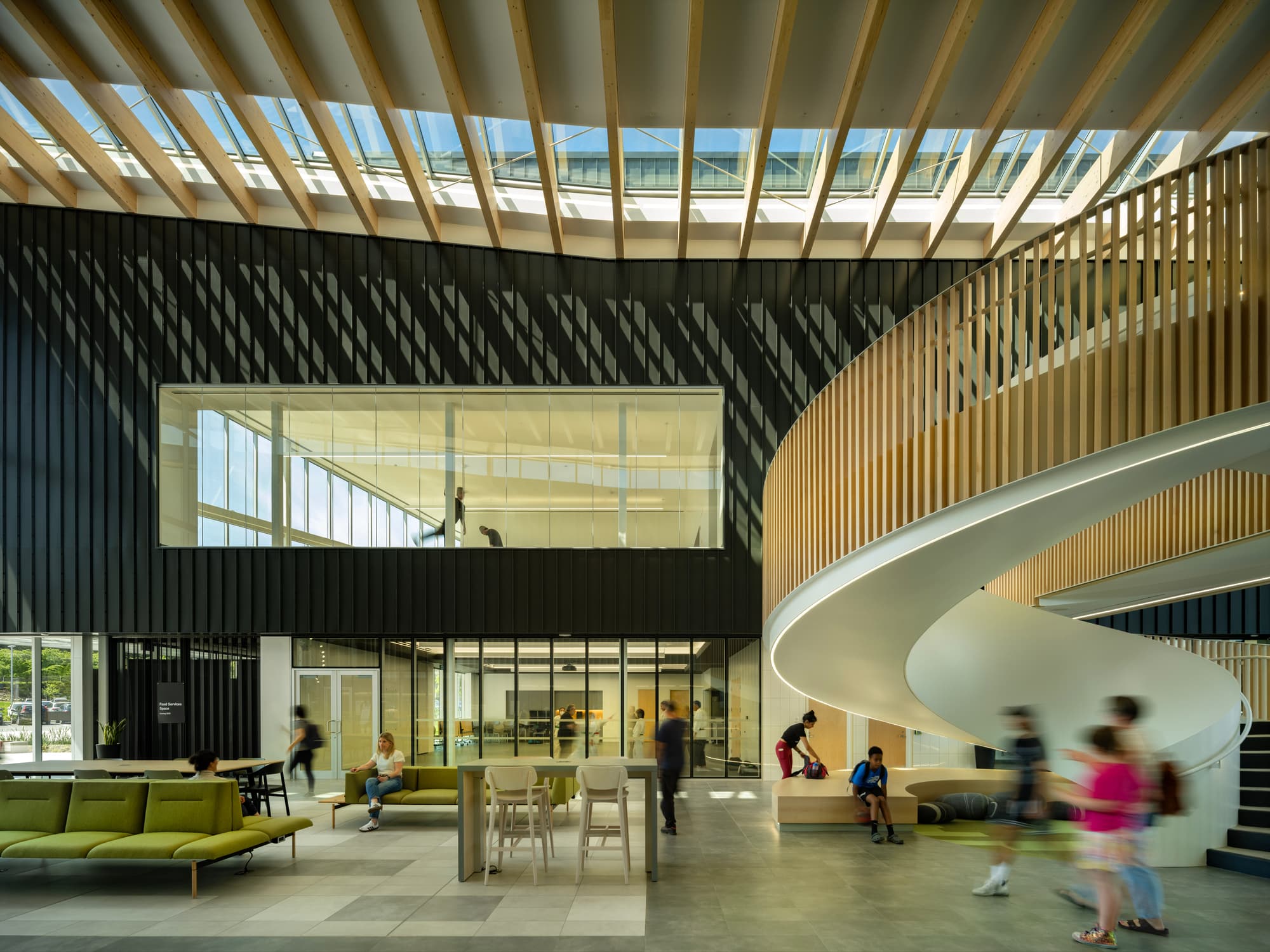
Since its spring opening, the space has been abuzz with activity: teens playing pickup basketball, kids learning to dog-paddle and synchronized swim teams practising their moves. The centre has also received the blessing of local Indigenous groups. Its name, təməsew̓txʷ, means “sea otter house” in the hən̓q̓əmin̓əm̓ language, a nod to animals well known for their tight-knit bonds and love of play.

Isabel Slone writes about fashion, culture and lifestyle for the New York Time, the Wall Street Journal, Harper’s Bazaar and more. She is author of the newsletter Freak Palace.
Related Posts
Inside a Canadiana-Themed Island Cottage

Home Prices Are Finally Dropping
Little House in the County
The Great Unbuild
Get the Best of Maclean’s straight to your inbox.
Sign up for news, commentary and analysis. Join 60,000+ Canadian readers.