The Myth of the All-American Car
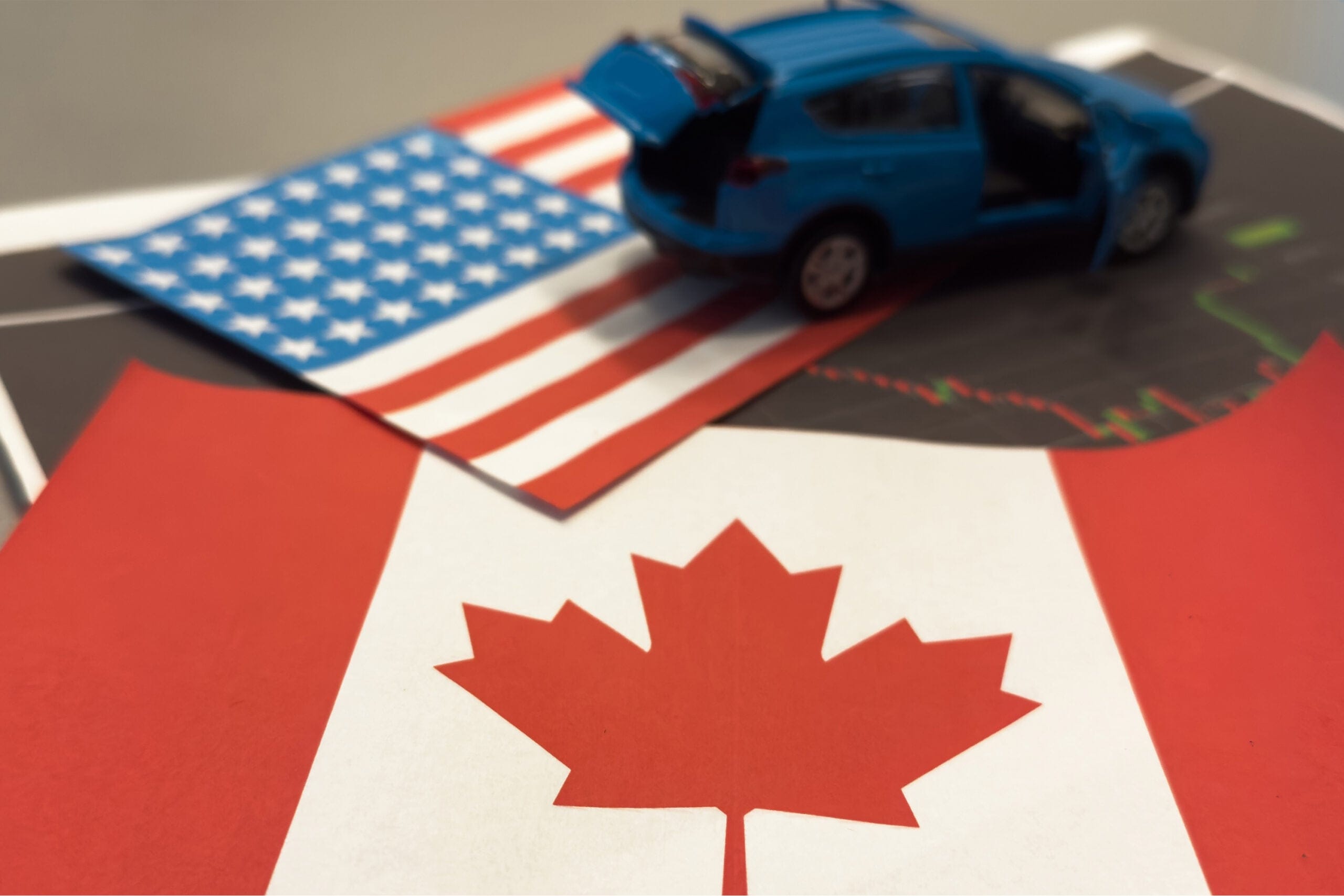
While touring the Ford River Rouge plant in Dearborn, Michigan, on Tuesday, President Trump declared that the United States will be just fine making its own automobiles, thank you very much. “We don’t need cars made in Canada, we don’t need cars made in Mexico, we want to make them here,” he said.
He gave the statement in response to a question about his plans for the review of the Canada-United States-Mexico Agreement, or CUSMA, a deal signed during his first term that allows for barrier-free trade among the three countries. The agreement comes up for mandatory review in July, but Trump’s rhetoric doesn’t bode well for the treaty’s future. He calls it “irrelevant” and says it offers no real advantage for the U.S.
I couldn’t disagree more. Trump’s statements reveal a lack of understanding of how the auto industry works. From extraction and refining of raw materials to the car showroom, Canada—alongside many other nations—plays an essential role in the U.S. auto industry. In fact, America’s industry would collapse without contributions from other countries.
Related: The Auto Industry Runs on Precision. Trump’s Tariffs Are Chaos.
Let’s start with the building blocks. Aluminum is one of the most important materials used in modern cars. Take America’s favourite vehicle, the Ford F-150, whose body is made entirely out of aluminum. Right now, Canada supplies the U.S. with more than half of its aluminum—largely because we have the abundant hydroelectric power needed to run energy-hungry aluminum smelters.
Our southern neighbours lack sufficient hydroelectric power to make enough of their own aluminum. In fact, for more than a century, parts of the country have relied on electricity from Ontario and Quebec just to power their homes. And any alternatives that could fuel smelters at scale—such as nuclear plants—are massively expensive and take decades to build. There’s simply no way the U.S. could ramp up their domestic aluminum production to meet the needs of their automotive, aerospace and consumer-goods sectors. They sure can’t do it quickly, and they absolutely couldn’t do it at the low cost they currently pay for Canadian aluminum.
CUSMA also allows the U.S., Canada and Mexico to operate as a single manufacturing entity, with vehicle parts crossing borders an average of seven to eight times before being assembled into vehicles and sold. Without free trade, costs would increase astronomically, straining manufacturers, cutting jobs and innovation and driving up prices for consumers. Take the recently announced North American Car of the Year, the 2026 Dodge Charger. The Charger is a high-performing coupe assembled in the Stellantis Windsor Assembly Plant using an engine built in Mexico, a transmission designed in Germany, a body styled in the U.S. and parts from all over the world. This multi-nation collaboration isn’t a one-off. It’s the norm for virtually every vehicle built in North America.
The auto industry is already organized in a way that takes the best advantage of what each country has to offer and minimizes their shortcomings. Even with CUSMA, the U.S. has a long-standing shortage of skilled tradespeople required to sustain its auto industry, due to their under-performing education system. At Ford Motor Co. alone, there are around 5,000 skilled trades jobs currently sitting unfilled. Even if they forced the closure of every factory in Canada and Mexico and reopened them in the U.S., they wouldn’t have enough qualified people to make the wheels turn. Without free trade and co-operation, we run the risk of driving up costs for both Canadians and Americans, decreasing product availability, diminishing vehicle quality and thwarting innovation.
Related: Why Trump’s Tariffs Didn’t Break Canada
The other half of the conundrum is on the consumer side. Canada represents America’s largest export market for passenger vehicles and light trucks, amounting to US$23 billion in U.S. exports in 2024. But if the U.S. decimates Canada’s auto industry through tariffs, will Canadians still want to buy American-made cars? According to a recent study from KPMG, Canadians are already intent on using their buying power to champion their home turf. The study found that 72 per cent of people expecting to buy a car in the next five years are highly prioritizing vehicles manufactured or assembled in Canada. My guess is that if our auto industry becomes unviable, Canadians will turn their sights to other markets like Europe and even China over the U.S. Just today, Carney said Canada has struck a deal with China to allow Chinese electric vehicles into the country at a lower tariff rate, in exchange for reduced duties on other goods.
America has worked alongside Canada to build a successful auto industry for decades—a dynamic that Trump paints as theft from Americans. But this ignores an undeniable truth: that America’s success needs Canada. If CUSMA is eliminated, Canada would certainly take a hit, but so would the U.S. And American auto industry leaders know it. At the Detroit Auto Show, hours after Trump’s statement, Ford CEO Farley weighed in: “We really see Canada and Mexico and the U.S. as an integrated manufacturing system. And that’s how we’re going to approach this negotiation.”
Unfortunately, on the Canadian side, Trump’s aggressive trade policy is already choking off investment, chilling the economy and cutting jobs. The same day that Trump toured the Ford factory, I grabbed lunch about 30 minutes away with a recent automotive engineering graduate. We sat at a sports bar near the Stellantis Windsor Assembly Plant, and he told me that despite doing a year-long internship in Germany, speaking three languages and applying for jobs since last August, he could not land a position in his hometown. He is a top-notch engineer, but he said that he was in town to apply for an assembly-line position just to get some work. Because despite the skilled labour shortage, tariffs are icing the auto sector and other Canadian industries—like putting glue in your transmission. I told the young man to take heart: a first-class education is his best asset, and this trade war will be resolved. Young Canadians—and all of us—must look forward and not allow what is happening today to define their future.
Peter Frise is a professor in the faculty of engineering at the University of Windsor.
Related Posts

The Case for Tourist Taxes

How Do We Keep Canada Insurable?

Canada is Funding its Own Economic Decline
American Carmakers Are Leaving. Bring on the Chinese EVs.
Get the Best of Maclean’s straight to your inbox.
Sign up for news, commentary and analysis. Join 60,000+ Canadian readers.