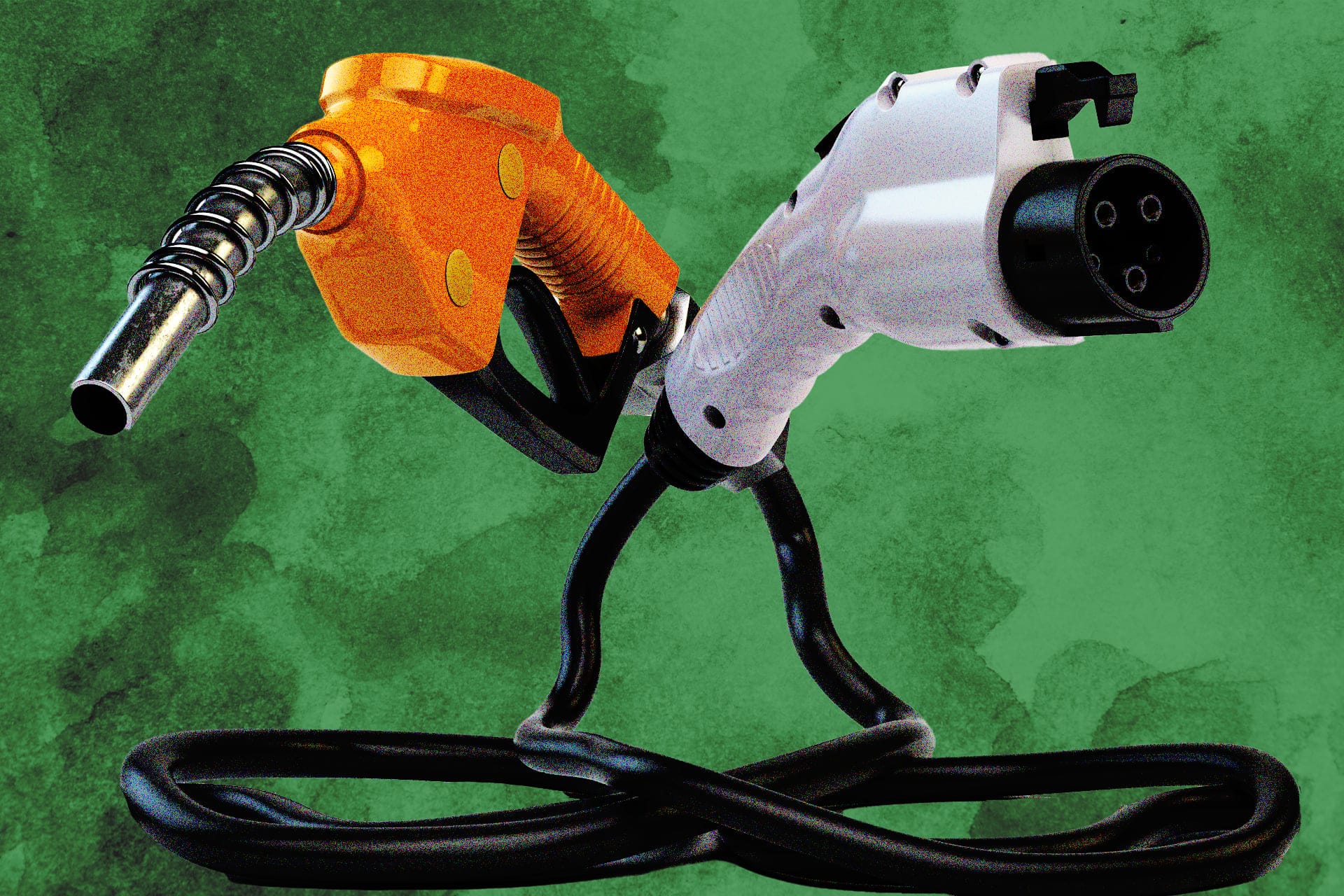
Will Outrageous Gas Prices Restart the EV Boom?
As the war in Iran rages on, gas prices are skyrocketing: drivers are now paying roughly $20 to $25 more each time they fill up their tanks. I, on the other hand, am saving $500 a month—and that’s because, for the last three years, I’ve been driving an electric vehicle. In B.C., where I live and where gas prices recently rose above $2 per litre, these savings are becoming harder to resist. Just recently, a friend’s boss ordered a new electric SUV; they said they’re simply over the volatile gas prices, especially since electricity is so much cheaper here. Indeed, for many drivers, today’s egregious gas prices may be the final push that tips them toward an EV.
There are already signs of this happening. While we won’t know exactly how much EV sales have grown until first-quarter data is released, online searches for EVs have ballooned. According to Rates.ca, insurance quotes for EVs rose 40 per cent in March, compared to the same time last year, while online vehicle retailer Clutch reported a 94 per cent jump in searches for EVs between January and March. Meanwhile, the president of Electric Mobility Canada said some car dealers have seen a 30 to 100 per cent leap in EV sales.
A similar phenomenon happened at the beginning of the war in Ukraine, when soaring gas prices pushed 61 per cent of Canadians to say they’d been convinced to buy an EV, and 51 per cent to say they’d never purchase a gas-powered vehicle again. In fact, from 2019 to 2024, EV sales in Canada grew from about two per cent of total new car sales to over 15 per cent.
Related: Could the Iran War Catalyze Canadian Oil and Gas?
That enthusiasm eventually died down as gas prices returned to normal. In 2025, Ottawa also paused its $5,000 EV rebate—it ran out of funding due to high demand—and many would-be buyers held off on purchasing an EV as they waited for the program’s potential return. That year, Canada was the only country among 50 major markets where EV sales declined. The other, more pervasive problem was Canada’s EV market itself. Late last year, Clean Energy Canada, where I work as director of policy and strategy, found that Canadians had fewer affordable options than consumers in Europe or Asia, in part because foreign EVs were boxed out of the market. We counted at least 21 EV models under $40,000 available to drivers in the EU, while Canadians just had one. This lack of competition means that most new EVs sell for about $50,000 to $70,000, while Europeans can buy models for closer to $30,000, like the French Citroën ë-C3 Comfort Range ($30,000) and BYD’s Dolphin Surf Comfort (around $33,000).
Now, Canadians’ interest in EVs may be here to stay. For one thing, the new federal automotive strategy positions EVs as both an economic strategy and an affordability solution. As part of that, it will reintroduce the $5,000 federal rebate this year, which will taper off over a five-year period, dropping to $2,000 by 2030. The discount applies to EVs valued at up to $50,000 from other countries, but there’s no price limit for Canadian-made cars. At the same time, Prime Minister Mark Carney has promised to strengthen tailpipe emissions standards and aim for 75 per cent EV sales by 2035, which would compel automakers to sell more fuel-efficient vehicles over time and create more affordable options; the policy is still in the works. On top of all this, Ottawa is investing $1.5 billion to expand the national EV charging network, part of which will fund the installation of 8,000 new public chargers. Together, these steps, in addition to expensive trips to the pumps, could help reverse sluggish EV sales from last year to a pace more aligned with global trends. EVs are expected to account for 30 per cent of global vehicle sales this year, compared to 25 per cent in 2025.
Related: American Carmakers Are Leaving. Bring on the Chinese EVs.
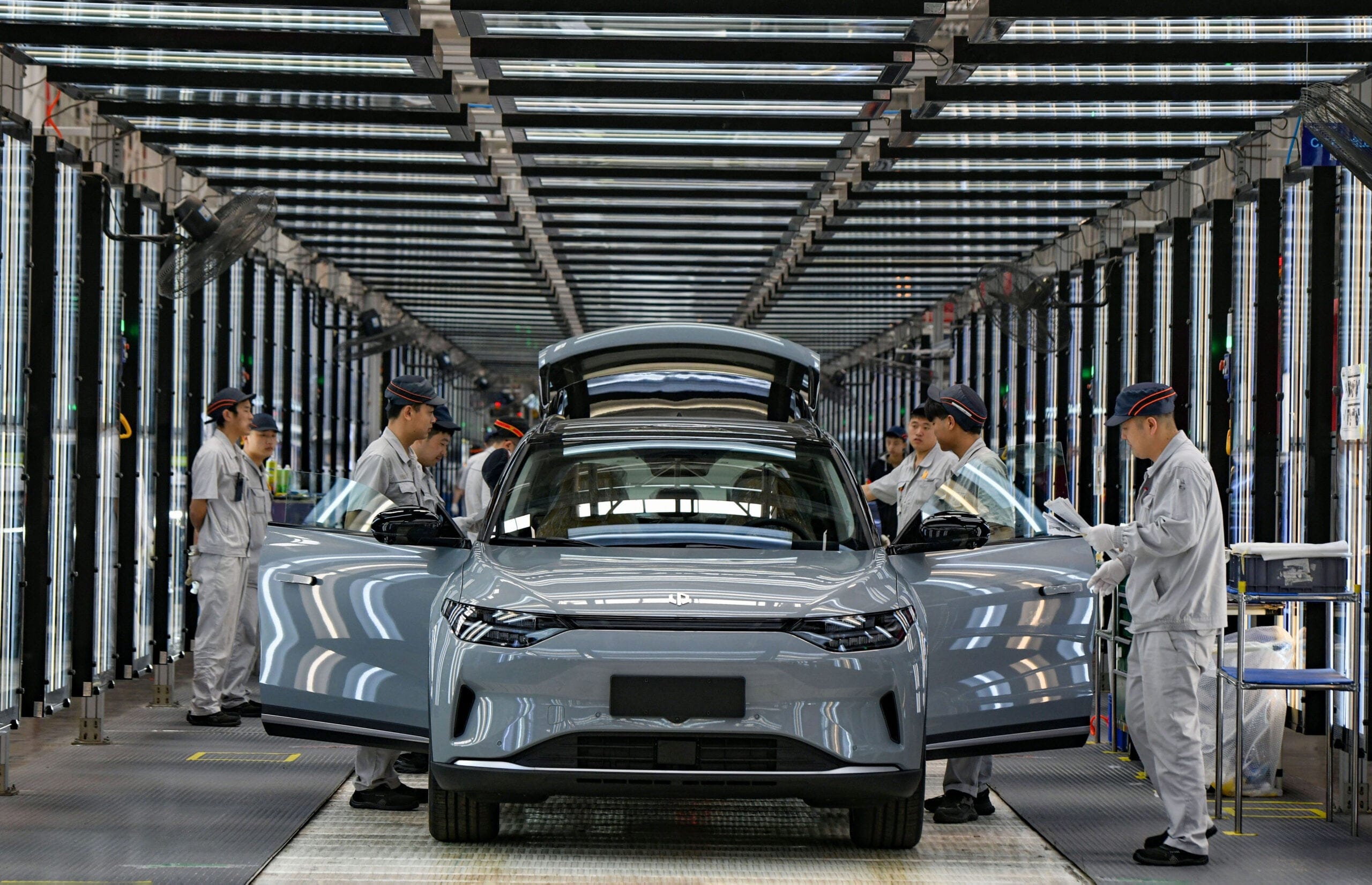
The other good news is that cheaper, Chinese-imported EVs are on the horizon, too. Canada’s EV agreement with China, which takes effect this year, will allow a limited number of Chinese imports at first, with an increasing share eventually set aside for vehicles priced under $35,000. Chinese car companies are already responding: BYD, a major Chinese EV brand, is set to open 20 dealerships across the country later this year.
As gas prices climb and the rebate returns, the already-good cost calculus for driving an EV has improved dramatically almost overnight. For Canadian households, switching from a gas-powered vehicle to an electric one is one of the most effective ways to cut their energy bills. Even before the war in Iran, swapping a comparable gas vehicle for a popular EV like the Chevrolet Equinox could save roughly $22,200 over 10 years. With the rebate and today’s war-driven gas prices, the savings now rise to about $34,100. Some automakers are also already dropping prices to qualify for the new $50,000 rebate cap, which will make EVs even more cost-effective from the start.
For EVs in Canada, 2025 was an outlier. But 2026 is already showing signs that Canada is getting back in the race. This could be the year more drivers than ever say goodbye to the pump and hello to the plug.
Joanna Kyriazis is the director of policy and strategy at Clean Energy Canada.
What did you think of this story? Send a comment for publication to letters@macleans.ca, and supply your name and address. Comments should be fewer than 200 words, and may be edited for length and clarity.
Related Posts

The Case for Tourist Taxes

Canada is Funding its Own Economic Decline
American Carmakers Are Leaving. Bring on the Chinese EVs.

How Do We Keep Canada Insurable?
Get the Best of Maclean’s straight to your inbox.
Sign up for news, commentary and analysis. Join 60,000+ Canadian readers.