The Rising Cost of On-Campus Living
A few years before her daughter, Abby, started post-secondary, Krista Kay had a conversation with friends about the cost of sending kids to university. She was surprised when one of them revealed that her child’s first year at a Canadian university had cost $25,000 including tuition, residence fees and a mandatory meal plan. Other parents in her circle echoed this number, leaving Kay grateful for the financial reality check. In 2023, she paid roughly $22,000 for Abby’s first year at the University of Guelph, where she studied bio-medical science.
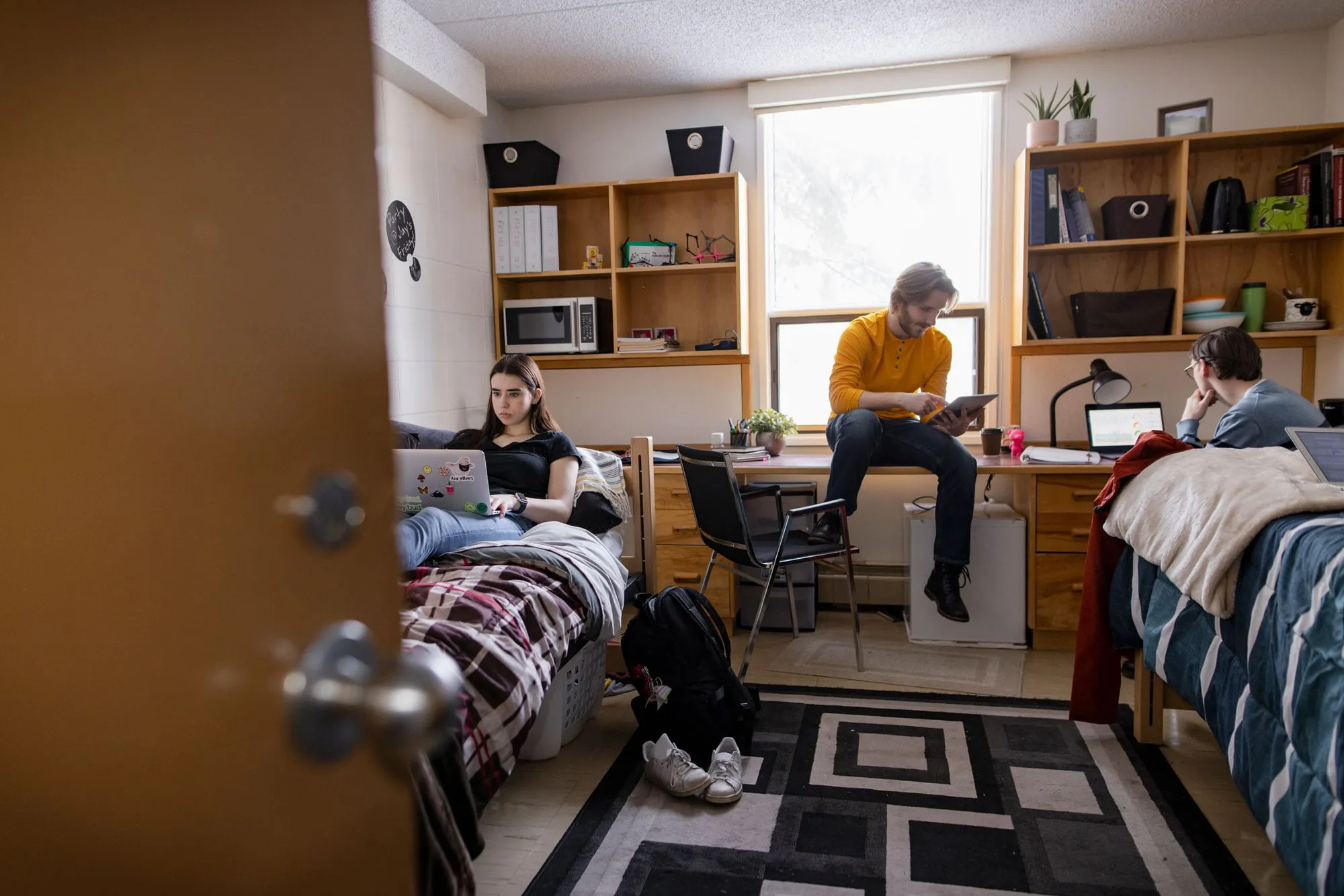
While prospective post-secondary students and their parents may be aware of the high cost of tuition fees, many families are shocked to discover that it’s the cost of residence—and the often-mandatory meal plans—that breaks the bank. There are plenty of benefits for students living in residence beyond a mattress and cooked meals, though, and many first-year families find that the full “university experience” is worth the cost.
The cost of living on campus has gone up substantially across Canada, with many schools increasing their residence fees by as much as 30 to 50 per cent over the past decade. At McMaster University in Hamilton, for example, the price range for on-campus housing during the 2015–16 academic year was $5,028 to $8,310. Today, the range is $6,475 (for a bed in a room shared with three other students) to $11,500 (for a spacious “super single” room with a connected washroom shared with another student). That’s a 29 per cent increase for the lowest-cost accommodation and a 38 per cent increase when comparing the high end of the range. Those figures don’t include a meal plan, which adds another $6,000-plus onto the invoice.
Residence fees tend to be highest in urban centres like Toronto, Montreal and Vancouver, and lower in smaller communities in Saskatchewan, Manitoba, northern Ontario, New Brunswick and Newfoundland and Labrador. A double occupancy room with meals at the University of Toronto’s downtown campus, for example, currently starts at $13,775, whereas at Brandon University, a double occupancy room with meals goes for a comparatively modest $9,400. At the University of Regina’s campus, first-year students can opt for a single occupancy room and meal plan starting at $7,632, while a similar room (plus meal plan) at the University of British Columbia costs around $13,592. Residence fees, which aren’t subject to rent control, don’t always go up gradually, so increases can catch families off-guard. The University of Toronto’s Mississauga campus implemented a 6.5 per cent increase to the cost of undergraduate residence rates in 2024 and another four per cent increase in 2025. Fees now start at $9,802 for a double occupancy room including meals.
What do residence fees include?
At most colleges and universities in Canada, room and board covers more than just a bed, utilities and internet. Each building typically has resident advisers who offer 24/7 peer support, as well as full-time, live-in residence life coordinators and front desk staff. Many also feature a variety of amenities, including fitness centres, shared kitchens, multifaith spaces, lounges and event spaces for student use, plus cleaning staff to maintain common areas.
Related Posts

The Crisis in Student Housing

Lessons From My First Year of University
In some cases, fees cover costs beyond the day-to-day services a student benefits from. Andrew Parr, vice-president of students at UBC, says that, in addition to operating costs such as labour, utilities, maintenance and other expenses, a substantial portion of housing costs at UBC comes from the mortgages the school incurs when investing in new housing. In fact, 36 per cent of residence fees at UBC currently go towards that expense.
Investing in on-campus housing is costly, but it’s also an extremely high priority. While UBC has over 14,000 students living in school-owned housing on campus (including 6,000 beds added over the past 15 years), their wait list for residence leading up to September is typically about 7,000 students long. After decades of minimal investment in student housing, schools across the country are playing catch-up: new residences are being built at McMaster, Western University, Ontario Tech University, the University of Toronto, the University of Ottawa, the University of Victoria and more.
There are few, if any, provincial rules that specify how universities must allocate residence fee revenues internally, so institutions largely set their own policies. For example, some schools put all of the income generated from campus housing into their general operating budget, whereas other schools keep those funds within a silo. That’s the case at the University of Waterloo, where funds from campus housing stay within that unit. Conversely, housing doesn’t receive money from other parts of the university budget. At the University of British Columbia, a small surplus goes to the general operating budget. Residence fees also contribute to the funding of bursaries for students who need support paying for residence, plus campus wellness and counselling services. “The notion is that on-campus students use these services more,” Parr explains. When setting residence fees, campus housing teams also consider the off-campus rent prices, so the housing market can also drive year-over-year fee increases.
The cost of mandatory meal plans
The cost of living on campus goes beyond the price of the room. Most universities require first-year students, or others living in on-campus housing without kitchenettes, to purchase a meal plan. While costs vary significantly between institutions, meal plan fees across Canada have gone up dramatically over the past decade and continue to rise each year, largely due to the rising costs of food and labour. Increased demand for quality and variety in on-campus food offerings has also played a role. York University, for example, offers a tiered meal plan system with a declining card balance, with options ranging from $5,650 to $6,950 per academic year. Their meal plan covers nearly all food on campus, including chain restaurants and coffee shops. The University of Calgary meal plan offers “all you care to eat” visits to their dining room on an unlimited or declining balance basis with two tiers, but their meal plan doesn’t include other retail food locations on campus. Not all post-secondary institutions offer tiered options, though; UBC recently moved to a flat-fee model with unlimited meals available for the duration of the term. Students can eat what they want, whenever they want, with no limits and no need to track a balance throughout the year. This has led to a much higher use of on-campus dining spaces and a better student experience, Parr says, but it’s also contributed to higher meal plan fees. UBC’s meal plan options started at $4,126 in 2015, and the flat-rate plan currently costs over $7,500 per year.
Is living on campus worth the high price tag?
Between tuition, residence and dining on campus, it’s easy to see how a single year of university in Canada can add up to $20,000 or more. Still, many families decide that the benefits are worth the investment. Universities report students who live in residence during their first year typically earn higher grades than peers who commute to and from campus, and also have higher graduation rates. Living on campus with a meal plan also leads to sharing meals with other students—a good way to meet people—and saves time, as they don’t need to grocery shop, prepare food and clean up after.
But for those feeling the pinch, it’s helpful to know students have more flexibility after their first year of study, when the majority of students move off-campus. Rent may not always be cheaper than residence, but it’s typically paid out incrementally (instead of getting one large residence bill per term) and without a mandatory meal plan, food costs can be spread out and reduced.
Moving off-campus is exactly what Abby Kay did in her second year at the University of Guelph. While she enjoyed the amenities there, and made good use of the library, study rooms and dining options, on-campus options were limited after first year. Living with friends in an off-campus student housing complex was the natural next step.
This story appears in the 2026 edition of the Ultimate Guide to Canadian Universities. You can buy the issue for $19.99 here or on newsstands.
Subscribe to Message Board, our weekly newsletter guide to planning your post-secondary journey
Whether you’re a student, parent or guidance counsellor, Message Board is a resource you won’t want to miss out on.
Related Posts
I was a Campus Tour Guide. These are the Best Questions People Asked Me.

How to Plan a Gap Year

The Confusion and Controversy of University Meal Plans