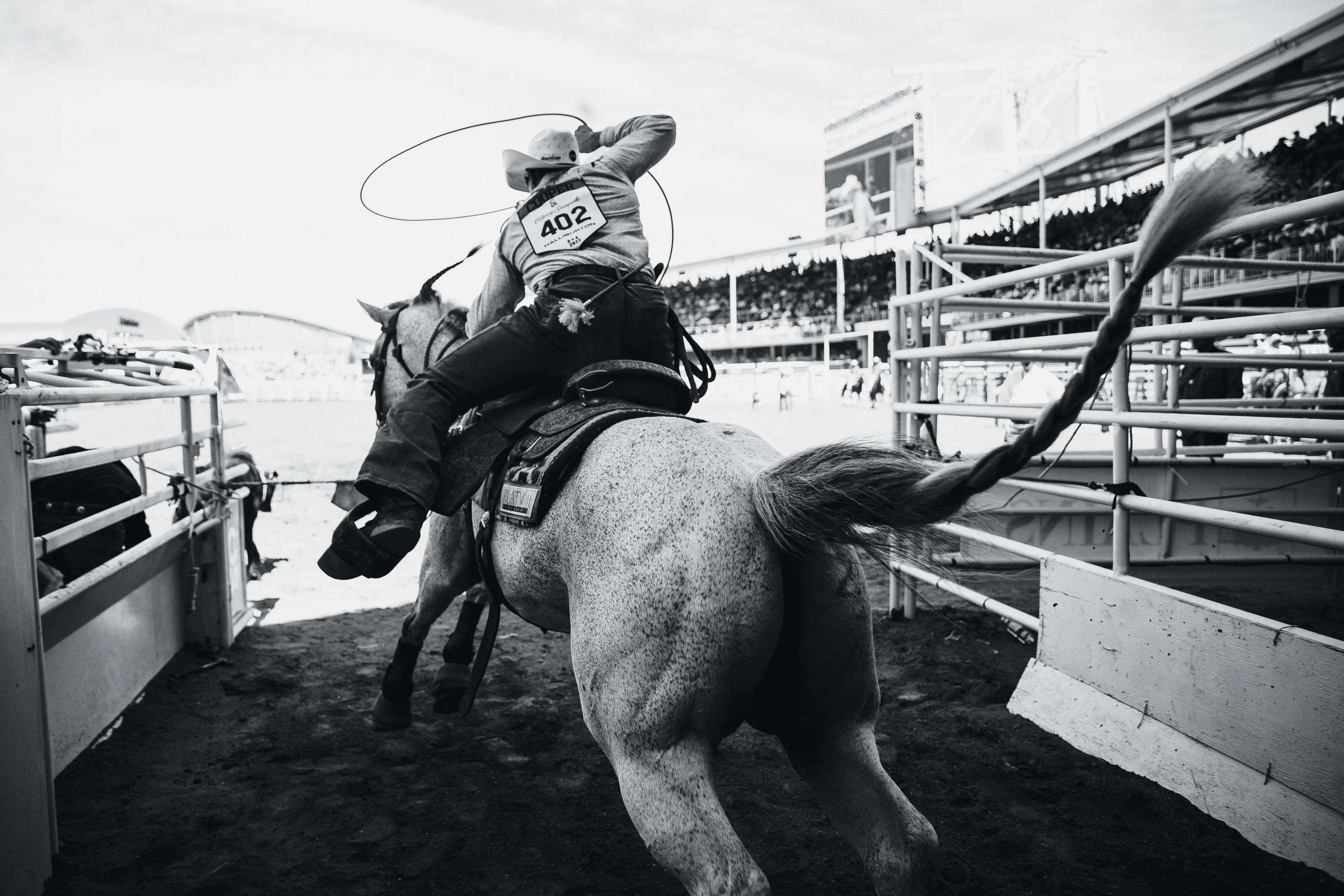
The Calgary Stampede is Peak Canada
For me, as for most Calgarians, the Stampede is a festival of firsts: my first time on a rollercoaster, my first time hearing the bleat of a goat, my first time wearing a bolo tie. Then, too, there was the first time crowd-surfing, mosh-pitting and shooting a BB gun; the first time getting debilitatingly drunk, heatstroke and fired (in that order). There was the first time meeting a hypnotist, a hoop dancer and a sculptor who didn’t have a day job. The first time eating a bucket of mini doughnuts, a slice of pizza with fried crickets, a pickle on a stick. The first time seeing the heavy horse pull, pigeon racing and Shania Twain. The first time having a same-sex experience, the first time hearing the tectonic roar of the chuckwagon races or the pin-drop inhalation when the stadium saw a bull rider get gored. The first time I went, the first time I didn’t.
The Calgary Stampede has no equal. Last week, my boss took me to lunch at a chain pub in Abbotsford, B.C.—I grew up in Calgary, but now live in Vancouver—and asked what I was writing about. He told me that he’d never gone to the Stampede, but he had been to the Cloverdale Rodeo in Surrey. I said nothing, and not just for reasons of sycophancy. The comparison was so preposterous as to be unworthy of response. It was like saying, “I’ve never been to Istanbul, but I have seen a stray cat.”
The Calgary Stampede, entering its 115th year, is Canada’s premiere annual event. Each year, on average, it employs 5,000 people. It generates more than $600 million in economic output in the city. Its average daily attendance, nearly 150,000 people, is almost double that of the Canadian National Exhibition in Toronto, despite Calgary’s population being less than one-quarter of the Greater Toronto Area’s.
The Stampede’s superiority comes not only from its size, but its ethos. Montreal’s Jazz Fest, Ottawa’s Winterlude and Quebec’s Winter Carnival may be comparable in attendance, but not in participation. Because those other festivals, while popular, are not obligatory. For Calgarians, the only way to avoid the Stampede is to flee to another time zone—or, at the very least, to Edmonton.
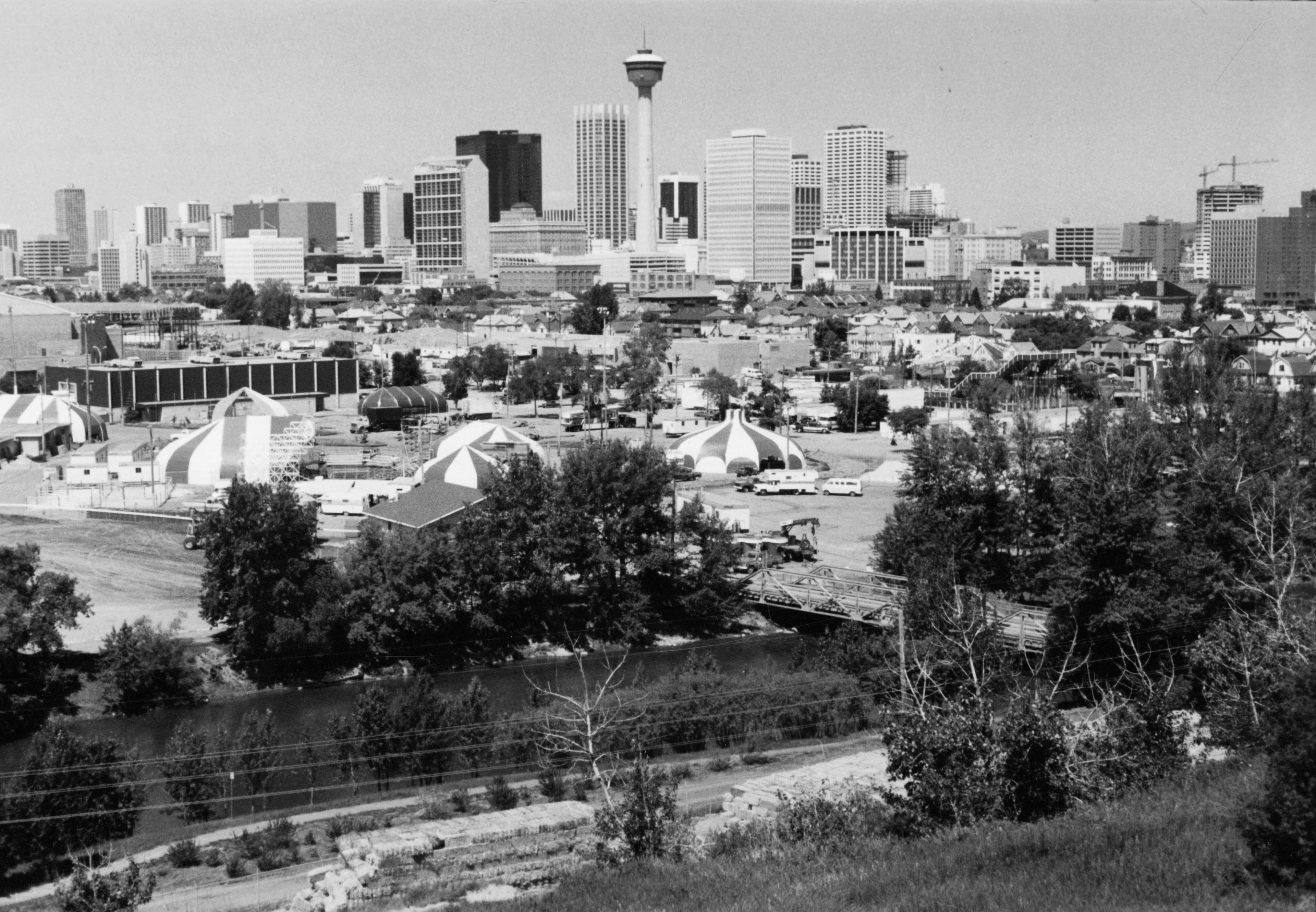
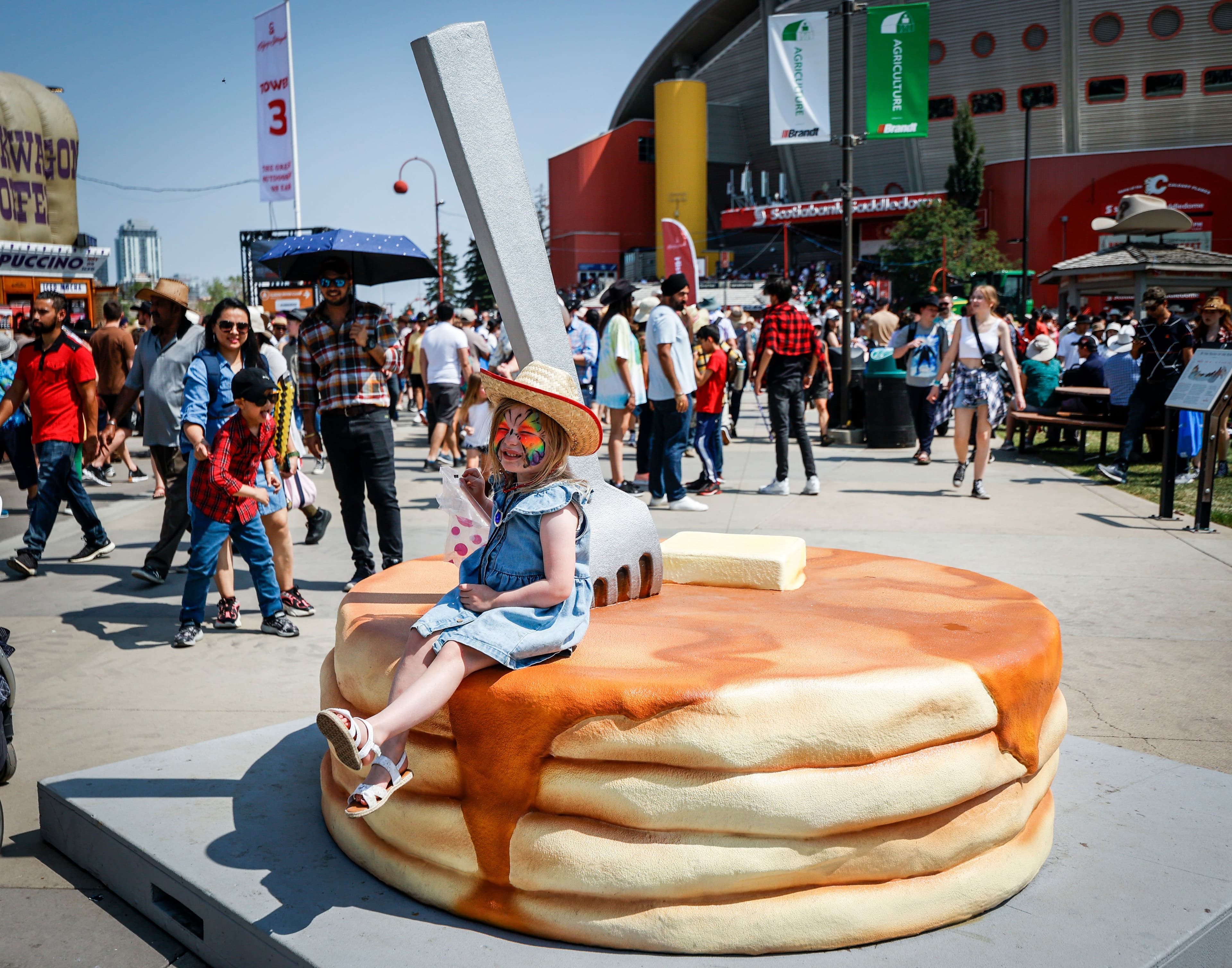
For 10 days following the first Friday of July, the Stampede overflows its fairgrounds and into the city entire: into every strip-mall parking lot that turns into a hay maze, into every school parking lot that turns into a pancake breakfast, into every community centre parking lot that turns into a petting zoo. (Yes, Calgary is one-third parking lot.)
Related Posts
My Misadventures in Gentle Parenting

Big Tech v. Me
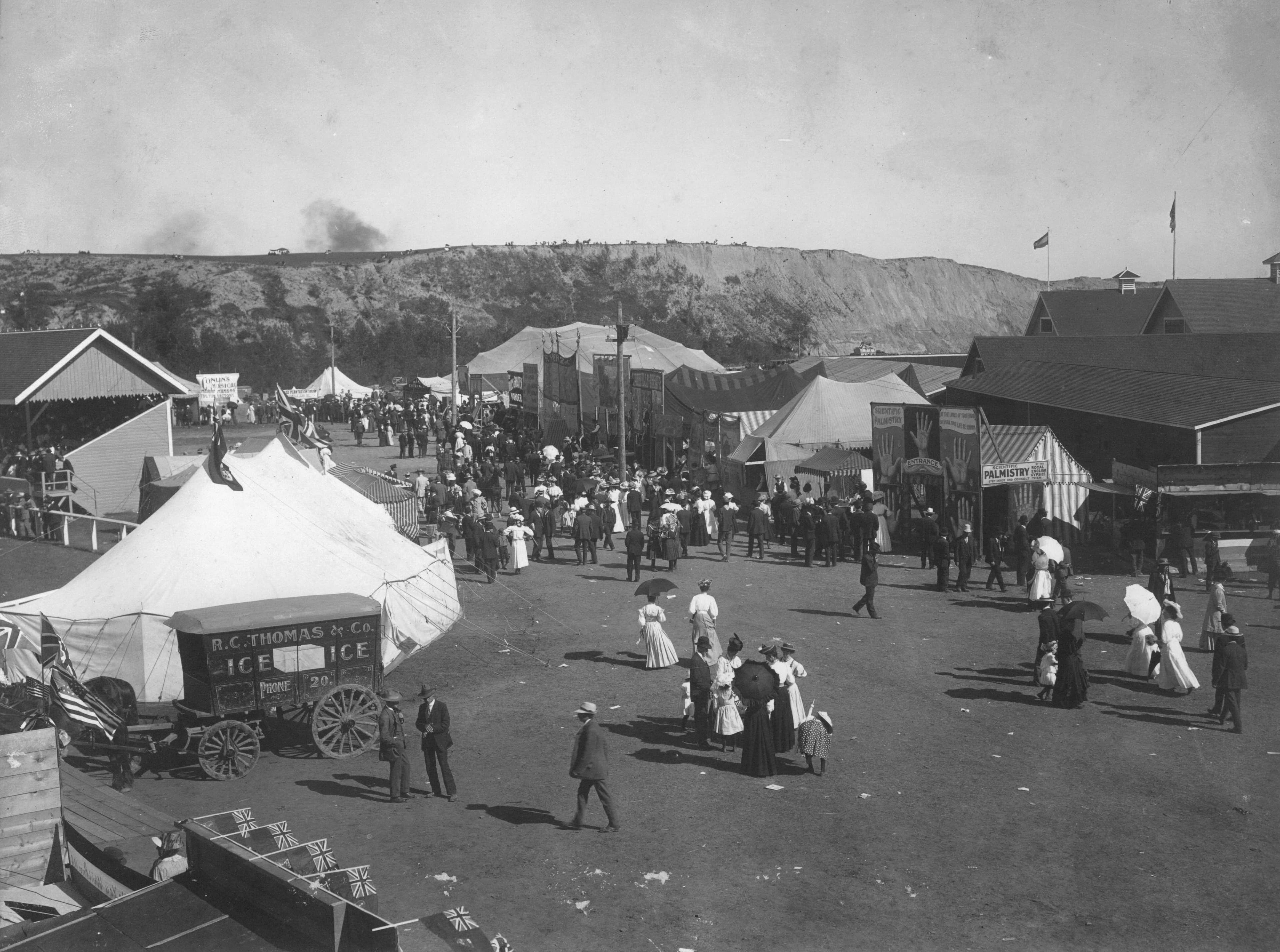
The Stampede is as ubiquitous as Christmas, as costumey as Halloween and as rowdy as New Year’s. It exists in the window murals of restaurants, in a stark increase of police on horseback, in the Western wear that struts through every bank, library and office building. As my mother said, “The thing about the Stampede I love the most is that it’s the only time of year that I can small-talk some CEO in the bar because we’re both wearing our cowboy shirts.”
Canada is a country often accused of having no culture. But in my opinion it has two: the one we enjoy and the one we endure. The one we enjoy is, quite simply, American. These are the easy delights of Taylor Swift and the Toy Story films. There’s also our idealization of suburban sprawl, touring Broadway shows and coffee that is basically hot ice cream. Anything we enjoy that we create ourselves, like Schitt’s Creek, works tirelessly to make us forget that it’s Canadian, through the erasure of setting, politics and any glimpse of coloured currency.
The culture we endure, on the other hand, is made at the begrudging fulfillment of CanCon laws or from the emotional compunction of arts-award juries. This type of art is all Canadiana. Anything made in this category takes place in Canada not because stories—and, by extension, real human lives—happen here, as they clearly do. Instead, it’s to serve as a nutritional metaphor about our country writ large. These cultural creations work tirelessly to make us never forget that they are Canadian, and they achieve this through their moral education, artistic rigidity and dutiful reverence for the city of Toronto. Examples in this category include practically every Canadian novel published in the last 30 years by an author not named Louise Penny.
At the centre of the Venn diagram of these two cultures is the sliver of the Calgary Stampede: local but not provincial, Canadian but not onerously so. It can feel, these days, as if we exist at the climax of history, when every question has the “will they or won’t they” urgency of a series finale. Will Alberta leave Canada? Will America leave Canada alone? Will Canada become part of the European Union? The Stampede is the antidote—it always promises another season. It maintains an unfailing boosterism, an unflinching assurance, a sincerity that forbids irony. It has a hubris that is brazen, a quest that is Icarian. This quality is my brother’s favourite part: “There was that slingshot ride. I don’t think they have it anymore. Someone may have died.”
As every Calgarian child knows—for the history of the Calgary Stampede is taught in elementary school—the Stampede was founded by an American, Guy Weadick. Weadick was not only an American, but the most American of Americans, in that he was born in New York and died in L.A. He was an entertainer, salesman and trick roper: all hat, no cattle.
Weadick wanted to mimic the mega-rodeos of the U.S. In both Houston and Cheyenne, as in Calgary, you can sit atop a Ferris wheel at twilight, the rainbow glow of the midway beneath you, and peer into the lurid light of a stadium, packed to capacity, where a man—a boy, really—launches himself from his galloping horse to land between the sharpened horns of a charging steer.
But at the Calgary Stampede, those other festivals do not matter. I didn’t even know they existed until I researched this article. You can Stampede from dawn ’til dawn, and you will never hear any anxiety that it’s a ripoff, any question whether it’s “just as good.” It is the only example I can think of where the Canadian counterpart has outgrown its American inspiration. The rarity of this cannot be overemphasized. (Consider the clinical level of insanity someone would need to possess in order to claim that Canadian Idol is the superlative Idol.)
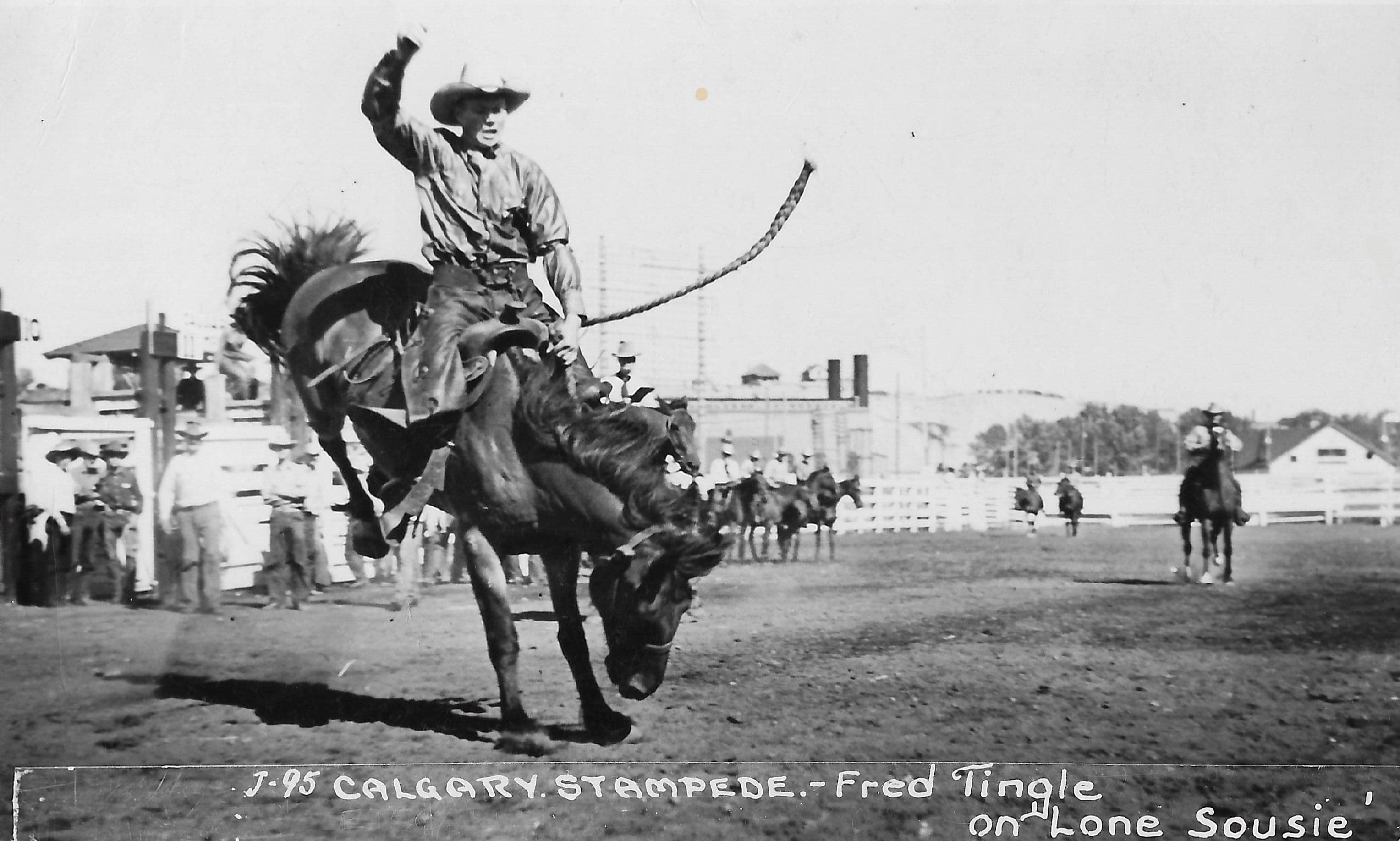
The Calgary Stampede’s carpetbagger beginnings hold little sway in the festival of today. Proof of this is found in the Stampede’s Weadickville—a replica streetscape from ye olden days of log cabins, affectionately called “We A Dick Ville” by local troublemakers—being dismantled recently to make way for a high-rise hotel. Today’s festival is more cosmopolitan, more multifaceted and more debonair, making any cultural definition difficult to pin down (or, in the world of competitive calf-roping, to throw “two wraps and a hooey”). Every attempt kicks free of its ties.
On the Stampede grounds (which of course function as a collection of parking lots for the other 355 days of the year), there are several thematic spheres. Americana is there, but that’s largely limited to Nashville North, a jumbo party tent for live country music, featuring advertisements for Bud Light and performers with single-syllable first and last names. Then, too, there is the midway of rides and games, where every ride is so outclassed by those of year-round amusement parks that the zeitgeist is one of nostalgia—a soft-lit longing for the World’s Fairs of Paris, London or Chicago.
There’s the Agricultural Zone, much quieter and more calloused than the electric-guitar ballyhoo of Nashville North. Here, real-life ranchers, shepherds, swineherds and blacksmiths come to showcase and sell. This zone is geared not for tourists but for trade, and the atmosphere there is Genuine Rural, full of people who use the word “folks” sincerely and harbour an unrelenting suspicion of men who don’t wear socks.
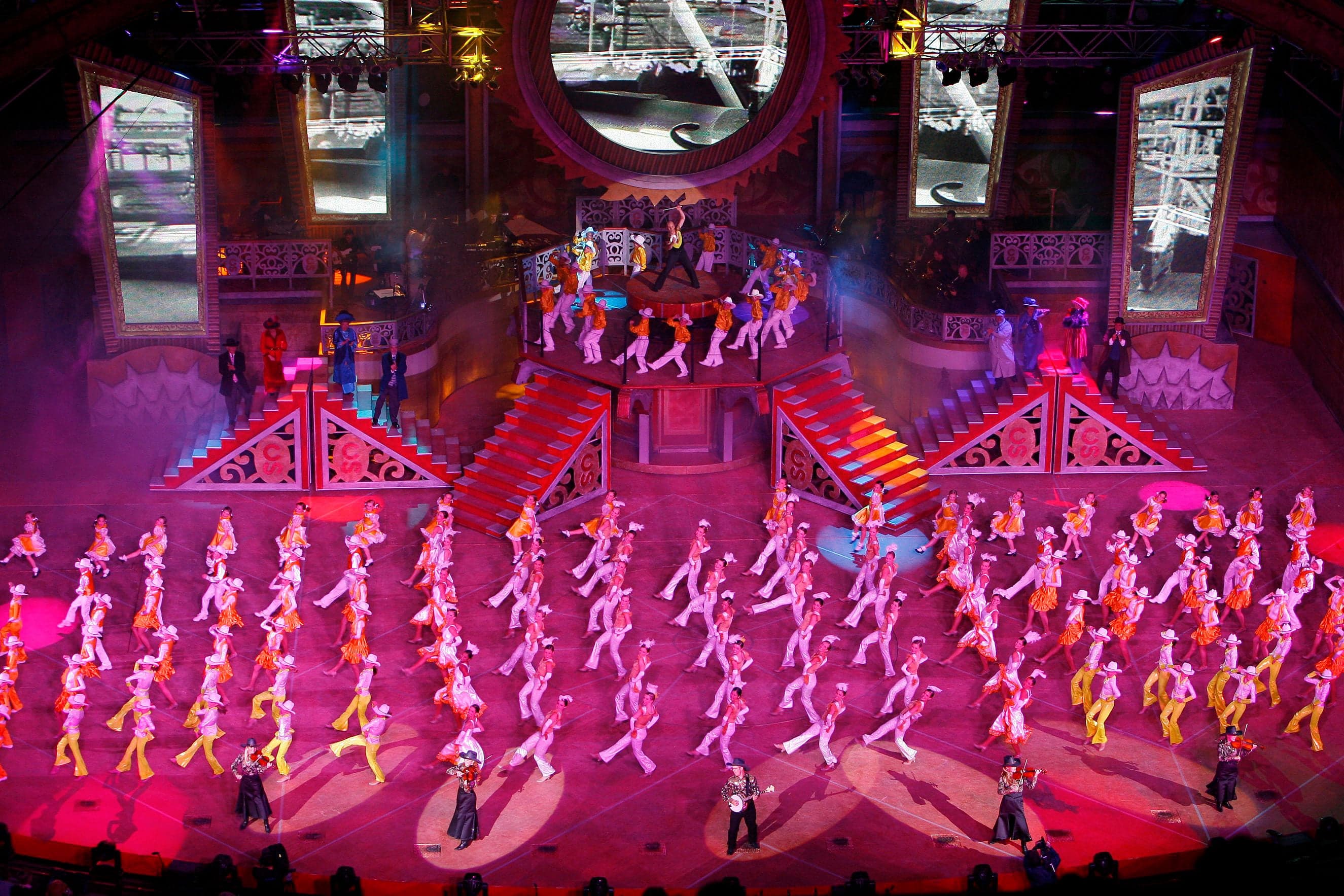
There is also the Stampede’s Grandstand Show, featuring the Young Canadians—a troupe of adolescent dancers, singers and acrobats who march and assemble through various geometric shapes in what is undoubtedly our country’s most North Korea–esque display of patriotism. Such displays are not common in Alberta but, during the Grandstand Show, you see so many Canadian flags that you continue to see them until later that night as you fade to sleep, for the Maple Leaf has been branded onto your eyelids.
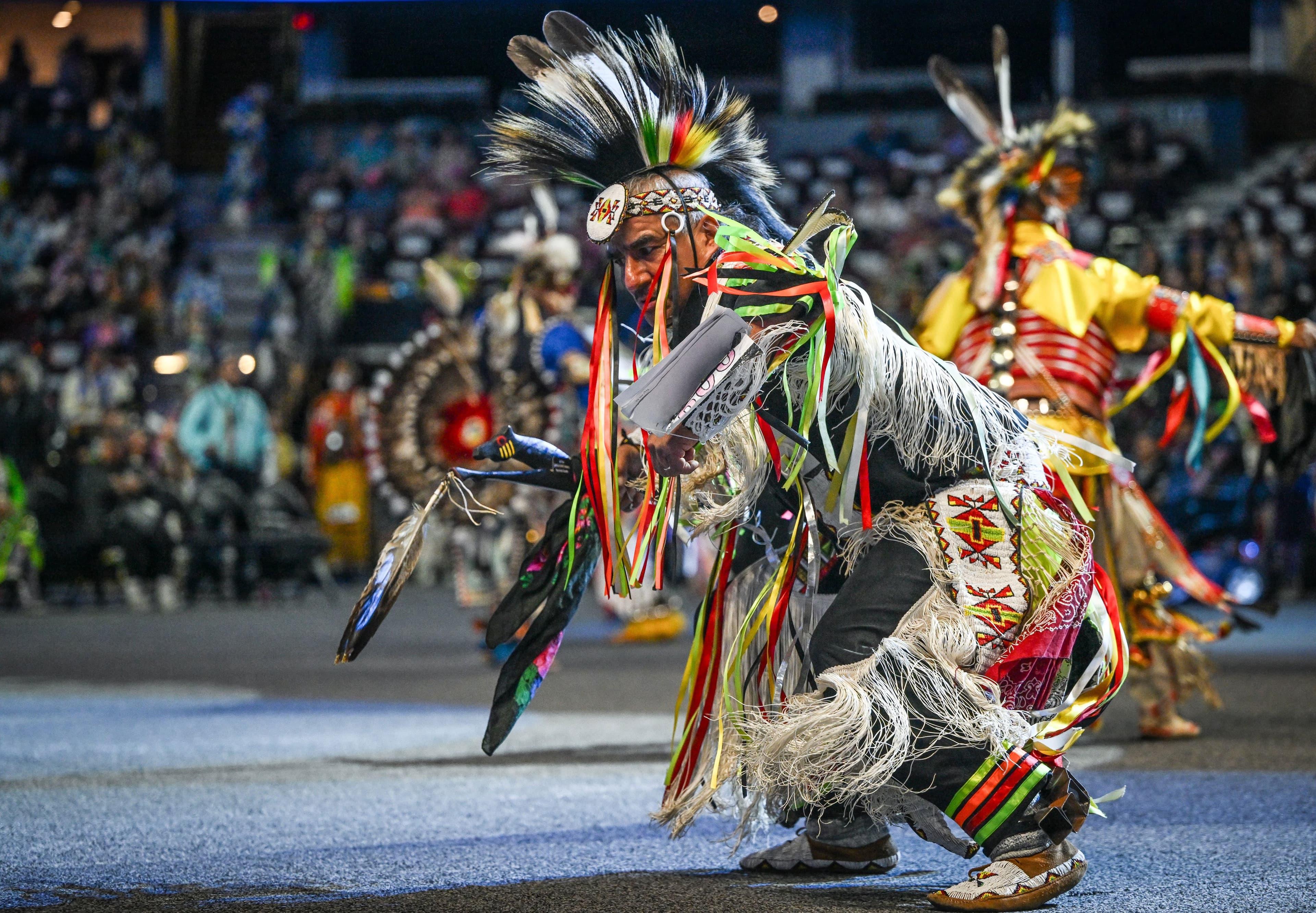
Then there is the Elbow River Camp—named Indian Village until 2018—which showcases the Stampede’s Indigenous traditions, specifically those belonging to Treaty 7 peoples: the Tsuut’ina, Piikani, Stoney Nakoda, Kainai and Siksika. The Elbow River Camp is also the genesis of the Stampede’s “fuckin’ make me” relationship with Ottawa, an antagonism so nationally unifying (unless you live in Ontario) that it too may be considered a birthright of Confederation. In 1910, more than 2,000 Indigenous performers re-enacted the signing of Treaty 7, structuring the narrative as a five-act play. The performance, by all accounts, was great. Ostensibly, the feds preferred Indigenous people to be busying themselves in farming and other productive tasks, not engaging in cultural practices. In response to the performance, the federal government revised the Indian Act in 1914 to make any Indigenous participation in fairs illegal, unless permission was granted otherwise by the local Indian agent. Weadick was appalled, not at the legislative overreach but at the kneecapping of gate admission. The Stampede became one of the exceedingly few places to flout the Indian Act’s prohibitions, as Weadick simply ignored the law. This animosity between the Calgary Stampede and Department of Indian Affairs existed throughout the governments of Robert Borden and Mackenzie King.
All of this to say that there is very little of the Calgary Stampede that comes from Calgary, and even less that articulates a cohesive cultural heart. (As stated by my co-parent: “I went to one of the best rap concerts there that I’ve ever been to. I also really liked line-dancing in the outdoor tent.”) Yet the event exists in a state of equanimity; it does not wish to be anything other than what it is. Its cultural heart is not found in the unrepentant recklessness of the rodeo, or the fur-baby urbanity of the Dog Bowl, or the millennial death wish of the motocross showjumping, or the family values of the BMO Kids’ Zone, or the new-money bravado of the Stampede Cellar Champion Wine Experience or the mysteries of the magic showcase at Stage of Wonders: The Neon Frontier.
Rather, the Stampede’s heart lies within the Western Oasis, a convention-centre-slash-art-gallery. It is my father’s favourite part. The last time we went, he and my mother had recently returned from Paris, where they visited the Picasso museum. It was an experience that, for them, could only be described as traumatic. “Paintings of women with hands that aren’t even hands,” my father said as we entered the Oasis. “But this,” he said, pointing at a log split lengthwise and painted with an aurora borealis. “This is wow.” He turned to survey the aisles of realist oil paintings of wildlife, realist bronze sculpture of livestock, realist photographs of storm clouds and grain elevators. The unmitigated accuracy in every brushstroke. “Why would I ever pay money for a drawing of a horse,” he said, “that doesn’t look like a horse?”
If the Stampede were a word, it would be one that hardly means anything anymore: authentic. Each year, we see the reach of this earnestness when politicians of all stripes arrive to seduce voters whom they will, in time, come to hate. But during this glad-handing—which takes place in a parking lot and often includes the serving of some ready-made breakfast food—the politician must submit to the wearing of the cowboy hat. It functions as our nation’s equivalent of the Sorting Hat: a head covering that, when donned, announces the content of its wearer’s character.
The historical archive reveals the hat’s ability to prophesy what Canadians, at the time, did not yet know about our most powerful citizens, but would soon enough:
Thomas Mulcair: Citizen of France.
Michael Ignatieff: The antagonist in The Grapes of Wrath.
Stéphane Dion: Hufflepuff.
Stephen Harper: Born in Toronto.
Justin Trudeau: Views every other person as another opportunity to open his tickle trunk.
Pierre Poilievre: The protagonist in No Country for Old Men.
Mark Carney: Thinks he’s (Christ help us) cool?
None of this politicking is endorsed by the Stampede itself. Politically speaking, the Stampede is as untamed a beast as they come. Don’t get me wrong: it is not some sanctum of impartiality. Its welcome brochures do not bother to declare that there is something for everyone. There is no “Arena for Animal Rights.” And any midway food that is vegan is only coincidentally so, its ingredients being so far estranged from the natural world that it is akin to eating a battery. There is an annual Pride event, but it’s limited to a few hours one afternoon (this, despite the latent homoeroticism that exists for me within every barn). It is also true that there is probably no other major event in the country where Donald Trump would be more likely to be applauded.
However, there’s also no other event where he’d be more likely to be hog-tied and dragged out of town. The Stampede is no more of a conservative carnival now than it was a socialist soirée during the 36-year rule of the province’s Social Credit Party. The festival has a libertarian streak, but only in its thriving contempt for anything that whiffs of ideology. Politics is the art of today, and much like the World Bank or Walt Disney, when your eye is on eternity, you do not romp with the passing fads of the ballot box.
Even the question of Alberta separatism is mostly ignored, in spite of the likelihood of an upcoming referendum. The Calgary Stampede does not dwell on such things. The Stampede exists beyond politics. It does not think about judicial appointments or equalization payments or the notwithstanding clause. The Calgary Stampede thinks only of itself. And that is what it offers all, regardless of creed, who pass through its gates: to enter an uproar, a widening gyre that will fling the world and all its rough weight right off us.
According to my friend Lindsay Mullan, “The best part of the Calgary Stampede is the ride that spins backwards with loud Top 40 music playing, blurred images of polar bears and women in fur bikinis, an ex-convict on the mic asking if you want to go faster. You tell me a better thrill.”
Over the years, I have Stampeded about two dozen times. As a child, it was the place where my father told my brother and me to stand on our tiptoes when the carny measured us so we could accompany him on rides that we were much too small for. Then, as an adolescent, it became the place where I—emboldened by a lukewarm Mike’s Hard—approached women who were much hotter and older than me. Finally, as an adult, it became the place where, because of my albatross-like arm length, I assumed myself to be a generational talent at lobbing the wiffle ball into the basket and having it stay. In other words: for me, the Stampede has always been a place of striving, of aspiration, of belief.
And as any Catholic will attest, belief is more important than truth. Or rather, belief determines truth, like how my mother—when she was single—saw a psychic at the Stampede who told her that she’d marry a man “who works with his hands” (perhaps not a rarity in blue-collar Alberta), and so when a cabinetmaker swerved up to her at Lloyd’s Roller Rink, she thought she better toe-stop and talk.
The Calgary Stampede proclaims that it is “The Greatest Outdoor Show on Earth.” How intoxicating the grandiosity of the first adjective; how charming the stipulation of its second. One can quibble with the motto’s accuracy, but what is inarguable is that the Stampede, with every fibre of its being, believes it to be true. It does so with such devotion that I, for far too long, believed the motto was not just some sloganeer’s whim but an official designation, one internationally agreed upon, an honorific straight from the United Nations.
I must convey to you, dear reader, the importance and the rareness of this belief for someone growing up in a middle-power province in a middle-power country. Living in such a place leads you to conclude that you must have sinned in a past life, not grievously but mildly: a wrongdoing without opulence, a transgression on a technicality, a most Canadian offence. This purgatory seemed even worse than Hell. For in the Inferno, there’d at least be some intolerable pain to rail against. But here, there were only parking lots.
This is my favourite part of the Calgary Stampede: being somewhere, anywhere, on the grounds—in the lineup for the Zipper; shooting your shot at a basketball hoop that’s been squished more oval than circle; ordering (without a trace of vanity) lobster Rangoon, Portuguese tarts, wagyu poutine and a round of Jell-O shots for the table—and looking at the hay-strewn ground to see the bright yellow paint of parking lot lines. What a world we live in; what hope and what splendour.
In our age of cultural entropy, where everything melts into everything else, it seems inevitable that the Calgary Stampede—whether in five years or 500—will become a festival of lasts. The last Stetson sold, the last sheep herded, the last Alanis song sung. The last fireworks lit, the last powwow danced, the last horse euthanized. The last time a teenager with a lazy eye slams the cage of the Mach 3 and looks both at you and through you when he asks, “Are you ready to die?” The last stomach pumped, the last “winner, winner!” at the ring toss, the last blisters from boots worn only once a year. The last time the cinnamon sugar is blown off the bucket’s bottom mini doughnut, and a cloud of glitter lingers in the sunset. The last time the gates are opened, the last time they’re closed. Then, the Stampede will do permanently what it does annually: it will become a parking lot.
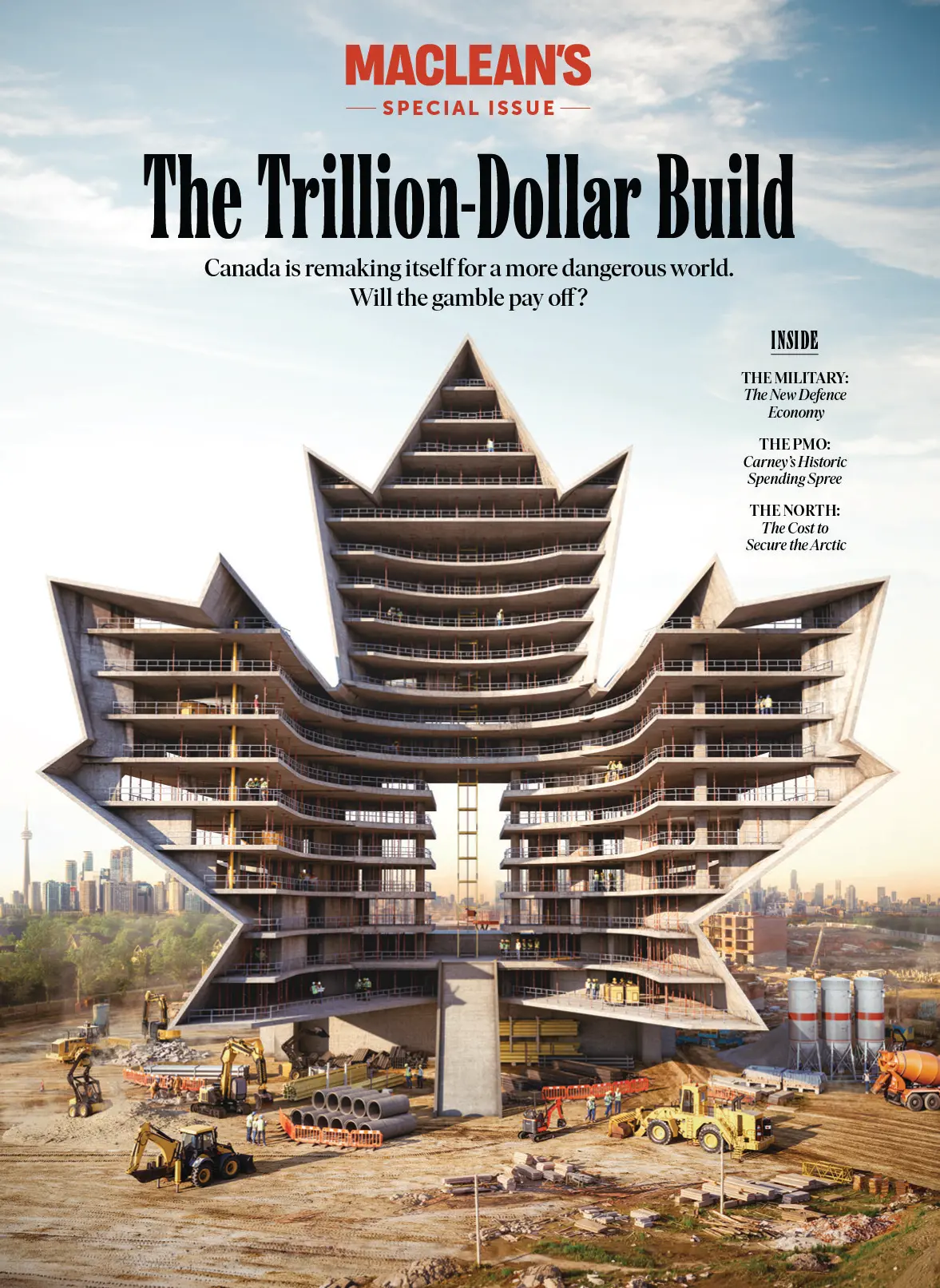
This story appears in the July 2026 issue of Maclean’s. You can buy the issue here, subscribe to the magazine here or send a gift subscription here.
What did you think of this story? Send a comment for publication to letters@macleans.ca, and supply your name and address. Comments should be fewer than 200 words, and may be edited for length and clarity.
Related Posts
The Battle for the Soul of the University

The Doom Spenders

My Secret Addiction

The Rich List
Get the Best of Maclean’s straight to your inbox.
Sign up for news, commentary and analysis. Join 60,000+ Canadian readers.