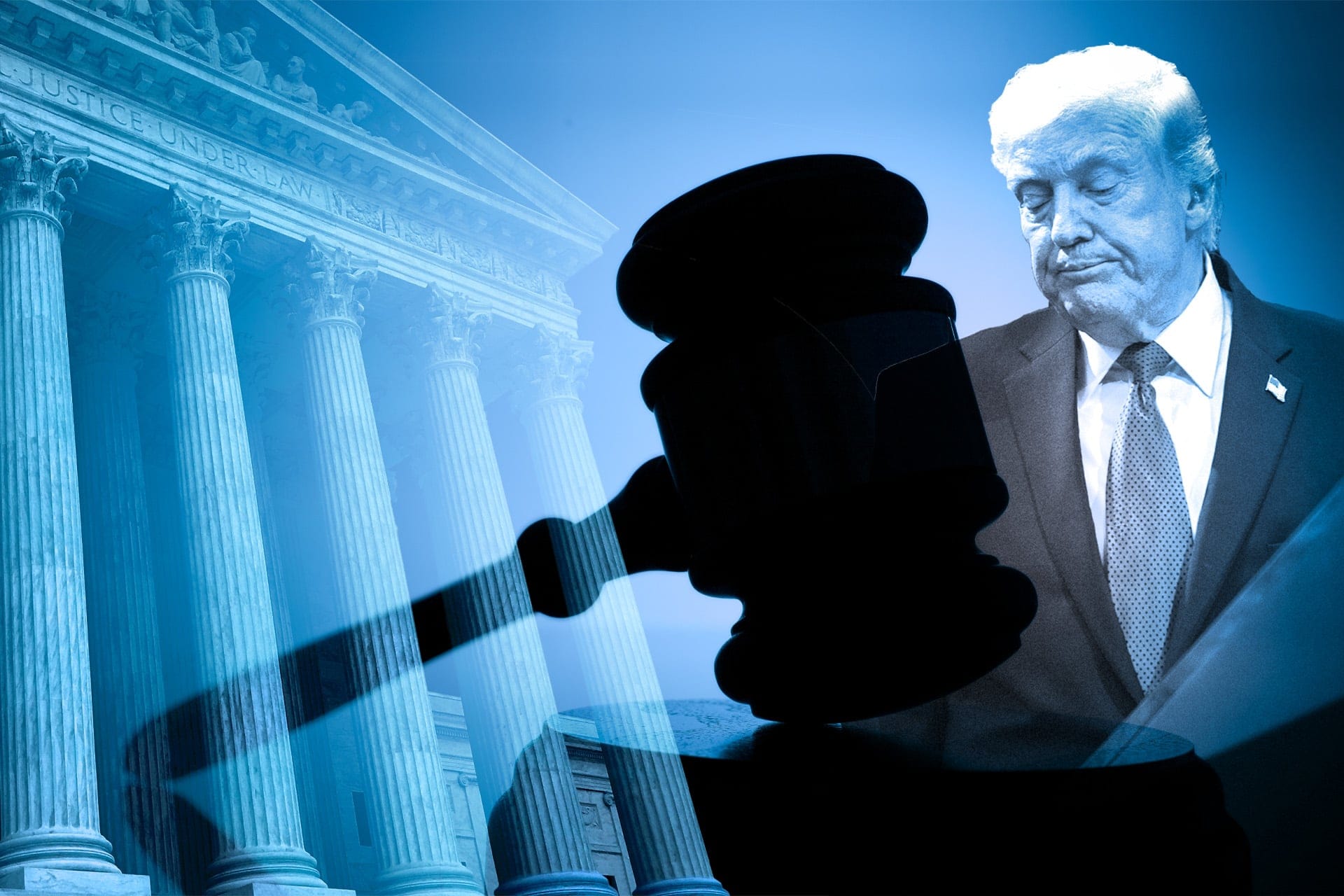
America’s Rule of Law Is Alive and Well
For over 250 years, the U.S. has relied on checks and balances to uphold the rule of law—chief among them, the separation of powers across the executive, legislative and judicial branches. Since Trump’s return to office, though, the effectiveness of these accountability mechanisms have come into question, as Trump has repeatedly pushed beyond the boundaries of presidential authority. He ordered the seizure and overthrow of Venezuela’s leader, froze billions of dollars in federal funding approved by Congress and, most notably for Canadians, imposed sweeping global tariffs to support his protectionist agenda. Each move faced legal challenges, but none had produced a definitive ruling so far. That changed on Friday, when one very important body—the U.S. Supreme Court—ruled that Trump’s sweeping global tariffs are illegal.
It was a 6-3 ruling that declared the International Emergency Economic Powers Act, or IEEPA, does not authorize the President to impose tariffs. The Supreme Court held that the Constitution grants Congress the exclusive power to raise taxes. Even Neil Gorsuch and Amy Coney Barrett, two justices appointed by Trump, joined the majority. The decision sent a powerful message to the President, the country and the world that there are limitations on presidential power. American rule of law is not dead. Despite his bullish actions, the system is still holding Trump accountable.
The Supreme Court’s decision is a relief for the 90-plus countries that have been subject to Trump’s tariffs, which are as high as 50 per cent for countries like India and Brazil. For Canada, the ruling is more symbolic. Most Canadian exports have been protected from these illegal tariffs by the Canada-United States-Mexico Agreement, or CUSMA, leaving many tariffs on Canada unchanged despite Friday’s momentous decision. The exemption are the the 25 per cent to 50 per cent sectoral tariffs placed by Trump on goods like lumber, metals and automobiles, which were imposed by a different law—the Trade Act, Section 122—and were not under review by the court.
Related: Why Trump’s Tariffs Didn’t Break Canada
The ruling is significant for Canada in other ways. People who’ve felt helpless under Trump’s erratic trade policy for nearly a year now can find comfort in the knowledge that his power does indeed have limitations, no matter what MAGA supporters may claim.
The court decision doesn’t mean an end to tariffs. Within hours of Friday’s verdict, Trump announced a global 15 per cent tariff on most imports, based on Section 122 of the 1974 Trade Act, which allows the President to issue tariffs to address “large and serious United States balance-of-payments deficits” or “fundamental international payments problems.” It kicked in yesterday, the same day the illegal tariffs ended. For many countries, these represent a much lower tariff rate than the previous one. They’re also weakened by the fact that the tariffs expire after 150 days, unless Congress votes to extend them. And for Canada, most goods under the new 15 per cent levy are once again cancelled out by CUSMA.
Trump may turn to more drastic and powerful measures in the future. One option exists under Section 301 of the Trade Act, which would allow the U.S. to impose tariffs following an investigation if it finds a country guilty of unfair trade practices. The Trump administration used this lever in his first term against China. He could also invoke Section 232 of the Trade Expansion Act, which would permit tariffs following an investigation that identifies threats to national security. However, both of these approaches would require time-consuming investigations. Trump’s Treasury Secretary Scott Bessent floated another option: the administration is exploring using Section 338 of the Smoot-Hawley Act from a century ago, which would allow non-time-limited tariffs of up to 50 per cent on nations found to discriminate against U.S. commerce. This is the most plausible—and concerning—possibility.
The good news is that polls show that public support for Trump is declining, and this fall’s midterms will likely flip the House of Representatives. If Democrats do retake the House in November, it would greatly reduce the likelihood of these tariffs being greenlighted in Trump’s final two years in office.
In the meantime, his government is facing a massive administrative headache. An estimated US$133 billion in tariffs were illegally collected by the U.S. government under IEEPA over the last year, and it’s not yet clear how that revenue will be refunded. Lawsuits are inevitable. But equally likely is a negotiated political solution—such as a targeted tax cut or industry-specific rebates—for those affected. Large business associations are already lobbying Congress for rebates, and I expect a solution will be announced before the midterms.
Related: The Best of 2025: Maclean’s Top 10 Trade-War Stories
The road ahead remains uncertain, but Canadians can sleep better at night knowing the checks and balances of the rule of law prevail within our largest trading partner. In recent months, there has been much conjecture about the descent of the U.S. into fascism or dictatorship under Trump. I have always believe that this won’t be the case. Federal elections in the U.S. continue unimpeded, the Senate and House continue to debate budgets and bills, courts across the land continue to adjudicate, and foreign governments continue to dialogue with the government of the United States. We must not look to social media or Hollywood for evidence of the rule of law. We must rely on the social and political reality.
Ian Lee is an associate professor at Carleton University’s Sprott School of Business.
Related Posts

My Adventures in Greenland

Alberta Treaty Law Could Decide the Arctic
Carney’s Biggest National Project is Mythmaking
Carney Is the Crisis Manager Canada Needs
Get the Best of Maclean’s straight to your inbox.
Sign up for news, commentary and analysis. Join 60,000+ Canadian readers.