Carney’s Biggest National Project is Mythmaking
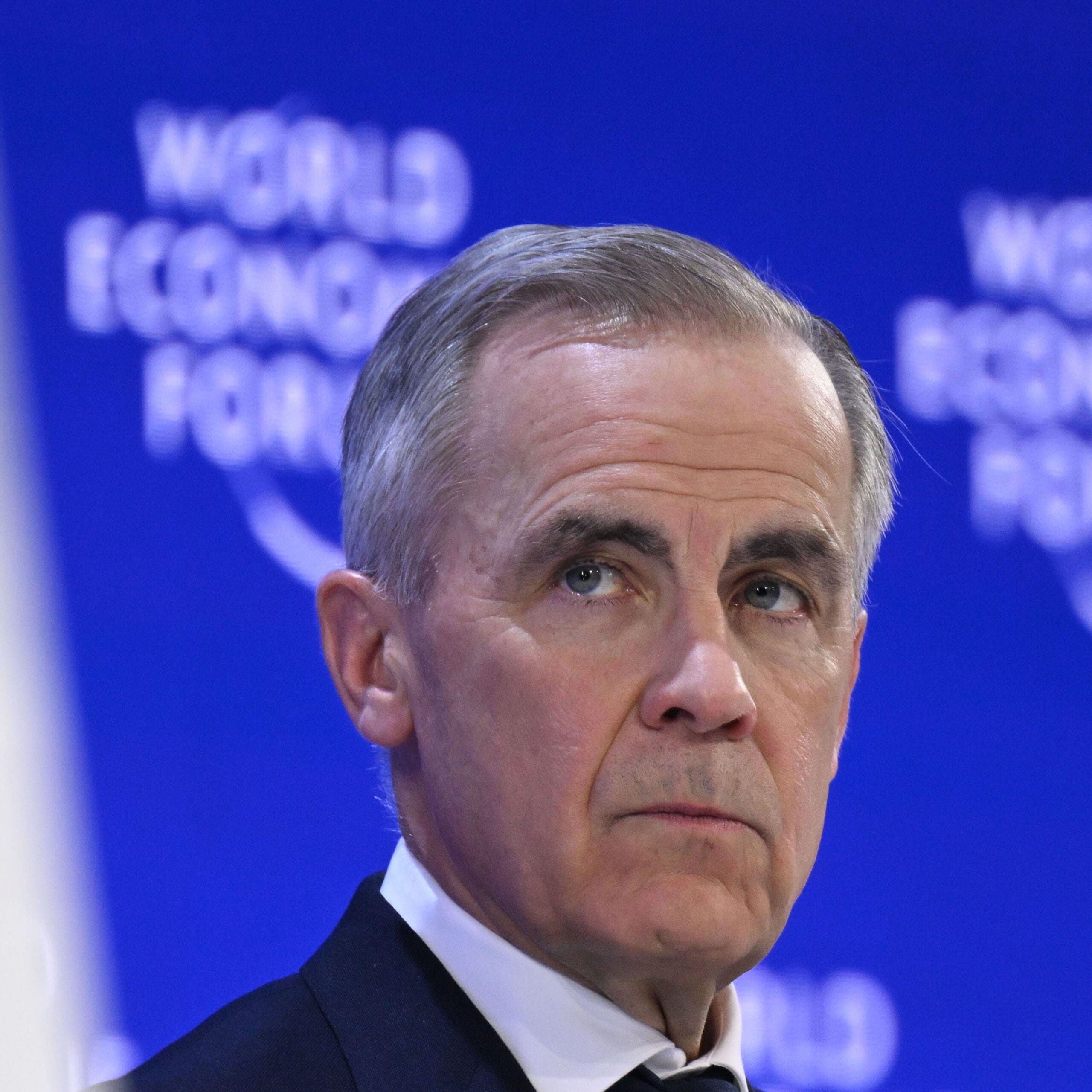
Last week in Davos, Mark Carney stood at a lectern and did something Canadian leaders are not always rewarded for: he made the room uncomfortable on purpose. Canadian politicians on the world stage are typically careful and guarded, trained to emphasize continuity, reassurance and diplomatic restraint—an instinct Carney himself displayed in his first meeting with Donald Trump in Washington this past May. In Davos, however, he set that caution aside.
Carney opened his speech with a story drawn from Václav Havel about a greengrocer who places a political slogan in his shop window despite not believing it. It is an empty ritual meant to avoid trouble. Power, Havel argued, survives not only through force but through shared participation in a lie. Its stability rests on ritual, and its fragility appears the moment someone stops performing, when the illusion cracks and truth intrudes. The story was a surprising move for a former central banker and current Prime Minister, but that was precisely the point. It serves as a reminder that politics is never only policy. Carney was signalling that this was not merely a speech about tariffs, alliances or growth projections. It was about how political orders persist, and fail, through the stories people agree to.
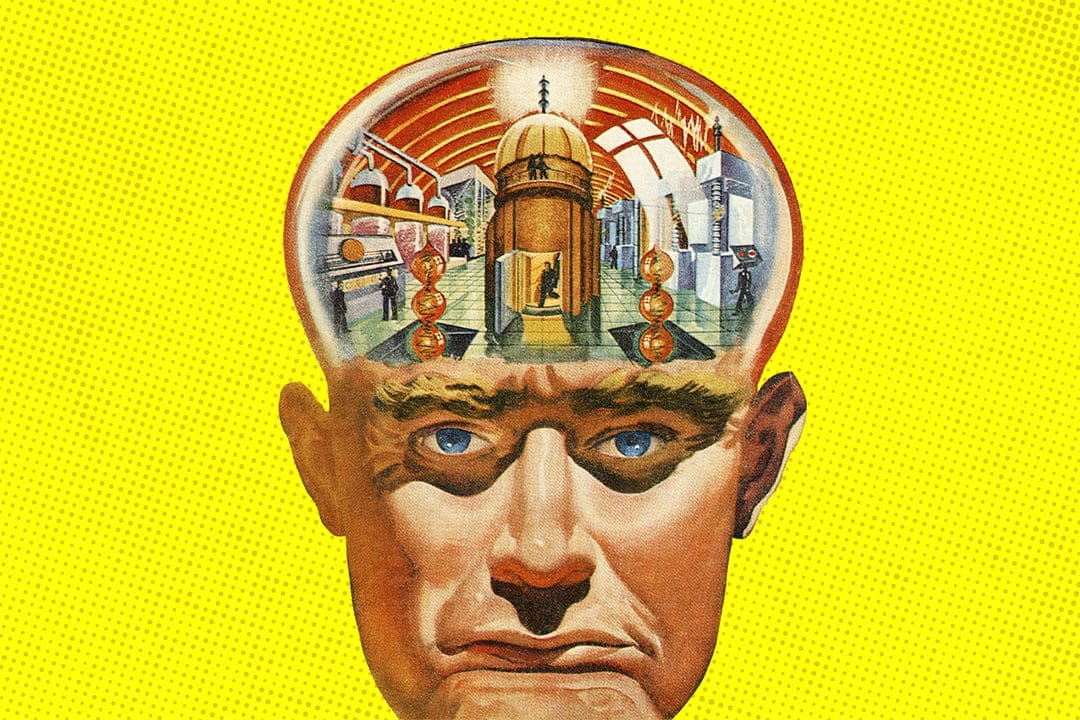
This is a leaf pulled from the book of another Canadian, one who, 40 years ago, gave us the keys to understanding the geopolitical mechanisms we’re seeing unfold today. Northrop Frye—still the most influential theorist of the Canadian imagination—argued that Canada’s most persistent reflex is that of the “garrison”: the instinct to retreat into defensiveness and moral vigilance when the outside world feels threatening, as it does today. As threats of annexation and punishing tariffs rain down from the south, the world order we’ve enjoyed for decades is being upended, and Canada is poised to once again raise the garrison walls. Carney’s speech was a stark intervention against this reflex, urging Canadians to resist returning to the safety blanket of the garrison and to imagine a different narrative.
Frye describes early Canadian society as a small, beleaguered population surrounded by vast and often hostile space, inclined to build a fort around itself for safety. Defensive, moralistic, orderly and suspicious of excess, such a culture tends to value survival over exploration and cohesion over imaginative risk. Frye offered the term “garrison mentality” as a provisional description, but it has haunted the Canadian imagination ever since.
Frye argued that Canadian sensibility has been shaped by uncertainty about its position—about how the country understands its place in relation to power. From the beginning, that position has been unstable. Canada is a vast territory with sparse settlement, first shaped by French and British imperial rivalry and later defined by proximity to the United States. These external powers functioned as both model and menace, offering protection while threatening absorption. The garrison, in this sense, is not merely a response to danger but an attempt to stabilize the unsettled question of Canada’s global position.
Related: Mark Carney Is a Very Demanding Boss
At times, the garrison mentality has receded, but it will never fully disappear from the Canadian experience. In the decades following the Second World War, Canada entered a period of cultural relaxation, manifested under Louis St. Laurent, steadied under Lester B. Pearson and fulfilled under Pierre Trudeau. Economic security improved, the welfare state offered a new form of collective shelter, and the country began to imagine itself as an outward-facing participant in global institutions, rather than a peripheral colony anxiously guarding its borders. This shift made Canadian culture less preoccupied with mere endurance and more capable of irony, dialogue and self-reflection.
But Frye never treated this as a permanent transformation. The garrison returns, he warned, whenever a society feels threatened. Canada’s openness, in other words, has always relied on it having shelter. In the postwar era, that shelter was deliberately constructed with the United States through a partnership that combined security guarantees, economic integration and a political friendship. This goodwill was rooted in a shared border, a common language and liberal democratic norms. Just as importantly, it supplied Canada with a myth it’s long clung to: that proximity to a powerful, familiar ally—and the economic opportunities that flowed from it—made openness safe enough to abandon the garrison. Canada began to imagine a national identity less organized around fear, allowing it to step onto the world stage not only as a trading nation but as an advocate for moral and political commitments beyond its borders. But in roughly one generation, between Pierre Trudeau and his son, Justin, that security has fractured, leaving the mythological framework that sustained Canada’s postwar confidence without its anchor.
That slow fracture has accelerated radically in the last few years. Donald Trump embraces this garrison mentality, but strikingly, he applies it to a country that is not, as Canada is, structurally vulnerable. Trump’s rhetoric about the power of the United States sits uneasily alongside a politics defined by threat: immigrants, trade partners, global institutions, cultural elites. In Frye’s terms, Trump is deliberately manufacturing an American garrison mentality, not out of a material necessity for shelter from external threats, but out of ideology. The language he uses is often overtly offensive, but its underlying logic is relentlessly defensive and exclusionary, insisting on walls, loyalty tests and the purification of its citizens.
What makes this especially consequential for Canada is that this new American garrison destabilizes the very shelter that once allowed Canada’s own garrison to recede. Trump’s America withdraws this protection by turning inward, abandoning multilateralism and reframing international co-operation as a liability rather than a strength. In doing so, it exports insecurity northward. When the United States retreats into a self-imagined fortress, Canada finds itself once again closer to the wall and is prompted, reflexively, to recover its own garrison habits of caution, order and moral vigilance.
The U.S.-Canada trade war already has many Canadians mentally ready to lower the portcullis. Talk of insulation—economic, political, even constitutional—has crept back into public discourse, sometimes shading into renewed flirtations with provincial separation. At the same time, critics see recent policy choices as weakening commitments to environmental protection and Indigenous consultation and rights. The accelerated approval of major energy infrastructure, renewed emphasis on pipelines as instruments of national security, the narrowing of environmental assessment processes and a more instrumental framing of Indigenous consent in the name of urgency have all contributed to this perception. These tensions provide the raw material for a possible renewed garrison mentality, even if it has not yet hardened into doctrine.
Related: Faces of the Trade War
Carney’s timing matters because he appears to recognize this as a liminal moment. It is the interval in which defensive instincts are present but not yet codified. Once formalized, a politics of protection hardens into a mythic garrisoned identity and becomes extraordinarily difficult to reverse, as the American case now demonstrates. This is precisely the reflex that Mark Carney is warning Canadians, and the world, to resist.
Read his speech alongside Frye, and the resonance is immediate. Carney describes a world where economic integration has become a weapon: tariffs wielded as leverage, financial infrastructure used as coercion, supply chains treated as vulnerabilities to be exploited. This is the geopolitical equivalent of the encroaching wilderness that Frye describes the early settlers as experiencing, except the wilderness now speaks in executive orders and deals. The instinctive response to a garrisoned world is another garrison. Stockpile. Harden. Retreat. Carney acknowledges the impulse, but he refuses to let that impulse become destiny. He knows where garrison logic leads. It leads to a world of poorer, more brittle and less free fortresses. Fear, in contemporary politics, is being marketed on an industrial scale, and nations that mistake that marketing for destiny will remain trapped in a siege myth of their own making.
Carney is calling for a new narrative because the old one—under which Canada’s loosened garrison was secured by alignment with a dominant neighbour—no longer holds. As a middle power, Canada lacks the economic, military and market leverage of a superpower, and only superpowers can afford the kind of fortress politics Donald Trump champions. What replaces that model, then, is a third way: resilience built through reduced vulnerability, diversification and shared strength among countries that likewise cannot afford isolation.
Carney’s recent travels abroad show how this narrative is being put into practice. Canada is removing internal trade barriers to strengthen the domestic economy; fast-tracking investment in energy, critical minerals, AI and new trade corridors; rebuilding defence capacity in ways that anchor production at home; and diversifying Canada’s partnerships across Europe, Asia and the Global South to reduce dependence on any single power. At the strategic level, this approach takes the form of what Carney calls “variable geometry,” coalitions that form issue-by-issue to share the costs of resilience rather than force each country to build its own fortress. At the moral level, Carney knows that diversification and variable geometry mean working more often with countries whose values Canada does not share. But Carney’s wager is that reducing dependence on any single country allows Canada both to exert pressure on practices it opposes and to accept more outside scrutiny of its own. This will not be easy.
If Trump’s annexation talk and Arctic theatrics are a form of imperial spectacle, the danger for Canada is to respond with defensive theatre of its own—a posture of grievance, a national identity built around being someone else’s victim. That, too, is a myth, and an easier one to sell than the more demanding alternative Carney is proposing. His Davos moment began with a shopkeeper’s sign; Frye’s Canadian imagination began with the fear of being “silently swallowed by an alien continent.” Both point in the same direction: what happens when a community stops performing a story built on fear, refuses coercion, names danger honestly and commits to a mythology that offers something more than a wall.
Joe Velaidum is an associate professor of religious studies at the University of Prince Edward Island.
Related Posts
Canada’s Defence Firms Are Ready to Boom
Alberta Treaty Law Could Decide the Arctic
My Adventures in Greenland
Carney Is the Crisis Manager Canada Needs
Get the Best of Maclean’s straight to your inbox.
Sign up for news, commentary and analysis. Join 60,000+ Canadian readers.