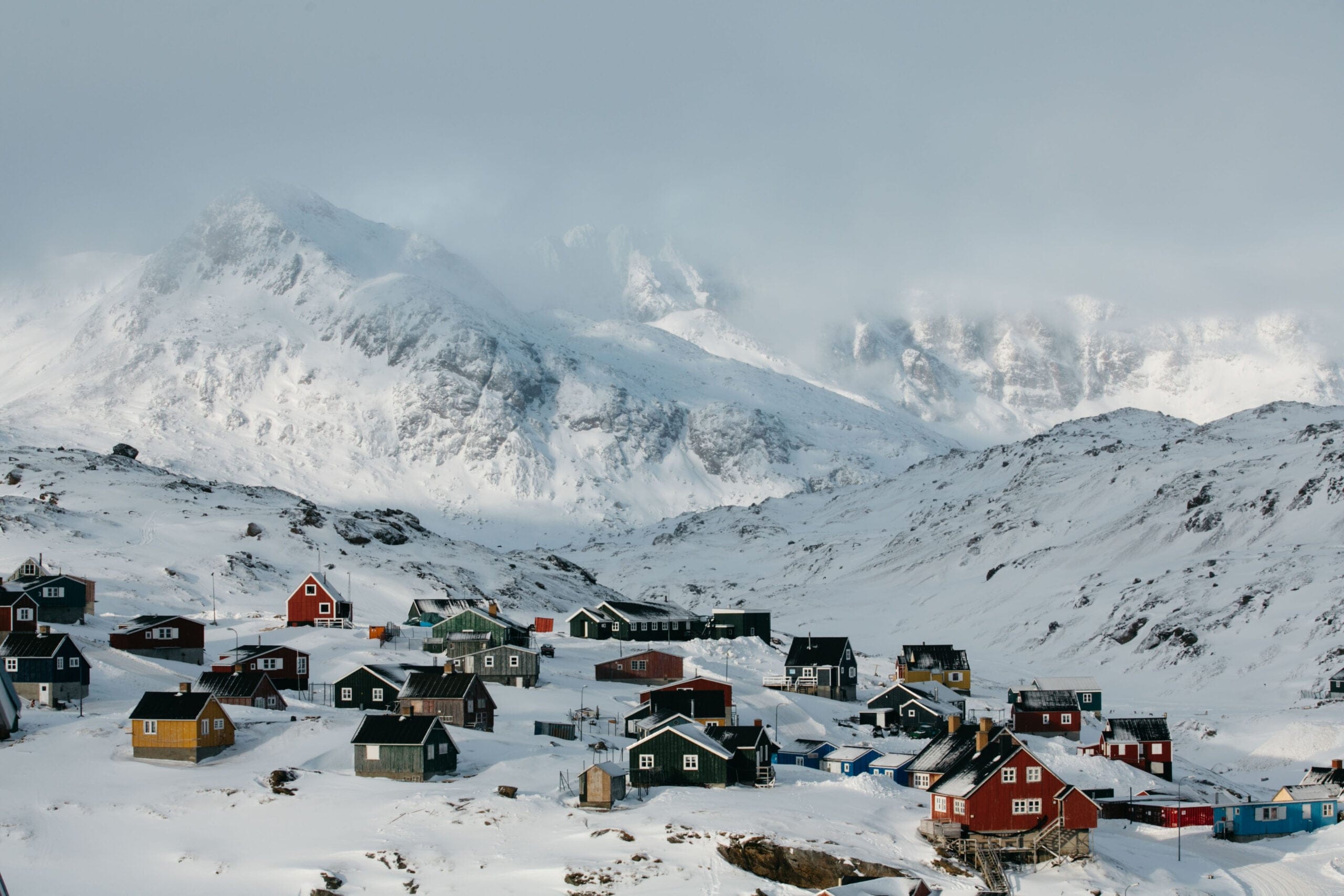
My Adventures in Greenland
These days, most people know Greenland the way the U.S. president knows it: a strategically located asset that the United States wants to own for national security purposes. The media are describing it as a mineral-rich, ice-covered Arctic island. Others see it as a frontier to cash in on: new shipping routes opening up due to melting ice, opportunities for oil and gas, and the mining of the world’s largest untapped reserve of rare-earth elements. Only in the European leaders’ joint statement in support of Greenland did we hear about the people who live there: “Greenland belongs to its people. It is for Denmark and Greenland, and them only, to decide on matters concerning Denmark and Greenland.”
Much of the international coverage has flattened an autonomous territory of 56,000 people—with a rich history and incredible culture and traditions—into a conveniently located piece of rock. This makes it easier to imagine it as real estate to be bought, territory to be invaded and a bargaining chip between the world’s big powers. But Greenland is not its coastline or minerals. It is its people—and they’re people I know.
In the summer of 2010, I was a bright-eyed, 20-year-old international development student at the University of Guelph, venturing to Greenland to research my honours thesis on climate change and its effects. Most tourists start in West Greenland, home to the capital, Nuuk, but I landed in Kulusuk Airport on the east side of the island. After sea kayaking for a week in Tasiilaq, a town of about 3,000 people, I travelled by boat to Sermiligaaq, a village tucked deep inside the Sermiligaaq Fjord on Greenland’s east coast. With a population of just over 200, it’s one of the most remote permanently inhabited settlements in Greenland.
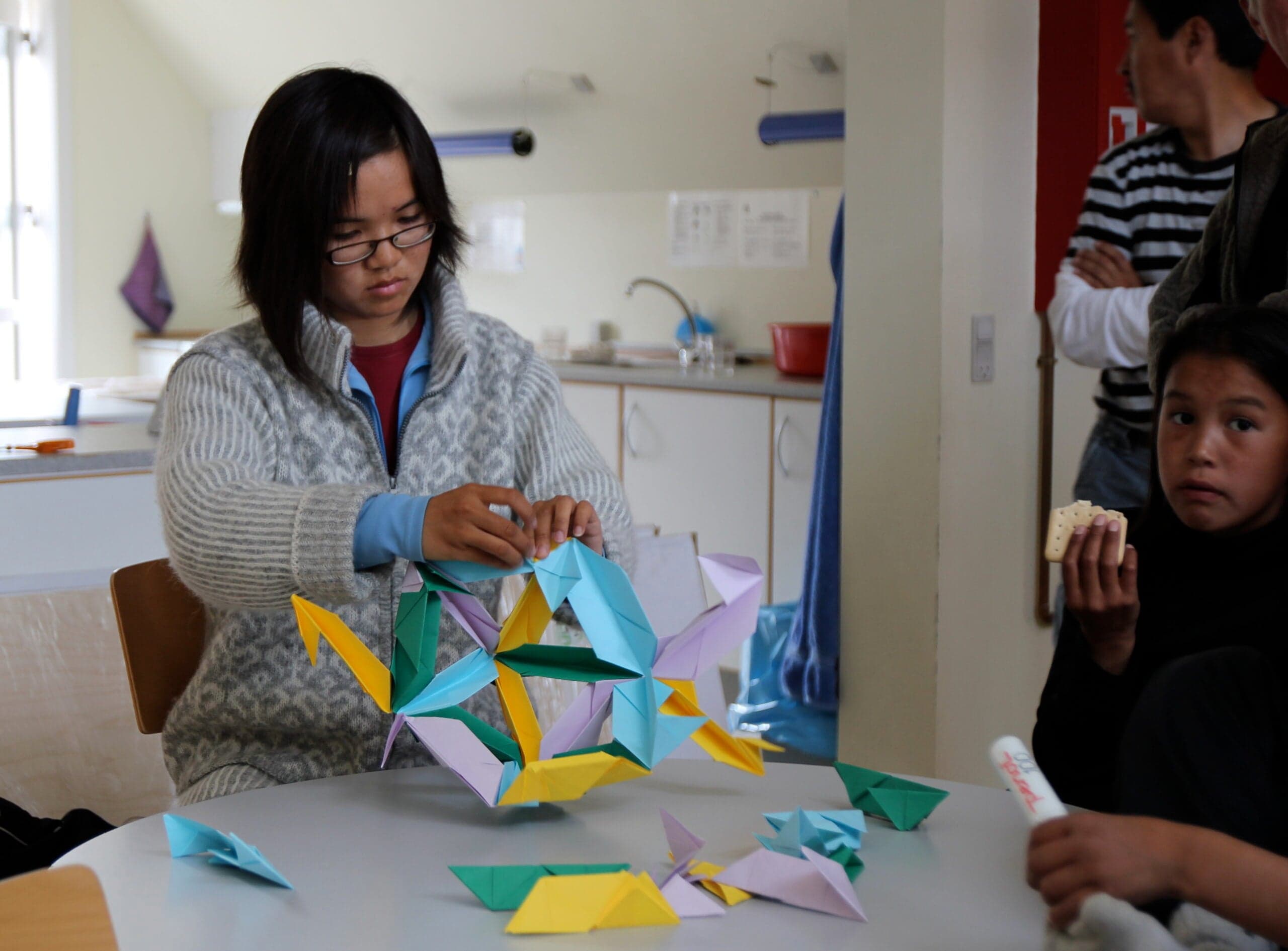
I lived there with a local family for a week. My host mother, Charlotte, welcomed me to her beautiful turquoise house, the same colour as the water, and I met her five-year-old daughter, Ebba, who would be my constant companion. We had to be creative with how we communicated because we didn’t share any languages. They speak East Greenlandic; they learn West Greenlandic, Danish and English at school, but Ebba hadn’t gone to school yet. So one of the first cross-cultural activities we did was play with makeup.
Then Charlotte motioned to her tummy and asked if I was hungry, and I was. I thought I was going to eat my first traditional meal, maybe raw dolphin or seal, but instead she opened the freezer, cut open a bag of frozen fried chicken, dropped the pieces across a baking pan and popped it into her oven. My first lunch in East Greenland was not so different from the lunch I might have eaten back home.
Related Posts
How to Win the Space Race

Carney’s Biggest National Project is Mythmaking
The village is tight-knit and composed of several extended families. Everyone knows everyone, so it didn’t take long for the whole village to know about me. Children loved to take pictures with my camera and show me their toys. On my second night, a local hunter caught a dolphin, and we all went to his home. When I walked in, everyone else was already eating. I sat down and received a set of plastic utensils and a can of Pepsi. I was served a paper plate with a small cube of raw dolphin blubber and an ulu, a traditional rounded knife, to slice it up. Then I was handed some Knorr seasoning, the one with the rooster logo. The blubber was nothing like I imagined: rich and fatty and tasty. I chewed on it for a while and then asked for more. I ate other raw meats—like seal—throughout my stay, served in the same way. Soon, I ditched the plastic utensils and ate with my hands like everyone else. The community took a great deal of pride in their traditional hunting culture, and hunters were treated with a great deal of respect. People endlessly thanked the hunters for putting food on the table and I, too, learned to say qujanaq, the Greenlandic word for “thank you.”
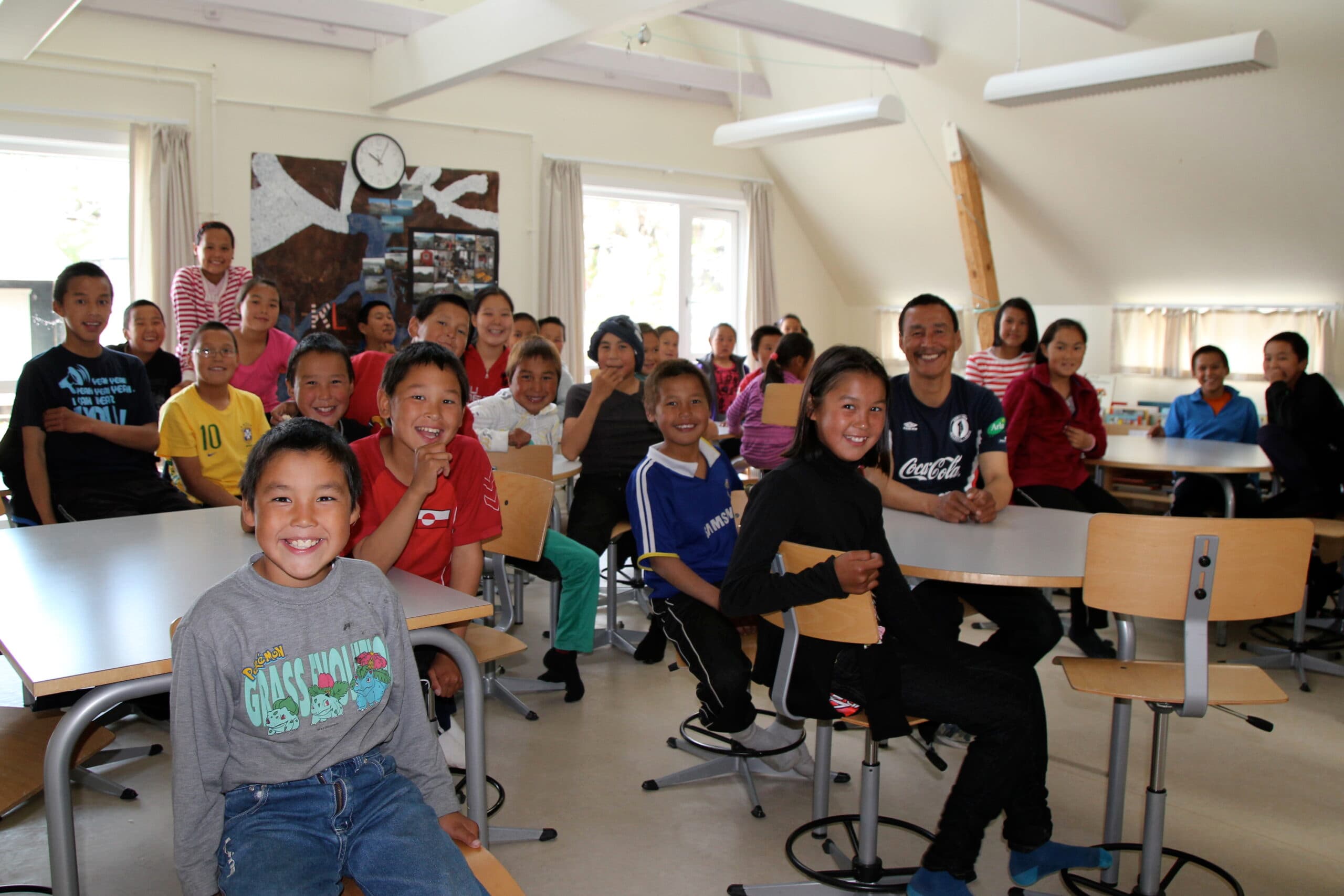
The next day, a local teacher who knew English invited me to the school so he could translate a conversation between me and his students. They were as curious about me as I was about them. They asked if I was Chinese or Canadian or both, and how China could house over a billion people. Did people sleep on very tall bunkbeds? And what about Canada—is it as cold there as it is in Greenland? In turn, I asked them about their culture and their relationship with Denmark. Many kids were extremely proud to be Greenlandic and showed off their traditional knowledge. They taught me how to understand ice through sensory details—its sounds, smells, textures and flow—and what it means for hunting and travelling by sled dogs. I asked if they wanted to move to Denmark when they grew up, and most were ambivalent. Many of the kids had relatives who had left for work, but most said Denmark isn’t home.
Later, the teacher explained that Greenland still has a challenging relationship with Denmark. During its 230 years of colonial rule, there was a great deal of economic exploration, forced assimilation, cultural suppression and paternalistic governance that led to deep social issues of family breakdown, alcoholism and trauma. He told me about the independence movement that gained momentum around the time I was there—the Self-Government Act was just passed the year before, which transferred more power from Denmark to Greenland and paved the way for future independence. Thinking back on those lessons now, I would think that Greenlanders don’t want to be owned by anyone and would prefer their own sovereignty.
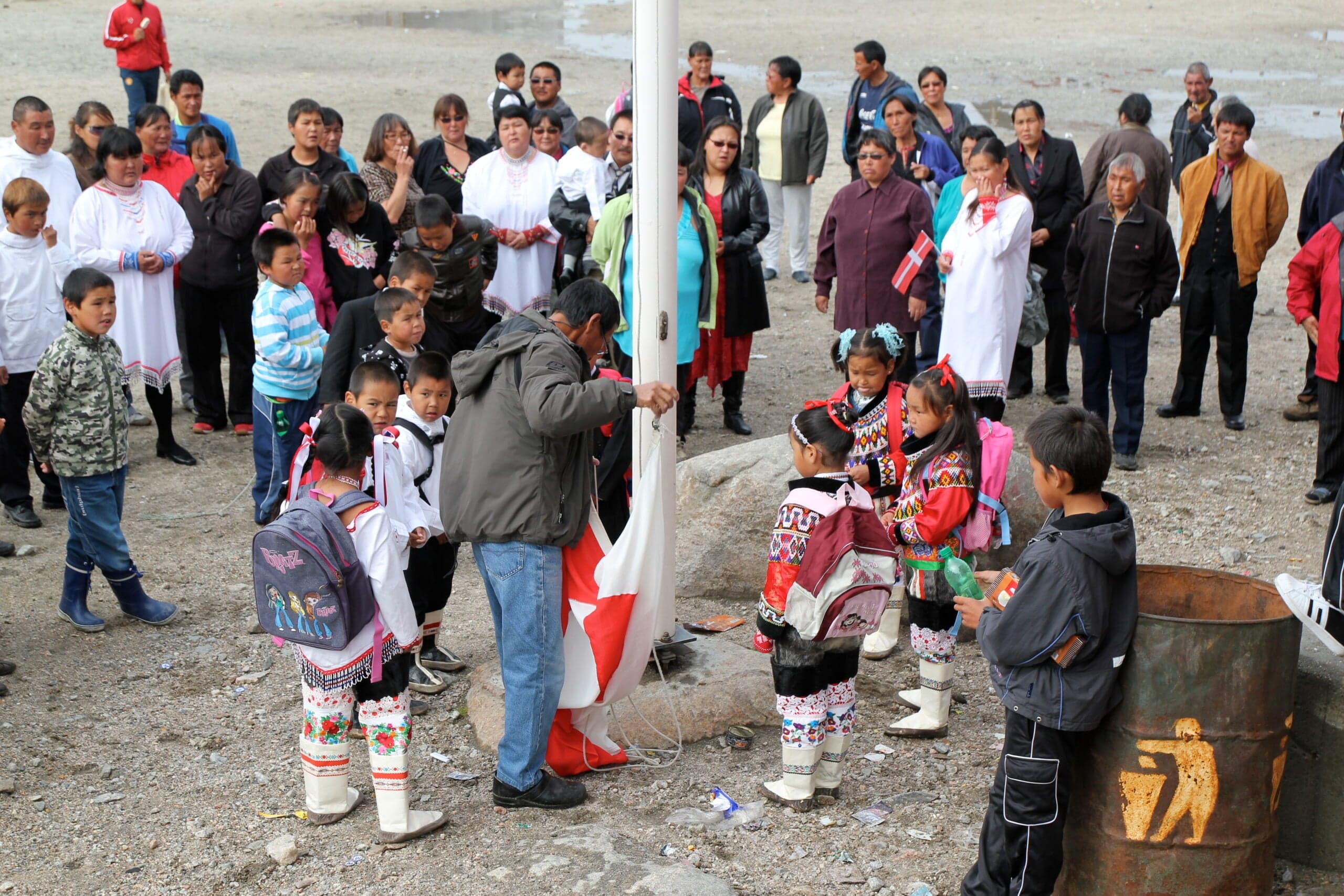
My visit coincided with the first day of school for the village’s youngest children. Education matters deeply to Greenlanders. Parents and children arrived dressed in traditional seal-skin clothing, often passed down from one generation to the next. There was a ceremony that involved most of the community: the principal formally introduced the first-graders into the education system, marking not only a personal milestone but a communal one. It is through education that the Greenlandic languages, their traditions and their history would be passed down to the future. On that day, I saw Greenlandic flags everywhere, prominently during the flag-raising ceremony but also throughout the school and on the desks of each new student in class.
What struck me most was how little the village resembled the frozen, pre-modern image often projected onto Greenland. Sermiligaaq had modern houses, running water and a thriving community. People watched Hollywood movies. They ate instant noodles and fried chicken. There were cellphones, internet and an acute awareness of global pop culture. The radio played the Black-Eyed Peas’ “I Gotta Feeling.” The kids and I didn’t have a shared language, but we all sang Lady Gaga’s “Bad Romance” together. We had big belly laughs, especially when someone broke out into the monster-like claw dance moves that went with the song.
I think about those weeks now, as Greenland has become something else in the global imagination. It’s now defined by its critical minerals, climate security, militarization and geopolitical strategy. It appears on maps and in headlines as a lifeless island of rock. I find myself thinking less about what powerful countries want from it, and more about what they refuse to see. Greenland is a rich and thriving country full of kind and forward-thinking people like Charlotte and Ebba.
The Greenland I knew was not a symbol. It was a place where the whole community came together to celebrate children starting school, where a fresh hunt was shared by the whole community and where fried chicken and subsistence hunting coexisted without contradiction. Before Greenland became a headline, it was already a world.
Yvonne Su is a visiting scientist at the Harvard T.H. Chan School of Public Health and an associate professor in the department of human rights and equity studies at York University. She researches forced migration, climate security and international development.
Related Posts
Alberta Treaty Law Could Decide the Arctic
Carney Is the Crisis Manager Canada Needs
Canada’s Defence Firms Are Ready to Boom
Are We Ready for an Arctic War?
Get the Best of Maclean’s straight to your inbox.
Sign up for news, commentary and analysis. Join 60,000+ Canadian readers.